




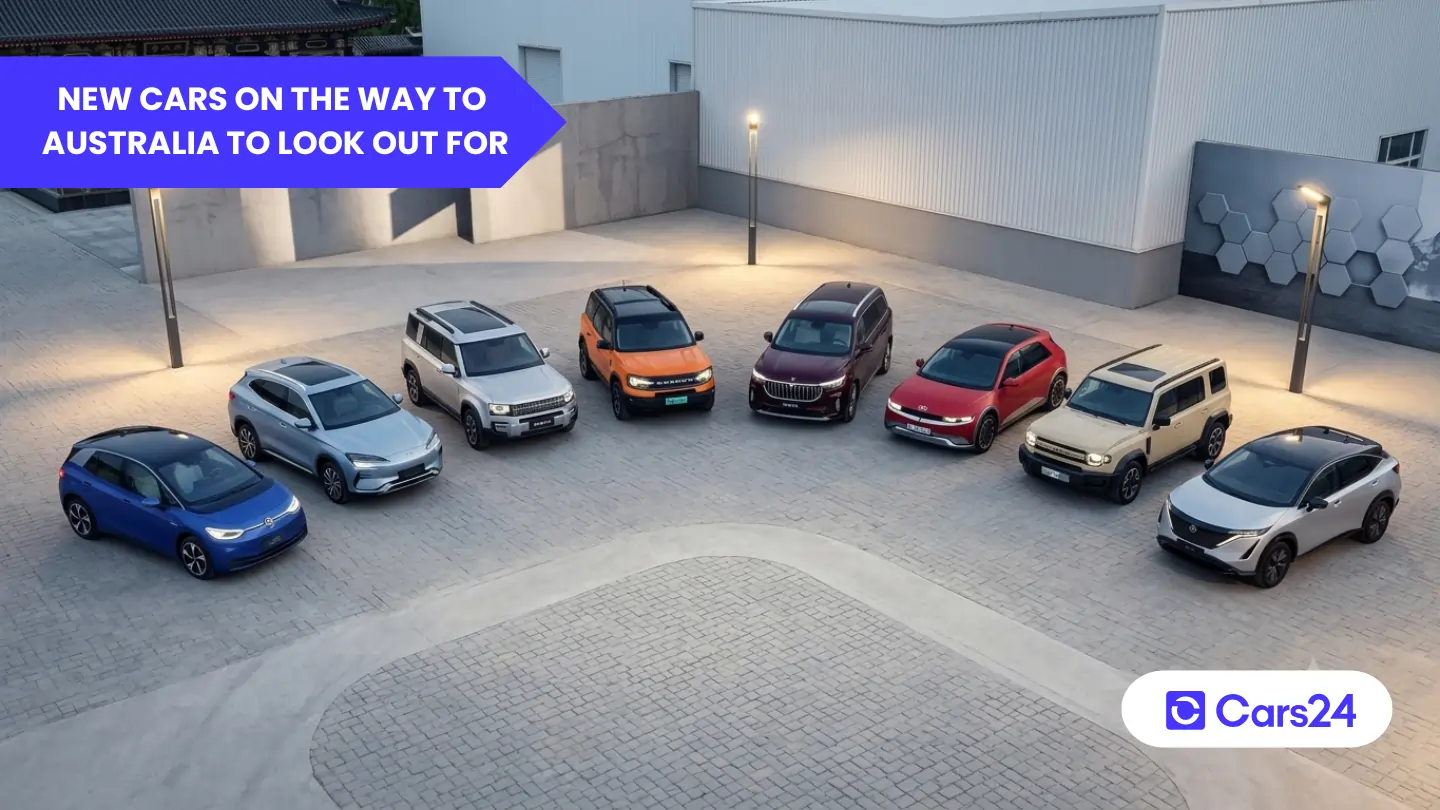
Australia’s new-car market is entering another major transition period, with manufacturers accelerating plans to introduce more electric vehicles, plug-in hybrids and technology-led family SUVs across multiple price points.
Australian car buyers are expected to see a wave of new EVs, plug-in hybrids and electrified family SUVs arrive over the next 12–24 months. From affordable electric hatchbacks and urban EVs to luxury plug-in hybrid SUVs and rugged off-roaders, these new cars on the way to Australia could deliver more choice than ever before. Chinese manufacturers continue to expand rapidly, while established brands including Nissan, Hyundai, Ford and Volkswagen are preparing important additions for local showrooms.
These upcoming models reflect changing buyer priorities around efficiency, driving range, practicality and value, while still catering to Australians who want towing capability, family usability and long-distance touring comfort.
Here’s a closer look at some of the most anticipated new cars on the way to Australia that are worth keeping on your watchlist.
Nissan Terrano PHEV
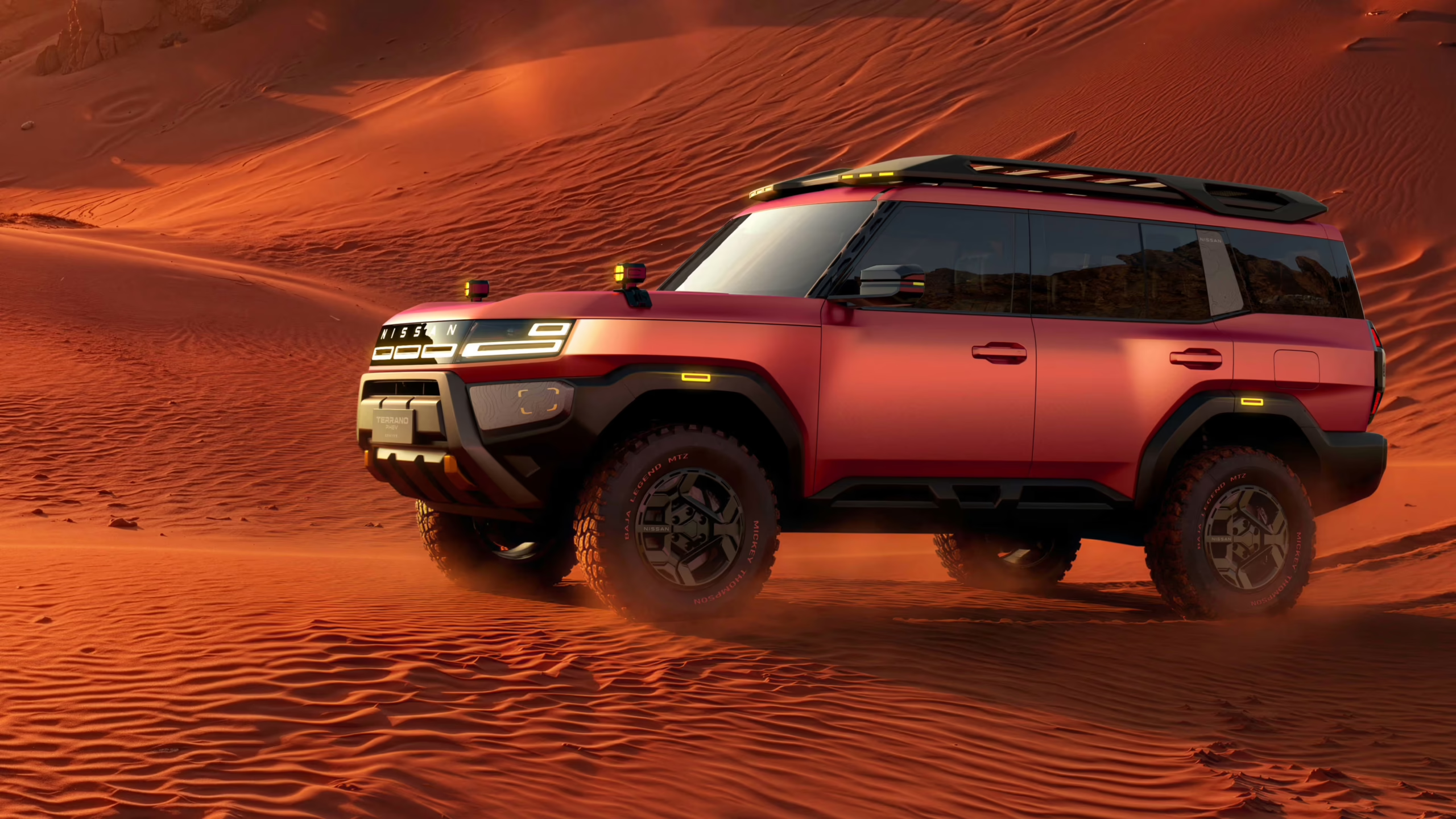


The Nissan Terrano PHEV is expected to become one of Nissan’s more interesting future SUVs for Australia, blending traditional off-road capability with plug-in hybrid efficiency. Expected to sit below the Patrol and share development links with Nissan’s future Frontier Pro architecture, the Terrano could appeal to buyers who still want genuine SUV toughness without fully committing to battery-electric ownership.
For Australian families and adventure-focused buyers, the appeal will likely come from its combination of body-on-frame durability and improved everyday efficiency. Plug-in hybrid technology should also make short urban trips possible using electric power while retaining longer-distance flexibility for regional travel.
If Nissan prices it competitively, the Terrano could emerge as a compelling alternative to newer electrified SUV rivals entering the market.
Hyundai Ioniq 3

Hyundai’s upcoming Ioniq 3 is expected to become an important entry point into the brand’s expanding electric portfolio. Positioned below larger Ioniq models, it is expected to target buyers who want an affordable EV without sacrificing interior practicality or driving range.
The compact footprint should make it particularly attractive for city drivers and smaller households, while Hyundai’s recent EV development suggests the Ioniq 3 will continue focusing heavily on charging performance, cabin technology and efficiency. Early expectations point toward driving range figures that make regional touring more realistic than earlier entry-level EVs.
For Australians considering their first electric vehicle, the Ioniq 3 could offer one of the more balanced combinations of price, usability and day-to-day practicality in the emerging small EV segment.
Read more: Top 10 new cars launched in Australia in 2025
Volkswagen ID.Polo

Volkswagen’s ID.Polo has the potential to become one of the most accessible European EVs available locally if it reaches Australian showrooms. Building on the familiarity and popularity of the long-running Polo formula, the ID.Polo aims to deliver compact dimensions with fully electric driving.
Unlike larger electric SUVs dominating current EV launches, the ID.Polo appears focused on simplicity, affordability and everyday convenience. Expectations include efficient packaging, practical cabin space and driving dynamics that preserve Volkswagen’s reputation for refinement and usability.
For buyers who have been waiting for a smaller electric hatchback rather than another SUV, the ID.Polo could become a highly appealing option and potentially broaden EV adoption among urban Australian drivers.
Ford Bronco PHEV

If introduced locally, the Ford Bronco PHEV would represent an interesting shift for Ford as it expands its electrified vehicle portfolio. While carrying familiar Bronco styling cues, this version is expected to prioritise plug-in hybrid efficiency and broader family appeal.
Rather than focusing exclusively on hardcore off-road credentials, the Bronco PHEV appears positioned as a lifestyle-oriented SUV that combines electric commuting capability with everyday practicality. Strong EV-only driving range expectations may help lower fuel costs while preserving flexibility for longer journeys.
For Australian buyers wanting distinctive SUV styling without committing fully to an EV, the Bronco PHEV could become an attractive middle-ground option should Australian availability be confirmed.
Read more: Cars with the best exterior design in Australia of 2026
iCaur V27

The iCaur V27 arrives with one of the more unconventional approaches among upcoming Australian launches. Combining rugged SUV styling with range-extender electric technology, it is expected to target buyers who want EV benefits while minimising range anxiety.
Visually inspired by traditional off-road SUVs, the V27 focuses heavily on practicality, long-distance capability and strong value positioning. The addition of a small petrol engine acting as a generator should allow significantly greater total driving range than many pure EV alternatives.
Australian buyers increasingly interested in electrification but hesitant about charging infrastructure may find the V27 particularly appealing, especially if aggressive pricing helps it compete against more established family SUV options.
Nissan T34 X-Trail

The next-generation Nissan X-Trail is expected to become an important evolution of one of Australia’s most familiar family SUVs. Moving into its fifth generation, the model appears set to place greater emphasis on efficiency, interior quality and updated hybrid technology.
A revised e-Power system is expected to play a major role, offering electric-like driving characteristics while maintaining petrol convenience. Improvements to ride, cabin presentation and overall refinement should also help strengthen its appeal against increasingly competitive mid-size SUV rivals.
For buyers who prioritise practicality and family usability but remain uncertain about full EV ownership, the next X-Trail could offer a strong transitional option.
Read more: New cars with the lowest power-to-weight ratios in Australia in 2026
GWM Wey V9X

GWM’s Wey V9X demonstrates how quickly Chinese manufacturers are moving into premium territory. Expected to sit at the upper end of the SUV market, the V9X combines luxury positioning with plug-in hybrid technology and extensive interior space.
Large dimensions, three-row practicality and substantial electric driving capability suggest this SUV is aimed squarely at buyers considering premium European alternatives. Fast charging capability and extended touring range are also expected to play a central role in its appeal.
For Australians seeking high-end SUV features without traditional luxury-brand pricing, the Wey V9X could become one of the market’s most disruptive arrivals.
Chery Freelander 8

The Chery Freelander 8 is expected to play an important role in Chery’s future expansion strategy, bringing a larger electrified SUV into Australian consideration. Drawing inspiration from the historic Freelander naming heritage while adopting modern electrified architecture, it appears designed to target growing demand for spacious family SUVs.
Three-row seating, modern cabin technology and multiple electrified powertrain options are expected to form key selling points. Chery’s recent focus on competitive pricing and equipment levels may also help position the Freelander 8 as a value-focused alternative to established family SUV players.
For buyers needing greater practicality without stepping into luxury pricing territory, this model could attract significant interest.
Read more: Top 10 cars for first-time buyers under $25k in Australia
BYD Atto 5 / Atto 3 MkII

BYD’s next-generation Atto model is expected to continue the momentum created by the original Atto 3 in Australia’s EV market. Whether launched locally as the Atto 5 or an updated Atto 3 MkII, the new version is anticipated to deliver improvements in size, refinement and driving range.
The focus appears to be on creating a more mature and premium ownership experience while maintaining BYD’s reputation for strong value. Updated battery technology, enhanced cabin presentation and improved technology integration are likely to feature prominently.
For Australian buyers considering a mainstream electric SUV, the next-generation Atto could reinforce BYD’s position as one of the country’s most influential EV brands.
Read more: Key BYD launches in Australia in 2026 (So far and what’s next)
Final thoughts on the new cars on the way to Australia
The next generation of vehicles arriving in Australia highlights how quickly the market is evolving beyond traditional petrol and diesel choices. These new cars on the way to Australia show how electrification is now reaching almost every segment, from affordable city cars and family SUVs through to luxury touring vehicles and adventure-focused off-roaders.
While not every model listed here has been officially confirmed for Australian showrooms, each highlights an important direction for the local market, whether through electrification, improved efficiency or increased value.

Comments
New Comment