




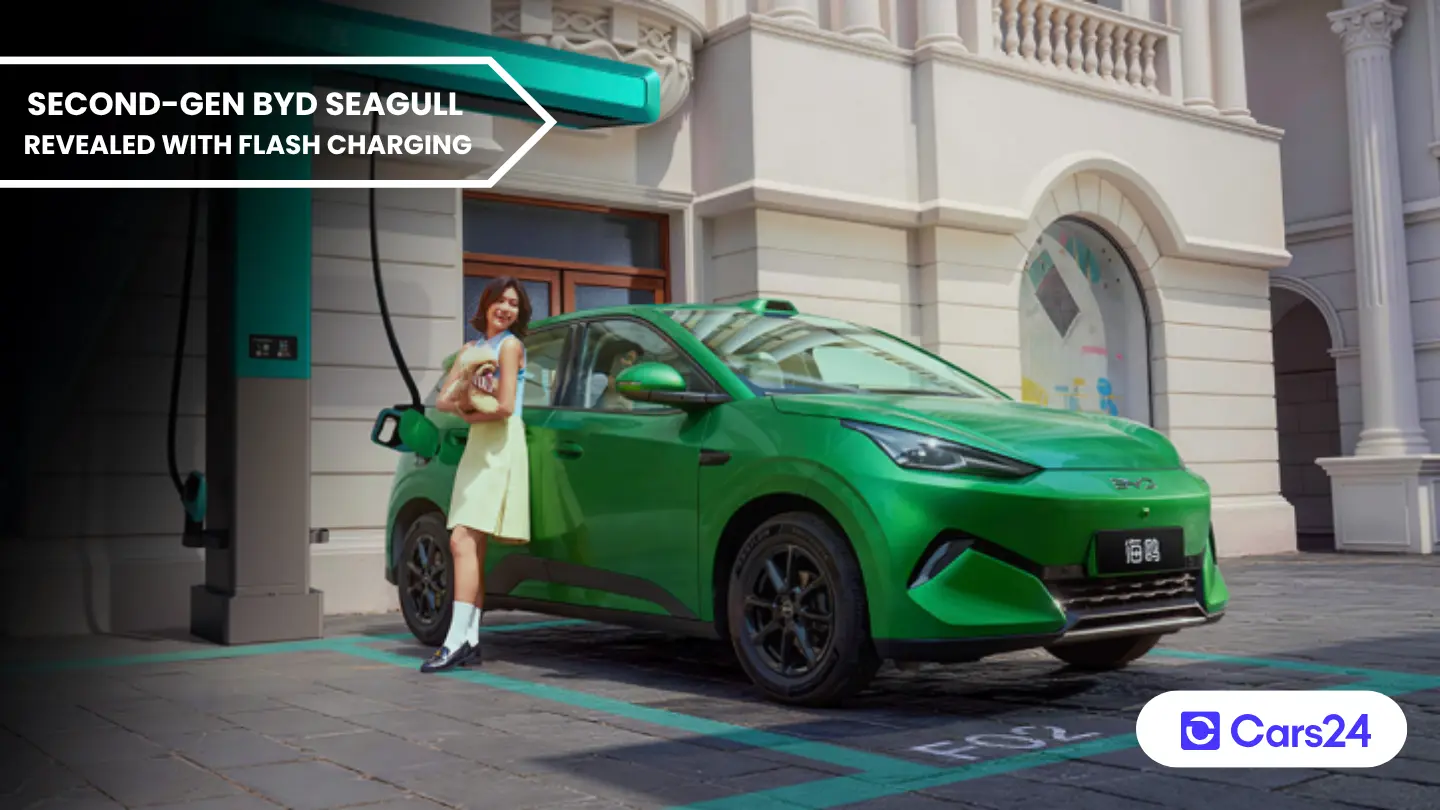
Key highlights
- The second-generation BYD Seagull starts at 65,900 yuan in China, undercutting the outgoing model.
- Its larger 39.2kWh battery supports Flash Charging, taking the charge from 10 to 70 per cent in five minutes.
- The updated electric hatchback gains a longer wheelbase, a 94-litre front boot and optional LiDAR-based driver assistance.
BYD has launched the second-generation Seagull in China, updating its entry-level electric hatchback with a larger body, a five-seat interior and new battery technology designed to significantly reduce charging times.
Revealed on 20 October 2026, the new Seagull is priced from 65,900 yuan (around US9,800)to99,900yuan(aroundUS14,900) across five variants. The entry-level model is cheaper than the previous generation, which started at 69,900 yuan in 2025.
The Seagull is sold under different names in overseas markets, including the BYD Dolphin Mini, Dolphin, Surf and Atto 1. In Australia, the current entry-level version is known as the BYD Atto 1, positioning it as an affordable option for buyers considering a small electric car.
However, Australian pricing and availability for the second-generation model have not been confirmed. Its Chinese launch does not necessarily mean the updated hatchback will arrive here in the same specification or with the same features.
Read more: BYD Yangwang U8 approved for Australia, could cost $250,000
Larger dimensions and more cabin space
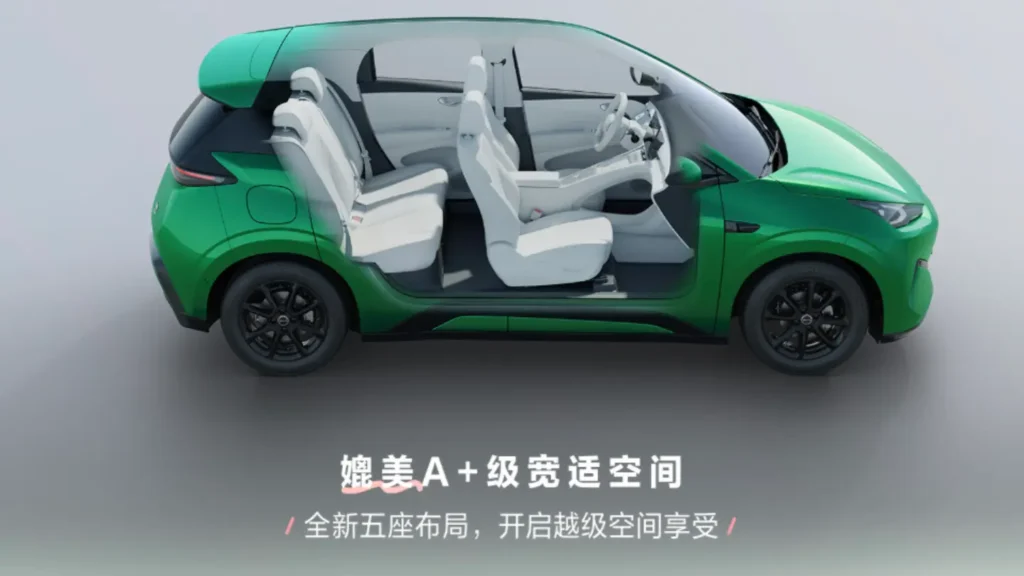
The new BYD Seagull measures 4,205mm long, 1,810mm wide and 1,570mm tall, with a 2,650mm wheelbase. Compared with the outgoing model, it is 425mm longer and has a wheelbase stretched by 150mm.
The extra length should help provide more cabin space, while the updated layout accommodates five occupants instead of four. BYD also claims up to 1,380 litres of rear cargo capacity, alongside a 94-litre front boot, commonly known as a frunk.
These changes could make the Seagull more practical for Australian city drivers who want a small car for commuting, shopping and occasional longer trips without stepping up to a larger electric SUV.
The exterior retains BYD’s Marine Aesthetics design theme, with a sporty stance and distinctive front lighting. Inside, the cabin receives revised materials, three colour schemes and a 15.6-inch central touchscreen running the DiLink 150 infotainment system with DeepSeek AI integration.
Other equipment includes wireless phone charging, ambient lighting, an eight-speaker sound system and powered front seats. Higher-specification versions also offer front-seat heating, ventilation and driver massage functions.
BYD Seagull gets five-minute Flash Charging
The biggest technical change is the introduction of BYD’s second-generation Blade Battery, available in 30.1kWh and 39.2kWh capacities.
The smaller battery delivers a claimed CLTC driving range of 320km, while the larger unit increases that figure to 420km. BYD’s figures use China’s CLTC testing cycle, which is generally more optimistic than the WLTP standard used in many overseas markets. They should not be treated as direct estimates of Australian real-world driving range.
Power comes from an electric motor producing either 85kW or 95kW, with both versions delivering 130Nm of torque. The car also features independent multi-link rear suspension and a claimed 4.95-metre turning radius.
The headline feature is Flash Charging, available on the three higher grades equipped with the 39.2kWh battery. BYD claims the system can charge the battery from 10 to 70 per cent in five minutes.
That would make topping up considerably quicker than with conventional home or public AC charging. However, the claimed charging time depends on compatible charging hardware and operating conditions, and Australian charging compatibility has not been confirmed for this model.
LiDAR and driver assistance added
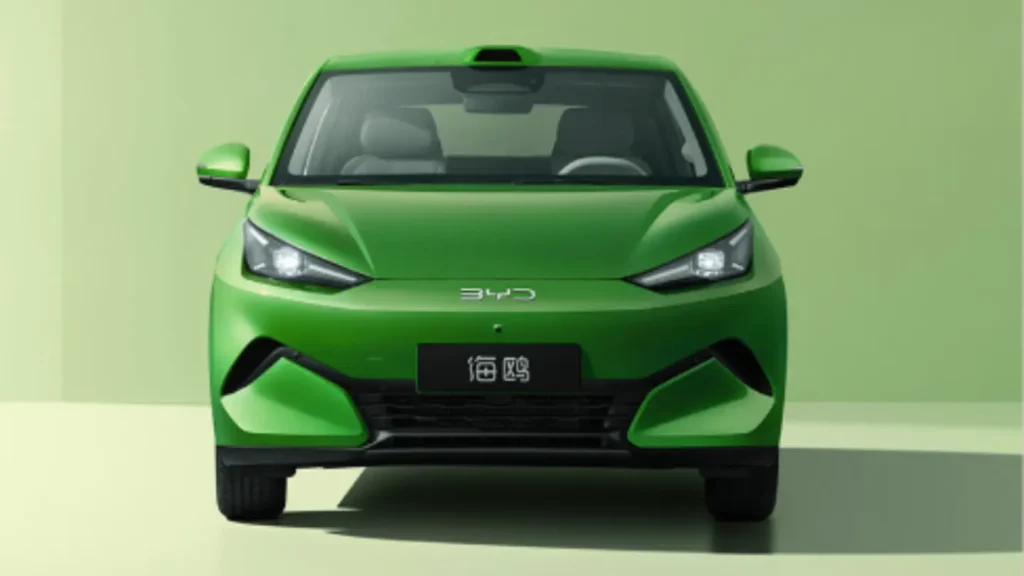
The new Seagull also introduces BYD’s DiPilot 300 driver assistance package, marketed under the ‘God’s Eye’ name. The system uses LiDAR, a sensor that measures distances using laser pulses, to help the car detect its surroundings.
Depending on specification, the system supports navigation-assisted driving in urban areas and on highways, traffic-light recognition and obstacle avoidance. BYD has also detailed a reinforced body structure, up to six airbags and a system designed to help stabilise the vehicle following a tyre blowout.
Whether these features would be offered in an Australian version remains unclear. Local equipment specifications and safety assessments would need to be confirmed before buyers could judge how the updated model compares with alternatives available here.
Can the new BYD Seagull reach Australia?
The update arrives as BYD faces stronger competition in China’s small electric car market. Between January and September 2026, global Seagull sales reportedly reached 266,000 units, down 33 per cent year-on-year. Sales in China fell 66 per cent to 83,600 units over the same period.
Rivals such as the Geely EX2 have put pressure on the segment, making lower prices, more equipment and faster charging important selling points.
For Australian buyers, the new Seagull’s combination of compact dimensions, extra cabin space and rapid charging could strengthen BYD’s offering at the affordable end of the EV market. But the most important details remain unanswered: whether the updated model will come here, how much it would cost and which battery and charging features would be included.
Until BYD confirms those details, the second-generation Seagull remains a promising development for the Chinese market rather than a confirmed new option for Australian showrooms.

Comments
New Comment