





Key highlights
- BYD found a software defect that allowed Android Debug Bridge (ADB) access to be enabled on the Shark 6.
- The fix will be delivered through a future over-the-air infotainment software update.
- BYD says its analysis found the demonstrated control of the headlights and wipers required physical access to the vehicle’s CAN bus.
BYD Australia will roll out a software update for its Shark 6 plug-in hybrid ute after completing an investigation into cybersecurity vulnerabilities demonstrated on the vehicle. The investigation followed an episode of the ABC’s Four Corners program, broadcast on 21 September 2026, in which a cybersecurity researcher examined a Shark 6.
During the program, the researcher was shown gaining access to the vehicle’s infotainment system, including its location and microphone. The program also showed the headlights and windscreen wipers being controlled during an on-road demonstration, and the doors being locked. BYD subsequently launched its own forensic investigation involving technical teams in Australia and China, focusing on the infotainment system and the vehicle’s CAN bus. It has now confirmed it was able to reproduce the software issue identified during the demonstration.
Read more: Bigger second-gen BYD Seal 07 revealed in China; Australia launch soon?
BYD found a software defect in the infotainment system
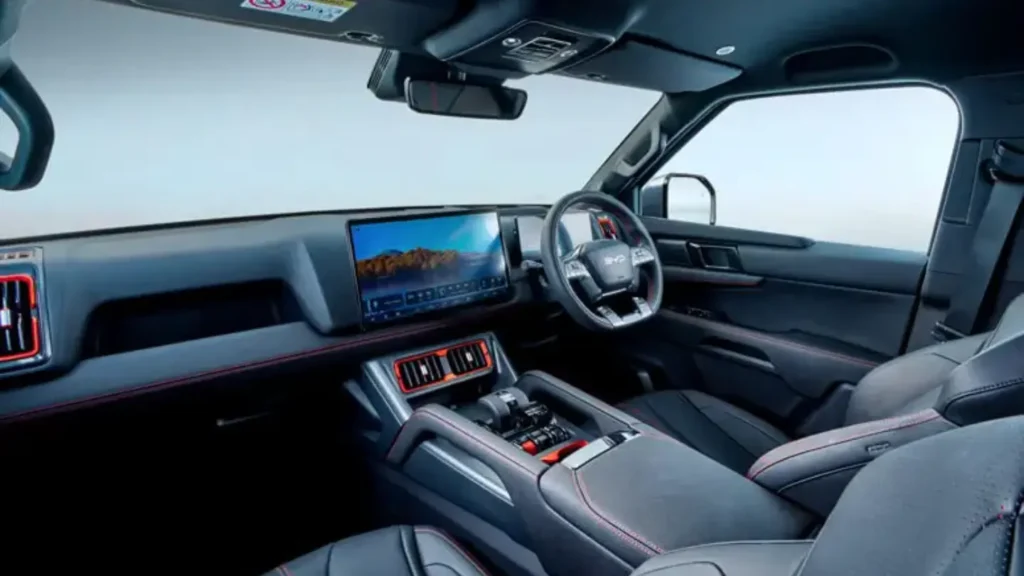
According to BYD, the investigation found a software defect that allowed the Android Debug Bridge (ADB) to be enabled. ADB is a tool used to communicate with and access Android-based devices. BYD says it is disabled by default in the Shark 6 and can normally only be accessed by authorised personnel using special tools.
The company said the researcher was able to exploit the software defect to enable ADB and subsequently install an untrusted third-party application. BYD engineers were able to reproduce both the software defect and the subsequent installation of the third-party application during their investigation.
The company says the application could request access to information or functions such as the vehicle’s location and microphone. However, BYD says those permissions still required manual approval through the infotainment system. BYD also notes that ADB is a standard Android capability rather than something proprietary to the brand. It says the root-cause investigation is now complete.
Shark 6 to receive an OTA software update
BYD has started work on a fix for the confirmed ADB-related software issue. The company says the corrective action will remove the unintended pathway that allowed ADB to be enabled through the infotainment system’s user interface. The fix will be deployed through a future over-the-air infotainment software update for Shark 6 vehicles.
However, BYD has not announced when the update will be available. The company says the updated software will only be deployed after it has undergone rigorous validation.
BYD is also investigating whether the same software update will be required for other BYD vehicles sold in Australia.
Headlights and wipers required physical access, says BYD
BYD’s investigation also examined the demonstration involving the Shark 6’s headlights and windscreen wipers. The company says its technical analysis confirmed that controlling those functions required direct physical access to the vehicle’s internal CAN bus by tapping into the vehicle’s wiring. The CAN bus is the network that allows different electronic control units within a vehicle to communicate with each other.
According to BYD, this method requires physical intervention and is limited to the individual vehicle that has been accessed. The company says its OBD interface already uses device authentication and physical isolation, alongside cybersecurity measures designed to meet UN R155 requirements. BYD has nevertheless started a separate risk assessment to determine whether additional measures are required to strengthen CAN-bus security. It says the assessment will evaluate the necessity and technical feasibility of measures covering CAN message authenticity, integrity and freshness verification, and that any further improvements will depend on the outcome.
BYD to review cybersecurity processes
BYD says the findings from its investigation will also be used to strengthen its cybersecurity processes. The company is reviewing areas including debug-interface management, application permission controls, pre-release cybersecurity testing, vulnerability management and cross-platform issue screening.
BYD says it remains committed to improving cybersecurity protection throughout the vehicle’s lifecycle through ongoing vulnerability analysis, security testing, risk assessment and software updates.

Comments
New Comment