




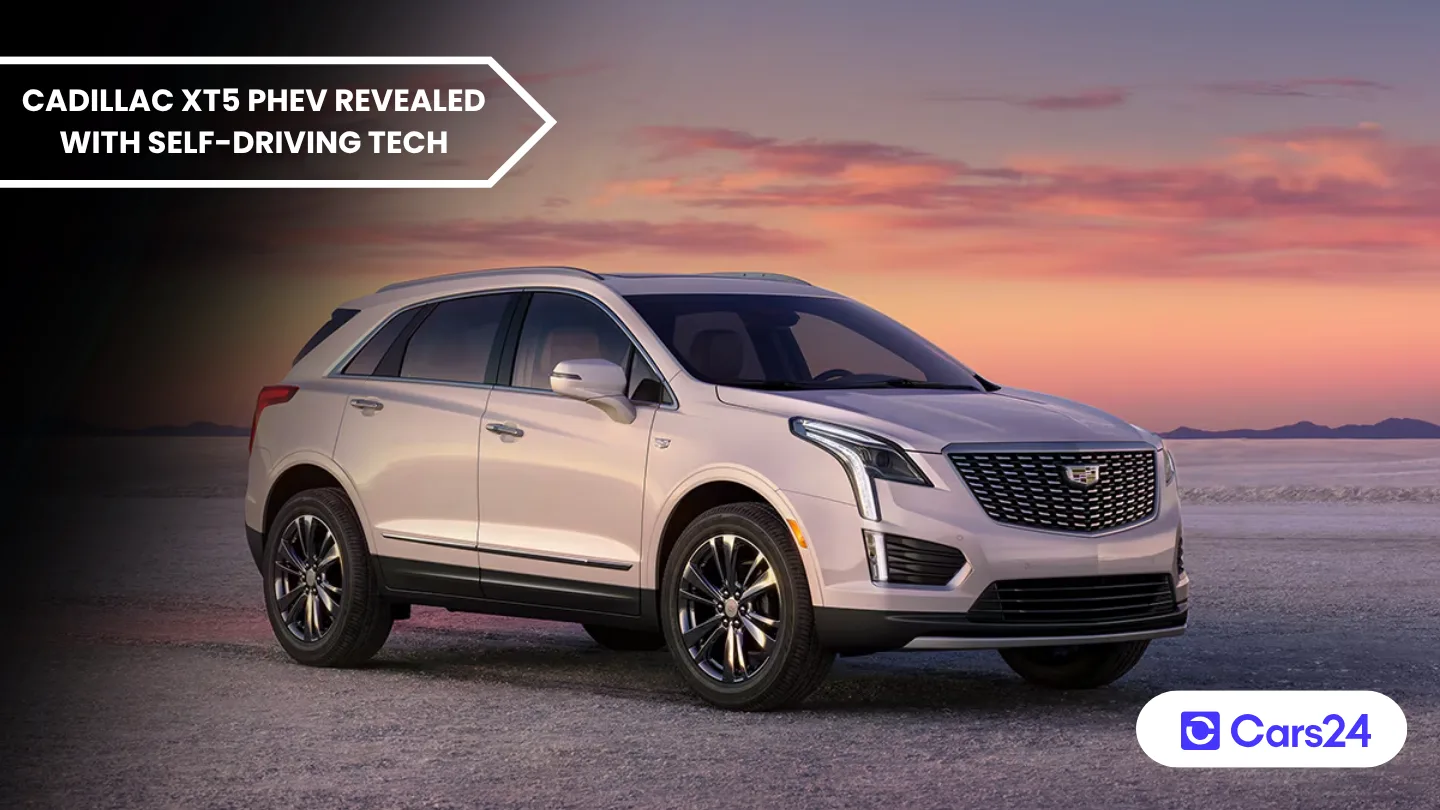
The Cadillac XT5 PHEV goes up for pre-sale in China from August 21, 2026, and is the first mass-produced luxury hybrid SUV claimed to feature Momenta’s R7 “world model”.
If that name means nothing to you, here’s the short version: Momenta is a Chinese autonomous driving technology company with a claimed 15 billion-plus kilometres of real-world driving data.
Cadillac is integrating that technology with its own Super Cruise system, which has accumulated close to 1.7 billion kilometres of driving globally.
What does the tech actually do?
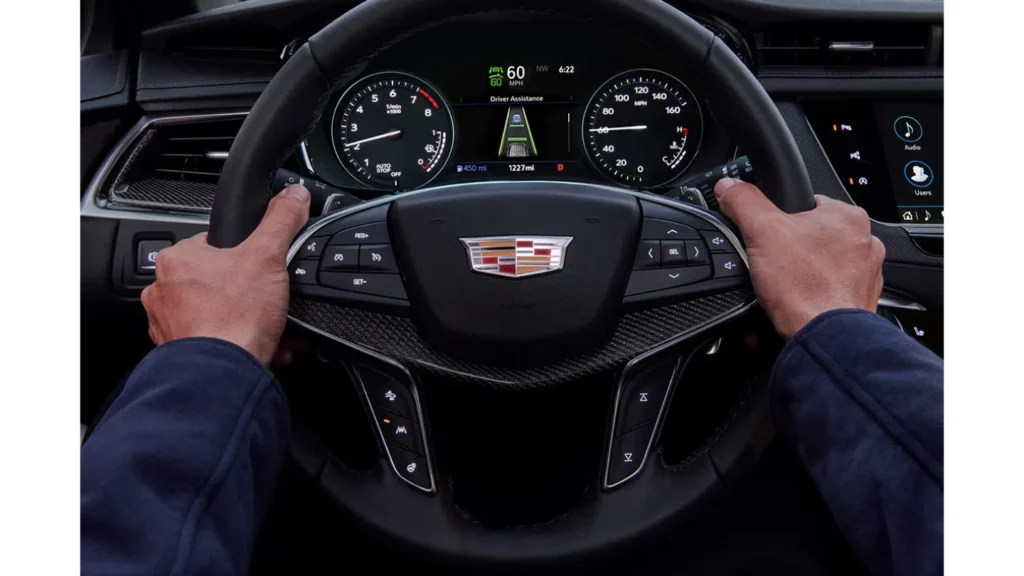
This isn’t just an adaptive cruise with a fancy name. Cadillac says the system can understand when it’s permissible to enter a bus lane, judge when to give way and react to unpredictable situations that can challenge driver-assistance systems.
That includes delivery workers, temporary road cones and doors suddenly being opened into traffic. It is also claimed to be able to react to an unexpected falling object, such as an apple.
The system uses LiDAR, an 8-megapixel high-definition camera and millimetre-wave radar to monitor the vehicle’s surroundings. Despite the increasingly sophisticated hardware, this remains an assisted driving system, rather than a fully autonomous vehicle. The driver remains responsible for the car.
Read more: Cadillac XT5 PHEV revealed in China with semi-auto driving
Under the bonnet
Power comes from a 1.5-litre turbocharged four-cylinder petrol engine working with front and rear electric motors. The system sends power to all four wheels through a two-speed direct hybrid transmission. Total system output stands at 385kW and 740Nm, giving the XT5 PHEV a claimed 0-100km/h time of 4.8 seconds with sufficient battery charge. With a low state of charge, Cadillac says it can still complete the sprint in 5.4 seconds.
That makes it quicker than the dual-motor Cadillac Lyriq, which produces 373kW and 610Nm and takes a claimed 5.3 seconds to reach 100km/h.
The standard petrol XT5 is considerably less potent. In the Chinese market, it uses a 2.0-litre turbocharged four-cylinder engine producing 174kW and 350Nm, paired with a nine-speed automatic transmission. It is offered with front-wheel drive or all-wheel drive.
The US-market XT5 is also available with a 3.6-litre V6 producing 231kW and 367Nm, depending on grade. The range includes front-wheel-drive versions, while higher-performance Sport models get twin-clutch all-wheel drive. That makes the Chinese-market PHEV a rather different proposition, using a smaller petrol engine but electric motors to deliver substantially more combined power.
155km of electric range
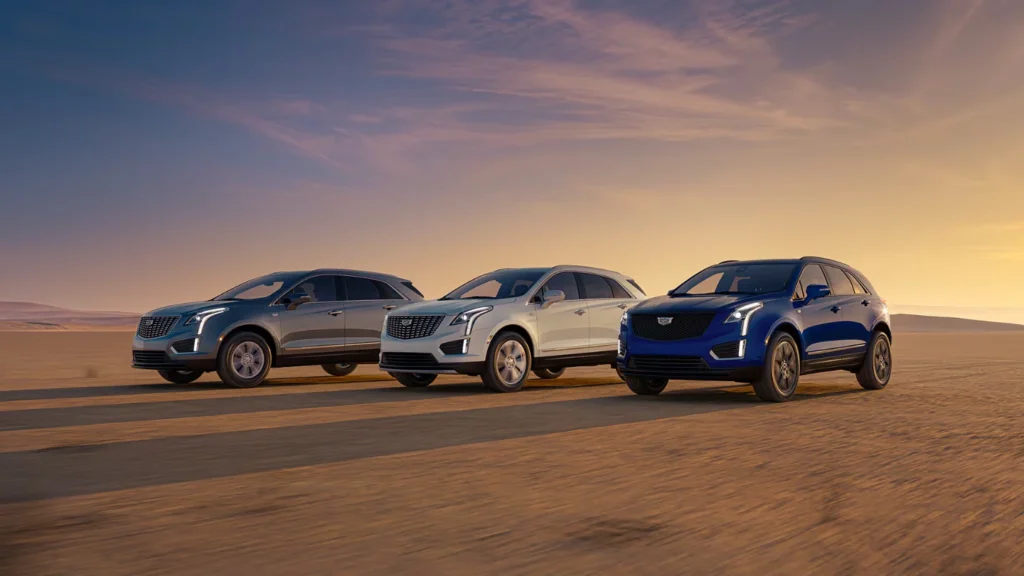
The XT5 PHEV uses a 35.5kWh battery, giving it a claimed 155km of WLTC electric range. Once the battery is depleted, Cadillac claims fuel consumption of 6.05L/100km, which it says is the lowest figure in its class.
Charging is another area where the XT5 PHEV gets some serious hardware. Its battery supports 5C fast charging, with Cadillac claiming a 30 to 80 per cent charge can take just 15 minutes.
There’s also vehicle-to-load (V2L) capability, with up to 6kW of output. That allows the SUV to power external electrical equipment, which could come in handy for camping or running small appliances away from a conventional power outlet.
Cadillac has also fitted continuously variable damping suspension. The system can reportedly scan the road surface up to 20 metres ahead and make 500 real-time adjustments per second to prepare the suspension for what’s coming.
Same face, smarter guts
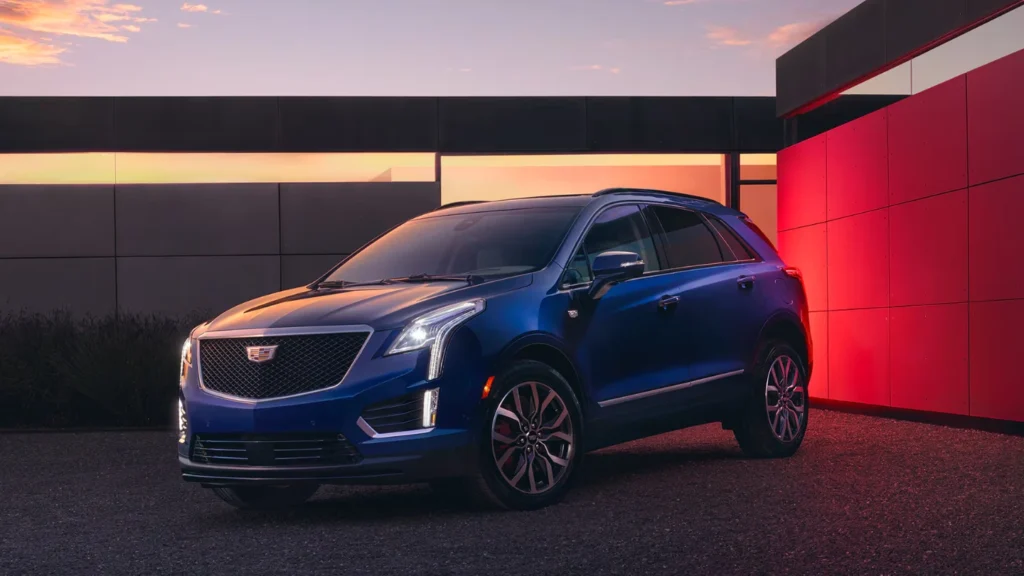
The XT5 PHEV doesn’t get a dramatic visual makeover. Its exterior styling remains largely unchanged from the second-generation XT5 sold in China, while the cabin adopts Cadillac’s newer design language.
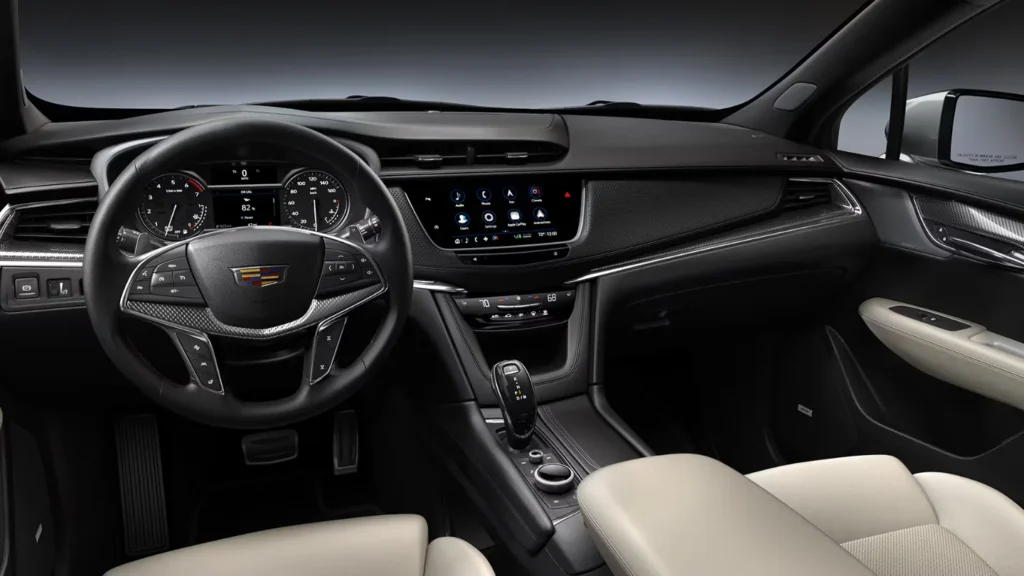
There’s a 33-inch curved display similar to the unit used in the Lyriq, combining the infotainment system and digital instrument cluster. The XT5 measures 4888mm long, 1957mm wide and 2863mm between the axles, putting it almost directly into Lexus RX territory for size.
Depending on market and grade, the regular XT5 can also be fitted with features including Bose audio, a head-up display, HD Surround Vision, a rear camera mirror and automatic parking assistance.
Higher US-market grades also offer features such as a 3.6-litre V6, twin-clutch all-wheel drive, Brembo front brakes and chassis damping and yaw control.
The bigger picture for GM in China
The XT5 PHEV arrives as General Motors continues to give its Chinese operations a bigger role in developing and producing vehicles. The Chinese-market XT5 is built by SAIC-GM, GM’s joint venture with Chinese automotive giant SAIC. The partnership was established in 1997 and was recently extended through to 2047.
GM has also indicated that it is exploring exports of Chinese-built vehicles to markets including the Middle East, Africa, South America and Asia-Pacific. The Buick Electra E7 PHEV SUV is due to begin exports from China in October, while Chevrolet’s domestic Chinese lineup is being wound down. Chevrolet-badged vehicles will, however, continue to be manufactured for export.
The XT5 itself has an unusual global history. Cadillac launched the second-generation model in China in 2024, but it has yet to reach the US, where GM is preparing next-generation versions of the current XT5 and XT6 for launch from the first half of 2027.
Will the Cadillac XT5 PHEV come to Australia?
There’s no confirmation that the XT5 PHEV or any Chinese-built Cadillac is coming to Australia. A GM Australia and New Zealand spokesperson said the company currently has no announcements regarding future vehicles for the ANZ market. That means Australian buyers shouldn’t expect to see this 385kW PHEV in local Cadillac showrooms just yet.
Still, GM’s increasing use of China as a production and potential export hub makes the XT5 PHEV an interesting one to watch. With its long electric range, fast charging and performance that rivals some much larger petrol SUVs, it also shows how far Cadillac’s Chinese-market technology has moved beyond the brand’s traditional formula.

Comments
New Comment