




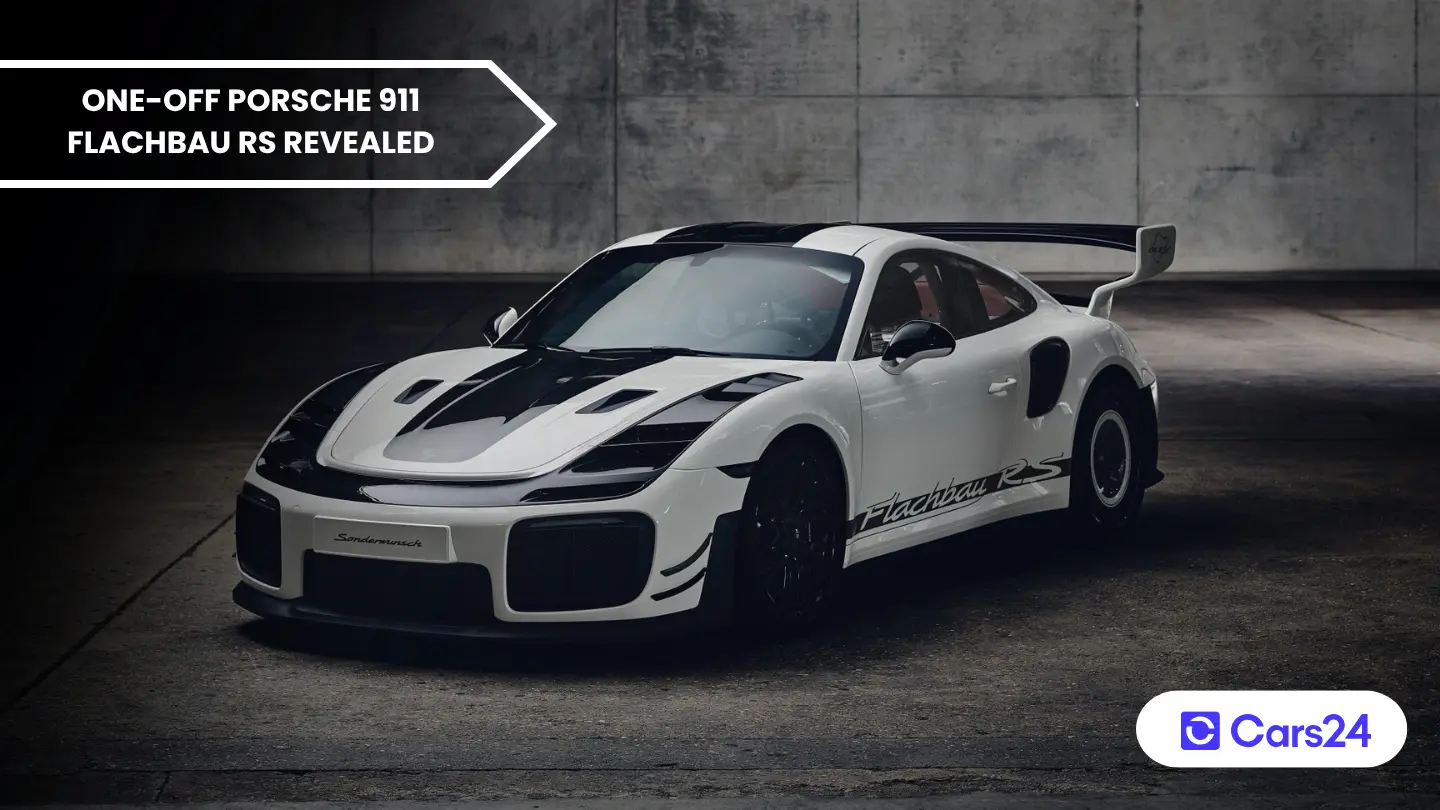
Porsche has created a modern-day Slantnose 911, but buyers cannot expect to see it in their local showrooms as the Porsche 911 Flachbau RS is a strictly road-legal, factory-built one-off commissioned by a single anonymous enthusiast.
Porsche created this rear-engined car specifically for that collector, so it has no retail price, no general production run and no availability for Australian customers or anyone else.
The custom car combines a previous-generation 911 GT2 RS Weissach Package with an extreme Slantnose conversion inspired by one of Porsche’s most famous racing cars and runs on a 3.8-litre twin-turbocharged flat-six with 515kW of output.
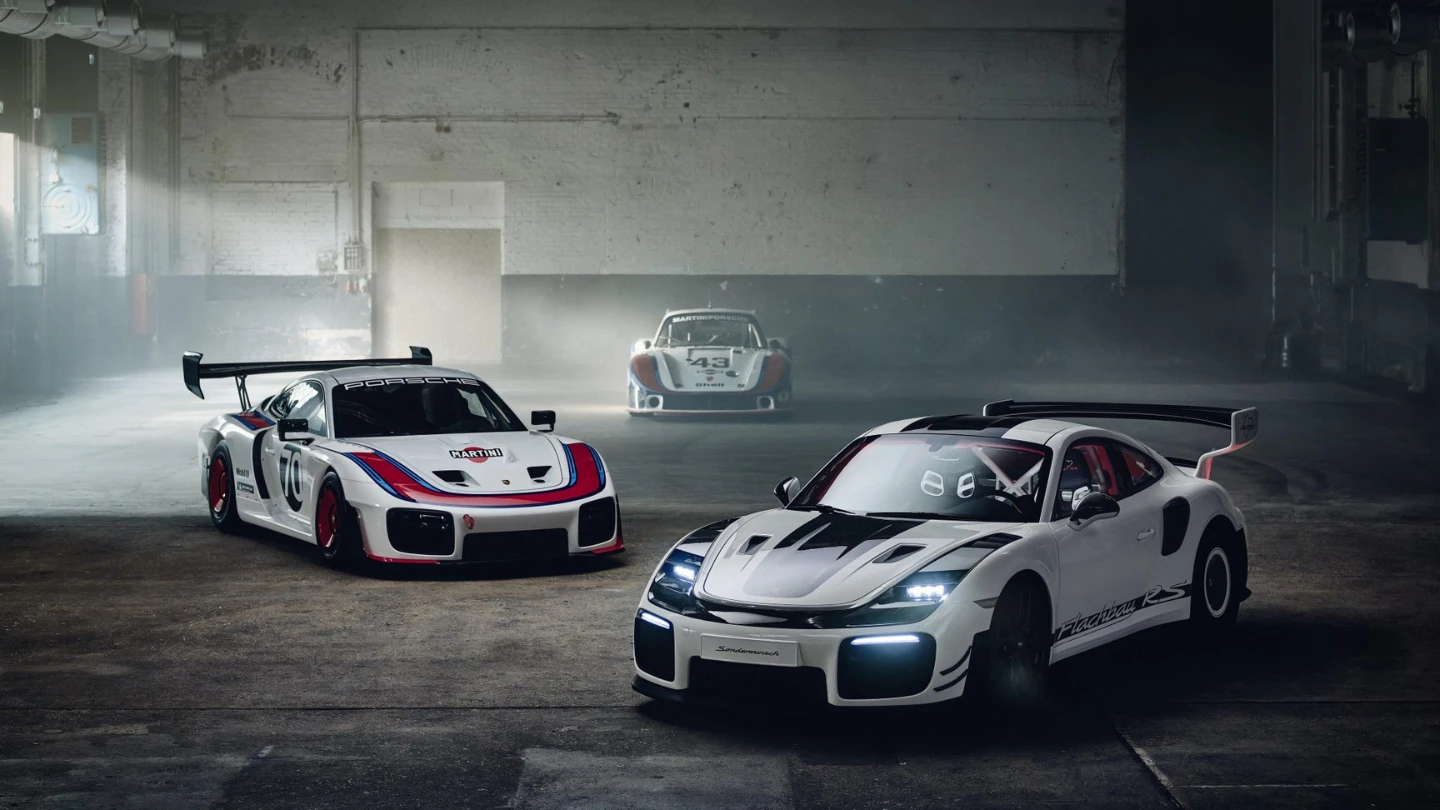
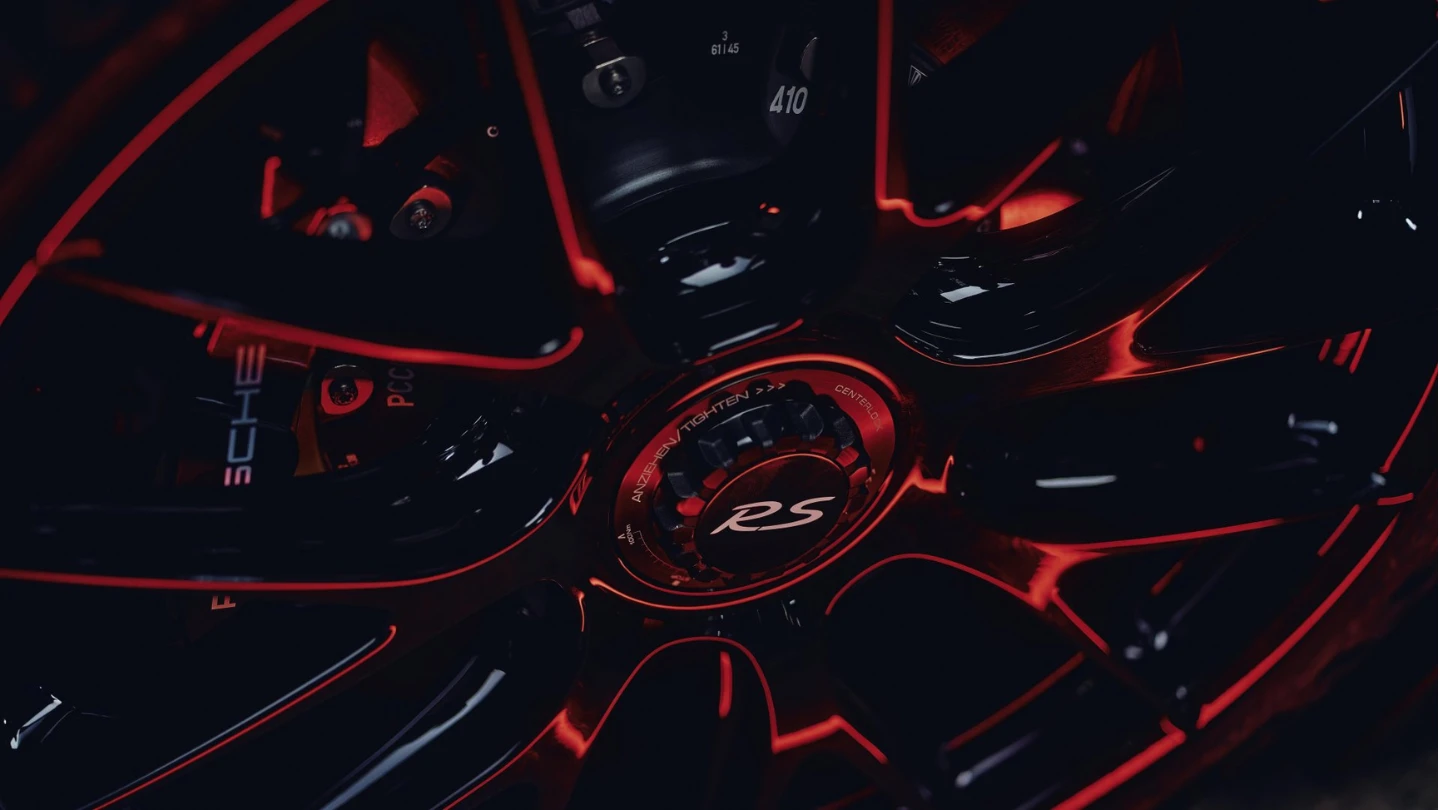
Based on the 991.2 911 GT2 RS
Porsche didn’t use the current 992-generation 911 for the project, but the lightly used 991.2-generation 911 GT2 RS fitted with the Weissach Package.
The car keeps its factory 3.8-litre twin-turbocharged flat-six, which produces 515kW and 750Nm, paired with a seven-speed PDK dual-clutch transmission. Porsche’s in-house Sonderwunsch department carried out the bespoke work alongside Style Porsche, Porsche Motorsport and Manthey.
Exterior: The Slantnose returns
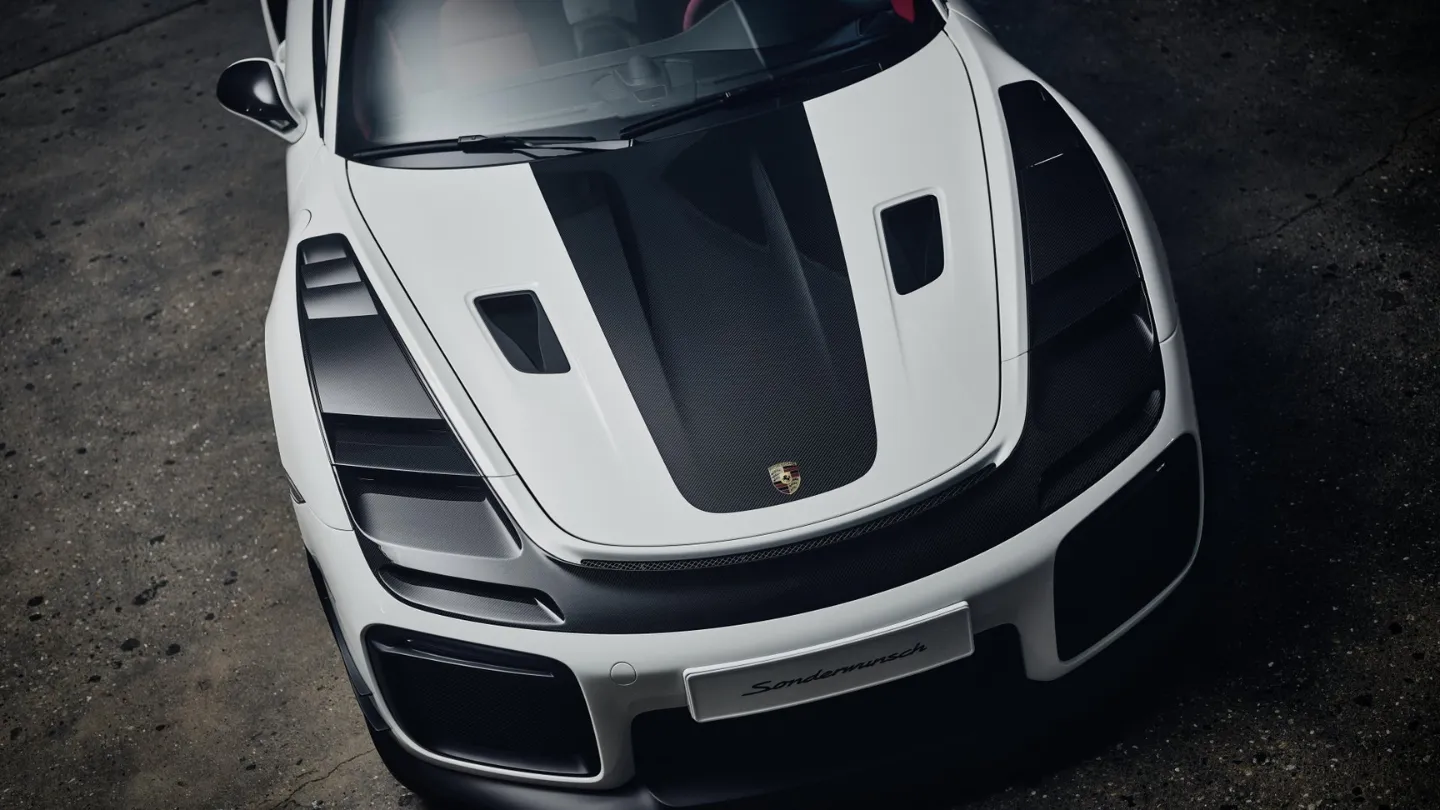
The biggest change in the one-off supercar sits at the front. Porsche removed the traditional round 911 headlights and replaced them with ultra-slim LED bars mounted low in the bumper to meet road-legal requirements.
The staggered lighting elements stack the low beam, high beam and daytime running lights above one another, and they sit within a black U-shaped section around the bonnet, which extends above the lowered front guards.
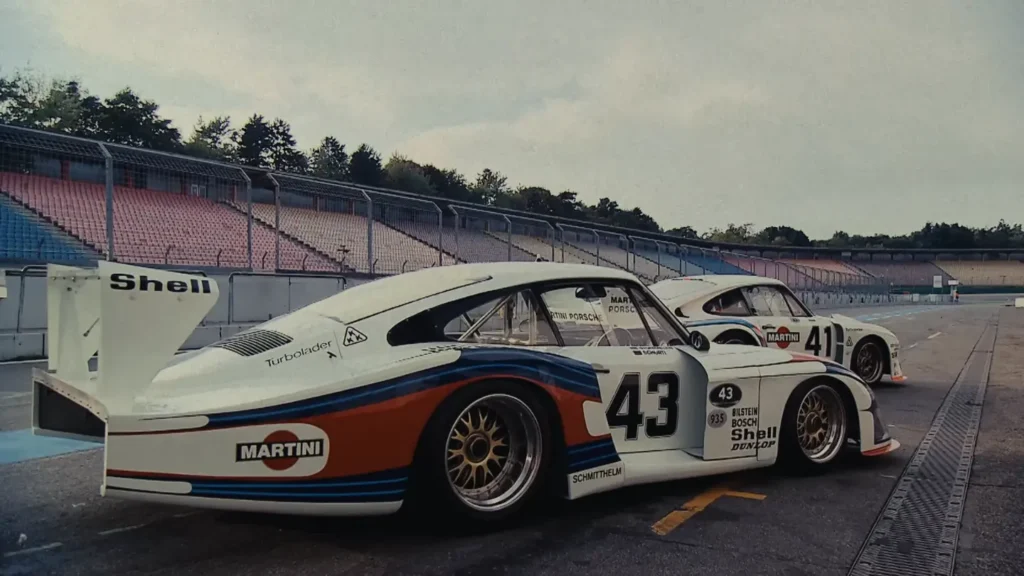
Those front guards also feature dedicated vents which help prevent air pressure from building up inside the wheel arches. The design directly references the 1978 Porsche 935/78 Le Mans race car, better known as Moby Dick because of its stretched white body and distinctive Slantnose shape.
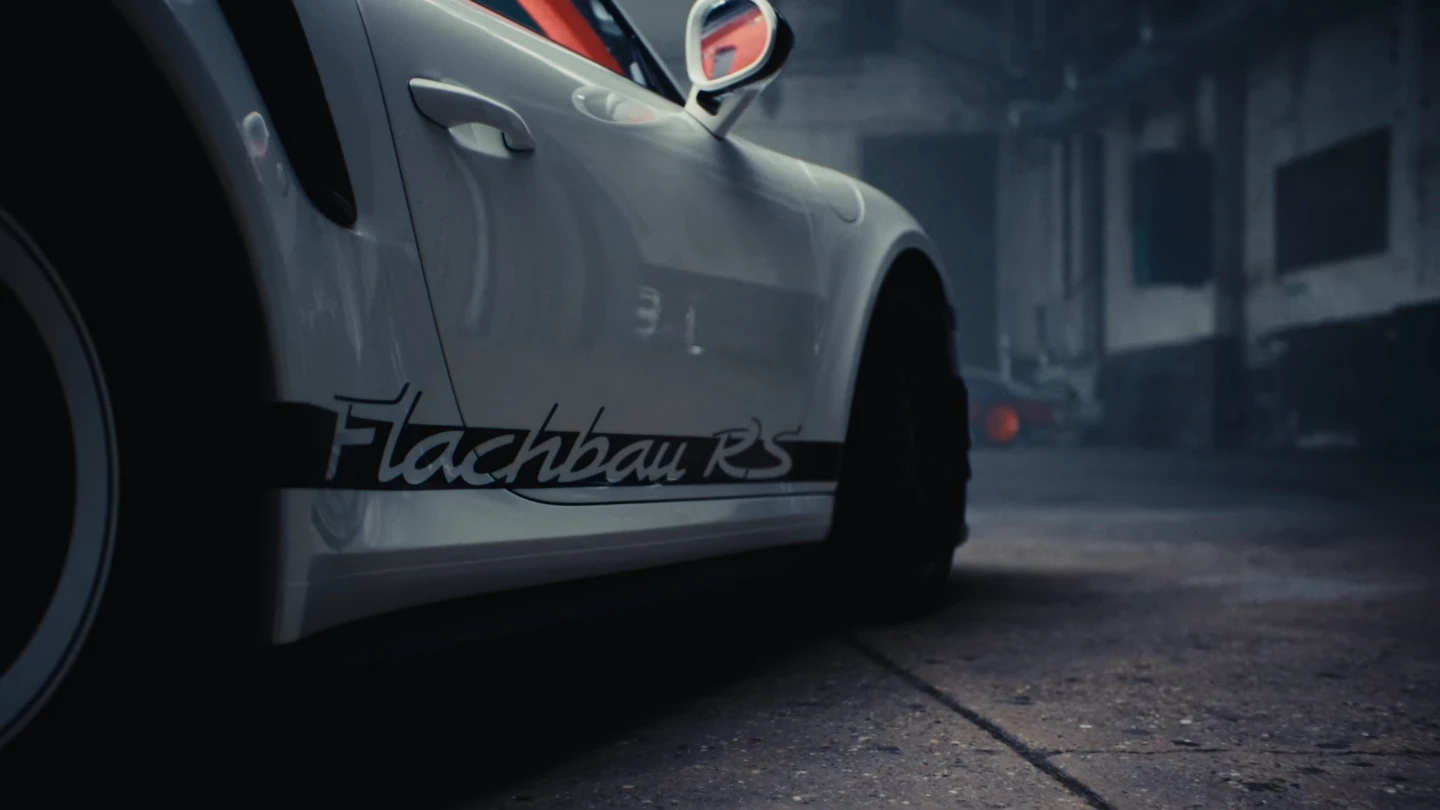
The exterior wears Grand Prix White with contrasting black accents, while the bonnet and roof receive black finishes. Black brake callipers and exposed carbon-fibre trim add more contrast and the car also carries Flachbau RS lettering and decals, while the Nordschleife appears on the rear wing.
Porsche even had to modify the fuel-filler flap and its underlying mechanism because the front guard shape changed.
Also read: Porsche Taycan could be discontinued amid cost-cutting plans
A huge rear wing does serious work
The Flachbau RS also gets a massive rear wing inspired by the ultra-exclusive, track-only 911 GT3 R Rennsport, and the wing uses S-shaped mounts and offers three manually adjustable positions.
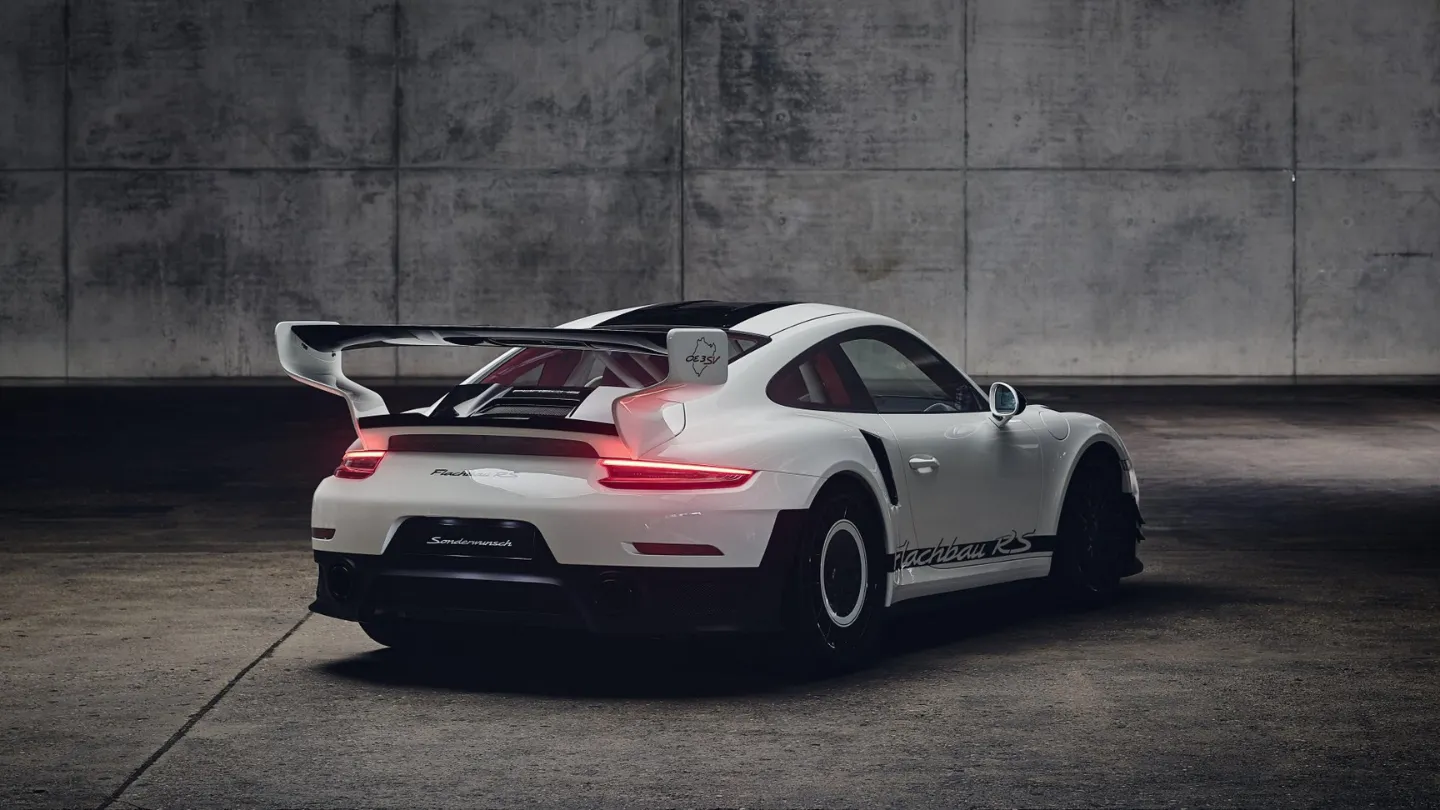
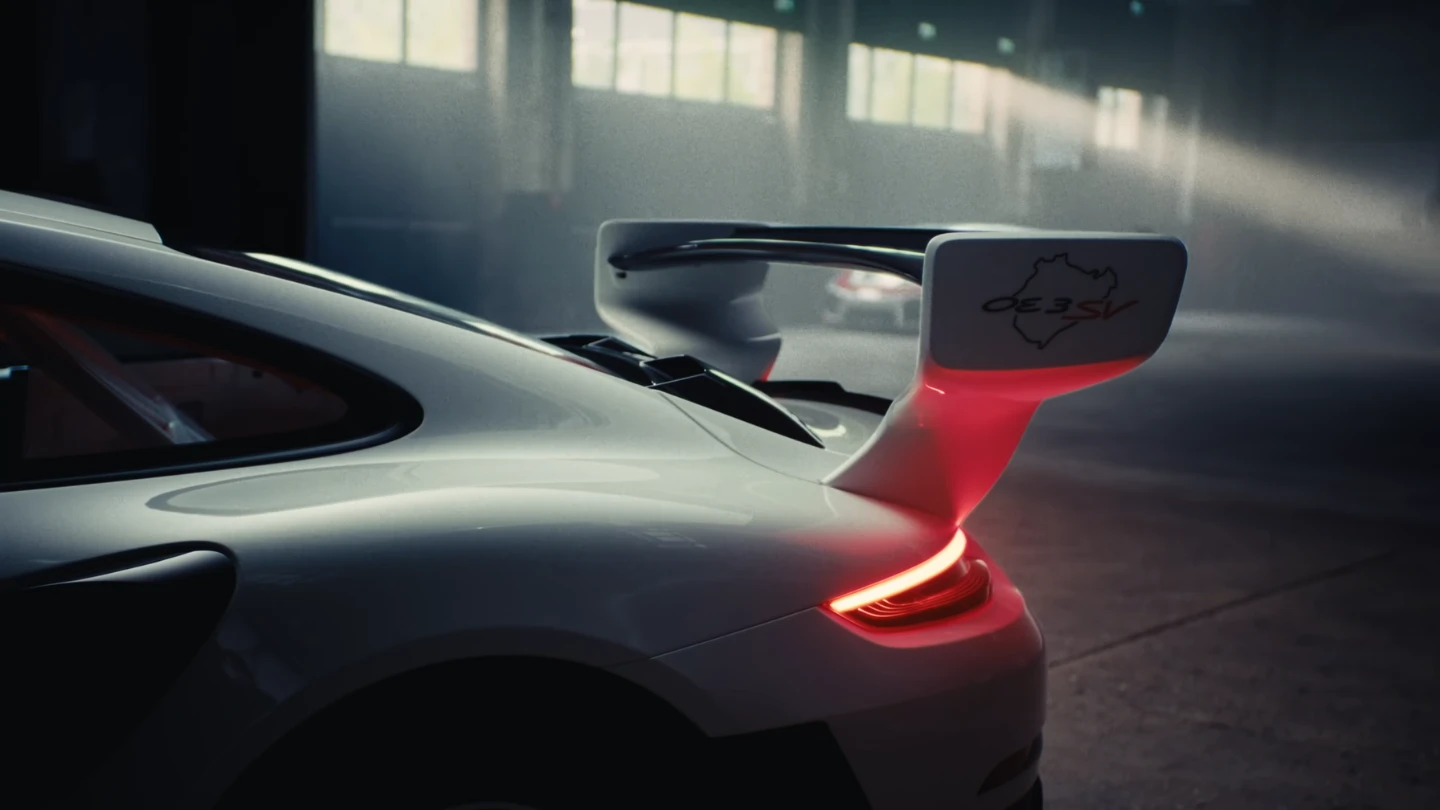
Porsche says it produces 554kg of downforce at the top speed of 340km/h. The custom Manthey Kit adds more aerodynamic hardware, including:
- A redesigned front bumper
- Small side canards
- A new underbody structure
- A different front splitter
- A redesigned rear diffuser
The rear wheels also use carbon-fibre aero discs to reduce drag, while the front wheels retain a conventional alloy design.
Porsche tested the wild conversion properly
Porsche didn’t simply build the bodywork and send the car out the door but built three test vehicles to validate its data. Engineers also used Computational Fluid Dynamics (CFD) to optimise the aerodynamics before putting the prototypes through multiple wind-tunnel and real-world road tests.
The development programme also included 50 laps of the Nürburgring Nordschleife.
That testing helped Porsche make the Flachbau RS road legal without losing the character of the 935-inspired design.
“Our aim was to reinterpret the iconic look of the 935 without compromising on safety, technology or road legality,” said Alexander Fabig, Porsche’s vice president for Product Offering and Individualisation.
Porsche went after every kilogram
Weight reduction formed another major part of the project. Porsche removed the rear seats and replaced individual wiring with simpler protective sheaths for newly installed wiring, and it also removed:
- The infotainment system
- Audio hardware
- Floor coverings in the cabin
- Floor coverings in the luggage area
- Sound-deadening materials throughout the car
The missing infotainment system made way for a leather-trimmed storage compartment. Porsche also used plenty of carbon fibre, and combined with all the above changes, it cut 31.6kg from the donor 911 GT2 RS.
Interior: The Moby Dick theme continues inside
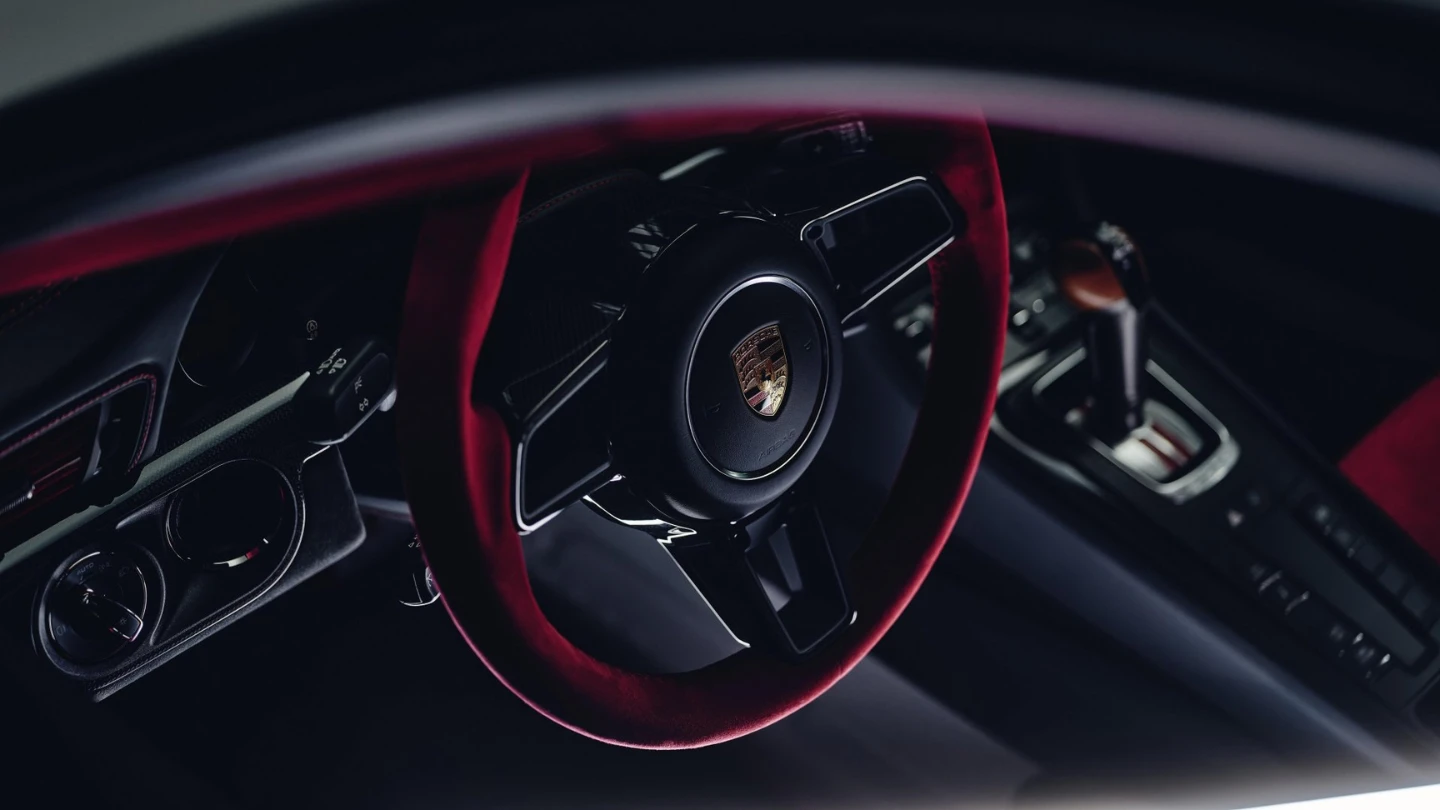
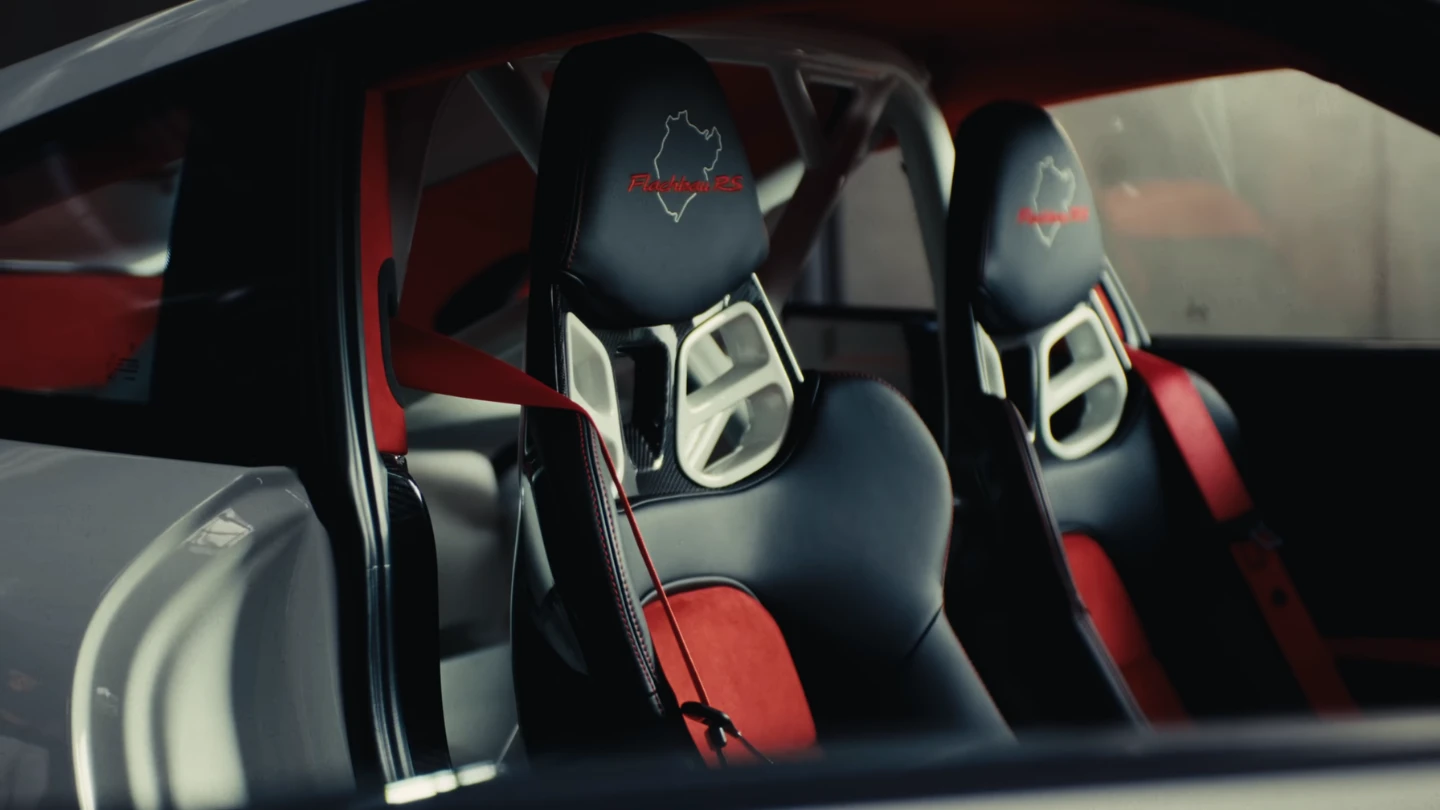
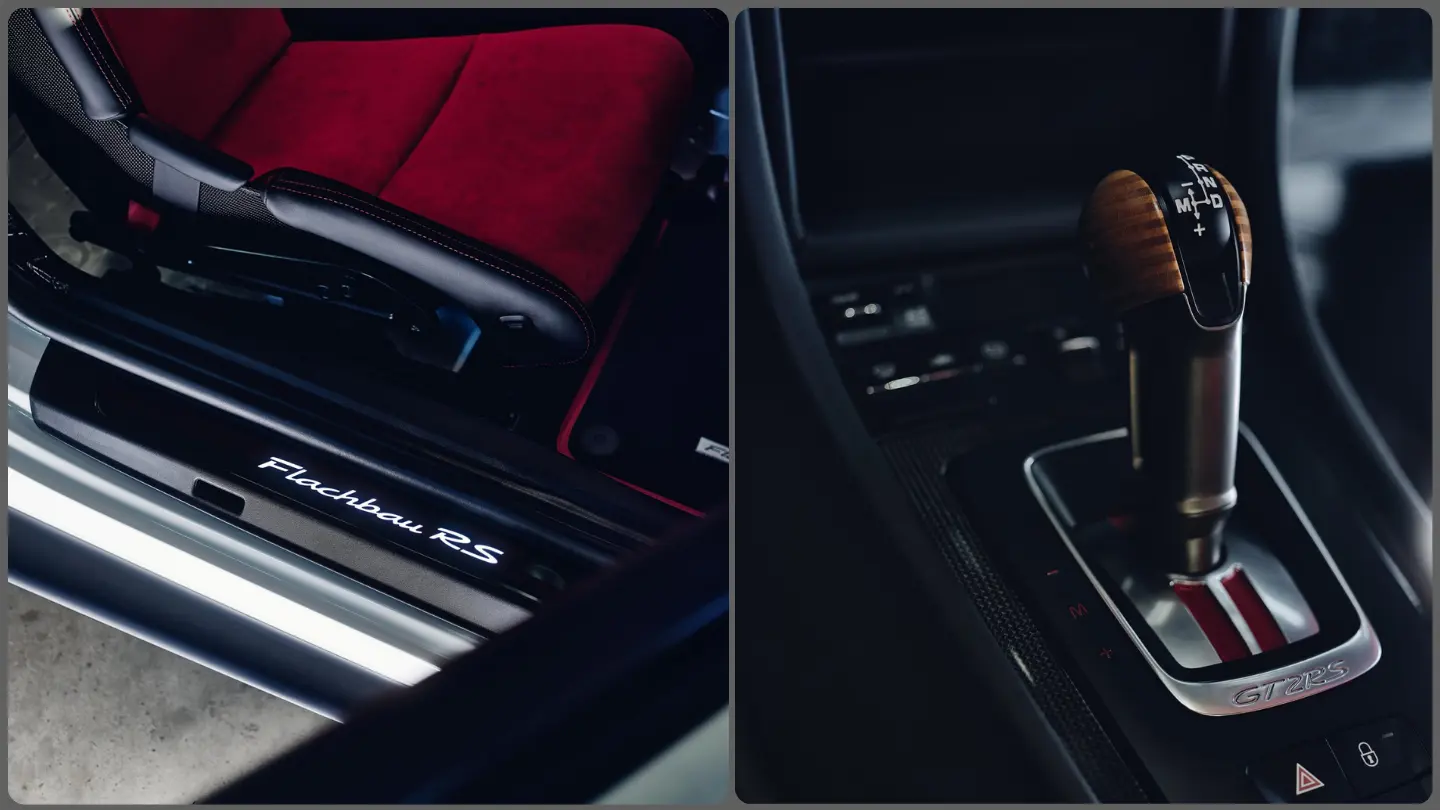
Porsche kept the donor car’s combination of red Alcantara, black leather and exposed carbon fibre in the cabin. The Flachbau RS branding appears on the door sills and seat headrests.
An outline of the Nordschleife sits behind the front seats, while a small gold-coloured dashboard plaque reads “Sonderwunsch” and “Factory One-Off 2026 | Flachbau RS”.

Comments
New Comment