




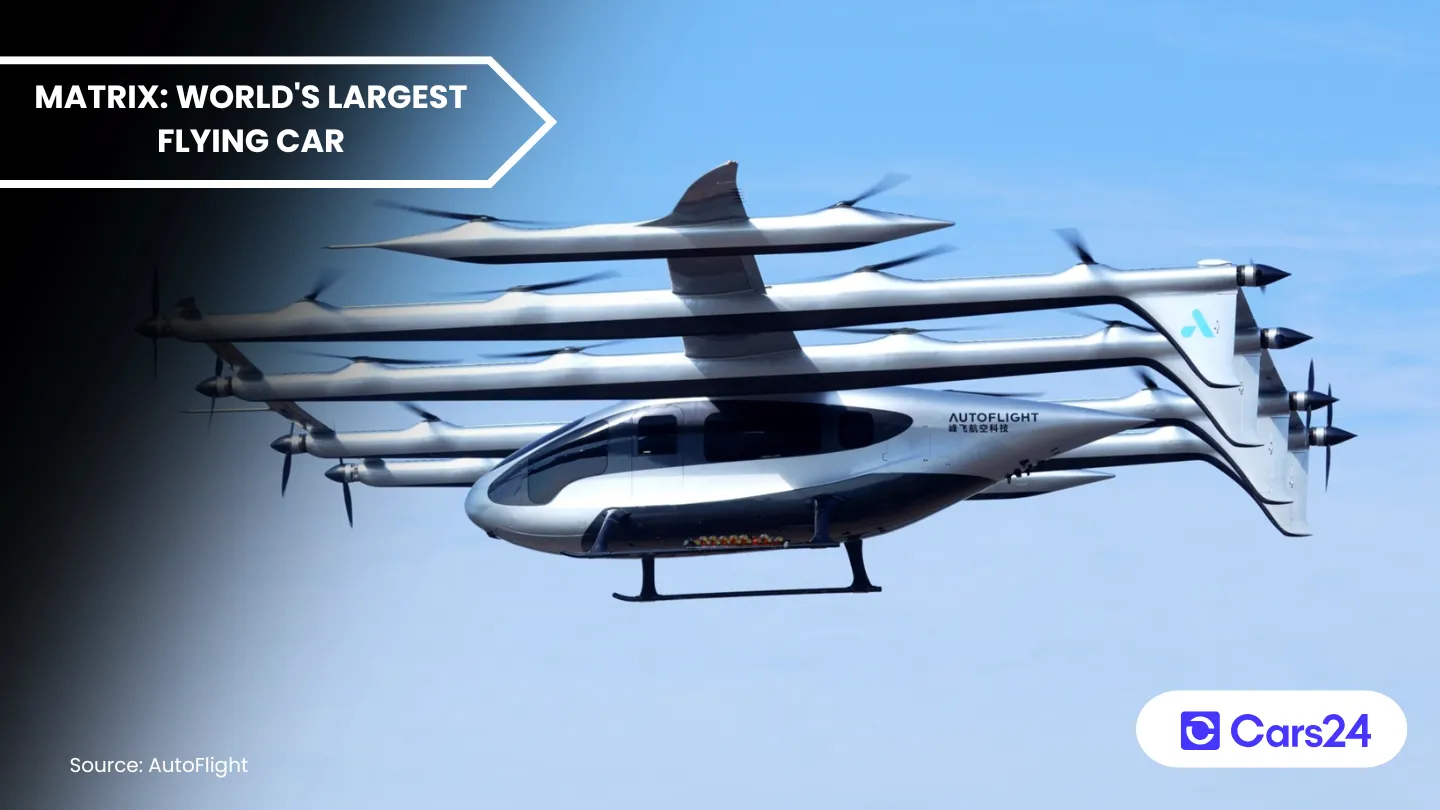
A Chinese aviation start-up, AutoFlight, has unveiled plans for what it claims is the world’s largest flying car, capable of carrying up to 10 people. The aircraft, known as Matrix, was revealed last week by AutoFlight, as China continues to push hard to lead the emerging “low-altitude economy”.
What is the Matrix aircraft?
Matrix is a 5-tonne electric vertical take-off and landing (eVTOL) aircraft, making it the largest of its kind to successfully fly. The Chinese aircraft made by AutoFlight comes in two versions of the passenger transport model and a heavy-duty logistics variant.
At full capacity, it can carry up to 10 passengers. The flying car is 17.1 metres long, 3.3 metres tall, and has a wingspan of 20 metres.
Most eVTOL aircraft developed so far weigh 1.5 to 3 tonnes and typically carry four to six passengers. Matrix represents a major step forward in size, payload and capability for the sector.
AutoFlight joins other Chinese players such as EHang and Aerofugia as the country accelerates the development and regulation of flying vehicles.
More: China bans electric-only door handles in new cars
Autoflight’s flying car progress so far
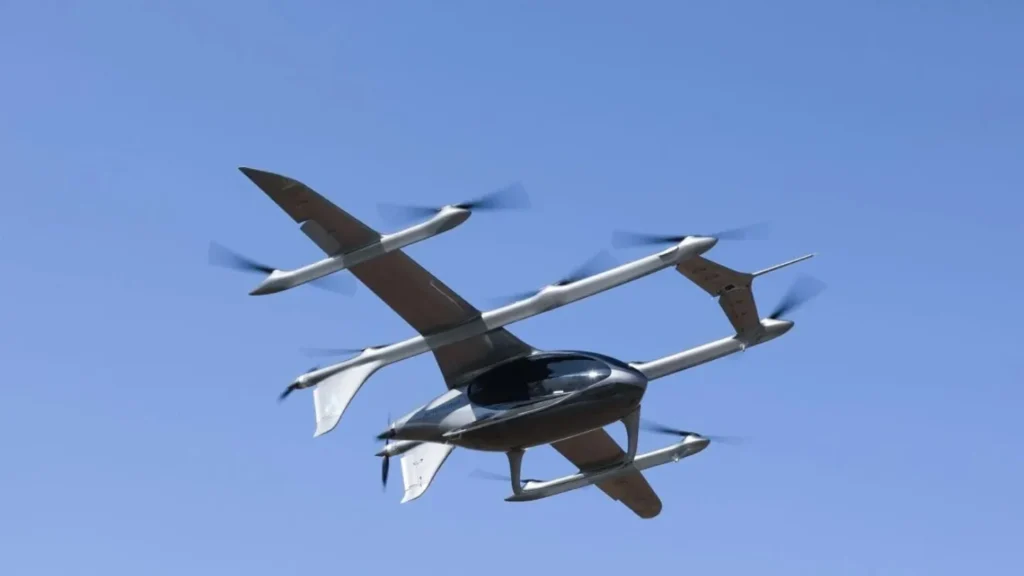
Founded in 2007, AutoFlight initially focused on cargo aircraft before expanding into passenger transport. AutoFlight’s earlier cargo model, CarryAll, recently completed the world’s first cross-city cargo eVTOL flight, flying 160km in one hour while carrying blueberry juice.
AutoFlight has already begun accepting orders, and according to Xie Jia, Senior VP of AutoFlight, the passenger aircraft now make up 70% of orders. The certification is still underway, and the approval for passenger flights is expected within 1-2 years.
Commercial eVTOL operations require design certification, production certification, and individual airworthiness approval. The company is backed by CATL, the world’s largest EV battery manufacturer.
Travel costs and the expansion plans for the Matrix
Xie believes future aerial trips could cost about the same as premium ride-hailing services, though he cautions that large-scale operations are still 3-5 years away. AutoFlight is also eyeing expansion into Northeast Asia, Southeast Asia, and the Middle East. He even added, “Our growth will be extremely rapid. We will be one of the most advanced players in the industry.”
More: Will Chinese cars dominate Australian roads by 2035?
What’s next for the flying cars in China?
China could see its first flying cars carrying paying passengers as early as 2026. Seven manufacturers are expected to begin aircraft deliveries before the end of this year.
To keep pace with rapid development, 10 Chinese government departments recently released new guidelines to regulate the industry.
The plan is to establish basic standards by 2027 and introduce more than 300 standards by 2030. These will cover aircraft design, infrastructure, air traffic management, safety oversight, and use cases.

Comments
New Comment