




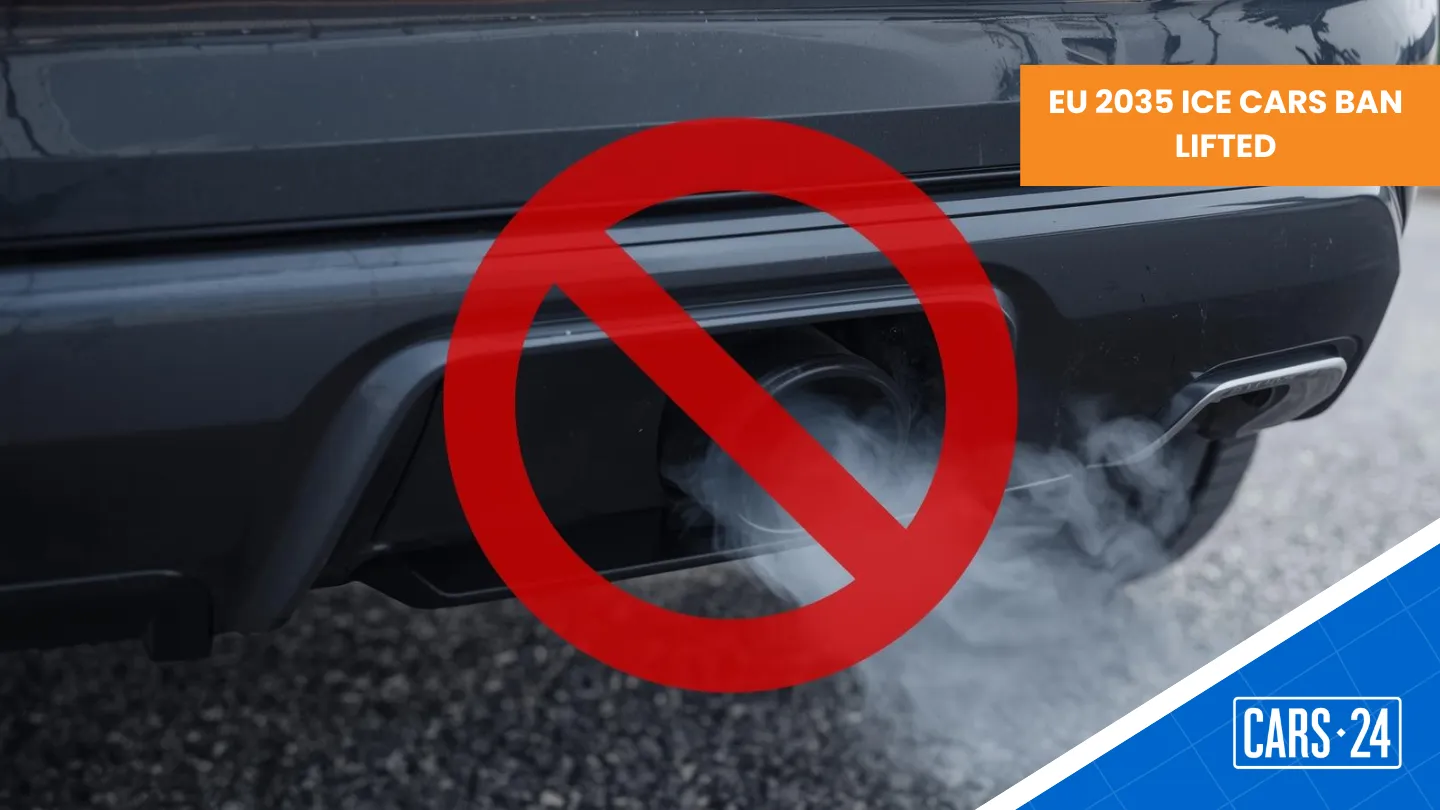
The European Union appears to have rolled back its plan to ban petrol and diesel vehicles by 2035, replacing the aggressive 100% zero-emission target with a 90% CO2 reduction target that permits manufacturers to continue producing combustion engine vehicles indefinitely if they meet stricter emissions standards.
The dramatic policy reversal, disclosed by German politician Manfred Weber, represents a fundamental retreat from what was positioned as Europe’s flagship climate initiative. The European Commission is expected to formally present the revised proposal in the coming weeks. In the months leading up to this announcement, numerous leading carmakers had also announced rollbacks on EV-only targets following extended periods of low demand for electric cars and rising competition from cut-price Chinese rivals.
About the EU’s original ban on petrol and diesel cars

The European Commission proposed sweeping CO2 standards for cars and vans in 2021, targeting the transport sector’s outsized contribution to EU greenhouse gas emissions (approx. 25% of the bloc’s total). The proposal advanced through the European Parliament and achieved final adoption in March 2023.
The policy stated that from 2035 onward, all new cars and vans sold in EU member states would be required to produce zero tailpipe CO2 emissions. This effectively prohibited sales of new vehicles powered by petrol, diesel, or conventional hybrid powertrains beyond that date stamp. Countries including the UK, Spain, France, Denmark, Belgium, and Finland adopted matching or more aggressive 2035 zero-emission targets.
However, seven member states, Germany, Italy, Poland, the Czech Republic, Hungary, Bulgaria, and Slovakia, expressed concerns about implementation feasibility. These countries conveyed their concerns on infrastructure deficits, low EV consumer demand, high manufacturing costs, supply chain vulnerabilities, and high energy prices. The political consensus supporting the ban had been fractured.
MORE: Australian government to close loopholes in NVES
Lifting the 2035 ban and changes in policy

Manfred Weber, leader of the European People’s Party (EPP) and the European Parliament’s largest political faction, disclosed to German newspaper Bild (also published by Reuters):
“For new registrations from 2035 onwards, a 90% reduction in CO2 emissions will now be mandatory for car manufacturers’ fleet targets, instead of 100%,” Weber told Bild. “There will also be no 100% target from 2040 onwards. This means that the technology ban on combustion engines is off the table.”
Weber’s statement followed discussions with European Commission President Ursula von der Leyen and represented the first official confirmation that the absolute ban would be abandoned. His public disclosure effectively confirmed what industry insiders had suspected for weeks.
Interestingly, Mandred Weber’s remarks stand in contrast to recent media reports from Europe that indicate the prohibition on new ICE vehicles would be prolonged by five years, until 2040. The Commission is expected to formally unveil the revised proposal in the coming weeks, though the specific timeline remains fluid.
EU policy-making involves 3 primary institutions with distinct but interconnected roles: The European Commission (executive branch), the European Parliament, and the Council of the EU.
Seven member states that represent roughly half of the EU’s population and major European automakers, including BMW, Mercedes-Benz, Volkswagen Group, Renault Group, and Stellantis, also actively lobbied against the 2035 deadline. The European carmakers also face the threat from the rising Chinese EV adoption. A Euronews piece even mentions a letter endorsed by Germany and Italy that reads, “We aim to maintain the strategic independence of the European automotive industry.”
There are also supporters of the original policy. Companies like Volvo and Polestar (presently owned by Chinese carmaker Geely) had publicly committed to phasing out combustion engines in line with the original 2035 ban, urging the EU to “stand firm” on climate commitments.
While we are waiting for an official announcement from the EU, it seems that what was an absolute fossil fuel prohibition has now become a flexible emissions target that manufacturers can meet through various technological pathways rather than through forced electrification. One of the leading areas of mobility sciences will be synthetic fuels that will enable existing combustion engine technologies to make significant reductions in harmful emissions.

Comments
New Comment