




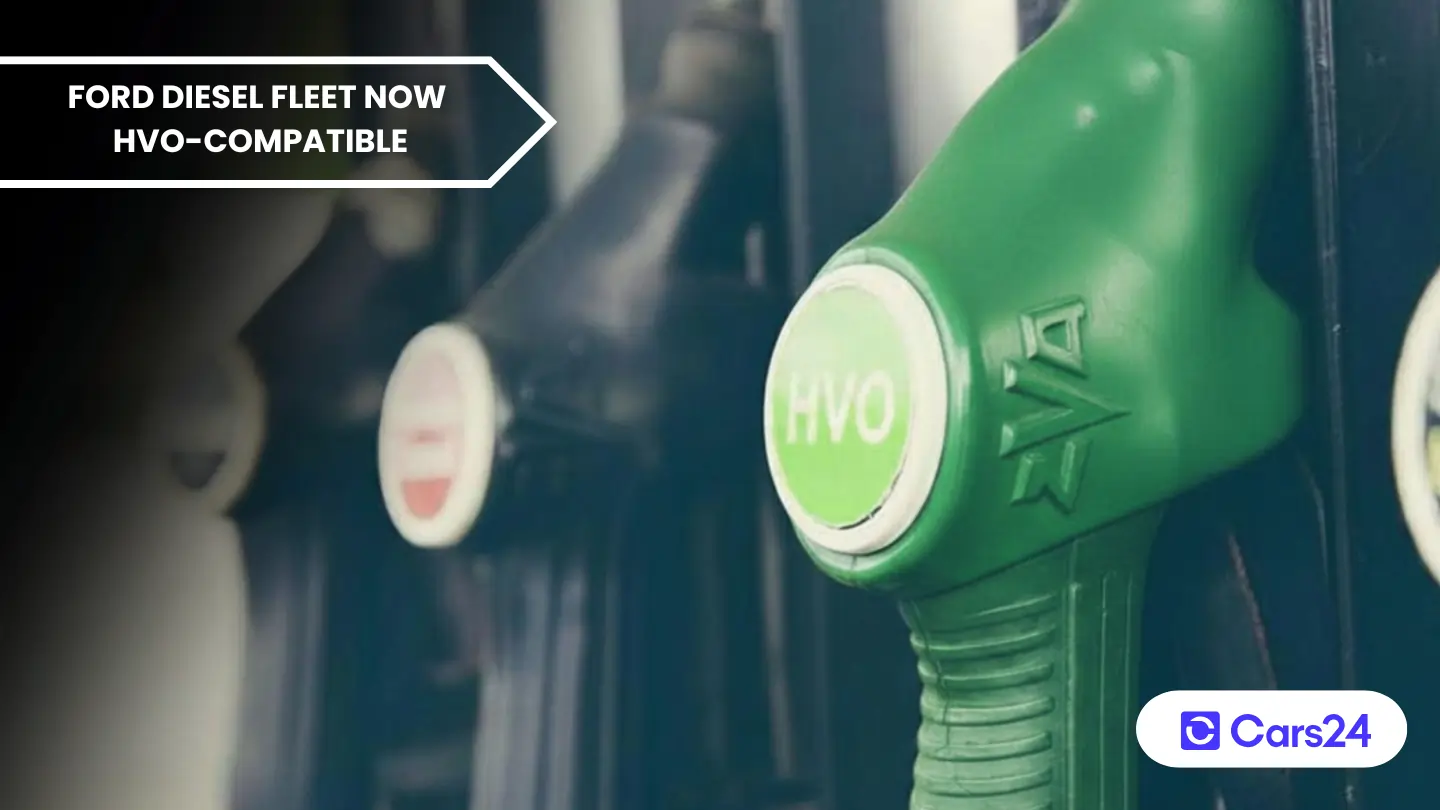
Ford has confirmed that its Australian diesel commercial vehicle line-up is compatible with Hydro-treated Vegetable Oil (HVO), a renewable diesel alternative that can be used without engine modifications in approved models.
The compatibility applies to vehicles including the Next-Gen Ranger, Everest, Transit and Transit Custom, as well as the Ranger Super Duty, depending on engine specification and emissions standard compliance.
HVO, also referred to as renewable diesel, is produced from waste-based feedstocks such as used cooking oil, animal fats and agricultural residues. It is classified as a paraffinic diesel meeting EN15940 standards and can be used either in pure form (HVO100) or blended with conventional diesel where permitted.
Read more: Ford Australia reveals From The Road online storytelling hub
Interest in drop-in fuels alongside electrification
Fleet operators in Australia are increasingly exploring alternative pathways to reduce emissions as fuel costs fluctuate and regulatory pressure intensifies. While electrification is expanding across light commercial segments, internal combustion platforms continue to dominate heavier-duty and remote-use applications.
Renewable diesel such as HVO is being assessed by some operators as a “drop-in” option that does not require changes to vehicles or refuelling infrastructure, provided supply is available through onsite or bulk fuel systems.
Read more: Ford ute line-up in Australia in 2026
Performance and technical differences
Unlike first-generation biodiesel (FAME), HVO is a synthetic hydrocarbon fuel with higher chemical stability. It is generally described as having improved cold-start behaviour, lower particulate emissions and longer storage life.
However, availability remains limited in Australia compared with conventional diesel, with distribution largely confined to industrial users, closed fleets and trial projects rather than public retail networks.
Read more: Ford Australia announces new President and CEO
Melbourne Airport trial transitions to full use
Melbourne Airport is among the early adopters of HVO in Australia, having trialled the fuel in a fleet of Ford Rangers, Everests and Transit vans before transitioning to full use across its Ford diesel vehicles.
The airport has also developed onsite storage infrastructure, including a 30,000-litre HVO tank and dispensing system, to support fleet refuelling operations.
According to airport fleet management, the shift was driven by the ability to reduce emissions without replacing existing vehicles or installing large-scale electric charging infrastructure. The organisation also noted operational advantages for intermittently used equipment, where fuel stability and storage life are operational considerations.
Read more: Ford Transit Custom recalled over digital owner manual error
Cost and supply constraints remain
HVO typically carries a cost premium over conventional diesel, with reported differences ranging from approximately $0.50 to $0.70 per litre depending on supply arrangement and location.
Industry uptake is also shaped by feedstock availability and production capacity, which influence both pricing and regional supply consistency.
Read more: Ford Australia van line-up explained
Broader fleet decarbonisation context
Renewable diesel is increasingly being discussed alongside electrification and hybridisation as part of broader fleet decarbonisation strategies. However, adoption pathways vary significantly depending on duty cycle, infrastructure access and total cost of ownership considerations.
While Ford highlights HVO compatibility across parts of its diesel range, wider availability in the Australian market remains limited, and its role is currently concentrated in controlled fleet environments rather than general consumer fuel supply.

Comments
New Comment