




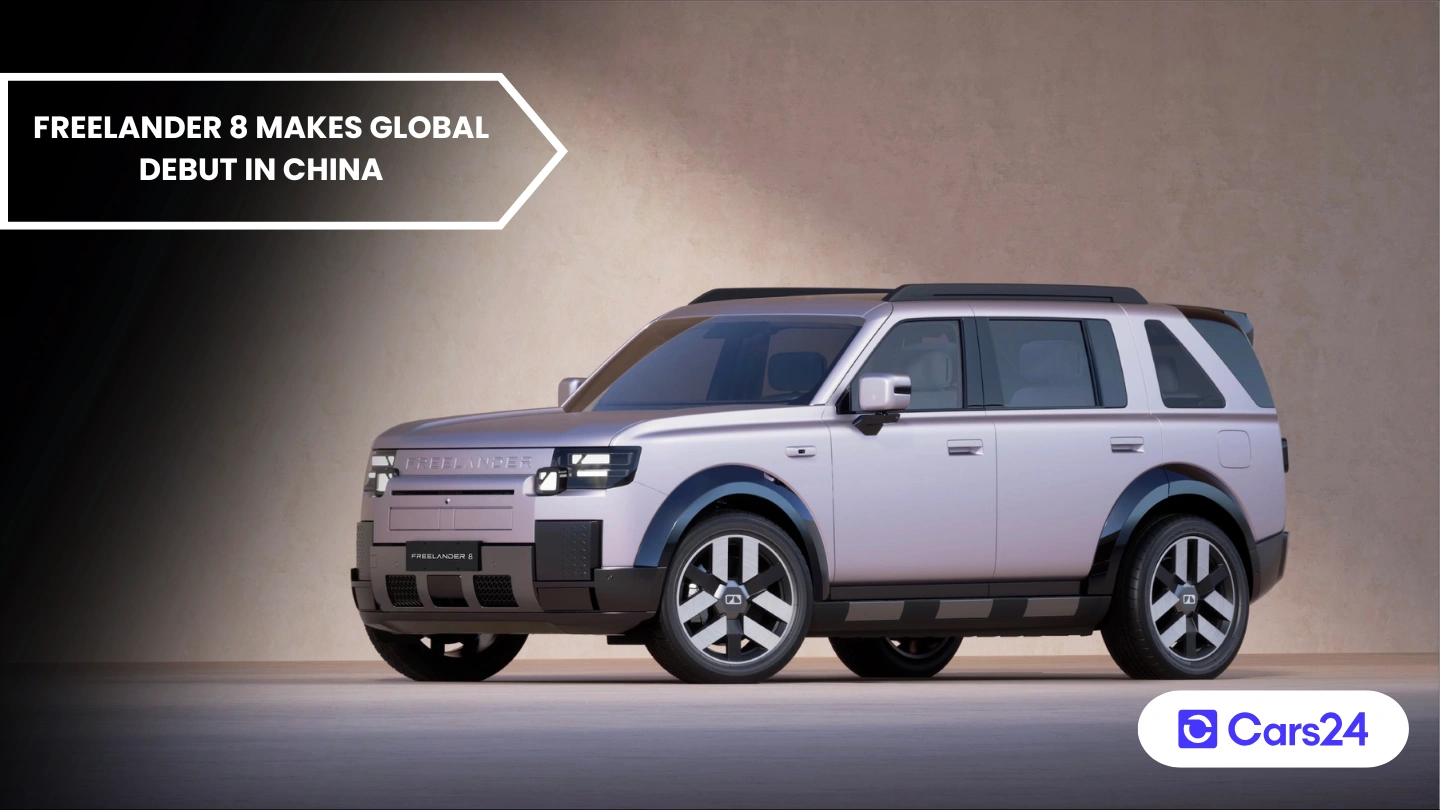
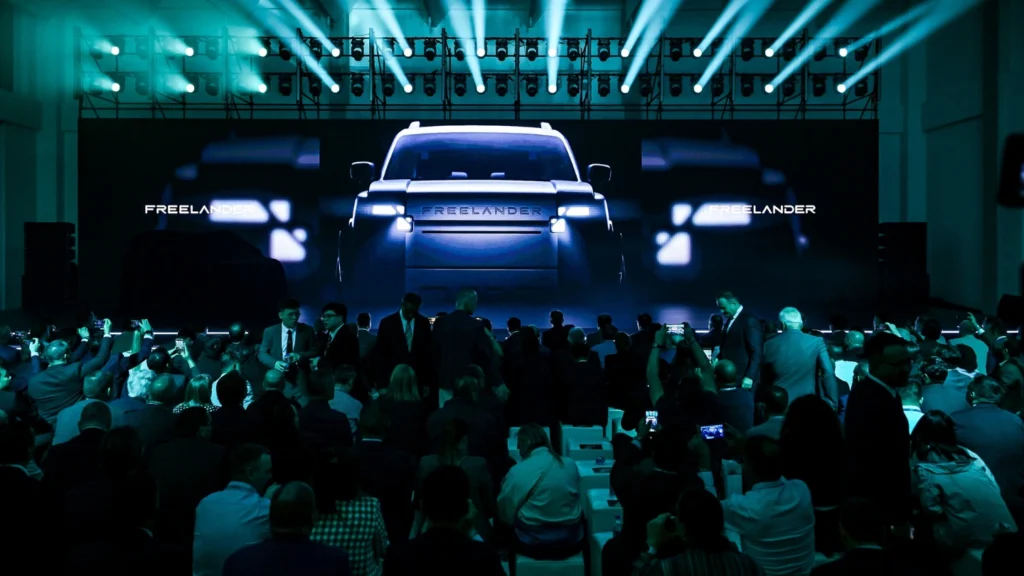
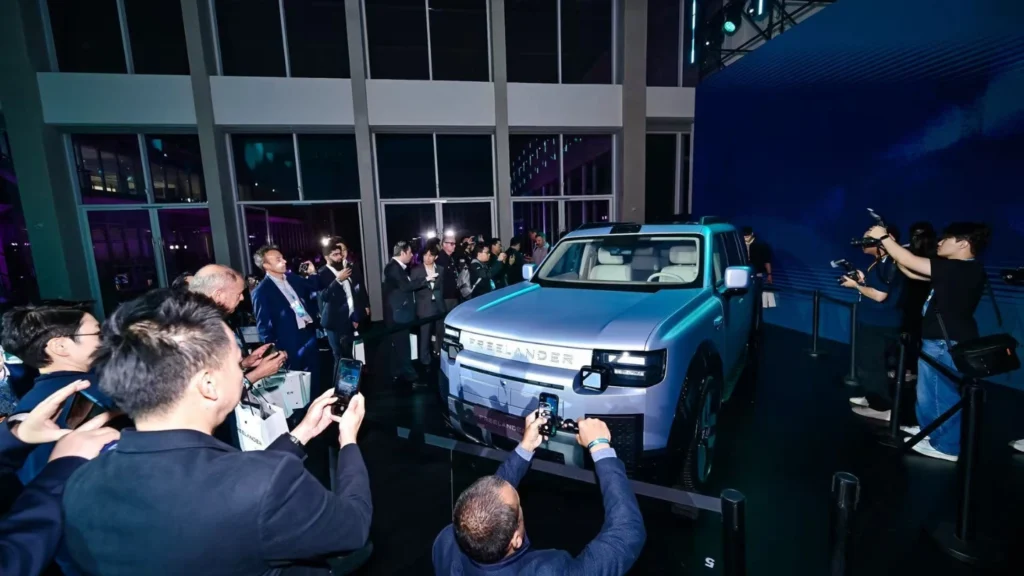
The Freelander name is back, and it’s making a serious play for the premium SUV market. The Freelander 8 has broken cover in production-intent form at a global reveal event in China, giving the clearest picture yet of what the revived British-heritage brand has in store, and Australian buyers are already on the radar, with local testing confirmed and a 2027 arrival date locked in.
Read more: Chery adds another brand to Australian lineup in 2027
A new brand built on familiar ground
Freelander is a joint venture between Chery and Jaguar Land Rover, with production taking place at the Chery Jaguar Land Rover plant in Changshu, north-west of Shanghai. The partnership combines Chery’s advanced Chinese technology and manufacturing scale with JLR’s expertise in world-class design and premium positioning. Freelander sits outside both parent brands’ regular line-ups as its own standalone marque, with six models planned across three years, all focused on hybrid and electric power.
Heading up the design is Phil Simmons, the man behind two of Land Rover’s most celebrated modern SUVs, the Range Rover Velar and the Land Rover Defender. His brief with the Freelander 8 was clear: honour the original nameplate’s character while making it genuinely relevant for today’s buyer.
“The opportunity with Freelander was to respect its heritage while making it relevant for modern customers,” said Simmons. “That means clean, confident design paired with genuinely useful technology.”
Read more: Transformable Chery Tiggo V SUV teased before Beijing reveal
Bigger than it looks, and bigger than the competition
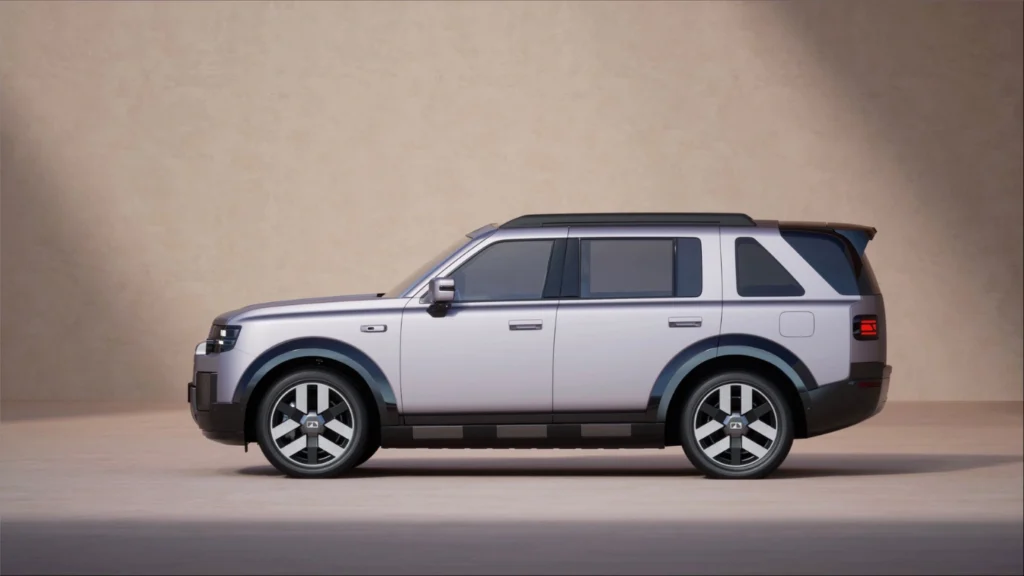
Don’t let the proportions fool you. The Freelander 8 stretches to 5.1 metres in length, longer than both a Toyota Prado and a Land Rover Defender 110, and seats six passengers across three rows. For Australian families who need genuine three-row practicality without stepping into van territory, that puts the Freelander 8 in serious contention against some of the segment’s most established names.
Design: British DNA, Modern execution
The Freelander 8 keeps several elements that made the original model recognisable, the distinctive triangular rear-quarter window makes a return as a clear nod to the late-1990s original, while geometric headlights reference the facelifted 2004 version. The overall package is sharper and more technical than its predecessor.
A “castle body” design theme runs through the exterior, pairing a solid, planted lower body with a lighter upper cabin structure. The result is an SUV that aims to look equally at home on a Melbourne city street as it does on a dirt track outside Broken Hill. A squared-off lighting signature and stronger road stance bring the overall look firmly into 2026.
Read more: Jaguar Type 00 designer Gerry McGovern reportedly marched from JLR
Inside: Big screen, practical focus
The cabin centres on a slim display stretching across the full width of the dashboard, paired with a large central infotainment touchscreen and physical switches below, a sensible layout that keeps the tech front and centre without abandoning tactile controls entirely.
A Qualcomm Snapdragon 8295 processor powers the screen and also runs the car’s safety systems, including lane-centring assist and an automatic parking function that operates via a phone app. Second-row passengers get zero-gravity seats, the kind of feature you’d typically expect in vehicles costing significantly more.
Three ways to power it
Freelander will offer the 8 in three powertrain configurations: pure battery-electric, plug-in hybrid, and a range-extender (REEV) setup, where the petrol engine acts solely as a generator to keep the electric motors charged and driving the wheels. The REEV variant uses a new all-terrain-specific battery pack with underbody protection, and Freelander claims it supports charging speeds of up to 360kW. That’s a fast-charging figure that rivals some of the quickest-charging EVs on the market today.
Off-road credentials that count in Australia
For Australian buyers, many of whom need an SUV that genuinely performs away from the tarmac, the Freelander 8’s Intelligent All-Terrain System (i-ATS) is the feature most worth watching. Functioning similarly in concept to Land Rover’s well-regarded Terrain Response system, i-ATS automatically adapts to changing surface conditions and offers nine terrain modes in real time.
It works alongside an electronic limited-slip differential, dual-chamber air suspension, and a virtual centre locking function, in place of traditional locking differentials. The REEV variant’s all-terrain battery pack and underbody protection add an extra layer of capability for serious off-road use. It’s a hardware and software package that should handle everything from the school run to a weekend run up to the Snowy Mountains or along the Great Ocean Road’s rougher stretches.
Coming to Australia in 2027, with local testing already planned
Freelander has confirmed 1,000 prototypes will be deployed globally ahead of the production launch, with Australia explicitly included in that testing program. The global launch sequence starts in the Middle East, with Australia to follow in 2027.
That local testing commitment matters. It signals Freelander is taking Australian conditions, corrugated outback roads, extreme heat, long highway stretches, seriously as part of its development program, not treating our market as an afterthought.
Specific details on Australian pricing and trim levels are yet to be confirmed, but given Chery’s established and growing presence in Australia, with the Freelander 8 sitting alongside Jaecoo, Omoda, and Lepas under the Chery Australia umbrella, a well-supported local launch looks likely.
Australian car buyers shopping in the premium large SUV space, currently dominated by the Toyota Prado, Land Rover Defender, and Kia Sorento, will have a compelling new option to consider when the Freelander 8 touches down next year.

Comments
New Comment