




Key highlights
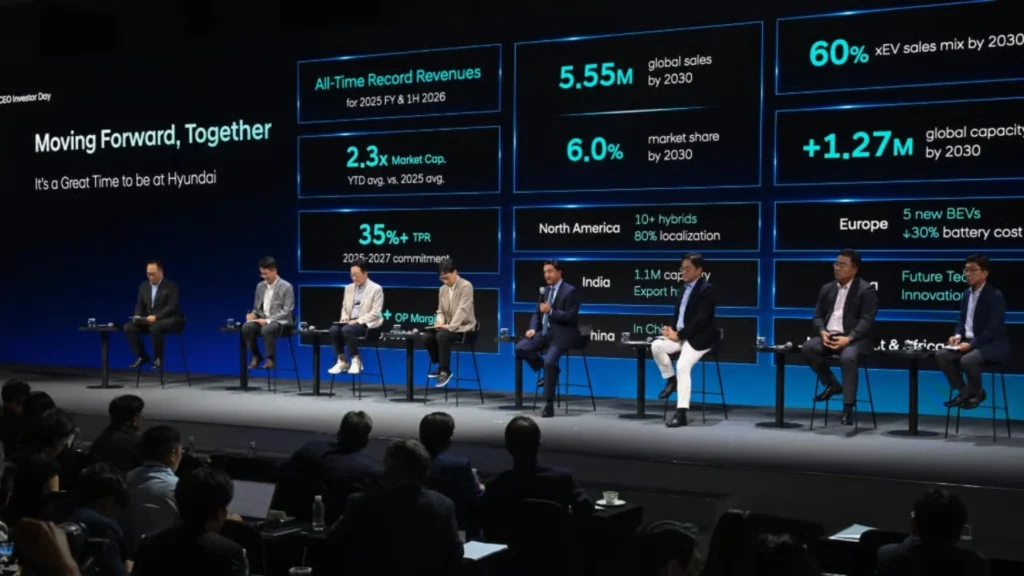
- New Hyundai EV batteries from 2027 could cut battery costs by around 30%.
- Hyundai’s next-generation battery management system is targeting a 20% increase in battery life by 2028.
- Level 2+ autonomous driving technology is planned for Hyundai models from 2028.
Hyundai is preparing a major overhaul of its electric vehicle technology, with new battery cells set to cut costs by around 30 per cent while offering more energy than similarly sized LFP batteries. The battery developments were outlined as part of Hyundai Motor Group’s latest investor day, where the company also detailed plans for new autonomous driving technology, expanded production capacity and a broader range of electrified vehicles.
The first major change will arrive from 2027, when Hyundai plans to introduce new mid-nickel NCM battery cells across its EV range.
According to Hyundai, the new cells will reduce battery costs by approximately 30 per cent while maintaining what it describes as optimal performance under real-world driving conditions. The company also claims the cells will provide around 30 per cent more energy than an equivalent-sized LFP battery.
For an EV, that combination is significant. Higher energy density can mean more usable range without adding battery mass, while lower cell costs give Hyundai more scope to reduce vehicle prices or put larger batteries into the same-sized cars.
Hyundai is also working on faster-charging battery technology
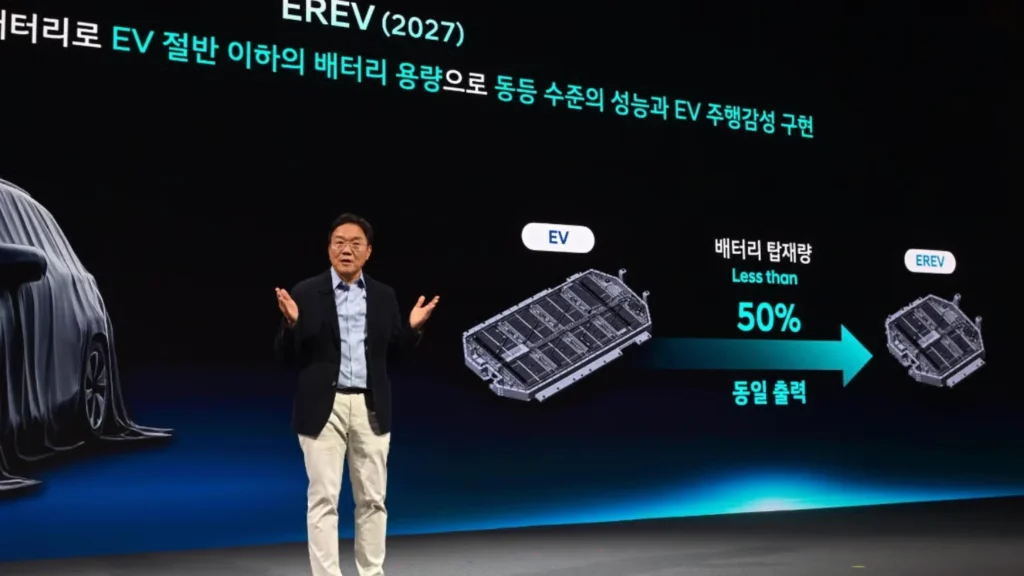
The mid-nickel cells are not the only battery technology Hyundai is developing. The company says it has developed its own battery cells that deliver more than twice the output of the high-nickel cells used previously, while cutting charging times by around 40 per cent.
Hyundai says this technology is expected to debut in an upcoming Santa Fe or Genesis range-extender vehicle, although it has not yet confirmed which model will receive it first. That is a slightly different approach to a conventional battery EV. Range-extender vehicles use a combustion engine as a generator to provide additional electricity, potentially allowing the manufacturer to use a smaller battery while retaining long-distance capability. Hyundai has not yet provided full technical details of the system.
EV batteries could last longer
Hyundai is also targeting improvements in battery longevity. The company plans to upgrade its cloud-based battery management system by 2028, with the technology expected to increase battery life by an average of 20 per cent.
Battery management systems monitor factors such as temperature, charging and discharging behaviour and battery state of health. Improving that software can help control how the battery is used and potentially reduce degradation over time.
For owners, the benefit is straightforward: a battery that retains its capacity for longer should remain more useful further into the vehicle’s life.
Hyundai targets Level 2+ driving technology from 2028
Hyundai’s technology push extends beyond electrification. The company plans to deploy its Atria AI autonomous driving technology by the end of 2026, with the system eventually forming the basis of Hyundai’s Level 2+ driver-assistance technology. The first Level 2+ system is planned for 2028.
Hyundai says Atria AI will progressively be introduced across mass-produced vehicles, with the longer-term objective of developing autonomous driving capabilities ranging from Level 2+ through to Level 4.
The company is also standardising its sensor architecture around Nvidia technology. Data collected by Hyundai, Kia, 42dot and Motional will be integrated using a common architecture, allowing information gathered from one part of the group to contribute to the development of its wider autonomous driving systems.
Hyundai is already involved in robotaxi development through Motional, while its partnership with Waymo will see the first Ioniq 5 robotaxis delivered in the fourth quarter of 2026.
Hyundai is adding 1.27 million units of production capacity
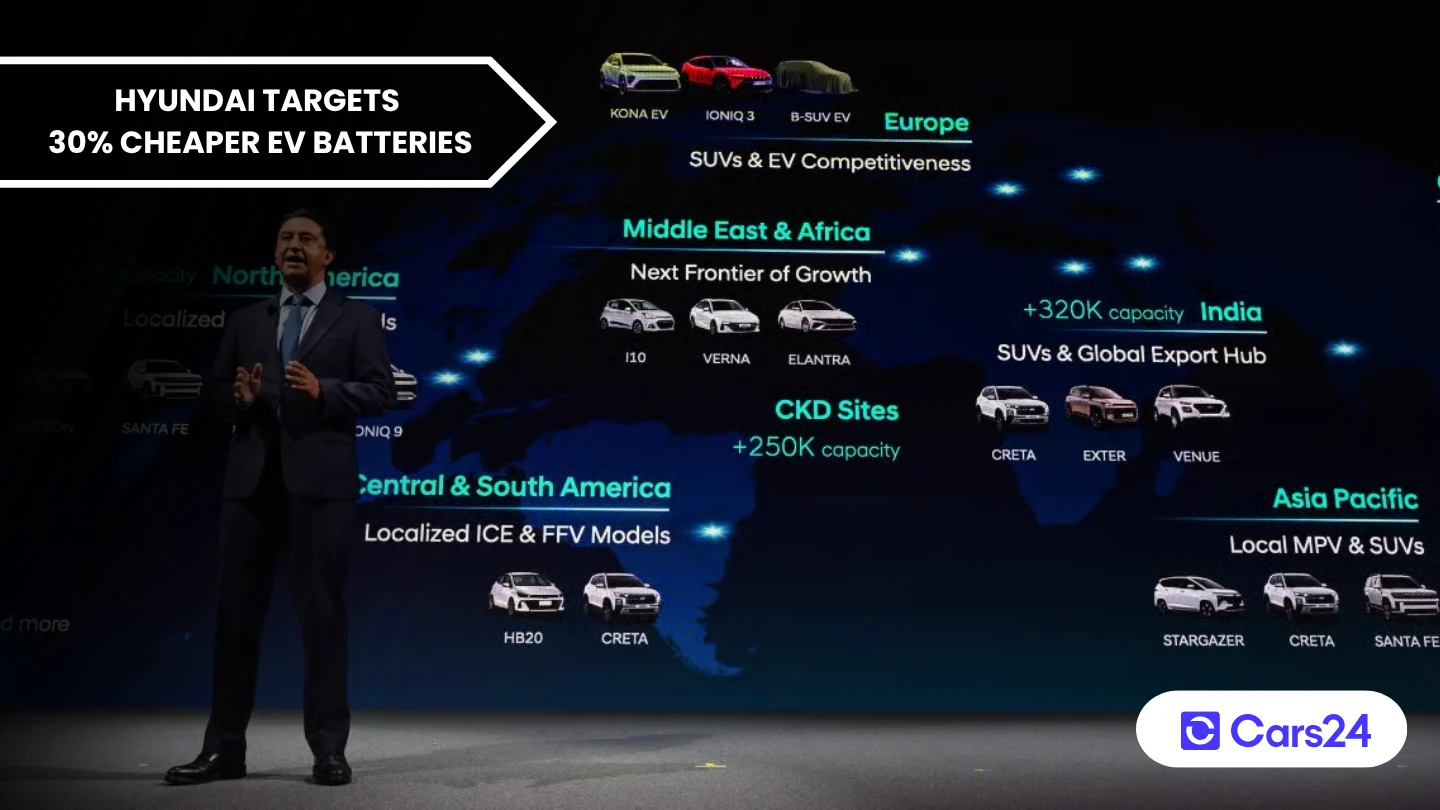
The technology investment is being matched by an expansion of Hyundai’s manufacturing footprint. The company plans to add 1.27 million units of global production capacity, with North American facilities accounting for 500,000 additional vehicles and Indian operations adding another 320,000.
Korean production will increase by 200,000 units, while CKD facilities are expected to add a further 250,000 units. The expansion supports Hyundai’s broader plan to launch more than 100 new vehicles by 2030, including EVs and hybrids.
Hyundai has also confirmed plans for more than 10 hybrid models in North America by 2030, underlining that its future powertrain strategy will not be exclusively battery-electric.
Amazon technology is also being expanded
Hyundai’s relationship with Amazon is being extended as part of the company’s broader connected-car strategy. Listings on Amazon Autos are expected to expand beyond the US from 2027, while Alexa built-in will be rolled out across Hyundai models before being introduced to Genesis vehicles.
Hyundai is also using Amazon Web Services to expand its cloud and AI capabilities. Taken together, the announcements point to Hyundai putting considerably more engineering firepower behind its next generation of vehicles. The immediate focus is not simply on adding more EVs to the range, but on improving the underlying technology, from battery chemistry and charging to battery management, driver assistance and connected services.
The first of the new battery technologies is expected to reach production from 2027, with the more advanced battery management and autonomous driving systems following in 2028.

Comments
New Comment