




Key highlights:
- Hyundai is developing AI systems for future North American vehicles
- Technology could estimate payload, trailer weight and tyre grip
- Machine learning could help predict mechanical failures during demanding use
Hyundai is developing artificial intelligence technology that could make its future trucks and SUVs smarter when towing heavy loads or tackling difficult off-road terrain. A new engineering job listing has revealed some of the company’s plans, including systems that could estimate vehicle loads, adapt to changing traction and predict mechanical failures.
The technology remains under development, but it could eventually help Hyundai, Kia and Genesis vehicles respond to demanding driving conditions without relying on additional dedicated sensors. The company has not confirmed any production plans with these AI features yet.
Hyundai seeks AI Control Systems Engineer
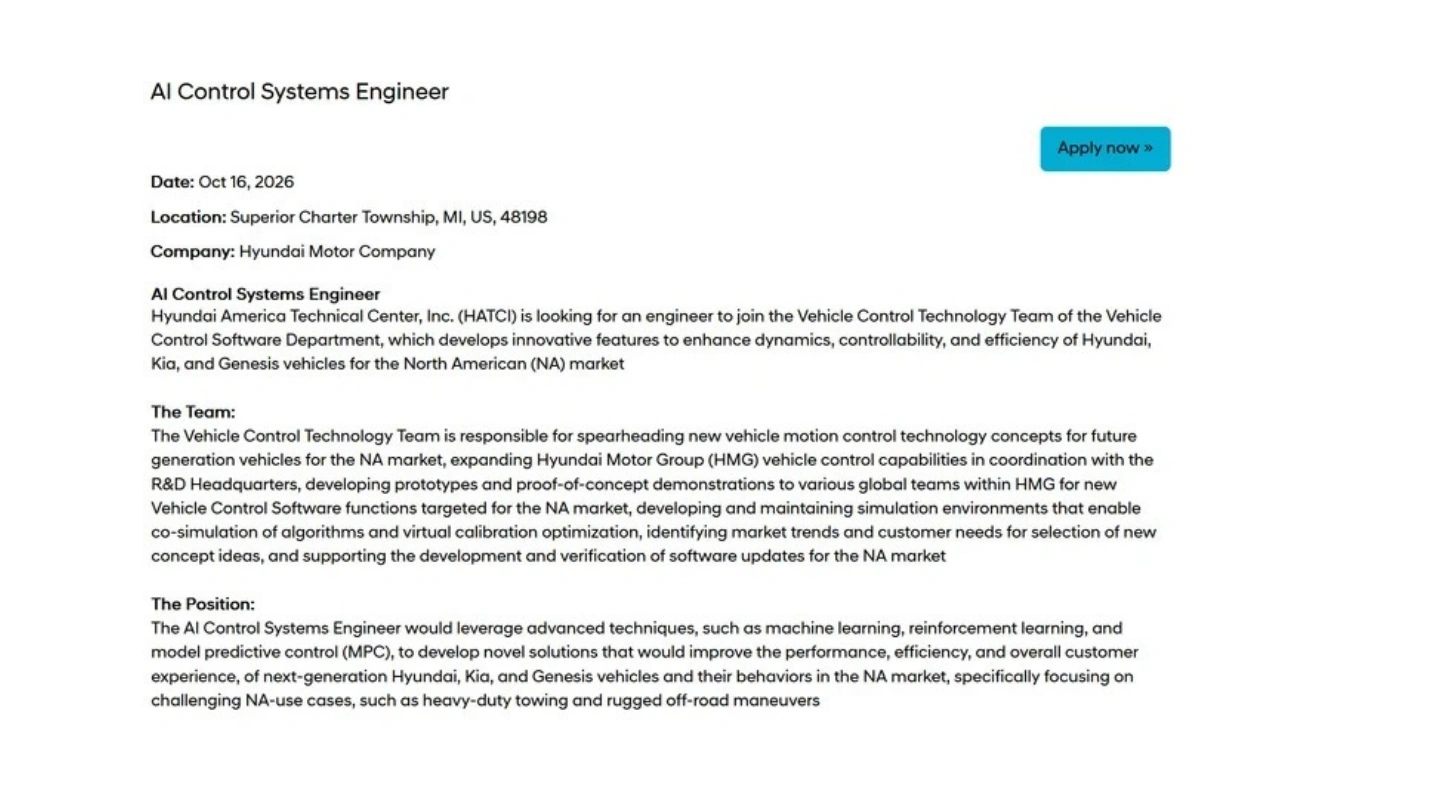
Hyundai has advertised an AI Control Systems Engineer position at its Hyundai America Technical Centre in Superior Township, Michigan. The role focuses on next-generation Hyundai, Kia and Genesis vehicles developed for the North American market.
The successful candidate will use several advanced engineering methods to improve vehicle performance: Machine learning, reinforcement learning, and model predictive control.
While these terms may sound technical, the job listing gives a clearer picture of the intended applications towards the end.
Hyundai wants the engineer to work on heavy-duty towing and rugged off-roading, and that combination could lead to some interesting developments in future trucks and SUVs.
AI could estimate loads and available grip
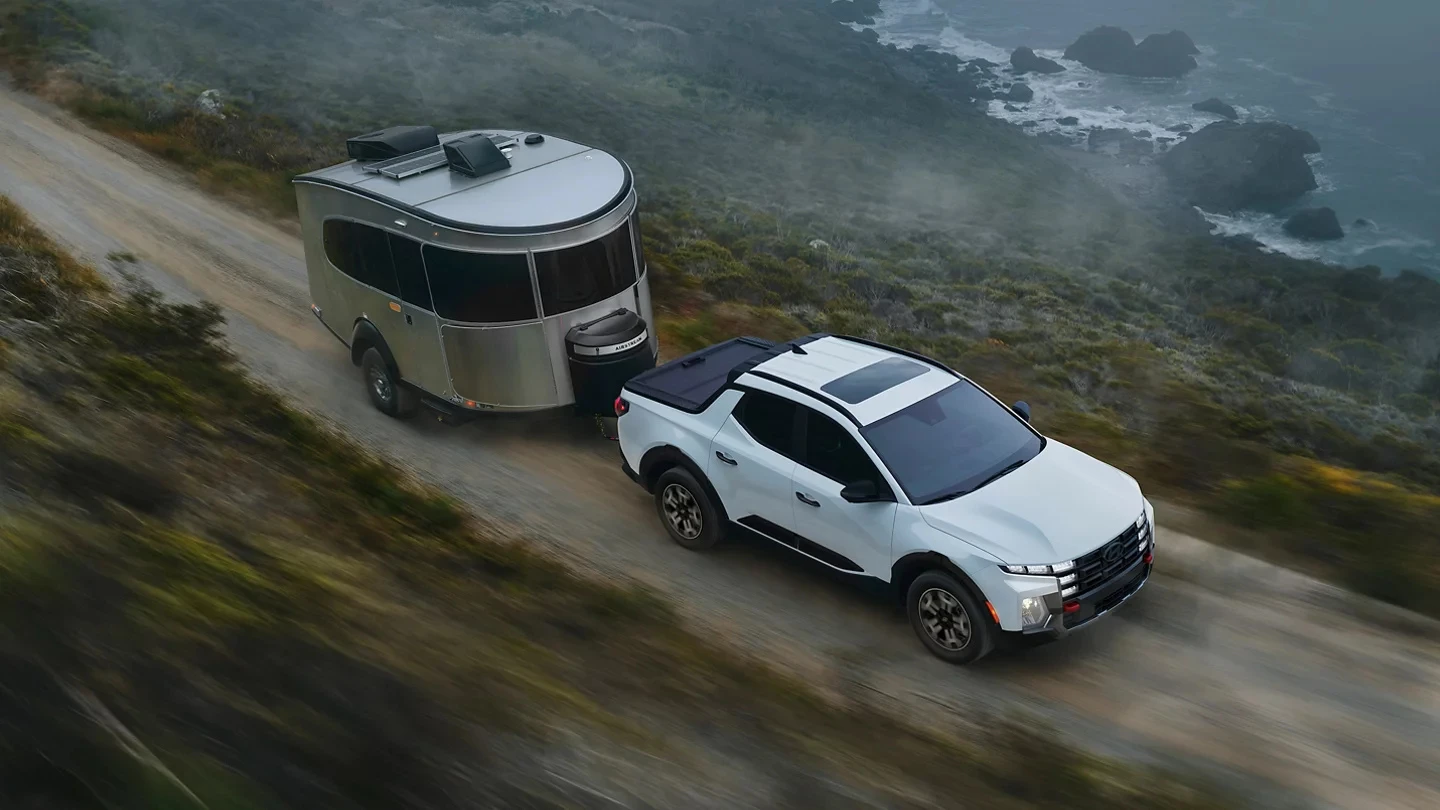
Hyundai wants the technology to estimate three key factors without requiring dedicated sensors for each one:
- Vehicle payload: How much weight the vehicle is carrying
- Trailer mass: How much weight the vehicle is towing
- Tyre-road friction: How much grip the tyres have on the surface
If Hyundai can develop the system successfully, it could allow vehicles to adjust their behaviour according to the conditions they detect. For example, a truck or SUV could automatically adapt its powertrain, braking and stability control to suit the load it is carrying or towing, without requiring the driver to make those adjustments.
The same technology could help a vehicle respond to changing traction; by estimating available tyre grip, it could adapt to loose gravel, mud or slippery surfaces while driving. This could make towing and off-road driving more responsive to changing conditions.
Also read: Hyundai keeps hydrogen cars alive in AU as Nexo future remains uncertain
Intelligent towing assist and terrain adaptation
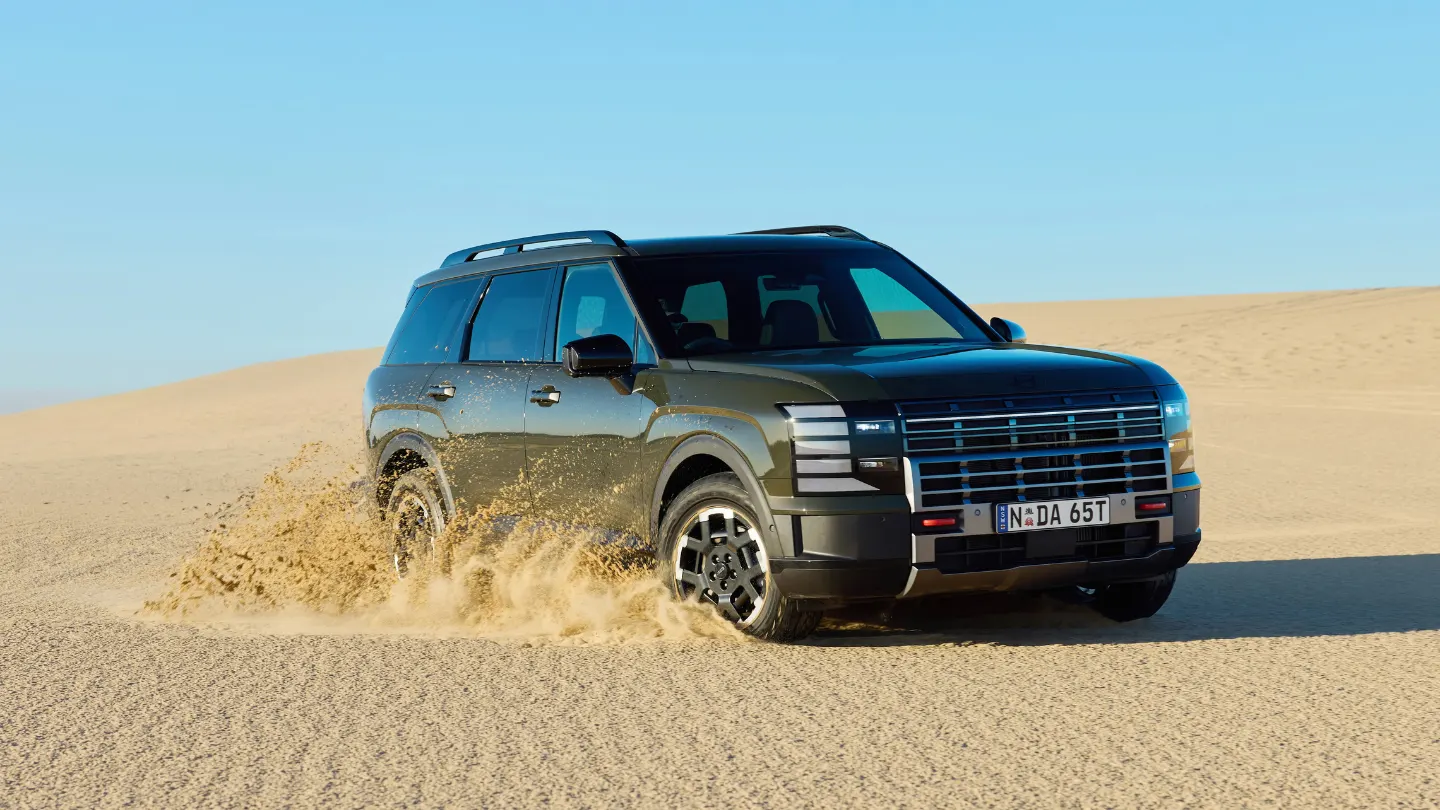
The job listing also mentions two technologies: intelligent towing assist and terrain adaptation. But Hyundai does not directly confirm whether these systems will use the AI software being developed for the engineering role.
Their intended functions suggest a possible connection. Both technologies point towards vehicles that can recognise changing conditions and adjust their behaviour accordingly.
Intelligent towing assist could help a vehicle respond to different towing demands, while terrain adaptation suggests adjustments to suit different off-road surfaces; Hyundai has not yet detailed how either system will work.
AI could predict mechanical failures
The job listing reveals another potentially significant application: using machine learning algorithms to anticipate component failures. Hyundai specifically links this development to situations where vehicles are towing or travelling off-road.
If the technology proves reliable and accurate enough for production, future Hyundai vehicles could warn drivers about developing mechanical problems before they become serious.
Potential examples include an axle approaching failure, a transmission getting too hot or brakes beginning to fade. Rather than waiting for a component to fail or a problem to become obvious, the system could potentially identify warning signs and alert the driver earlier.
Hyundai has not confirmed when these technologies might reach production vehicles or which models will receive them. However, the job listing provides an early look at how the company could use AI in its future trucks and SUVs.

Comments
New Comment