





Key highlights
- The JMC Vigus is expected to launch in Australia in November 2026, with customer deliveries planned before the end of the year.
- Power comes from a 123kW 2.5-litre turbo-diesel engine paired with an eight-speed automatic and four-wheel drive.
- Australian pricing is yet to be confirmed, but the Vigus is expected to undercut the LDV T60 and GWM Cannon.
The JMC Vigus is set to return to Australia in November 2026, bringing another Chinese-built dual-cab ute into an increasingly crowded market. It will target buyers looking for a work vehicle without paying for the extra equipment and technology found in more expensive rivals.
JMC previously had a brief presence in Australia around a decade ago. Its return will be handled by independent distributor Jumac, led by Danny Lenartic, who was involved in bringing MG to Australia and later worked with JAC.
The company plans to open its first dealerships and begin taking orders in November 2026, with customer deliveries expected by the end of the year, subject to any delays.
The Vigus will be the first model introduced, with the more expensive JMC Grand Avenue ute also under consideration for a future Australian launch. The Grand Avenue has already received local approval for sale, although a launch date has not been confirmed.
Read more: Rox Motor SUVs coming to Australia in 2027
JMC Vigus price expected to undercut key rivals
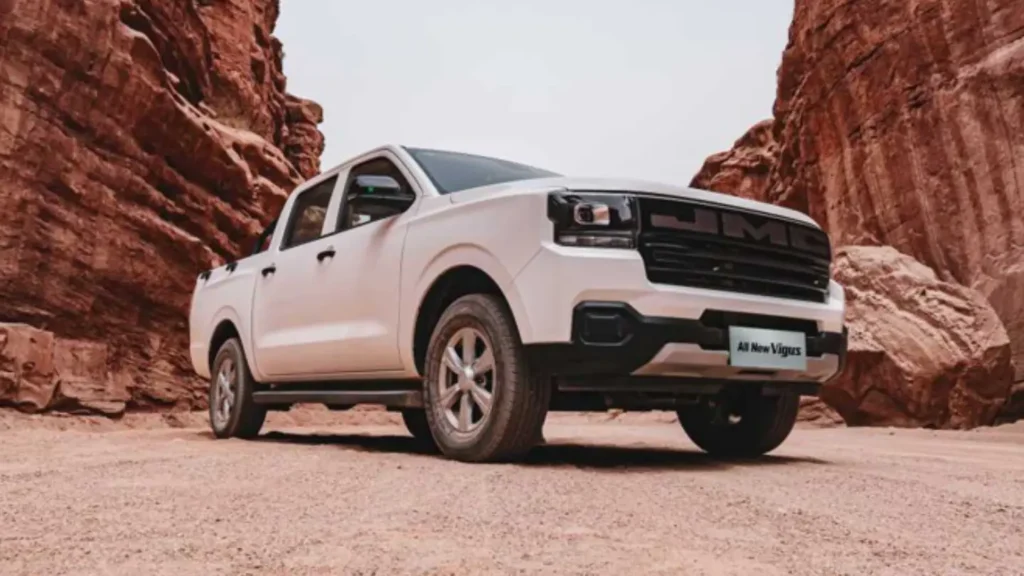
Australian pricing for the JMC Vigus has not been announced, but it is expected to sit below established budget-priced Chinese utes.
As of October 2026, the LDV T60 starts at $39,989 drive-away, while the GWM Cannon starts at $39,990 drive-away. Both are established options for buyers who want a new dual-cab ute without moving into more expensive models.
The Vigus will need to make a strong case on price, though. Its relatively basic equipment list and missing driver assistance systems could make it harder to justify if the final price is too close to those rivals.
The entry-level model is expected to focus on the essentials, while the Vigus Plus adds cosmetic upgrades, including wheel-arch flares, black wheels, a sports bar and synthetic leather-look upholstery.
Diesel engine, four-wheel drive and 2500kg towing
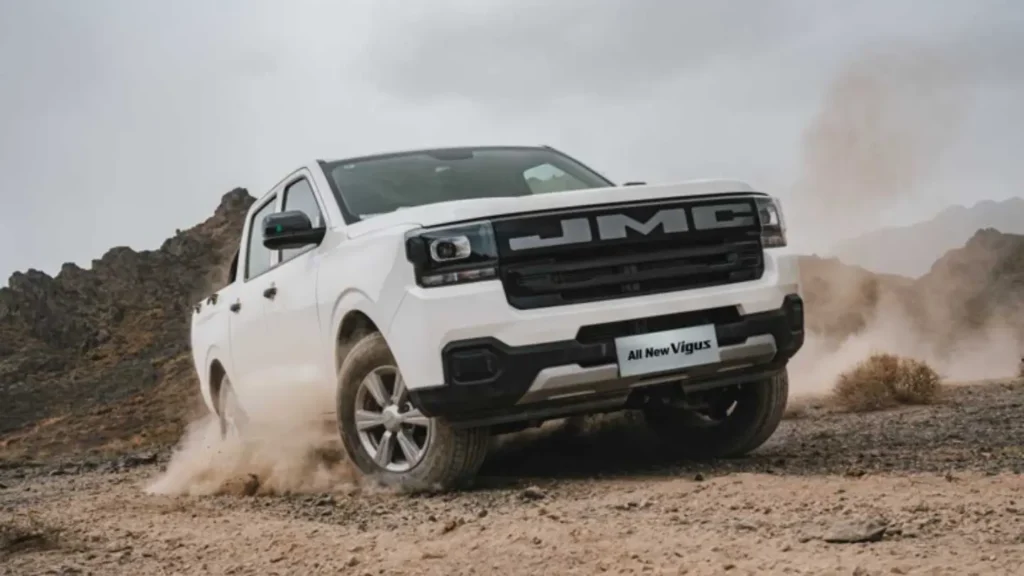
The JMC Vigus is powered by a 2.5-litre single-turbo four-cylinder diesel engine producing 123kW and 430Nm. An eight-speed automatic transmission sends drive to all four wheels, with a low-range transfer case for more demanding conditions.
Those outputs put the Vigus towards the lower end of the new-ute market for engine power. However, it is reportedly around 250kg lighter than a 2.4-litre GWM Cannon, which could help it achieve a similar power-to-weight ratio.
Fuel consumption is claimed at 7.8 litres per 100 kilometres, although Australian-market testing figures have not been confirmed.
Towing is another area where the Vigus falls short of many competitors. Its braked towing capacity is rated at 2500kg, compared with the 3500kg limit common among dual-cab utes sold in Australia.
That difference matters for buyers who regularly tow caravans, horse floats or heavy work trailers. The Vigus may suit lighter-duty jobs, but buyers will need to check their actual towing requirements before choosing it over alternatives.
Basic safety equipment could be a sticking point
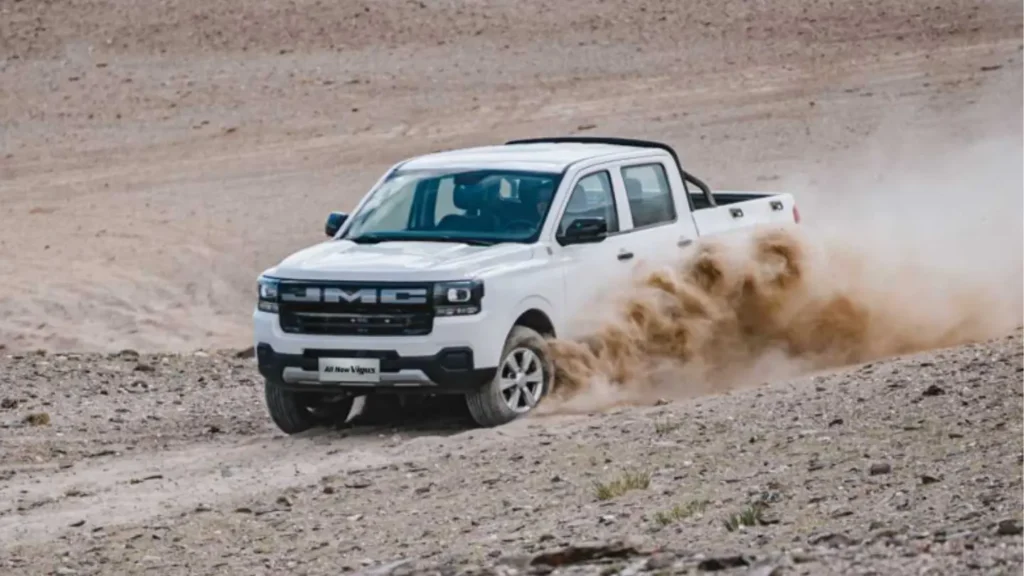
The Vigus is expected to arrive with a relatively modest list of standard equipment. According to industry guide data, features will include wireless Apple CarPlay and Android Auto, keyless entry, front and rear parking sensors, 17-inch alloy wheels and folding mirrors.
However, several driver assistance systems found on competing utes are missing. These include lane-keep assist, blind-spot monitoring, rear cross-traffic alert and adaptive cruise control. A front-centre airbag is also absent from the industry guide data.
Autonomous emergency braking (AEB) is expected to be standard, as required under Australian new-vehicle safety regulations for applicable new models.
JMC does not intend to proactively submit the Vigus for an ANCAP safety assessment, according to the source report. Unless ANCAP independently obtains and tests one, the ute is unlikely to receive a published rating.
The absence of several safety technologies could also make a five-star result difficult if the Vigus is tested. ANCAP assesses vehicles across multiple categories, and a weak result in one area can limit the overall rating.
For buyers, the key question will be whether the lower purchase price outweighs the missing equipment. Tradespeople who prioritise a straightforward diesel ute may find the Vigus worth considering, but families and drivers who regularly travel at highway speeds may prefer a model with a more complete safety package.
JMC is expected to appoint around 20 to 30 Australian dealers, either already appointed or in the process of joining the network. Parts availability, servicing support and access to accessories will be important considerations for buyers who depend on their ute for work.
With pricing still to come, the Vigus’s value will ultimately depend on how much cheaper it is than established rivals and whether its basic specification suits the job.

Comments
New Comment