




Key highlights:
- Polestar wants a road-user charge that applies to all motorists
- Federal fuel excise currently adds 53.7 cents per litre to petrol and diesel
- NSW plans kilometre-based charges for EVs and PHEVs from July 2027
Polestar Australia wants the government to introduce a weight-based road-user charge that applies to all motorists, not just electric vehicle (EV) owners. The federal government is developing plans for a new charge as growing EV sales reduce the number of drivers paying fuel excise on petrol and diesel.
Polestar says a fairer system could help recover road-related tax revenue while keeping EVs an affordable alternative. The proposal comes as NSW prepares its own kilometre-based charge for EVs and plug-in hybrids from July 2027, despite a similar Victorian tax being struck down by the High Court.
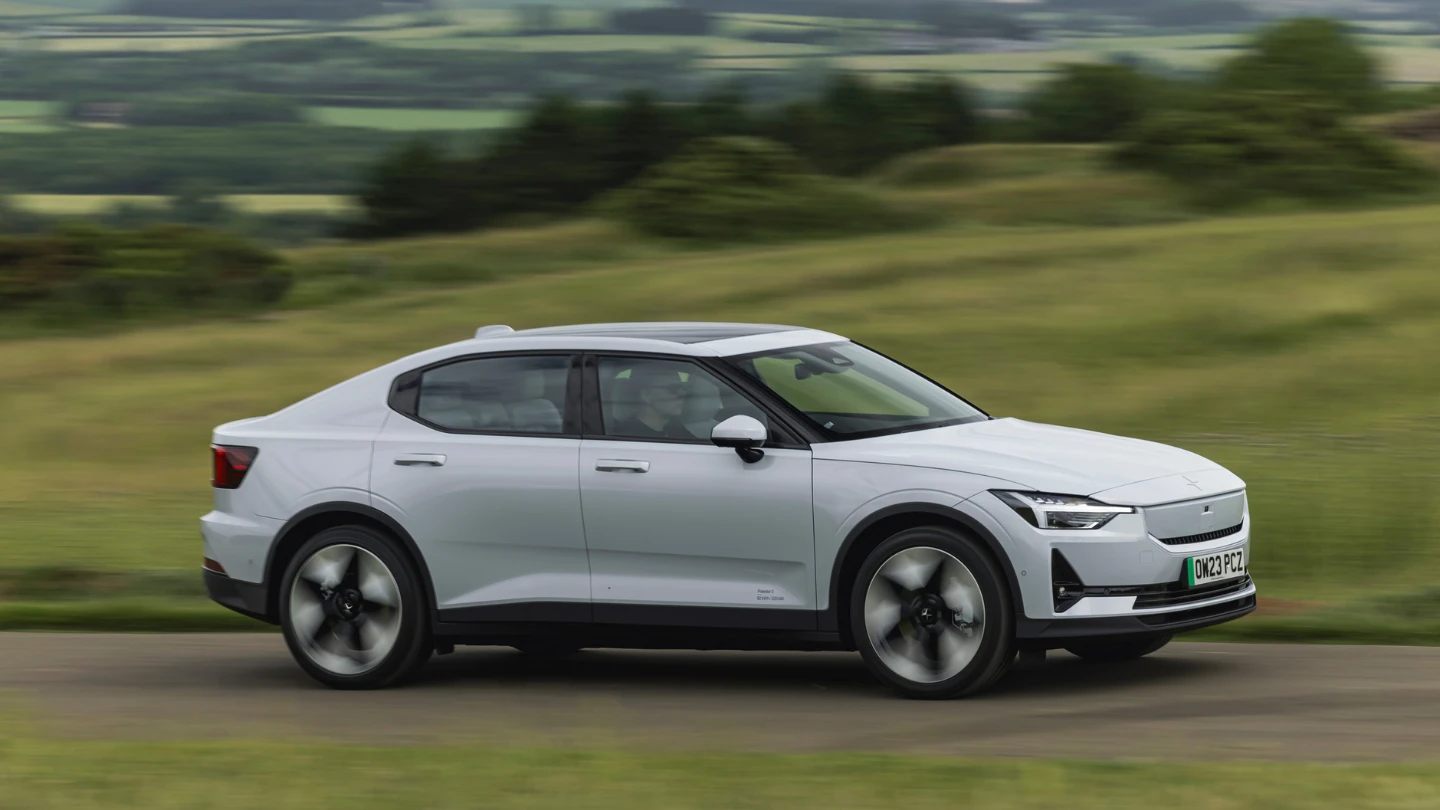
Polestar wants all motorists to pay a road-user charge
Polestar Australia managing director Scott Maynard says the company has been working with government officials to help shape the proposed road-user charge. Polestar sells only electric models, giving it a direct interest in how the government taxes EV ownership.
“We see the inevitable introduction of a road-user charge, and we feel that it’s critical that [the] charge be levied against all road users, and not just electric vehicle owners,” Mr Maynard told CarExpert Australia.
He added, “We don’t have a congestion tax in Australia. We don’t have any other form of pollution tax, as such, and so it would make sense that a road user charge be levelled fairly and evenly across all users.”
Under Polestar’s preferred approach, the government would apply the charge across the road-using population rather than placing the entire burden on EV drivers.
Why is the government considering a road-user charge?
The federal government currently collects 53.7 cents per litre in fuel excise on petrol and diesel, and the rate increases twice a year in line with Consumer Price Index (CPI) figures. As more Australians buy EVs, fewer motorists pay this fuel excise, so the government is considering a road-user charge to address the resulting shortfall in tax revenue.
Mr Maynard said, “[The introduction of a road-user charge] could be met by a review of the fuel excise that then remains, and that would then, in a sense, become similar to a congestion or output tax, which would continue to make electric vehicles cheaper to own, and allow them to be a credible choice for Australian drivers. That’s, I think, really important.”
In other words, Polestar wants the government to consider the combined effect of the new charge and existing fuel taxes, rather than simply adding another cost to EV ownership.
Also read: Tesla Roadster revealed with rocket thrusters and sub-one-second acceleration claim
Federal government says the charge must be carefully designed
In August 2026, federal Minister for Climate Change and Energy Chris Bowen said Australia should work towards a road-user charge, while warning that the government needed to get the details right.
Speaking at the National Press Club, Mr Bowen said, “I think a road-user charge is something that Australia should be working towards. It’s got to be done right. It’s got to be done carefully. That includes timing.
“It’s a very big undertaking. It should not be rushed unnecessarily. The Treasurer and I are of one mind on that.”
He continued, “No one in the EV industry says we oppose a road-user charge ever. They say do it right, plan it well, get all the designs right – and when the time is right, it’ll be an important part of ensuring that the transport revolution in Australia.”
“It’s important it happens, but it’s important it be done right. It’s important it’s not rushed in a way which threatens getting it right.”
His comments indicated that the federal government was working towards a charge, although the final design and timing remained unresolved.
NSW plans a kilometre-based charge from July 2027
While the federal government continues its work, the NSW Government plans to introduce its own road-user charge for electric cars and plug-in hybrids from July 2027. The proposed rates are:
| Vehicle type | Proposed charge |
|---|---|
| Electric vehicles (EVs) | 3.095 cents per kilometre |
| Plug-in hybrid electric vehicles (PHEVs) | 2.476 cents per kilometre |
However, NSW’s plan faces a significant legal complication. In 2023, the High Court of Australia struck down a similar tax introduced by the Victorian Government, saying that only the federal parliament can “impose duties of customs and excise”.
The ruling meant people who had paid the unlawful Victorian tax were entitled to claim refunds from the authorities. That decision raises questions about state-level road-user charges, including NSW’s proposed scheme, while the federal government considers a national approach.

Comments
New Comment