




Key highlights:
- Suzuki aims for a 310km range from its 26kWh LFP battery
- Japanese sales start by March 2027, UK follows in mid-2027.
- Australian launch of the e Sky remains unconfirmed
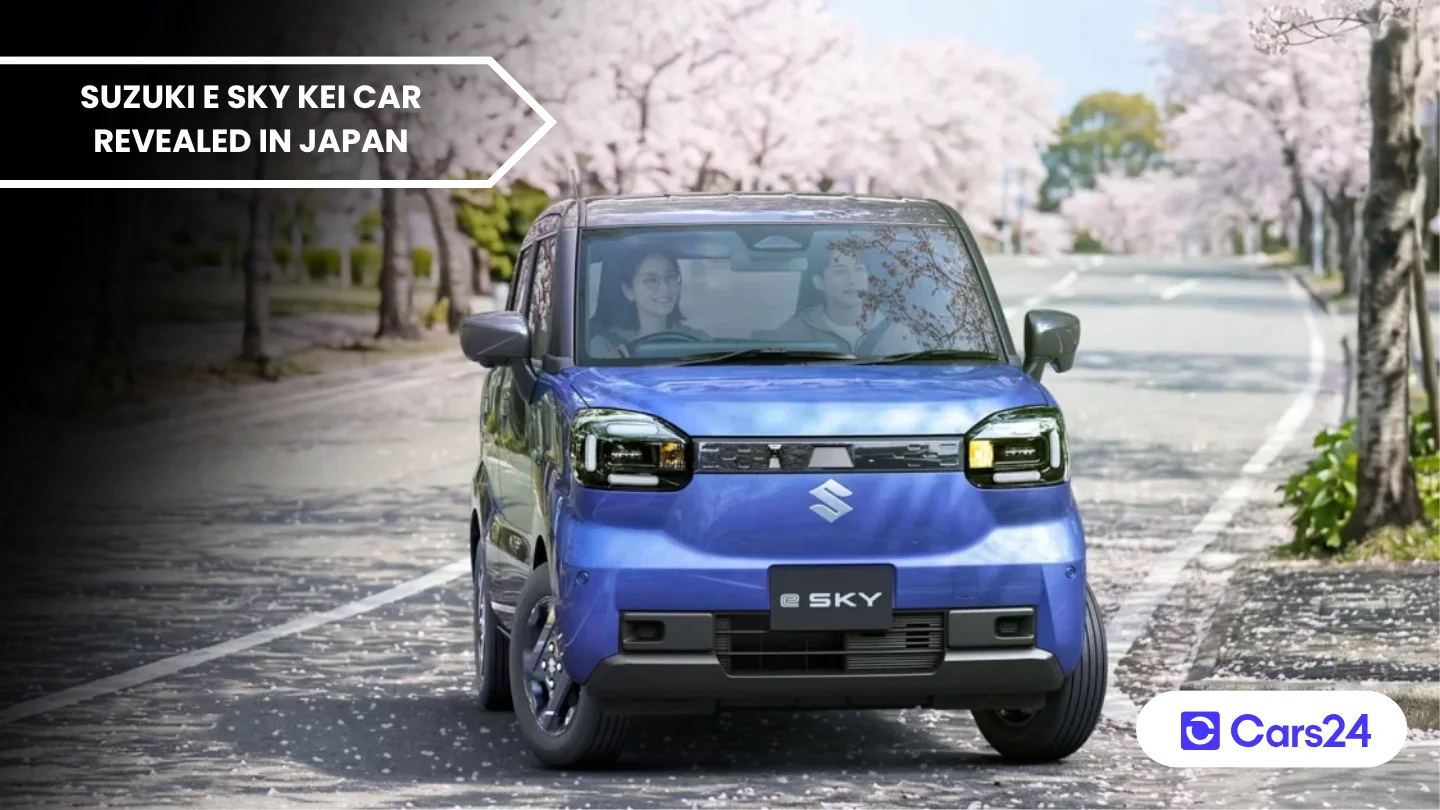
Suzuki has revealed its first electric passenger kei car, the e Sky. The Japanese carmaker will fully reveal the compact EV by fall in Japan and is scheduled for a mid-2027 launch in the UK; the Australian release remains unconfirmed.
Japanese sales will begin before the current financial year ends in March 2027. The production e Sky evolves directly from the Vision e-Sky concept, which made its grand public debut at the 2025 Japan Mobility Show.
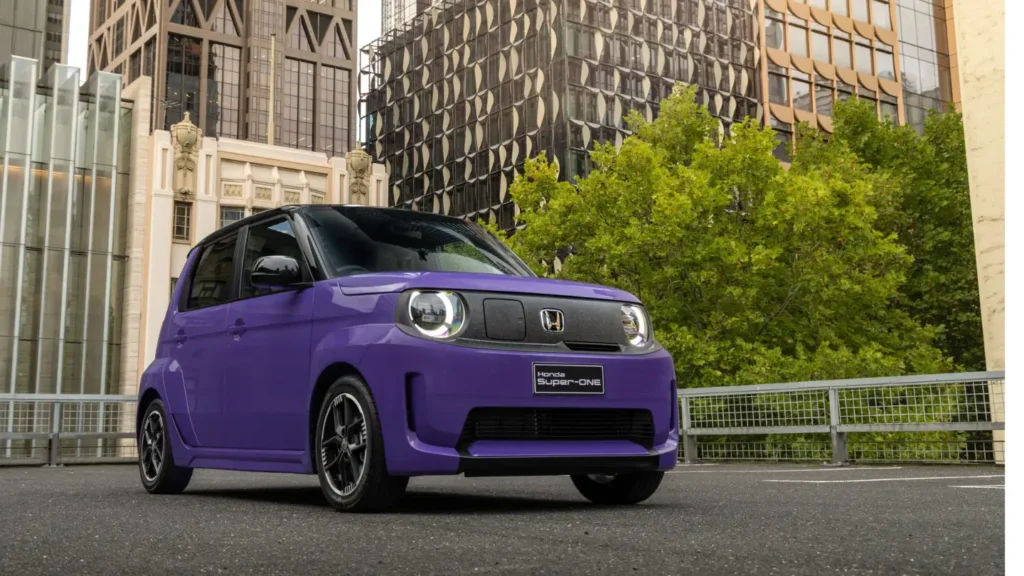
The new Suzuki compact EV can directly compete with the Honda Super-One, which starts at $36,900 drive-away, if it gets launched by 2027 in Australia.
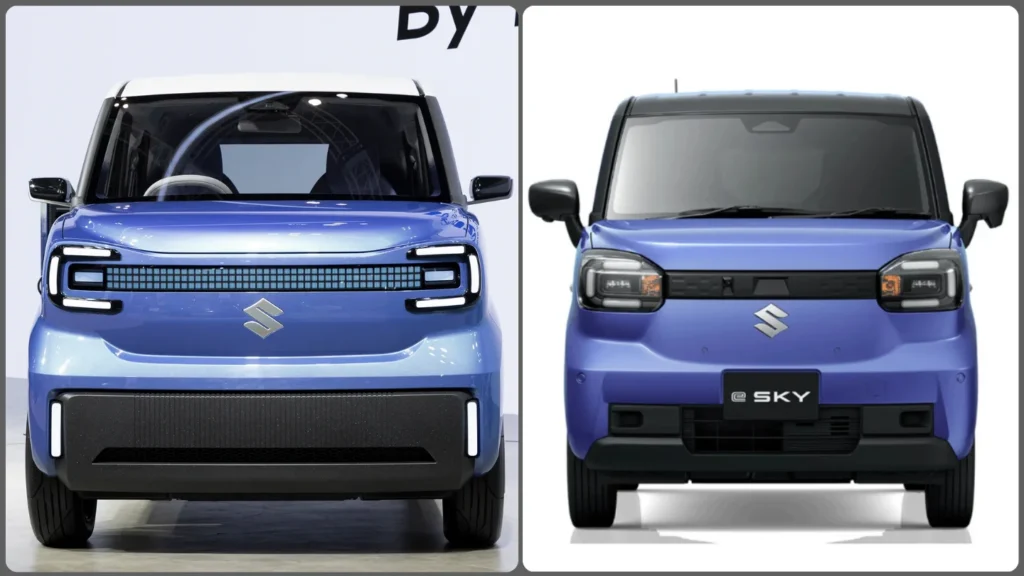
Dimensions: Built around Japan’s kei-car rules
The e Sky EV’s length, width and power output must stay within Japan’s kei-car regulations, which give qualifying vehicles tax and registration benefits.
| Length | 3395mm |
| Width | 1475mm |
| Height | 1625mm |
| Wheelbase | 2460mm |
| Kerb weight | 1030kg |
Decent battery size with fast charging
The e Sky uses a front-mounted electric motor, expected to produce the class-standard 47kW and packed with a 26kWh lithium iron phosphate (LFP) battery with up to 50kW of DC fast charging.

Suzuki hasn’t released a final electric range figure yet but is targeting 310km, presumably under the more generous WLTC testing standard.
The DC input charges the battery from 10% to 80% in 25 minutes, and it can also be plugged in with 6kW AC home charging. The Suzuki electric kei car also features Vehicle-to-Load (V2L) capability and is capable of pumping out 1,500W to charge appliances or camping gear.
Also read: New Mazda CX-6e with LiDAR opens bookings in China
Retro-modern exterior styling
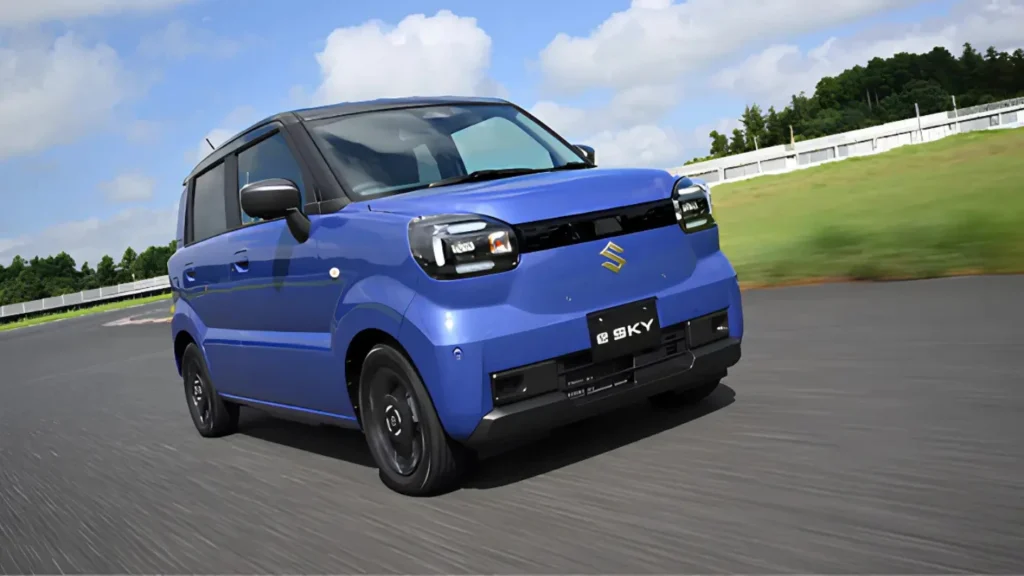
The e Sky’s styling blends clean, futuristic electric-vehicle cues with the classic, boxy proportions mandated by Japanese kei-car regulations.
On the front, it features a smooth bumper with a grille-less face and rectangular projector LED headlights paired with distinctive C-shaped daytime running lights (DRLs).
The Suzuki kei car has a tall-boy silhouette with a boxy shape, flat roofline, and blacked-out pillars and sits on 14-inch alloy wheels.
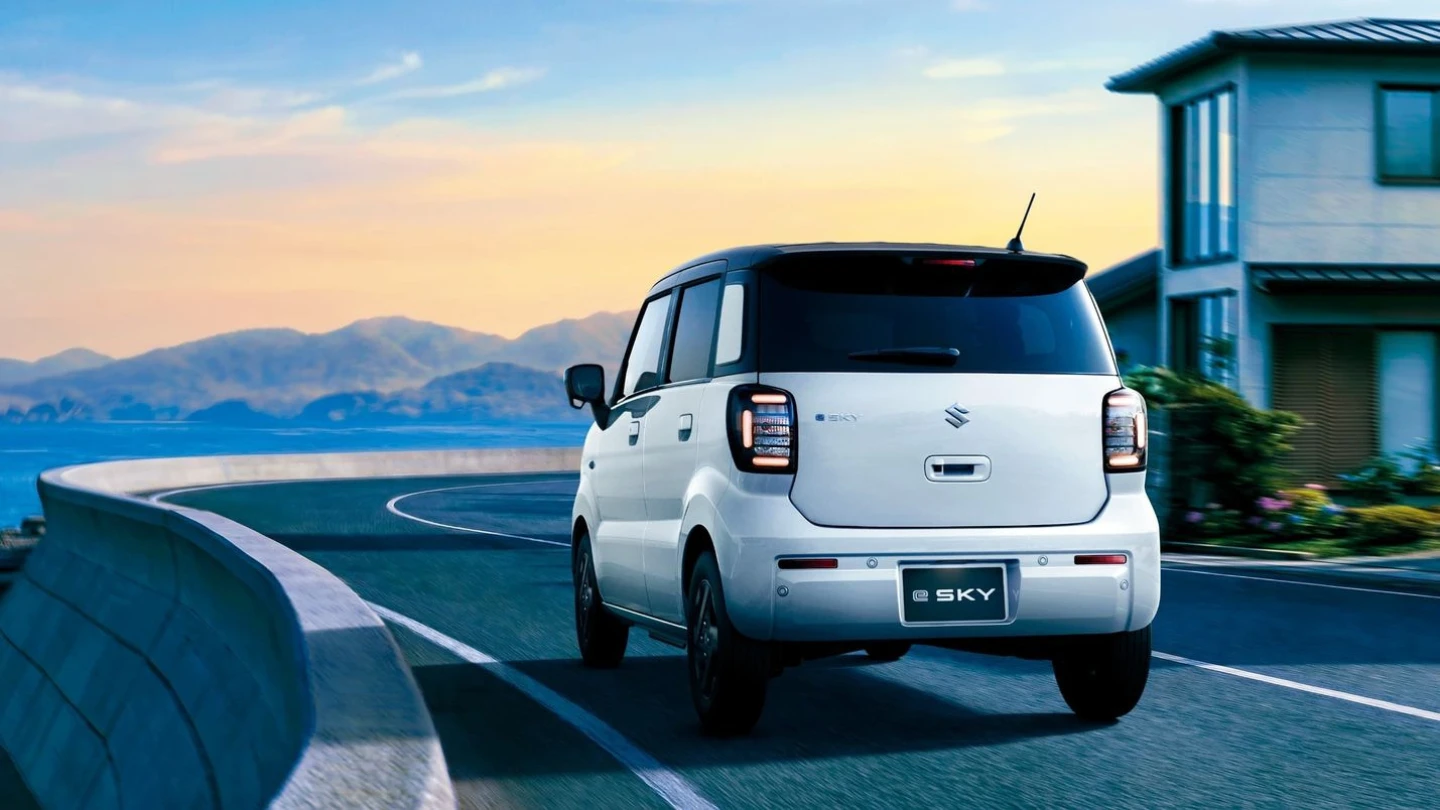
It has a short roof antenna on the back side of the roof, a wraparound rear glass, vertically stacked taillights like the front C-shaped LED bars and a clean roof-mounted spoiler.
The revealed model shows an exclusive Immersion Blue paint option with a contrasting, two-tone roof treatment and a matching interior colour theme.
How does it compare with other Japanese kei EVs?
The e Sky will enter a growing Japanese electric kei-car market, and its rivals will include the Nissan Sakura/Mitsubishi eK X, Honda N-One e: and BYD Racco.
| Model | Battery capacity | WLTC range |
|---|---|---|
| Nissan Sakura/Mitsubishi eK X | 20kWh | 180km |
| Honda N-One e: | 29.6kWh | 295km |
| Suzuki e Sky | 26kWh | TBC (Targeting 310km) |
| BYD Racco | 35.8kWh | 320km |
A simple cabin with modern tech

Suzuki has kept the e Sky’s interior modern without going overboard. It is a four-seater equipped with a 10.1-inch infotainment touchscreen, a direct heat-pump system for cold-weather efficiency, and an “Easy Drive” one-pedal layout.
A traditional gear lever sticks out of the dashboard, while capacitive controls sit in a strip for the climate control.
Will the e Sky come to Australia?
There’s no confirmation yet from Suzuki’s Australian distributor, and if Suzuki does bring the e Sky here, it would become the brand’s second EV after the e Vitara. Suzuki has only confirmed Japan and the UK market for now, while Europe and India remain possible future markets.
The right-hand drive configuration in the UK gives some hope for the e Sky’s Australian launch in the near future. In Britain, the e Sky will face the Renault Twingo and Honda Super-One, with both rivals priced from around £19,000 (A$36,200).
The e Sky could also provide the foundation for a new entry-level EV built by Maruti Suzuki in India from 2028, but the brand hasn’t confirmed whether it will modify the e Sky for markets outside Japan.
The Honda Super-One is one example of how Suzuki could adapt a kei-based EV for overseas markets. The Super-One uses the Japanese N-One e: as its base but adds a wider track, tougher styling and a higher 70kW peak output.

Comments
New Comment