





Key highlights:
- Tesla wants Australian autonomous vehicle trials to begin in 2027
- Fully driverless vehicles are not yet legal in Australia
- Independent research on these cars forecasts 8000 lives saved by 2070
Tesla wants to start testing fully autonomous vehicles on Australian public roads in 2027, before the Federal Government finalises its proposed self-driving vehicle laws.
The US electric carmaker has urged the government to accelerate its regulatory timeline and allow early trials through permits. Its proposal comes as federal politicians examine ways to improve Australia’s economic productivity, with Tesla arguing that autonomous vehicles could deliver significant economic and road-safety benefits.
Tesla wants driverless trials to start in 2027
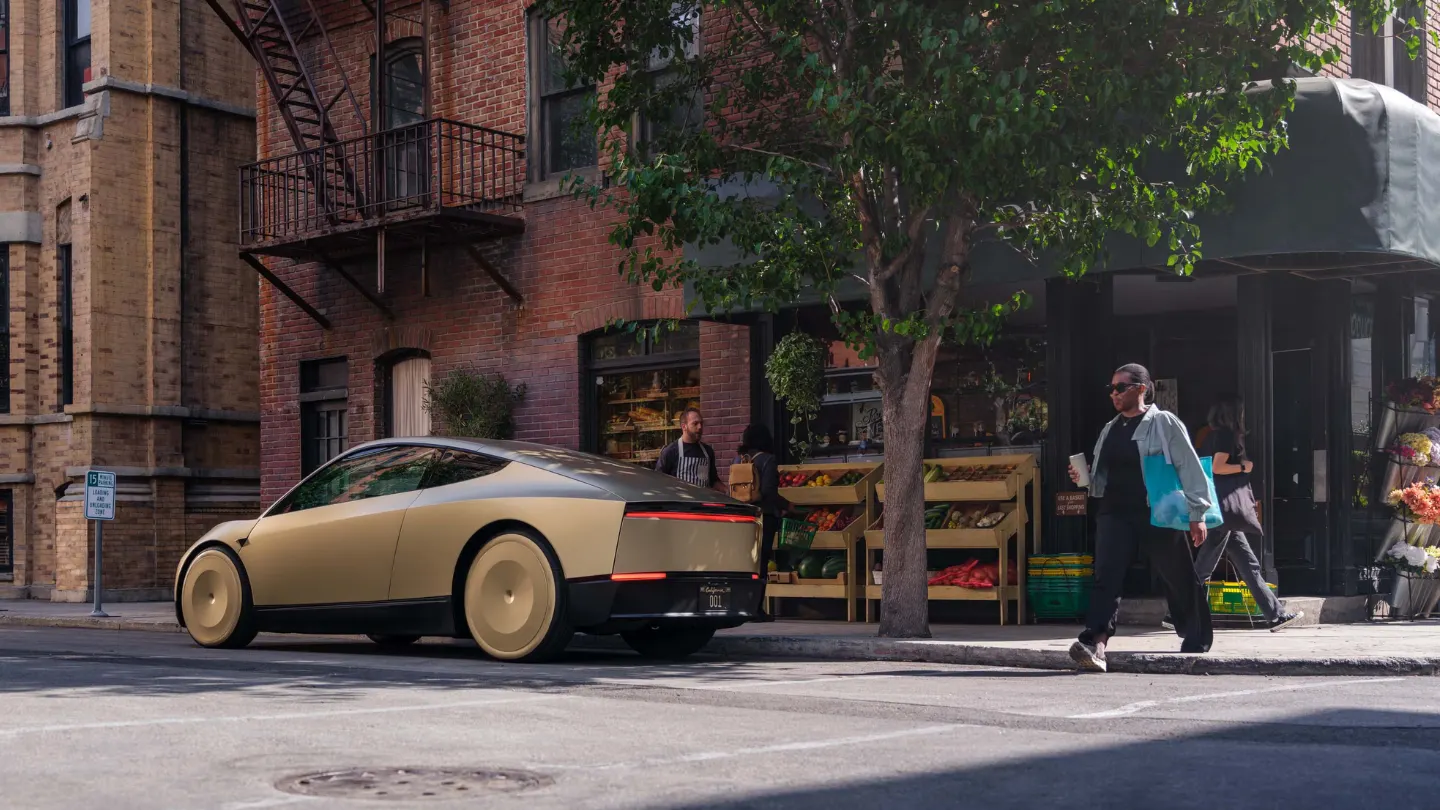
Australian Tesla owners can already use the company’s Full Self-Driving (Supervised) system in newer models, but the system still requires someone to sit in the driver’s seat, remain alert and supervise the vehicle. Fully driverless vehicles, including autonomous taxis like the Tesla Cybercab, are not yet legal in Australia.
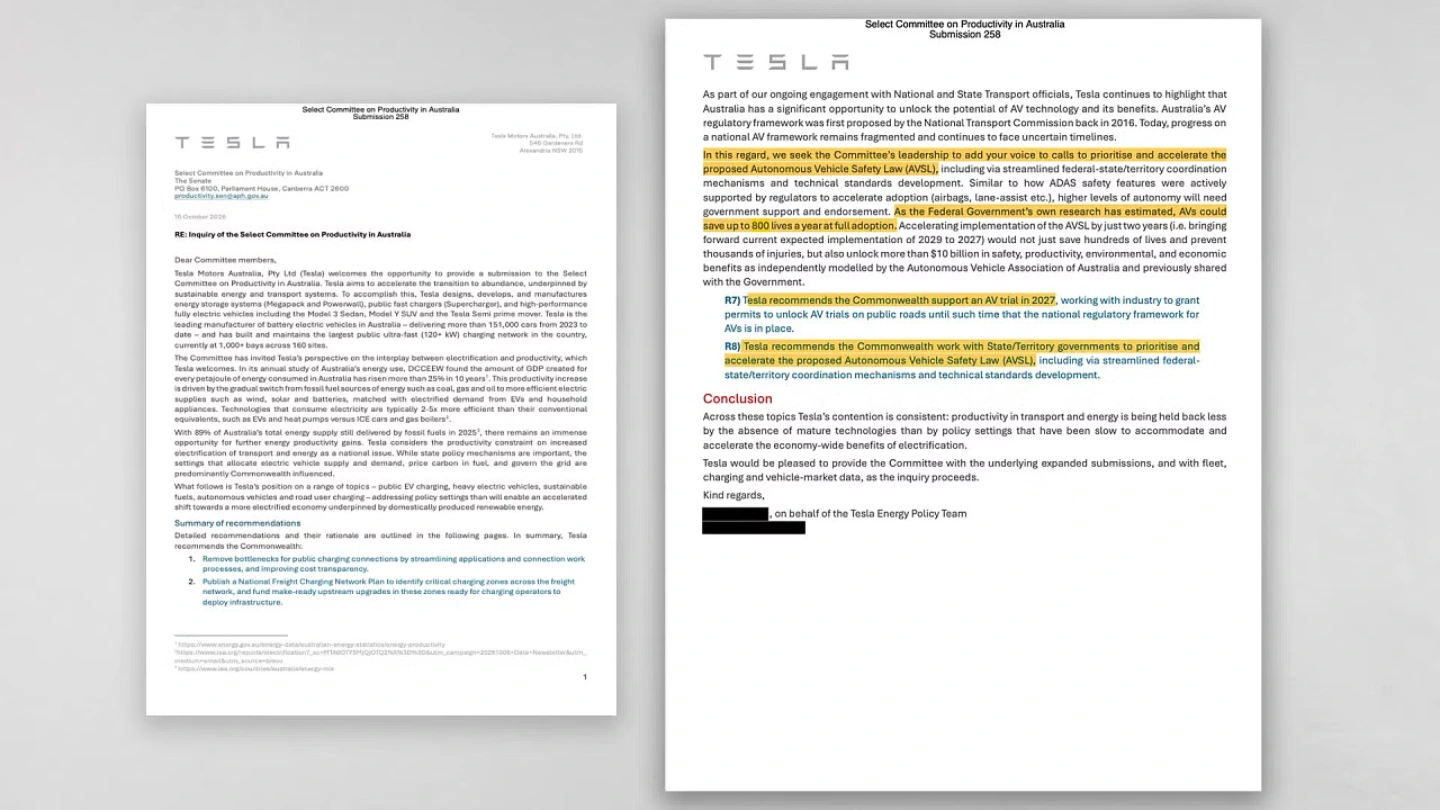
In a submission to the Federal Parliament’s Select Committee on Productivity in Australia, Tesla called on the government to “prioritise and accelerate” the proposed Autonomous Vehicle Safety Law. The company also wants permission to begin public-road trials before the legislation is finalised.
“Tesla recommends the Commonwealth support an AV trial in 2027, working with industry to grant permits to unlock AV trials on public roads until such time that the national regulatory framework for AVs is in place,” Tesla said.
The proposal would allow the company to test autonomous vehicles under permits while Australia develops its national regulatory framework.
Why is the government examining autonomous vehicles?
The Select Committee on Productivity in Australia was established last year in response to declining productivity across the country’s economy. Politicians are examining ways to improve efficiency and strengthen Australia’s economic performance. The committee describes the problem in its own terms:
“This stagnation has contributed to weak real wage growth and is reducing national competitiveness while increasing household cost-of-living pressures, with a palpable effect for Australian families,” the committee states.
It also highlights the importance of productivity amid wider economic and social changes.
“At a time of global uncertainty, demographic ageing and rapid technological change, the future trajectory of Australia’s productivity will determine whether national living standards stagnate, rise, or fall.”
The committee defines productivity as how efficiently Australia converts inputs such as labour, money and resources into outputs such as products and services.
Also read: Toyota bZ4X to become a Waymo driverless robotaxi
Tesla links autonomous cars to road safety and productivity
Tesla argues that self-driving vehicles could improve productivity by reducing road fatalities and delivering wider economic benefits, and the company claims autonomous cars could save 800 lives every year that would otherwise be lost in road crashes. Tesla said it sourced this figure from government research.
An independent report prepared for the Federal Government in 2021 offers a different timeframe, and it forecasts that autonomous vehicles could save a total of 8000 lives by 2070. The report expects most of those lives to be saved between 2050 and 2070, when autonomous vehicle adoption is projected to reach higher levels.
What does the independent research say?
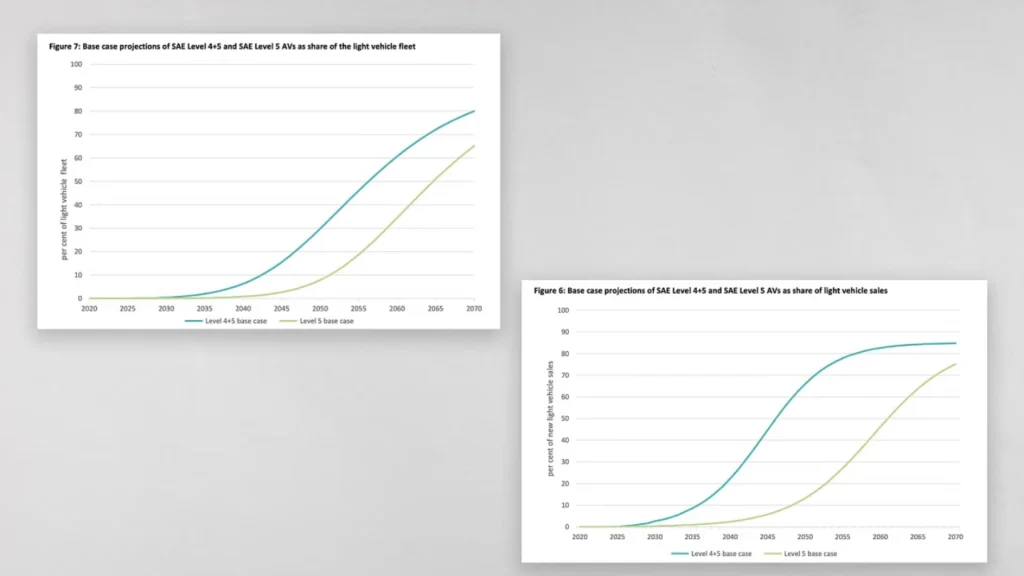
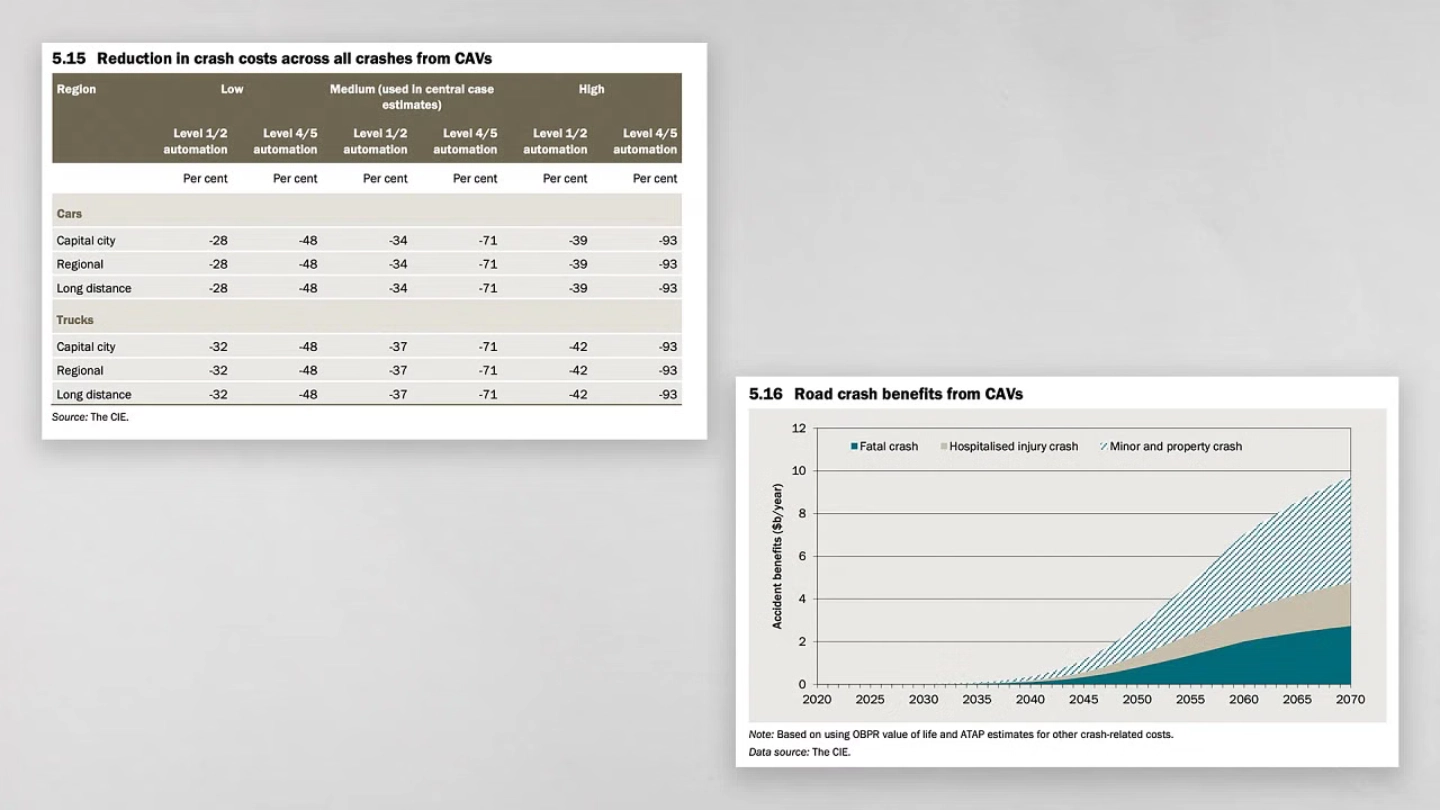
The 2021 report was prepared by the Centre for International Economics (CIE) and relied largely on research from the Bureau of Infrastructure and Transport Research Economics (BITRE). The underlying BITRE research forecasts that autonomous vehicles could account for:
| Forecast milestone | Share of new light vehicle sales |
|---|---|
| 2050 | Just over 65% |
| 2070 | 85% |
These projections provide the basis for the report’s estimate of 8000 lives saved by 2070, but they do not support Tesla’s separate claim of 800 lives saved every year. These data points are compiled by Drive Australia.
Questions over Tesla’s cited industry research
Tesla also said the economic benefits of autonomous vehicles had been independently modelled by the Autonomous Vehicle Association of Australia and shared with the Federal Government, but reportedly there is no organisation named ‘Autonomous Vehicle Association of Australia’.
That leaves questions about the source of the modelling Tesla cited in its submission. The company is asking the government to move faster on autonomous vehicle regulation and allow public-road trials in 2027; whether the government accepts that proposal remains to be seen.

Comments
New Comment