




Key highlights
- Toyota reportedly plans to begin EREV production in China in April 2027, with output targeted at 200,000 vehicles during the year.
- Production could rise to about 400,000 EREVs in 2028, although Toyota has not publicly confirmed the reported plans.
- There is currently no confirmation that Toyota’s China-market EREVs will be offered in Australia.
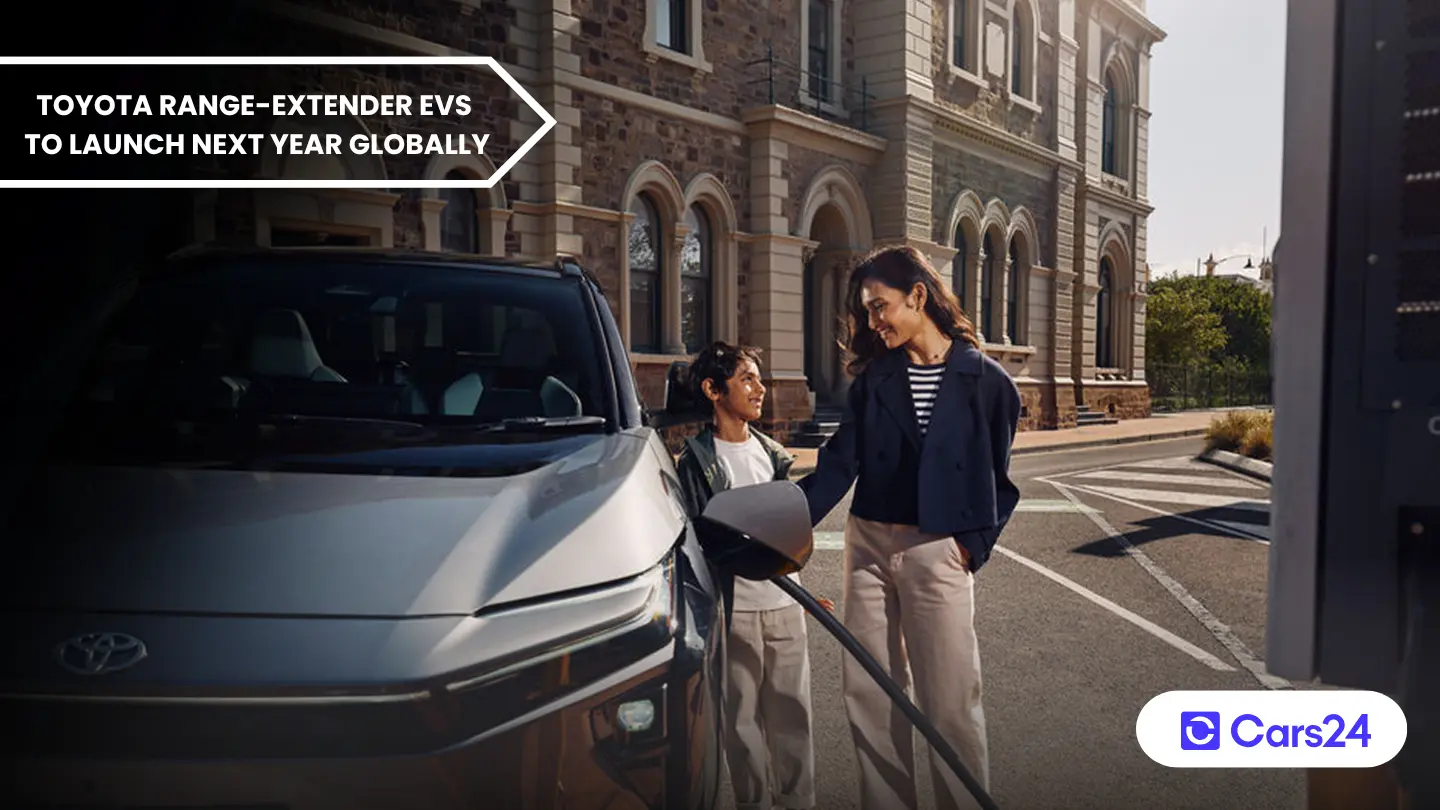
Toyota is preparing to add another type of electrified vehicle to its lineup, and this one splits the difference between a hybrid and a full EV. According to a report from Nikkei, Toyota is planning to launch its first extended-range electric vehicle (EREV) in China in April 2027.
The plan reportedly calls for around 200,000 EREVs to be built in 2027, doubling to 400,000 units in 2028. If Toyota hits those numbers, EREVs could end up outselling both pure EVs and plug-in hybrids in the brand’s global mix, based on 2025 figures that had Toyota selling roughly 200,000 EVs and 180,000 PHEVs.
What is an extended-range EV?
An EREV uses electric motors to drive the wheels, much like a conventional battery-electric vehicle. The key difference is the presence of a petrol engine. Rather than mechanically driving the wheels, the engine operates as a generator to produce electricity when the battery needs additional energy. That makes an EREV different from a conventional hybrid or plug-in hybrid, where the petrol engine can also contribute to driving the vehicle. An EREV can therefore deliver electric-motor propulsion while retaining the ability to refuel with petrol when the battery’s charge is running low.
For drivers, the appeal is relatively straightforward. The vehicle can be charged like an EV for regular driving, while the petrol generator provides an alternative to relying solely on public charging infrastructure during longer trips. That could be particularly relevant to Australian buyers who want electric driving but regularly travel long distances between towns or regional areas.
Toyota is expanding its China-specific EV range
Toyota has already been expanding its battery-electric range in China, with several models developed specifically for that market. Its China EV line-up includes the bZ3 and bZ5, while the bZ3X and bZ7 have been developed with Chinese manufacturing partner GAC. The bZ4X is the more globally oriented model and is also sold in Australia.
Toyota’s reported EREV plans come as other established manufacturers also turn to range-extender technology in China. Volkswagen and Nissan have entered the segment, while Mazda is also preparing an EREV offering for the market. The technology has become particularly prominent among Chinese carmakers, giving Toyota another powertrain option as it competes in China’s rapidly changing new-energy vehicle market.
Will Toyota EREVs come to Australia?
There is currently no confirmation that Toyota will bring its China-market EREVs to Australia.Toyota Australia is continuing to expand its local electrified range. The company has confirmed the all-electric C-HR for Australia in the first half of 2027, alongside the bZ4X and bZ4X Touring. Toyota Australia has also confirmed its first plug-in hybrid powertrain will arrive with the next-generation RAV4.
That means Australian buyers will have access to battery-electric and plug-in hybrid options from Toyota, but there is no announced local EREV at this stage. The China program is still worth watching for Australian buyers. If Toyota successfully scales up its EREV technology, it could eventually provide another way for the company to combine electric driving with the longer-distance flexibility of a petrol-powered generator. For now, however, any Australian model or launch timing remains unconfirmed.
Source: Nikkei Asia

Comments
New Comment