




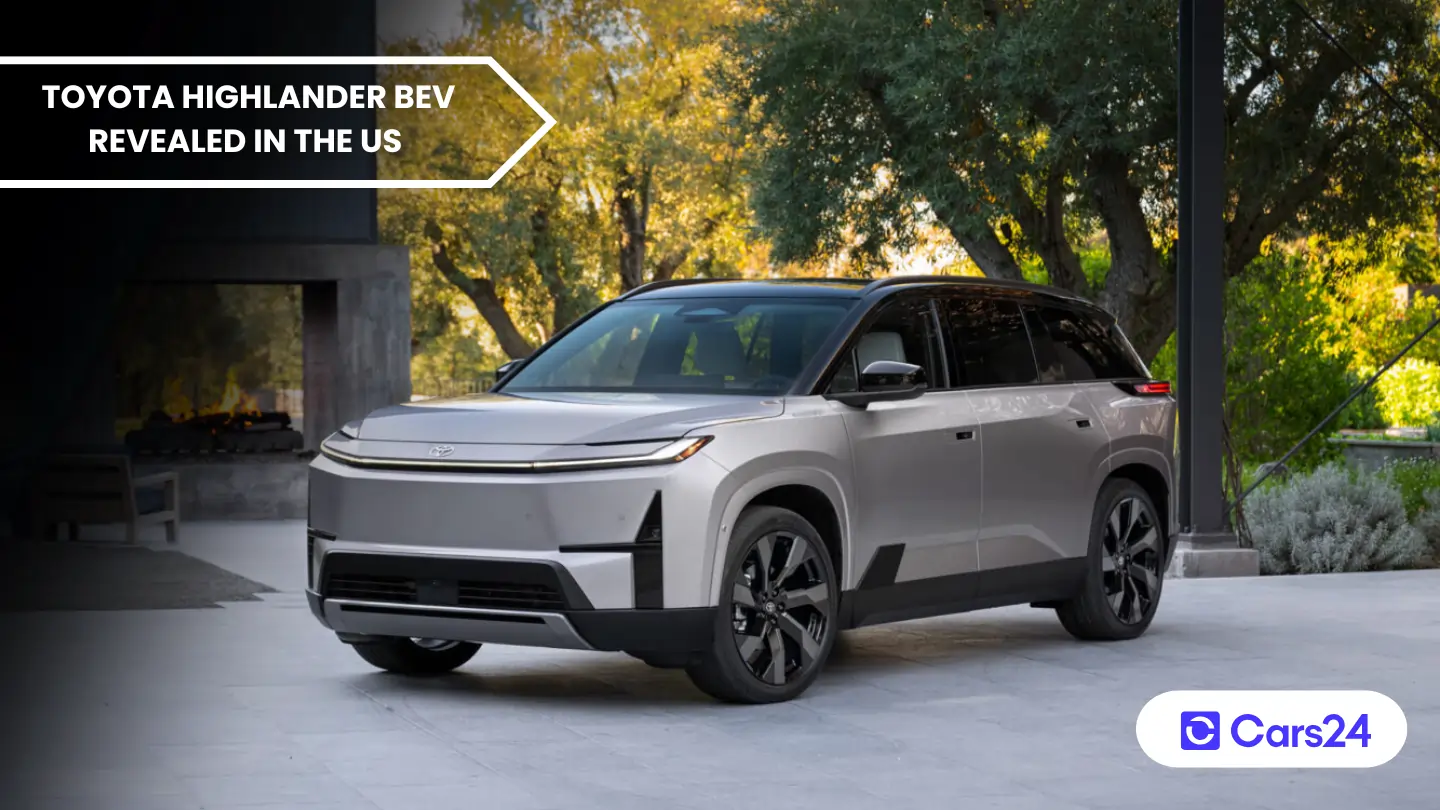
Toyota has officially unveiled the next-generation Toyota Highlander BEV, confirming the popular three-row SUV will transition to full battery-electric power in its latest generation. Sold in Australia as the Toyota Kluger, the electric Highlander represents a major evolution of one of Toyota’s most important family SUVs, but for now, it remains a US-market exclusive.
Revealed in the United States after an extended teaser campaign, the 2027 Toyota Highlander BEV becomes Toyota’s first three-row electric SUV and its fourth BEV model in the US lineup, joining the bZ, bZ Woodland and C-HR BEV. While Toyota Australia has confirmed it has no current plans to introduce the Highlander BEV locally, the reveal provides the clearest indication yet of what an electric Kluger could look like if it ever reaches Australian shores.
Read more: 2025 Toyota Kluger sees prices rise
A clean-sheet electric redesign
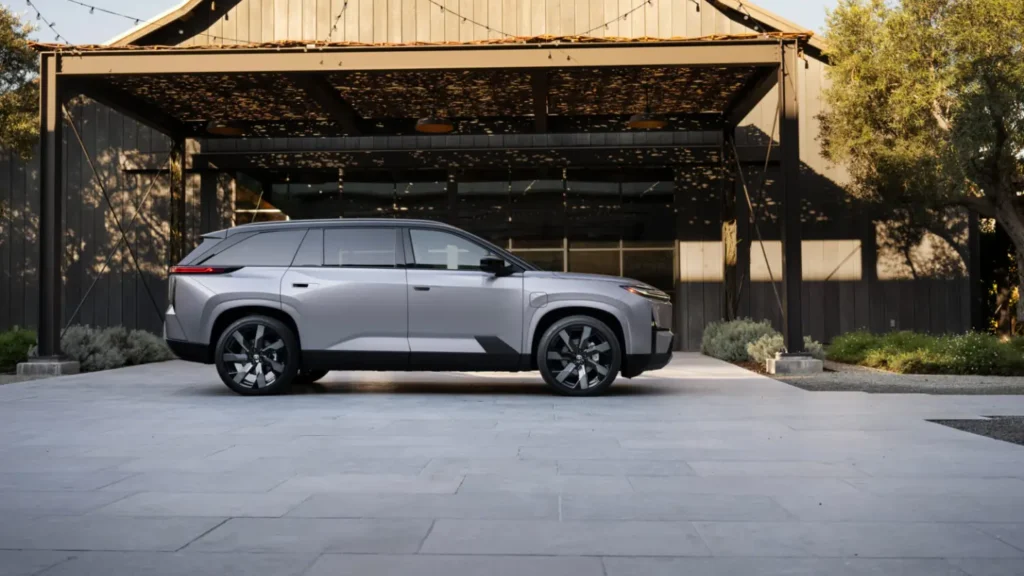
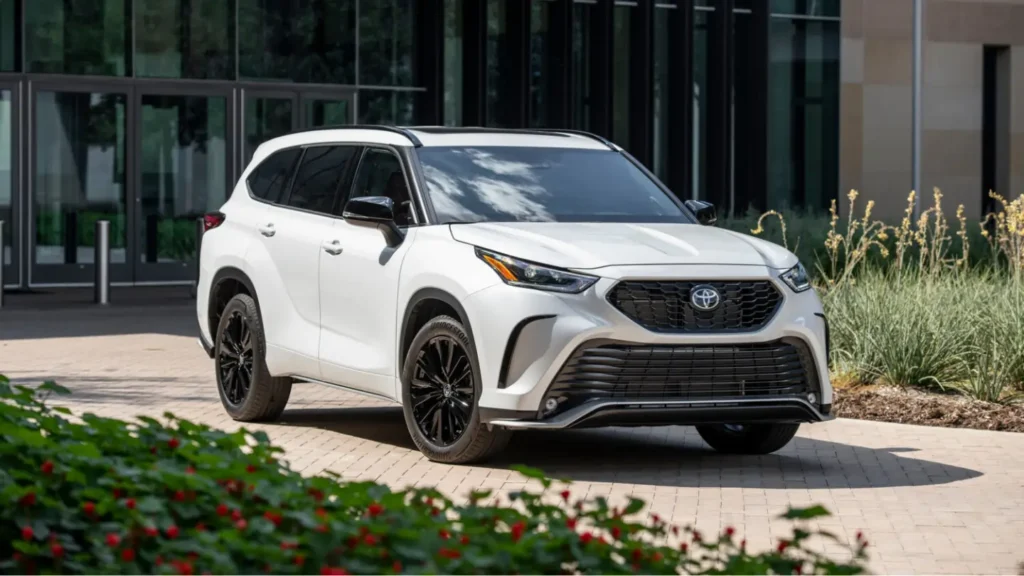
Unlike the current Kluger sold in Australia, which relies heavily on hybrid power, the 2027 Toyota Highlander BEV abandons combustion entirely. Built on a modified TNGA-K architecture, newly engineered to house high-capacity battery packs, the electric Highlander takes advantage of EV packaging to deliver more interior space, a flatter floor, and a lower centre of gravity.
Toyota refers to the new Highlander as a “Best Experience Vehicle”, prioritising efficiency, comfort, quietness, and family usability rather than outright performance.
From an Australian perspective, this aligns closely with how the Kluger is positioned locally, as a practical, family-first large SUV rather than a performance-focused model.
Read more: Toyota teaser hints at large electric SUV for Australia
Exterior design highlights
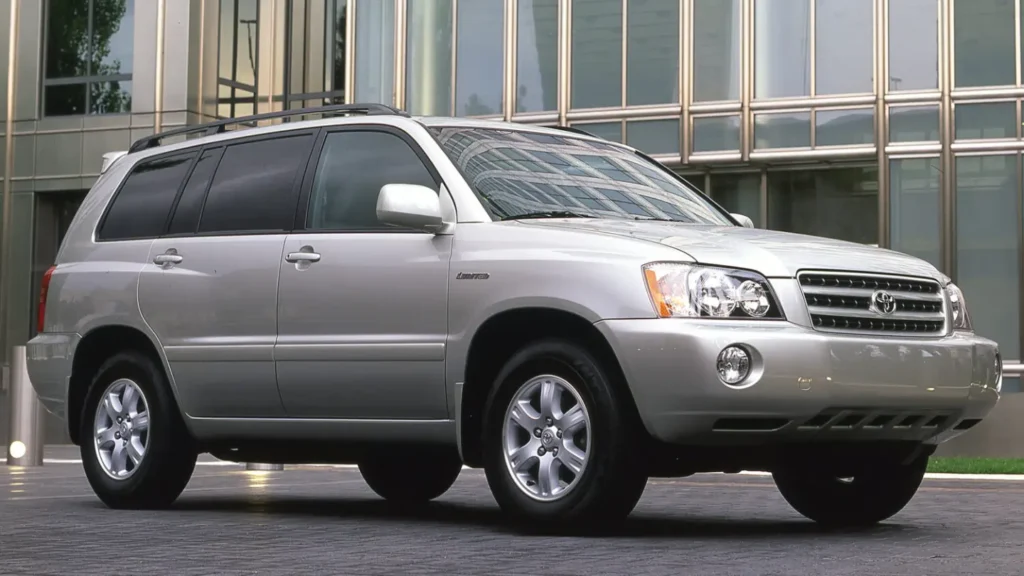
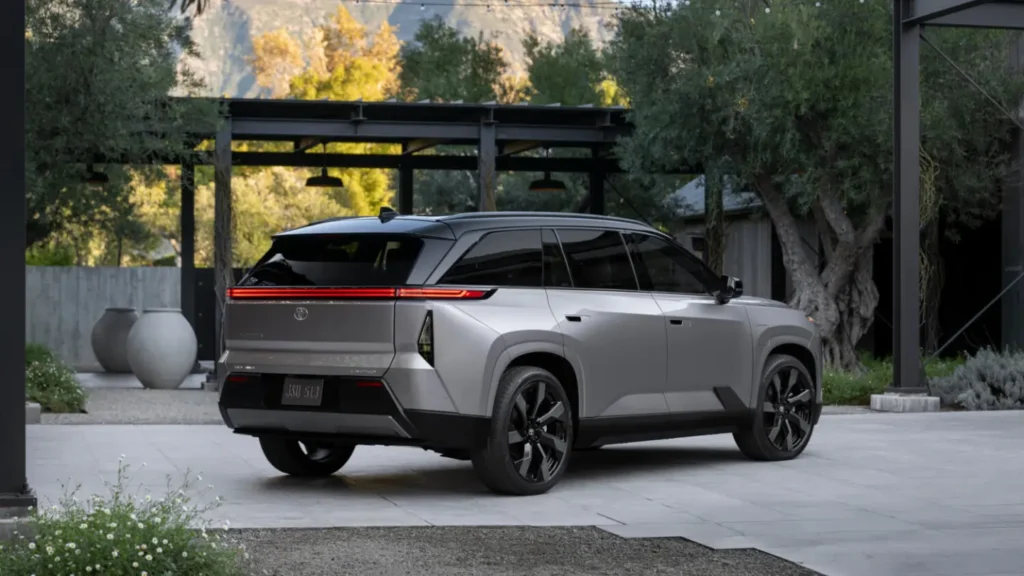
The 2027 Toyota Highlander BEV looks noticeably more futuristic than the current Australian-market Kluger. Toyota has altered the proportions significantly to improve both aerodynamics and cabin space.
Dimensions
| Measurement | Toyota Highlander BEV | Current Toyota Kluger |
| Length | ~5050 mm | ~4966 mm |
| Width | ~1989 mm | ~1930 mm |
| Height | ~1709 mm | ~1755 mm |
| Wheelbase | ~3050 mm | ~2850 mm |
This makes the electric Highlander longer and wider, Lower in overall height and significantly longer between the wheels.
The result is a more planted stance and improved third-row legroom, an area often criticised in large electric SUVs.
Design highlights include Toyota’s distinctive hammerhead front fascia, slim LED daytime running lights, flush electronic door handles, full underbody aero covers, and a focus on clean, uninterrupted surfacing.
Interior highlights
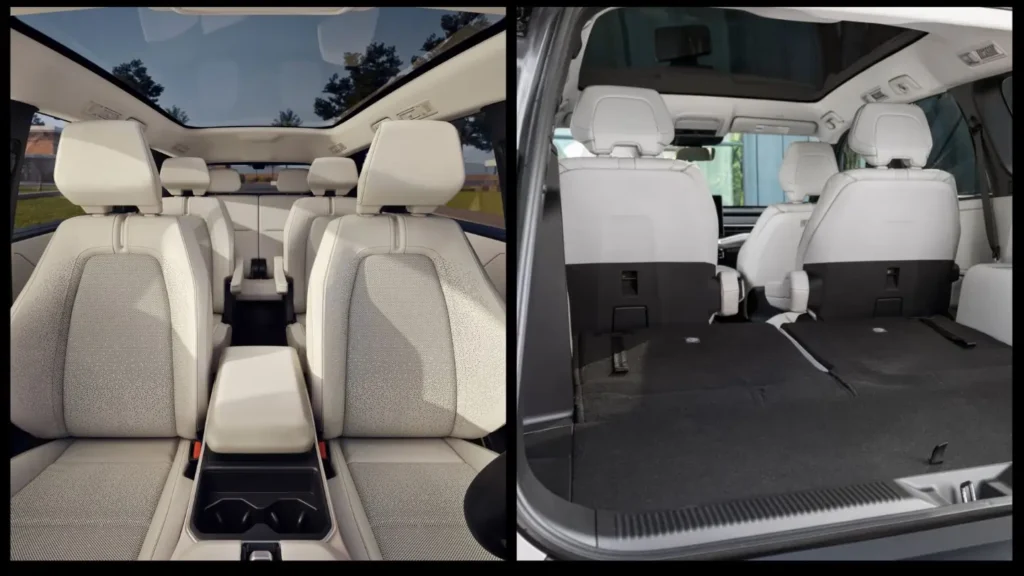
Inside, the Toyota Highlander BEV features a cabin layout similar to that of Toyota’s latest global models, including the next-generation RAV4.
Key interior features include:
- 14-inch central touchscreen
- 12.3-inch digital driver display
- Latest Toyota Audio Multimedia system
- 64-colour ambient lighting
- SofTex® synthetic leather upholstery
- Heated front seats (standard)
- Ventilated front seats and heated second row (Limited grade)
- Largest panoramic fixed glass roof ever fitted to a Toyota
Seating is standard for six with second-row captain’s chairs, while a seven-seat layout is available via a second-row bench, mirroring the Kluger’s current family-oriented setup in Australia.
From a local standpoint, the interior specification aligns closely with what Australian buyers expect in higher-grade Kluger variants.
Read more: Toyota teases interior of seven-seat EV SUV ahead of February 10 reveal
Battery, range and performance
The Toyota Highlander BEV will be offered in the US with two battery sizes and front- or all-wheel drive.
Battery and range
| Variant | Battery | Drivetrain | US Range | Approx. WLTP Equivalent* |
| Toyota Highlander XLE FWD | 77.0 kWh | FWD | 287 miles | ~520 km |
| Toyota Highlander XLE AWD | 77.0 kWh | AWD | 270 miles | ~490 km |
| Toyota Highlander XLE AWD | 95.8 kWh | AWD | 320 miles | ~580 km |
| Toyota Highlander Limited AWD | 95.8 kWh | AWD | 320 miles | ~580 km |
*WLTP estimates are indicative only.
Performance outputs translate to:
- 165 kW (FWD)
- 250 kW (AWD)
These figures place the electric Highlander directly against vehicles like the Kia EV9 and Hyundai Ioniq 9, both of which are sold in Australia.
Charging and EV technology
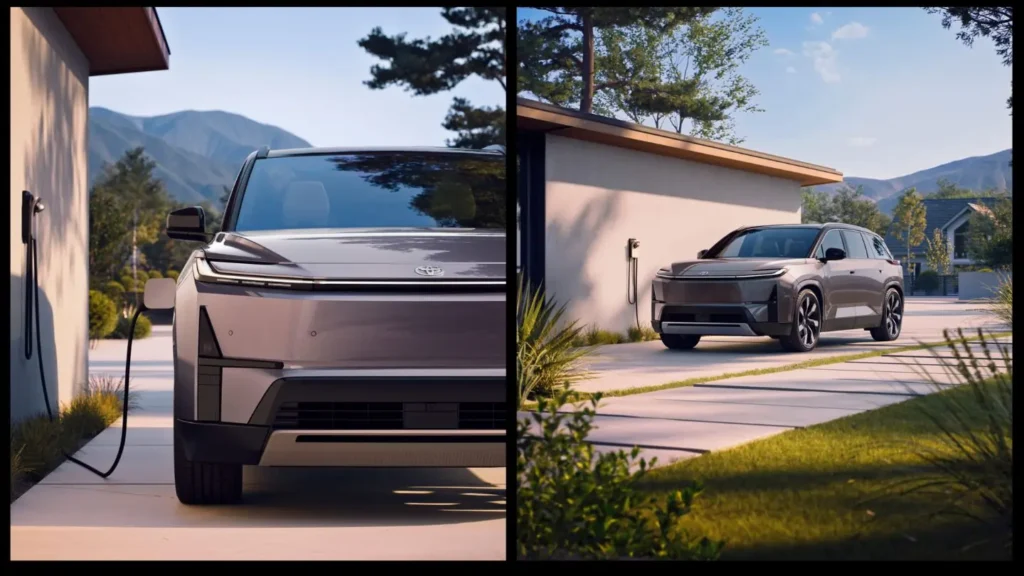
For US buyers, the Highlander BEV features a North American Charging System (NACS) port, giving access to Tesla-compatible DC fast chargers.
Key charging features include:
- DC fast charging (10–80% in ~30 minutes)
- Level 1 and Level 2 AC charging
- 11 kW onboard charger
- Battery preconditioning
- Plug & Charge capability
- Vehicle-to-Load (V2L) functionality
For Australia, some of this would likely change if the vehicle were ever introduced locally, particularly the charging port standard, which would need to align with CCS2 infrastructure.
Safety and driver assistance
The Toyota Highlander BEV is equipped with Toyota Safety Sense 4.0 as standard, including:
- Pre-Collision System with pedestrian, cyclist and motorcyclist detection
- Full-speed adaptive cruise control
- Lane Tracing Assist
- Proactive Driving Assist
- Road Sign Assist
- Blind Spot Monitoring and Rear Cross-Traffic Alert
Higher grades add features such as Advanced Park, Traffic Jam Assist, and a Panoramic View Monitor.
Will Australia get the electric Toyota Kluger?
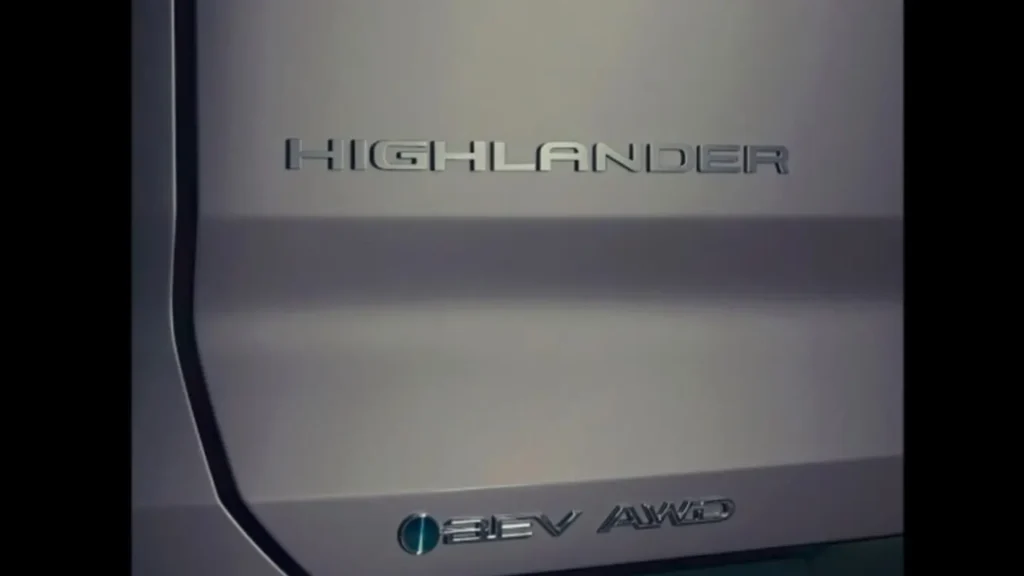
For now, the answer is no. In a statement to Australian media, Toyota said:
“Toyota Australia continuously explores opportunities to evolve our vehicle line-up. However, we have no current plans to introduce the Highlander BEV to the Australian market.”
That said, the reveal of the 2027 Toyota Highlander BEV gives a clear indication of Toyota’s long-term direction for large family SUVs. With rivals like the Kia EV9 gaining traction locally, pressure will continue to mount for an electric Kluger to join the Australian market in the future.
What does this mean for Australian buyers?
While Australian buyers won’t see the Toyota Kluger BEV in the near term, the global reveal confirms that Toyota is actively preparing its core family nameplates for a fully electric future.
If and when the electric Kluger does arrive, it is likely to mirror the 2027 Toyota Highlander BEV’s focus on:
- Long-range usability
- Family-friendly space
- Conservative, comfort-oriented performance
- Strong safety credentials
For now, the Highlander BEV serves as a glimpse into what could eventually replace the petrol-electric Kluger Australians know today.

Comments
New Comment