




Key highlights:
- Hydrogen HiLux targets more than 400km WLTP range
- Its 2500kg towing capacity trails the diesel’s 3500kg
- Toyota will launch the Australian FCEV HiLux in 2028
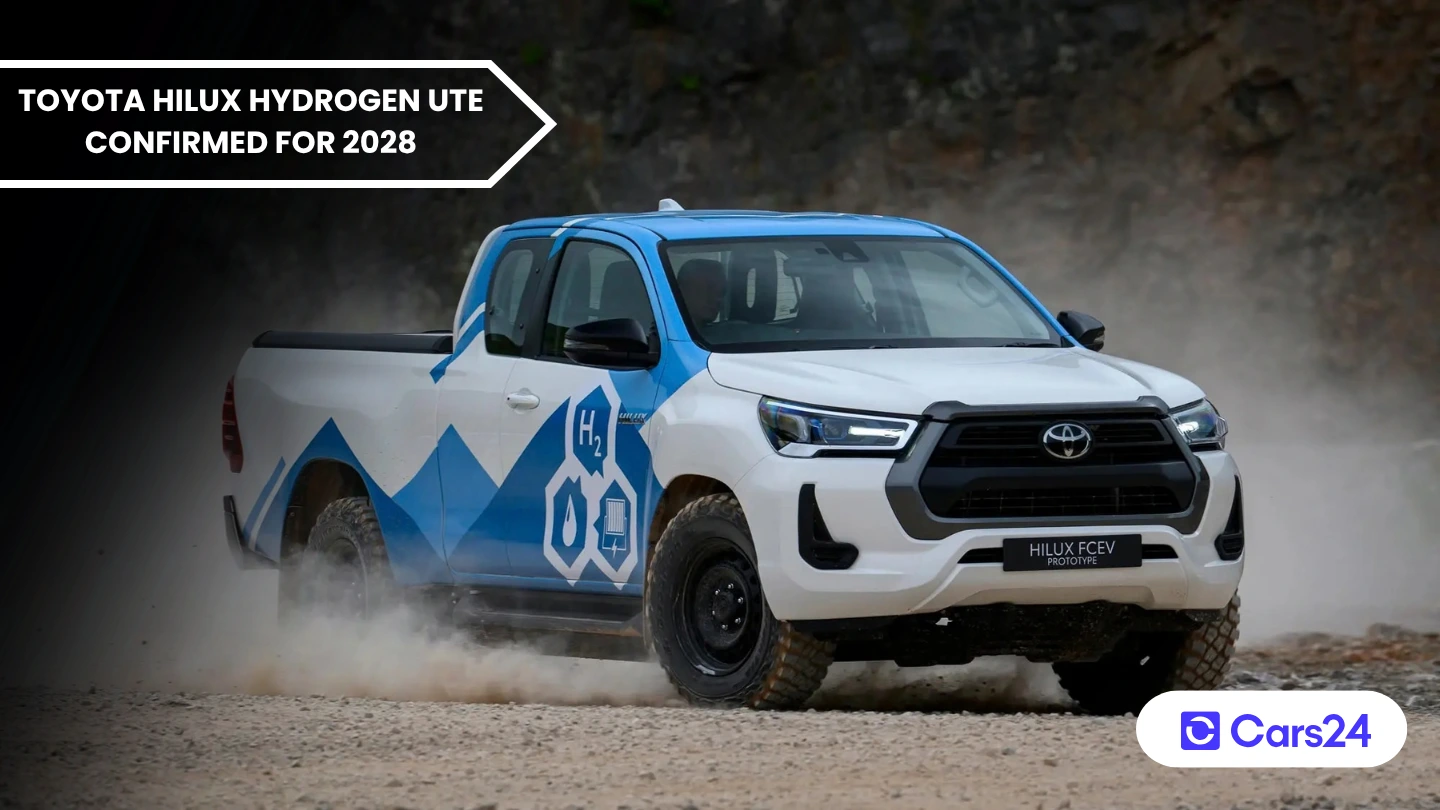
Toyota’s showroom-bound hydrogen fuel-cell HiLux ute could offer more than 400km of WLTP range when it arrives in 2028, but that figure remains well below the range of its diesel sibling. The hydrogen ute will also tow less, highlighting the challenge Toyota faces in making fuel-cell technology work for Australian buyers who want long-distance travel, off-road ability and heavy towing.
This model forms part of Toyota’s “multi-pathway” strategy, and arrives as a cleaner commercial alternative alongside the diesel, mild-hybrid, and the recently launched 2026 Toyota HiLux BEV. But two main concerns remain as the Japanese brand prepares to launch the FCEV ute: limited refuelling infrastructure and the short driving range.
Hydrogen HiLux targets 400km-plus range
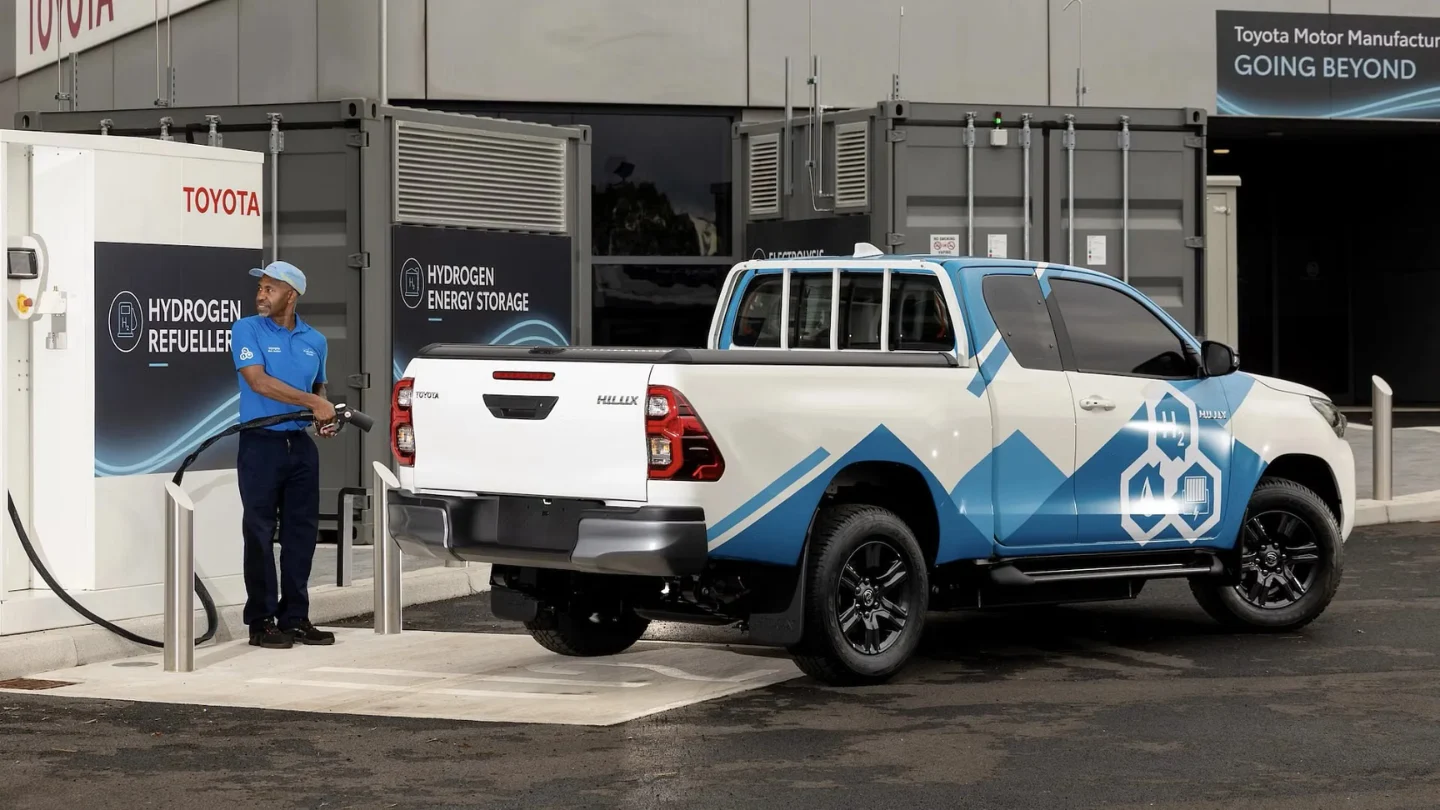
Toyota Europe has released the first technical details for its production-bound HiLux FCEV, although the figures remain early targets rather than final specifications.
The hydrogen HiLux will therefore offer less than half the 808km WLTP range of the current V-Active mild-hybrid diesel HiLux in Europe.
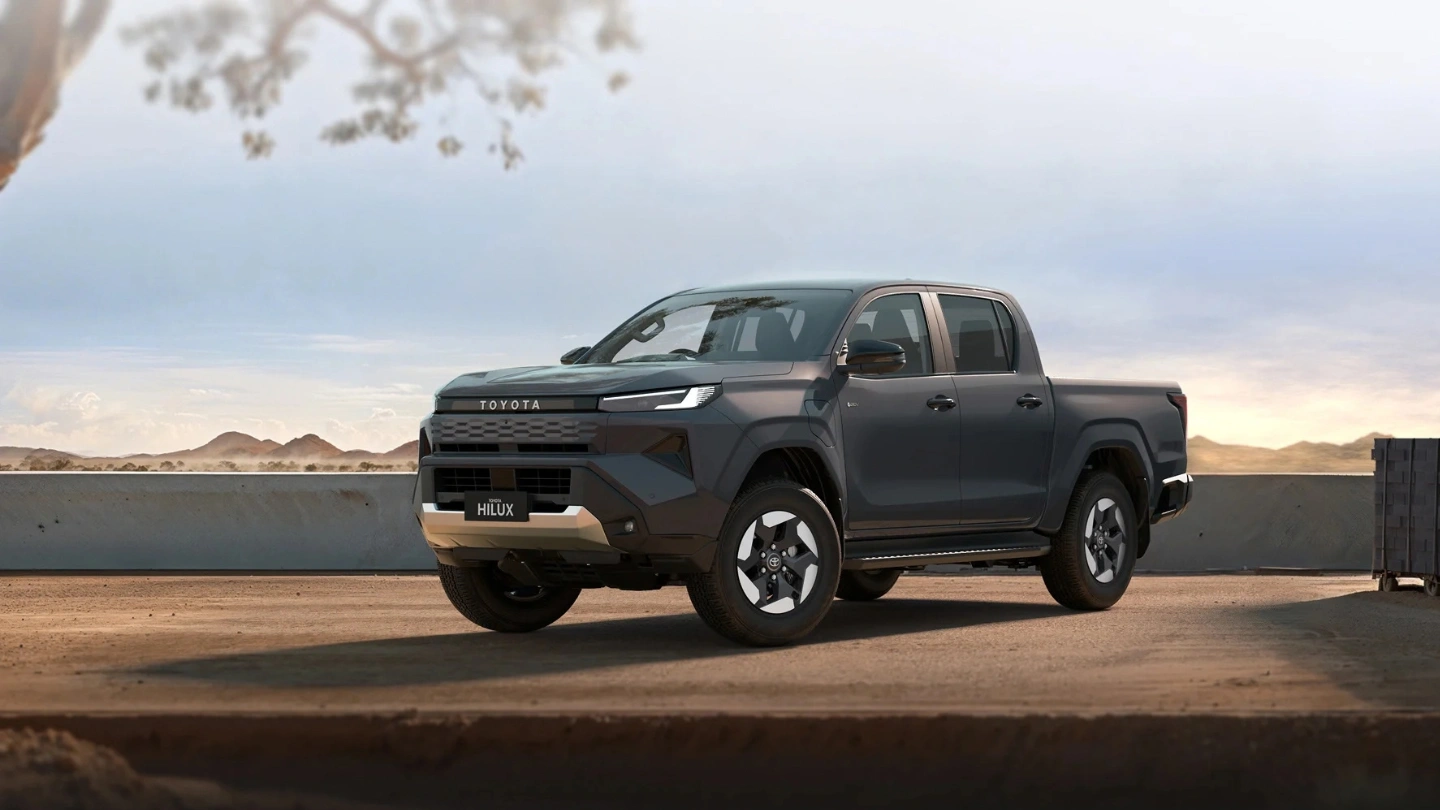
It will also fall short of the diesel’s 3500kg towing capacity, but the FCEV will tow more than the battery-electric HiLux, which is limited to 2000kg.
The hydrogen HiLux’s target range also compares with much cheaper electric vehicles. The MG electric hatchback, priced around $35,000, can offer a longer driving range than the more than 400km target quoted for the hydrogen HiLux.
Toyota has not revealed key FCEV specifications
Despite confirming the production model, Toyota has yet to disclose several important technical details, including:
- Hydrogen tank capacity
- Electric motor output
- Onboard battery size
- Final fuel-cell system specifications
The previous-generation HiLux hydrogen prototype used technology from the production Toyota Mirai hydrogen sedan. Its electric motor produced 134kW and 300Nm and drove the rear wheels only.
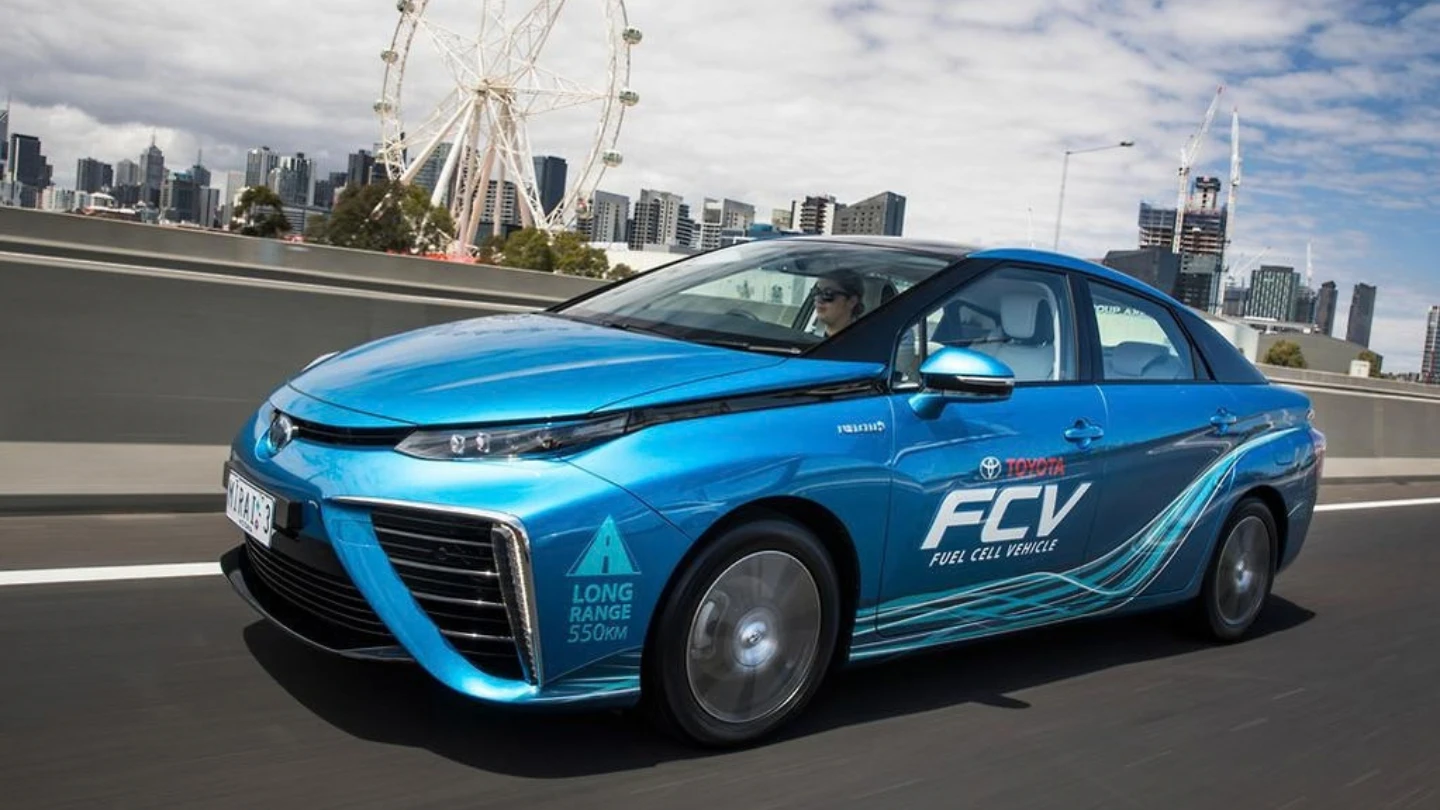
Three high-pressure hydrogen tanks supplied the fuel-cell system, and each tank stored 2.6kg, giving the prototype a total hydrogen capacity of 7.8kg.
The hydrogen travelled through a 330-cell fuel-cell stack under the bonnet, where the pressurised gas was converted into electricity to power the vehicle. Toyota has not confirmed whether the production HiLux FCEV will retain these specifications.
Also read: 2027 LDV T60 price and specs: More power, lower price
Toyota wants hydrogen to solve long-distance towing

Toyota has long promoted hydrogen fuel-cell technology as an alternative to battery-electric power for utes and vans. The argument centres on vehicles that need fast refuelling and long driving ranges while towing or carrying heavy loads.
When Toyota confirmed the production hydrogen HiLux project last year, it said the project’s “know-how” would contribute to the next generation of fuel-cell technology, with increased vehicle driving ranges.
The hydrogen HiLux has now been confirmed for Australian showrooms following its global launch in 2028.
Toyota will also put hydrogen technology through a much tougher test. A race-bred hydrogen fuel-cell HiLux is due to compete in next year’s Dakar Rally, one of the world’s most famous long-distance off-road rallies, covering 1000 kilometres across Saudi Arabia.
Toyota remains committed to hydrogen
Former Toyota Australia head of sales and marketing Sean Hanley said this when speaking to the media last year, “Many in this industry, and some outside the industry, remain sceptical about the potential for hydrogen.”
Hanley said Toyota remained firmly committed to developing a hydrogen economy, which the company saw becoming more important over the following 10 to 15 years. He described it as a long-term strategy.
Hanley had previously outlined a more ambitious goal for hydrogen HiLux technology. In 2023, he described fuel-cell technology as a potential solution for HiLux buyers who wanted more than 800km of range and long-distance towing, while also reducing emissions at a reasonable price.
He questioned whether buyers would spend $100,000 on an off-road ute designed for towing if it could not deliver half that range. Hanley said hydrogen could potentially solve that problem around 2030 or 2035, with infrastructure rather than the vehicle’s technology, know-how or capability being the main limitation.
He also said green hydrogen could make the vehicle carbon-neutral while allowing it to tow and carry heavy loads.
Australian pricing puts the challenge into context
Toyota’s electric HiLux currently costs $74,990 to $82,990 plus on-road costs in Australia, and the new MG U9 EV costs $78,990. Both cost more than the popular HiLux SR5 dual-cab, four-wheel-drive automatic diesel, which starts at $65,990.
That leaves Toyota facing a difficult proposition for a future hydrogen HiLux: it needs to deliver the long range and towing capability Australian ute buyers expect while keeping the technology affordable.
Toyota’s European targets also reflect a different market environment. Europe has tougher emissions rules than Australia, while drivers generally cover shorter distances across less sparsely populated terrain.
Toyota says 22% of its European light-commercial vehicle sales are electric, compared with 11% across the overall market. However, most of those electric sales come from smaller Peugeot-based delivery vans, which are not offered in Australia.
Overall, Toyota continues to pursue what it calls a “multi-pathway” strategy for vehicle propulsion, and the approach covers:
- Petrol
- Diesel
- Hybrid
- Plug-in hybrid
- Battery-electric
- Hydrogen fuel-cell technology
Toyota says the broad mix aims to ensure no motorist gets left behind as the industry changes. Toyota, BMW and Hyundai remain among the few car brands continuing to invest in hydrogen fuel-cell vehicles while many rivals concentrate on battery-electric technology.
Owning a reliable Toyota ute is more accessible now. Explore these used Toyota utes offered with a 30-day return policy.

Comments
New Comment