




A car horn does not “run out of honk” like a candle running out of wax. When it goes silent or starts sounding weak, it usually means something mechanical or electrical has failed.
And that is not something to shrug off in Australia due to legal and safety regulations. This is something you should diagnose quickly, and in many cases, the fix is fairly simple and cheap. This guide cuts through the funny questions and gets you to fix your failed or weak car horn fast.
Can your car horn run out of honk?
Technically, no, but effectively yes. As long as a car’s horn is okay (electrically), it will not run out of honk. You can, however, run into fines if you use your horn for anything other than a safety warning.
You will “run out of honk” the moment a police officer sees you. In NSW, for example, a single “goodbye” toot or a road-rage blast could cost you a few hundred AUD in fines.
How does a car horn work?
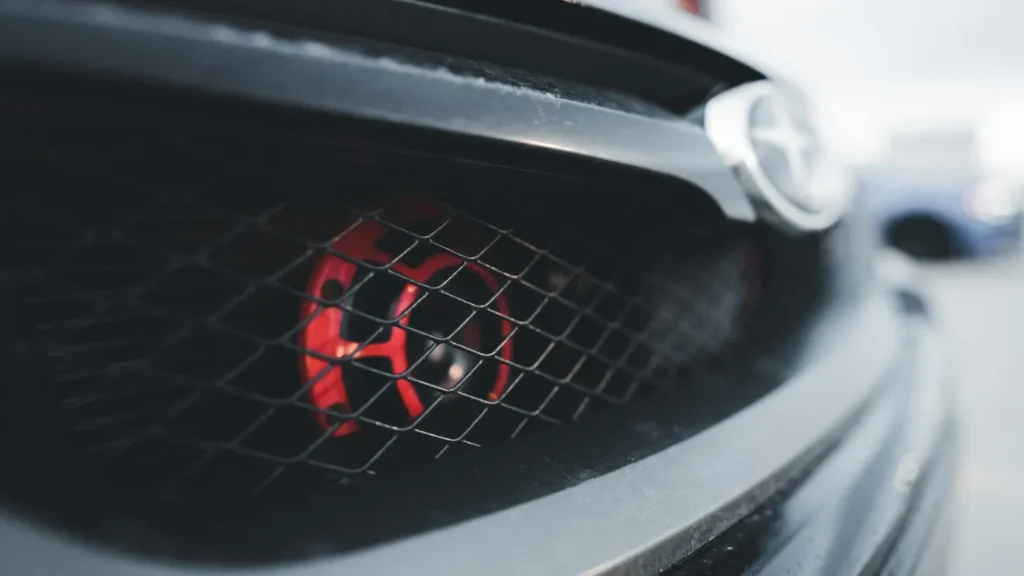
Most car horns are electromechanical devices that use electromagnetism to create a distinct car horn sound. When you press the horn button on your steering wheel, it completes an electrical circuit, often through a horn relay to handle the high current safely. Here is the car horn operation explained:
- Electromagnetism: The current flows into a copper coil, creating a magnetic field that pulls a metal armature.
- Vibration: This armature is attached to a thin metal diaphragm. As the armature moves, it breaks the electrical contact, turning off the magnet. The diaphragm springs back, reconnecting the circuit, and the process repeats hundreds of times per second.
- Acoustic amplification: These rapid oscillations create sound waves. Most modern Australian cars use a snail-shaped shroud or “trumpet” to amplify the sound and give it a richer note.
Many cars use a pair of horns or “dual tones” tuned to different frequencies (e.g., 400 Hz and 500 Hz) to create a dissonant chord that is more noticeable in traffic.
Also read: The forgotten genius behind your turn signal
Why is your car horn not working or weak?
When a car horn fails or sounds “sick,” the issue is almost always electrical or related to a physical obstruction. Since Australian road rules require a functioning horn for roadworthiness, it’s worth narrowing down the symptoms quickly. Here is a breakdown of common symptoms and their likely causes:
| Symptom | Possible cause | Explanation | How to fix |
|---|---|---|---|
| Total Silence (No sound at all) | Blown fuse | The most common cause. A surge in power can snap the fuse to protect the circuit | Pull the fuse out. If the metal strip inside is broken, replace it with an identical amp rating (e.g., 10A, 15A). |
| Total silence (No sound at all) | Faulty horn relay | If the horn relay clicks but nothing happens (or doesn’t click at all), it’s likely dead | Swap it with an identical relay from a non-critical system (e.g., wipers, headlights). If the horn works with the swapped relay, buy a replacement relay. |
| Total silence (No sound at all) | Broken clock spring | This is a spiral-wound cable behind the steering wheel. If it snaps, the horn won’t work | Replacing it requires removing the steering wheel and airbag and resetting steering angle sensors. Professional help recommended. |
| Weak or “thin” car horn sound | Failed second horn | Most cars have two horns. If one dies, the remaining one sounds high-pitched or “wimpy” | Find both horns. Test each by disconnecting and touching 12V directly (or have a helper press the horn while you listen) |
| Muffled or gurgling sound | Water ingress | Rain or high-pressure car washes can trap water inside the horn’s “snail” throat, dampening the vibration | Temporary: Remove the horn, drain the water, and let it dry in the sun for a day. Permanent: Replace the horn and reposition its face downward. |
| Intermittent operation | Loose/corroded ground | Rust or road grime at the mounting point can break the electrical circuit | Remove the mounting bolt, clean the bracket and chassis contact point with sandpaper until shiny, and reattach tightly. Apply dielectric grease to prevent corrosion. |
| Clicking sound only | Low battery voltage | There isn’t enough power to fully pull the electromagnet, so you hear the internal contact tapping | Test your car battery voltage with a multimeter (healthy is 12.4V-12.7V engine off). If low, charge the battery. If the battery is old (3-5+ years), replace it. |
| Stuck on (constant honking) | Stuck relay or switch | Either the horn button is jammed, or the relay has “welded” itself shut internally | Pull the horn relay or horn fuse immediately to stop the noise. If the relay is stuck (internal weld), replace it. If the horn button itself is jammed or the clock spring has shorted internally, that’s a professional job. |
When can you fix your car horn yourself?
You can fix most horn issues yourself if the problem is external to the steering column. Many fixes only require basic tools like a 10mm socket, a screwdriver, or even just your hands, because car horns are simple electrical circuits.
You can replace blown fuses, change a faulty relay, clean the corroded connections with a wire brush or WD-40, or install a car horn replacement.
You should not attempt a DIY fix if the problem is inside the steering wheel, specifically regarding airbag systems and complex wiring systems.
Australian standards and legal limits for the car horn

Car horns are strictly classified as safety warning devices in Australia. A combination of national technical standards and state-specific road rules governs their design and use. The Australian Light Vehicle Standards Rules and state environmental regulations primarily set vehicle standards.
1. Technical standards and noise limits
All motor vehicles must be fitted with at least one horn or device capable of giving “sufficient audible warning” of the vehicle’s approach or position.
- Single-tone horns decibel limit: <120 dB(A)
- Varying-tone horns decibel limit: <85 dB(A)
Standard vehicles cannot be fitted with devices that sound like a siren, bell, exhaust whistle, compression whistle, or repeater horn. Musical horns are also generally not permitted, as warning devices must typically emit a single non-varying note.
2. Legal use (Road Rule 224)
Rule 224 states (mentioned in Road Rules) that you must not use a horn unless it is necessary to:
- Warn other road users or animals of your vehicle’s approach or position
- Prevent an accident (e.g., alerting a car rolling back toward you)
- Operate as part of a safety system, such as an anti-theft alarm
3. Illegal use & fines by the state
Using your horn for “friendly” gestures (like saying goodbye) or expressing frustration (road rage) is illegal across Australia. Fines vary significantly by state.
4. Modifications
If you are considering an aftermarket horn (like a louder air horn), it must still comply with the single-tone requirement and decibel limits.
Do car horns have fluid?
No. Standard car horns are electrical devices that produce sound through vibration. The idea of “horn fluid” (or “honking fluid”) is a common automotive prank designed to confuse new drivers, similar to jokes about “blinker fluid” or “muffler bearings”.
FAQs about car horn not working
How long does it take for a car horn to run out?
A standard electric car horn will not run out in a fixed time, but prolonged continuous use can overheat the horn and potentially blow a fuse or damage internal components.
Do car horns have a limit?
Horns have specific technical and legal limits. A standard single-tone car horn must not exceed 120 dB(A) of the legal car horn sound limit. Continuous honking at once can permanently damage it in a few minutes. A properly maintained car horn can even last the car’s lifetime.
Can I drive my car if the horn is not working?
You can technically drive a car with a failed car horn, but a working horn is a mandatory legal and safety requirement for vehicle roadworthiness across all Australian states.
Are car air horns legal in Australia?
Standard air horns are permitted on passenger cars if they have a single non-varying tone and are under the 120 dB(A) legal limit.
Can I put a train horn on my car in Australia?
No, because a train horn exceeds the legal 120 dB limit for Australian motor vehicles.
Can I put a truck horn in my car?
You can use a truck-style air horn in your car, but only if it has a single non-varying tone, is under the 120 dB(A) legal limit, and does not sound like the prohibited devices (e.g. a siren).

Comments
New Comment