




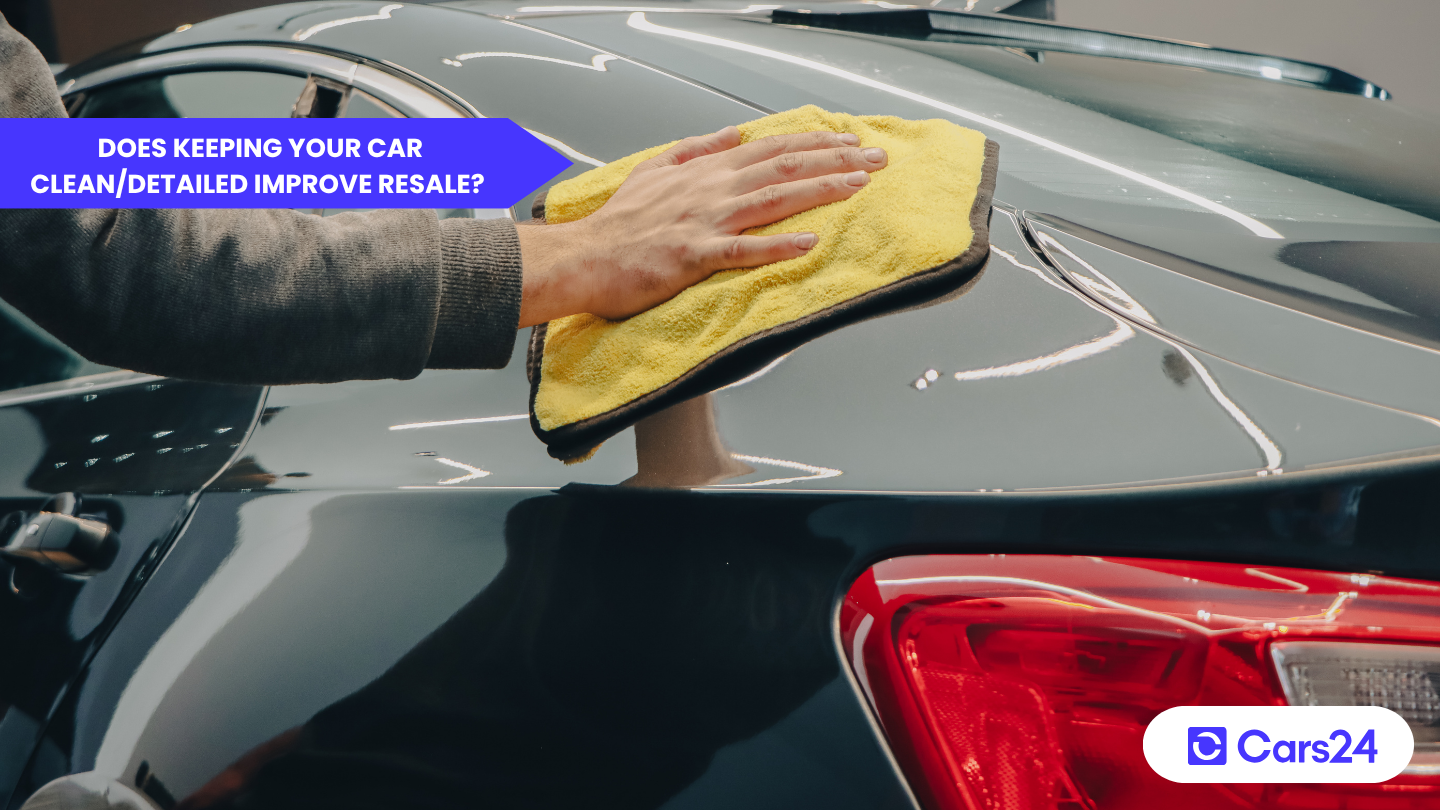
Anyone who’s ever walked onto a car yard and instinctively moved towards the shiniest car on the lot knows the answer in their gut. However, will that gut feeling prove to be money when it comes time to sell your own car? Short answer: yes. Long answer: why, and how you can leverage this to your advantage.
The condition of your car, inside, outside, and under the bonnet, has a significant impact on your car sale price and is something that many Aussies don’t realize when selling. Let’s dissect the fact and connection between cleanliness, detailing and the value of your car. Let’s also see what you can do about that BEFORE you list your car.
First impressions happen fast
Buyers, and even automated valuation tools, form an opinion about your car almost instantly. A dusty dashboard, foggy headlights, or a boot full of old servicing coffee cups sends a subconscious message: this car hasn’t been looked after. And if the outside looks neglected, buyers often assume the mechanical side has been neglected too, even if that’s not actually true.
On the flip side, a car that gleams in the driveway, smells fresh, and has crisp, clear paintwork tells a completely different story. It says this car has been cared for, and buyers are usually willing to pay a bit more for that peace of mind. This is one of the simplest, most overlooked answers to how to increase car resale value, and it costs a fraction of what most people assume.
It also affects how long your car sits on the market. A neglected-looking car tends to attract more lowball offers and more back-and-forth negotiation, simply because buyers feel they need to build in a margin for unknown issues. A clean, well-kept car shortens that process considerably.
Should you detail my car before selling?
This is one of the most common questions we hear from sellers, and it’s a fair one. Professional detailing isn’t free, so is it actually worth the spend?
In most cases, yes. Here’s why:
- The cost is usually low relative to the return. A full interior and exterior detail typically runs between $150 and $400 depending on your car’s size and condition, but it can lift your sale price by several hundred dollars or more, particularly on cars valued over $15,000.
- It removes doubt. Stains, pet hair, and lingering odours make buyers wonder what else might have been neglected. Removing that doubt tends to speed up the sale and cuts down on haggling.
- It photographs better. If you’re listing privately, your photos are often your only chance to hook a buyer. A clean, detailed car photographs noticeably better than a dusty one, and that usually means more enquiries.
- It can reveal your car in its best light, literally. Detailing often includes headlight restoration and trim treatment, both of which make a car look years newer in photos and in person.
That said, detailing isn’t always necessary. If your car is already in great condition, a thorough DIY clean might do the job just as well. The real question isn’t whether you should spend money on this. It’s whether your car currently looks like it’s worth what you’re asking for it. If the answer is no, detailing usually pays for itself.
Read more about how to negotiate better
How buyers and dealers judge condition
When you sell privately, you’re relying on individual buyers’ subjective impressions. But when you sell to a dealer or use an online car buying platform, your vehicle typically goes through a more structured condition assessment. This is where cleanliness has a very real, measurable impact.
Evaluators tend to look at things like:
- Paint condition, scratches, and swirl marks
- Interior wear across seats, carpets, dashboard, and headliner
- Odours such as smoke, pets, or mildew
- Wheel and tyre condition
- Engine bay cleanliness
- Glass clarity and headlight condition
A dirty or neglected car can trigger a lower condition grade, which directly reduces the value on the offer. A clean, freshly detailed vehicle in otherwise identical mechanical shape can grade higher, meaning more money in your pocket for essentially the same car. This is why two nearly identical cars, same year, same kilometres, same service history, can end up with noticeably different valuations once condition is factored in.
How to prepare your car for sale
If you’re planning to sell soon, here’s a practical way to prepare your car for sale and put your best foot forward.
- Deep clean the interior. Vacuum every seat, footwell, and boot space. Wipe down the dashboard, door cards, and centre console. Clean the windows from the inside, which alone makes a surprising difference. If you smoke or have pets, a proper odour treatment or steam clean is worth the effort.
- Wash and decontaminate the exterior. A regular wash isn’t always enough to remove months or years of road grime, tar spots, and bug residue. A clay bar treatment followed by a quality wash and wax will make your paint look noticeably deeper and glossier.
- Address minor cosmetic issues. Small scratches, scuffed alloys, or chipped paint are cheap to fix but affect buyer perception more than you’d expect. A quick touch-up pen or an alloy wheel repair can go a long way for very little money.
- Clean under the bonnet. This one surprises people, but a tidy, dust-free engine bay signals a car that’s been looked after. You don’t need showroom perfection here, just an absence of obvious grime and neglect.
- Sort your paperwork. Have your service history, roadworthy certificate if applicable, and any receipts for recent work ready to go. A well-documented car tends to sell faster and for more, simply because it removes uncertainty for the buyer.
- Take photos in good light. Once everything’s clean, photograph the car in natural daylight, ideally early morning or late afternoon when the light is soft. Avoid harsh midday sun, which creates glare and unflattering shadows.
Going through this checklist properly can easily take an afternoon, but it’s an afternoon that tends to pay for itself many times over once offers start coming in.
Read more about how to spot hail damage on a car
Resale maintenance: The habits that pay off over time
Detailing right before a sale is smart, but the sellers who get the best results are usually the ones who’ve practiced good resale maintenance throughout their ownership. Think of it as compounding interest for your car’s value. A few habits worth building over the years you own the car:
- Wash it regularly. Dirt and grime left on paint for long stretches can etch into the clearcoat over time, leading to dullness that’s hard to reverse.
- Deal with interior spills straight away. Stains that sit for weeks are much harder, and more expensive, to remove than fresh ones.
- Keep up with servicing on schedule, even when it feels like an unnecessary expense at the time. A complete, stamped service history reassures both private buyers and dealers.
- Park undercover where you can. UV exposure fades interiors and dulls paintwork faster than almost anything else.
- Fix small things early. A squeaky door, a chip in the windscreen, or a warning light left unresolved tends to snowball into bigger, more visible problems, and bigger deductions when it’s time to sell.
- Rotate and maintain your tyres. Uneven wear is an easy thing for buyers and evaluators to spot, and it raises questions about alignment and suspension that can affect your offer.
None of this requires obsessive care. It really just comes down to not letting small issues pile up by the time you’re ready to sell. Cars that are maintained consistently, rather than fixed up all at once right before a sale, also tend to have fewer surprises during a pre-purchase inspection, which keeps the whole process smoother.
What about older or higher mileage cars?
You might be wondering if detailing is worth it on an older, higher-kilometre car that isn’t going to fetch a huge price anyway. The answer is generally still yes, just scaled appropriately. For lower-value vehicles, a thorough DIY clean, a good vacuum, an interior wipe-down, and an exterior wash is often enough to lift the perceived value without spending money on professional detailing you might not recoup.
The underlying principle holds at every price point. Buyers pay for confidence, and a clean car is one of the clearest, cheapest signals of confidence you can offer. Even on a car worth a few thousand dollars, a clean interior and a decent wash can be the difference between a quick sale at a fair price and weeks of low offers.
In Short
Does keeping your car clean and detailed improve resale value? Yes, consistently and measurably. A clean, well-presented car:
- Creates a stronger first impression
- Reduces buyer hesitation and negotiation
- Can improve condition grading with dealers and online platforms
- Photographs better for private listings
- Often returns more in sale price than the cost of preparing it
If you’re getting ready to sell, don’t skip the clean-up step. A few hours of effort, or a modest spend on professional detailing, is one of the most reliable ways to boost your final number. It’s a small investment of time and money set against what’s usually the biggest financial transaction most people make outside of a house, so it’s worth getting right.
Ready to see what your car is actually worth? Get an instant, obligation-free valuation with Cars24 and find out how a bit of prep work could translate into a better offer today.

Comments
New Comment