





You’ve found the car. Maybe it’s a well-kept 2019 Corolla with one owner, maybe it’s a ute that’s ticked over 120,000km but still looks the part. Before you hand over a deposit at the asking price, it’s worth asking the seller one question: is this actually your best offer?
More often than not, it isn’t.
Negotiating a used car doesn’t mean haggling someone down to the bone. It means paying a price that actually reflects the car’s condition, its history, and what similar cars are going for right now,not what a listing happens to say.
Read more: What is a Car History Check and why you need one before buying
What factors factor in while negotiating?
It is normal in many parts of the used car market in Australia. If you’re buying from a traditional dealership or a private seller, it’s common to make a reasonable offer. Some sellers build a little room into their asking price, while others price their car as low as they’re willing to go.
How much room there is to negotiate depends on several factors, including:
- How realistic the asking price is to begin with
- Condition, both mechanical and cosmetic
- Service history,complete or patchy
- Kilometres relative to the car’s age
- How long it’s been sitting unsold
- Whether the model’s in high demand (a diesel dual-cab ute won’t move the same way a niche hatch will)
Do your homework before you quote your offer

Rocking up with an offer with no research whatsoever is the fastest way to lose credibility with a seller. Before you quote a figure out loud, look up what the same car, same make, model, year, variant, transmission, and roughly the same kilometres, is selling for in the used car market.
Comparing like for like matters more than you think. A base-model Toyota Corolla Ascent Sport with 180,000km and a fully-optioned Toyota ZR Hybrid with 90,000km won’t fetch you the same price, even if they share a badge. Getting the comparison right is integral and you’ll walk in with a number that’s hard to argue with!
Actually look at the car
Looks can be deceiving. A car that has been detailed for listings could potentially hide a lot. It’s best you actually walk around the car slowly and physically inspect for red flags like the following:
- Tyre wear, and whether it’s even across all four
- Panel gaps, mismatched paint, or fresh touch-ups
- Chips or cracks in the windscreen
- Warning lights on the dash once the engine’s running
- Fluid stains under the car or in the engine bay
- Anything that hints at prior smash repair
If you don’t trust your own eye for this, a pre-purchase inspection like the car history check from CARS24 at just $34. This will definitely save you from buying a used car with a hidden problem.
Chase down the paperwork
A maintained logbook with regular stamps offers more insight about the car than the car seller can. You must for:
- Service records and logbook
- Repair invoices, especially for anything major
- Registration papers
If you’re buying privately, run a PPSR check before you move further in the negotiation. It will tell you if the car has been written off, reported stolen, or still has finance owing against it. Skipping this step is how many people end up buying someone else’s debt.
Missing service history isn’t automatically a dealbreaker. It is, however, a very legitimate reason to knock the price down.
Know your ceiling before you start talking numbers
It’s easy to fall in love with a car and lose sight of the maths. It’s imperative that you set your absolute maximum before you start negotiating, and build in the costs that come after the purchase price:
- Registration and stamp duty
- Insurance
- Servicing and tyres
- Fuel or charging
- The inevitable “it’s a used car” repair fund
If the seller won’t get close to a fair number, walk away. You’ll always find another car that makes your heart go zoom.
Make an offer you can actually defend
A lowball offer with no explanation usually just annoys the seller and ends the conversation. A specific, reasoned offer gets a real response.
Something like, “Hey, I’ve compared a few similar listings and this one’s tyres are close to needing replacement, so I’d like to offer $22,000.”
That is not aggressive. It is backed by something the seller can check for themselves, making it much harder for them to not consider it.
Ask for the drive-away number, not the sticker price
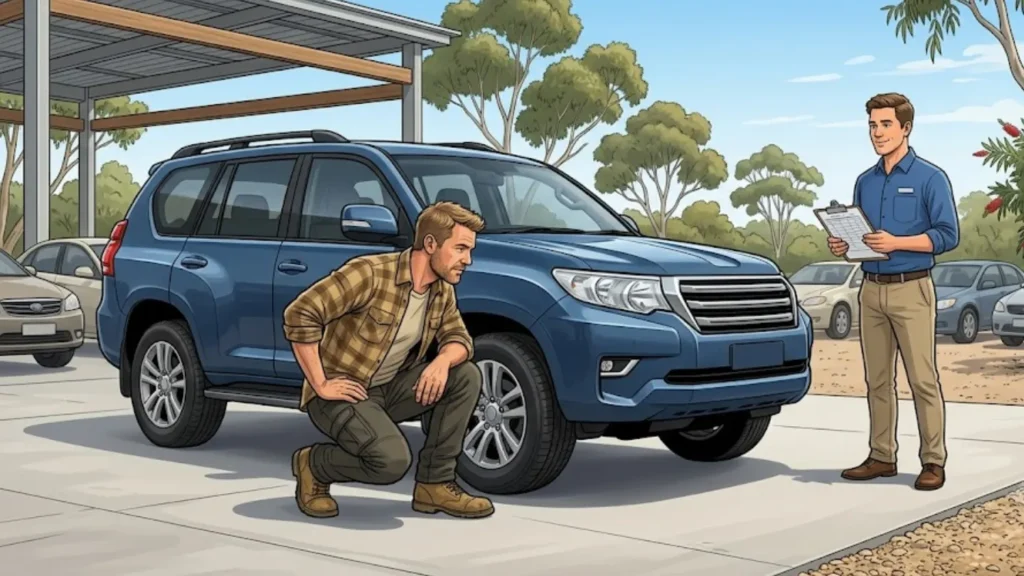
That is, at a dealership, the number they are advertising is rarely the number you have to pay. Ask them to show you the drive away, along with registration, delivery, and any other admin fees. And get it in writing, each and every time.
It’s important because if you get quoted one price from a dealer, and a different one from another, you need the figure you can actually take away in writing. Otherwise you are just, unfortunately, comparing apples and oranges.
If the price won’t move, ask for something else
Some sellers hold firm on price but have more room to move elsewhere. Worth asking for:
- A full service before handover
- New tyres if the current ones are marginal
- Rego renewal included
- A spare key (genuinely useful,replacements can run into hundreds of dollars)
- Floor mats or minor cosmetic fixes
Sometimes $500 of extras is worth more to you than $500 off the price, especially if it’s something you’d have paid for anyway.
Dealer or private seller,different game
Dealers can usually negotiate more, especially with older vehicles or during promotions. If a car dealer will not negotiate on price, try to get them to offer additional services instead. Dealers are often willing to offer accessories and other services compared to a price reduction.
Compared to dealers, private sellers have less room for negotiation since it is their own money. It is essential to maintain a good attitude when negotiating with private sellers, explain the reasons for the decision, and recognize that there is less potential for bargaining than in the case of dealers. It is also a good idea to check the PPSR database before meeting with a private seller to make sure that the car is registered correctly in the seller’s name; if possible, also conduct an independent inspection of the car if something seems suspicious.
Mistakes that cost people money
- Making an offer before actually inspecting the car
- Going in with a number so low it kills the conversation
- Telling the seller your top budget upfront
- Ignoring what repairs will actually cost down the track
- Letting yourself be rushed into a decision
- Skipping the PPSR or service history check to save time
None of these save time in the long run. They just move the cost to after you’ve bought the car.
When to just walk away
Some deals aren’t worth chasing. Walk if:
- The seller won’t answer straightforward questions
- The service history has gaps that don’t add up
- The price sits well above comparable listings
- You spot damage that wasn’t disclosed
- You’re being pushed to decide on the spot
There’s no shortage of used cars on the market. The right one at the right price will turn up again.
Where does Cars24 fit into this?
Negotiation isn’t part of the buying process when you buy through Cars24, and that’s deliberate! Every car on our platform is inspected to the same standard and priced with absolute transparency. So there’s no need for back-and-forth, no wondering if you are being quoted differently to the next buyer, and no guessing whether the number in front of you is actually fair and the best price available.
This is what a buyer who is not interested in the stress of negotiation gets in return for a stress free car buying experience.
Final advice
It’s not that negotiating the price of a used car is not a good idea. It’s just that it involves knowing the real value of the car and being able to justify it, comparing multiple options, ensuring the required due diligence is carried out, and then making an offer based on that.
And if it doesn’t feel right, walk. There’ll be another one.
There is no definite figure, as it depends on the car’s condition, how far it is from the ideal, what other similar cars are selling for, and how in demand it is. A realistic offer based on research is likely to be more effective than a particularly low one.
Not at all. It’s expected in both private sales and from dealers. Just remember to keep your offer realistic and explain your reasoning, and you should have no trouble.
In most cases, yes. You’re more likely to get a better deal from a dealer, as they have more room for negotiation or may be able to provide additional benefits instead of a straight lower price. Private sellers are often harder to negotiate with because they only have their asking price to work with.
Comparable listings, a test drive, the maintenance records, and, in the case of a private sale, a PPSR report. All of these together will give you a good idea of a realistic asking price and what sort of condition the car is in.

Comments
New Comment