




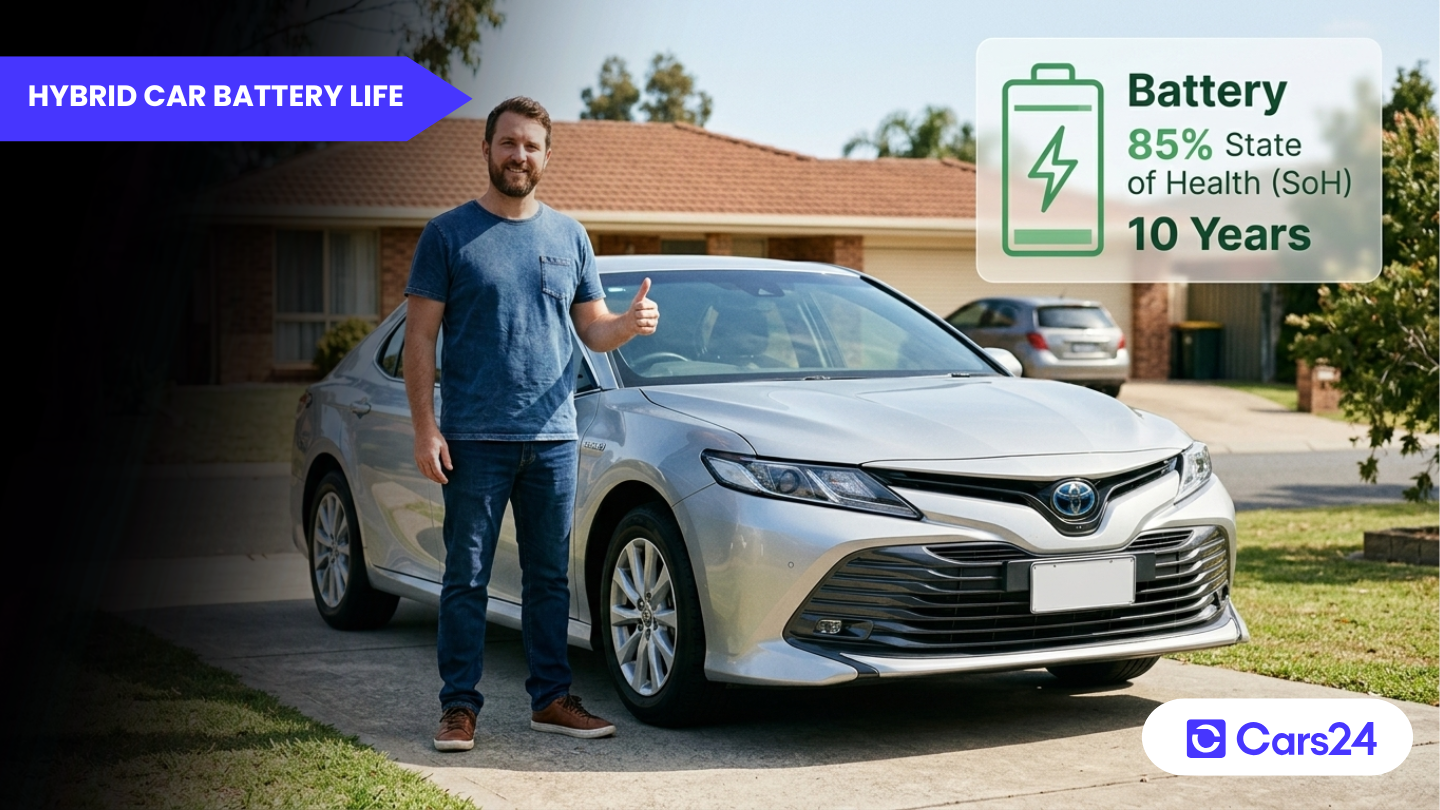
Thinking about whether to keep your hybrid car for another 5 years or trade it in while the battery health still looks good? Or maybe you want to buy a hybrid car.
Either way, you must know how long a hybrid car battery can last and how much a replacement usually costs.
You’ll also learn about the factors affecting the hybrid car battery lifespan, the signs of a degrading battery, and other things related to owning a hybrid car in Australia.
What is a hybrid car battery?
A hybrid car battery is a high-voltage energy storage system, usually made of Lithium-ion or Nickel-Metal Hydride, designed to store electricity captured during driving and use it to power an electric motor.
The mild hybrid (MHEV) car has a small 48-volt (occasionally 12-volt) lithium-ion battery. The full hybrid (HEV) car has a medium-sized battery pack (around 100V–300V). A plug-in hybrid (PHEV) has a massive battery pack, often 4 to 10 times larger than an HEV’s but smaller than an EV’s.
When is the hybrid car battery considered failed?
A hybrid car battery is considered failed when it can no longer maintain a stable voltage or support the electric powertrain, triggering system shutdowns.
Degradation is different; it refers to a gradual loss of capacity over time. Most batteries continue to function even after significant capacity loss.
How long can a hybrid car battery last?
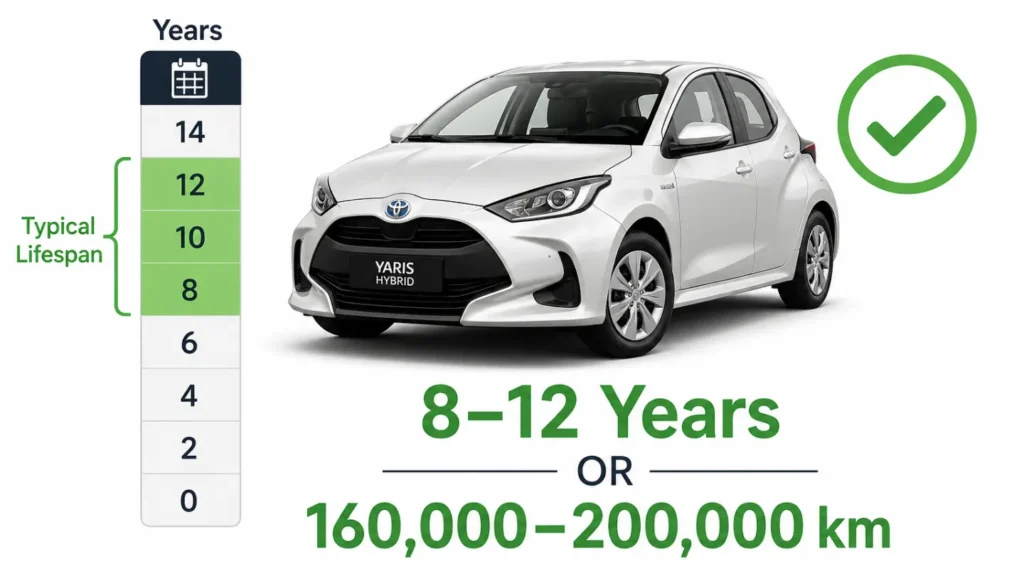
The realistic average lifespan for a hybrid car’s high-voltage traction battery is typically 8 to 12 years or roughly 160,000 to 200,000 kilometres in Australia. There is a slight gap between the standard battery warranty (8 years) and the average battery lifespan (which is longer).
This gap exists due to conservative powertrain engineering and the fact that batteries often remain usable well beyond the warranty period.
A well-driven and properly maintained hybrid car (HEV) can even surpass 250,000 km or run for 10-15 years on its original battery packs, though they may already be under higher stress due to Australia’s harsh climate.
Most Australians will never replace their hybrid car battery while they own the car, trading it in before the battery degrades. The gap primarily affects second or third owners of vehicles that are 10+ years old.
Standard hybrids (HEV) often outlast their warranty, with many Toyota Prius and Camry Hybrid models still on the road with original batteries after 10+ years. Plug-in hybrid (PHEV) batteries face higher stress due to deep cycling (0-100% charging) and can degrade significantly and quickly after the warranty (8 years).
For fleet hybrid cars
Many fleet companies cycle their cars out of service every 3–5 years (or after 100,000–150,000 km) to avoid the “failed phase” that typically begins closer to 200,000 km. This means their average battery lifespan of 5-8 years is often shorter than the battery’s total potential life.
Fleet hybrid vehicles (rideshare, delivery, or corporate pools) are used more and typically serviced frequently. Private hybrid cars often suffer from age-related or inactivity-related degradation. Fleet cars suffer from usage-related wear.
Interestingly, high-mileage fleet vehicles sometimes maintain better battery health than older, low-mileage private cars because regular use keeps the battery chemistry active and stable. Ex-fleet hybrids often enter the used car market with 90%+ battery health.
This article will help you determine whether standing or low-mileage cars are healthier.
Estimated hybrid car battery replacement costs
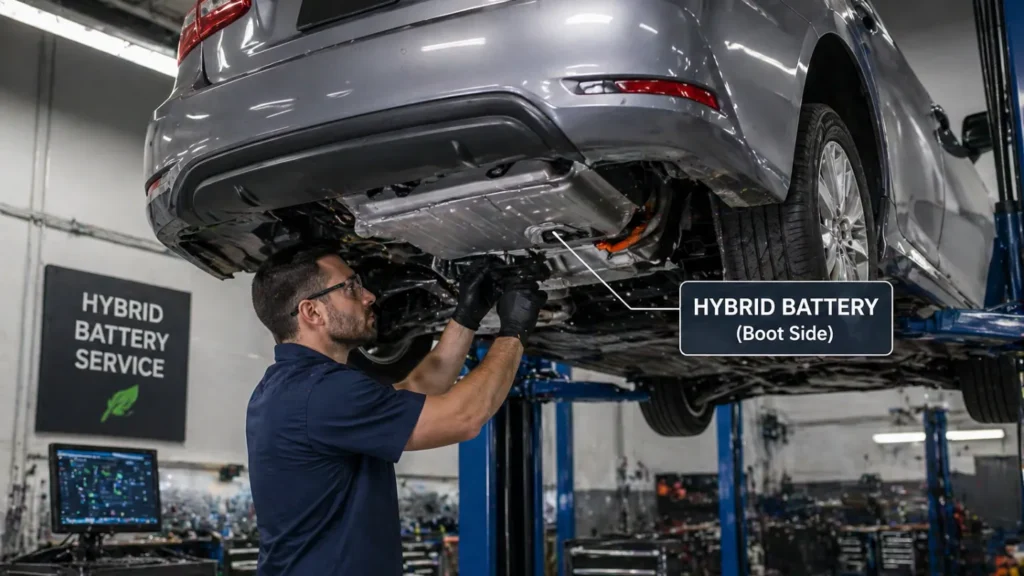
Battery replacement costs differ significantly between standard hybrids (HEVs) and plug-in hybrids (PHEVs) due to the vast difference in their battery sizes. Generally, a new HEV battery from a manufacturer costs between $2,000 and $10,000. Those costs jump to between $10,000 and $20,000 for a PHEV battery. (Compare them to EV battery replacement costs.)
These prices generally represent the hybrid car battery pack itself. Labour for installation can add several hundred to over a thousand dollars, depending on the dealership.
You don’t have to buy a brand-new battery from the dealer if your hybrid car is out of warranty. You can buy remanufactured batteries from companies like Infinitev or from my car, which cost 40–60% less than new ones.
Brand-new battery units made by third-party manufacturers are also available. Used battery packs from wrecked vehicles are also available on platforms like eBay Australia.
Read this article about Petrol vs. HEV vs. PHEV vs. EV running costs if you are considering buying a fuel-efficient car in Australia.
How is the hybrid car battery setup different from petrol cars or EVs?
You can think of a hybrid battery as the middle ground between a traditional ICE car and a full EV. All three use batteries, but they serve completely different purposes and operate under different stress levels.
| Feature | Petrol car | Hybrid car | Electric vehicle (EV) |
|---|---|---|---|
| Primary battery role | Starting the engine | Assisting the engine | Powering the car |
| Battery size | Very small | Medium | Very large |
| Voltage | 12V | 100-300V+ | 400-800V+ |
| Source of charge | Alternator | Engine + Braking | Wall plug |
You can learn more about how hybrid cars operate in a different detailed blog.
Factors affecting the lifespan of a hybrid car battery in Australia
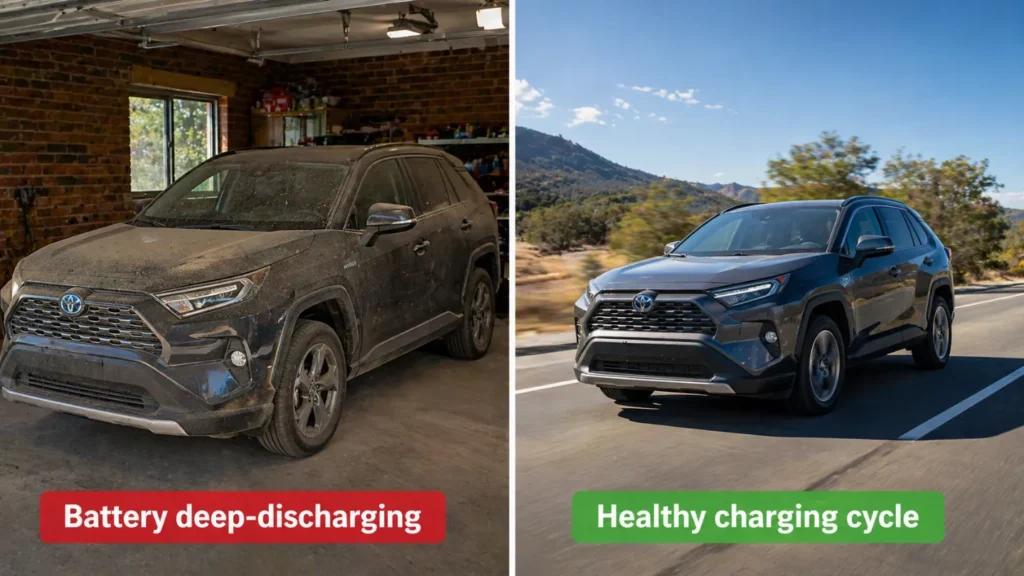
Australia’s unique environment often puts hybrid cars under “severe service” conditions (frequent maintenance), which can accelerate battery wear if not managed.
1. Thermal stress
High ambient temperatures (routinely over 35°C) speed up the chemical breakdown inside battery cells.
2. Cooling obstructions
Most hybrid cars use air-cooled batteries with intake vents near the rear seats. Fine red dust, pet hair, and lint may clog these vents and the cooling fan, making the battery run hot for months, leading to early failure.
3. Inverter coolant
The inverter handles power conversion (DC to AC and regeneration) and generates significant heat. Inverter coolant can break down faster in hot climates than the standard 8-year lifespan suggests.
4. Severe driving conditions
Frequent short trips, extended idling in city congestion, or towing heavy loads are common in Australia and put higher stress on the hybrid car system.
5. Inactivity
Ironically, not driving can be worse than driving frequently. If a hybrid car sits unused (often) for weeks, the battery can deep-discharge, which permanently damages its ability to hold a charge.
6. Regenerative braking
Heavy and sudden braking in hybrid cars creates heat spikes. Gentle, smooth braking is much better for long-term battery health.
7. Cycling stress
PHEVs generally have a stressful battery life because they are often charged to 100% and discharged to near 0% to maximise electric-only range. This “deep cycling” causes more chemical wear than the shallow 40–80% charging cycles used by standard hybrids (HEVs).
8. Charging habits (PHEV only)
Frequent use of DC fast chargers (where applicable) in PHEVs creates more heat and can accelerate degradation compared to slower AC home charging.
Signs of a degrading hybrid car battery
Hybrid car batteries typically decline gradually rather than failing overnight. These are the most common signs to watch for:
1. Reduced fuel economy
This is often the first red flag. If you find yourself fueling up more frequently for the same distance, your battery may no longer be effectively supporting the electric motor, forcing the engine to run more often.
2. Engine hunting
You might notice the hybrid car’s petrol engine kicks in sooner than it used to during light acceleration or even while idling to recharge a weak battery.
3. Sluggish or inconsistent performance
If your hybrid car feels heavy or slow to respond when pulling away from the lights, the battery might not be delivering the necessary power.
4. PHEV range loss
A significant drop in the usual electric-only range for plug-in hybrids is a clear sign of capacity loss.
5. The “check hybrid system” warning
This is the most direct alert. It may also appear as a “Red Triangle of Death” or a battery icon, depending on your hybrid car model.
6. Erratic battery gauge
If your hybrid car’s battery level display jumps rapidly from full to low or fluctuates wildly during a short drive, it indicates the cells can no longer hold a stable charge.
7. Overheating signs
Loud cooling fan noise or alerts about battery cooling performance often indicate overheating, usually caused by blocked vents or a failing system.
8. Strange odours
An overheating or failing hybrid car battery can sometimes produce a burnt electrical or sulphur-like smell.
How to check your hybrid car battery’s State of Health?
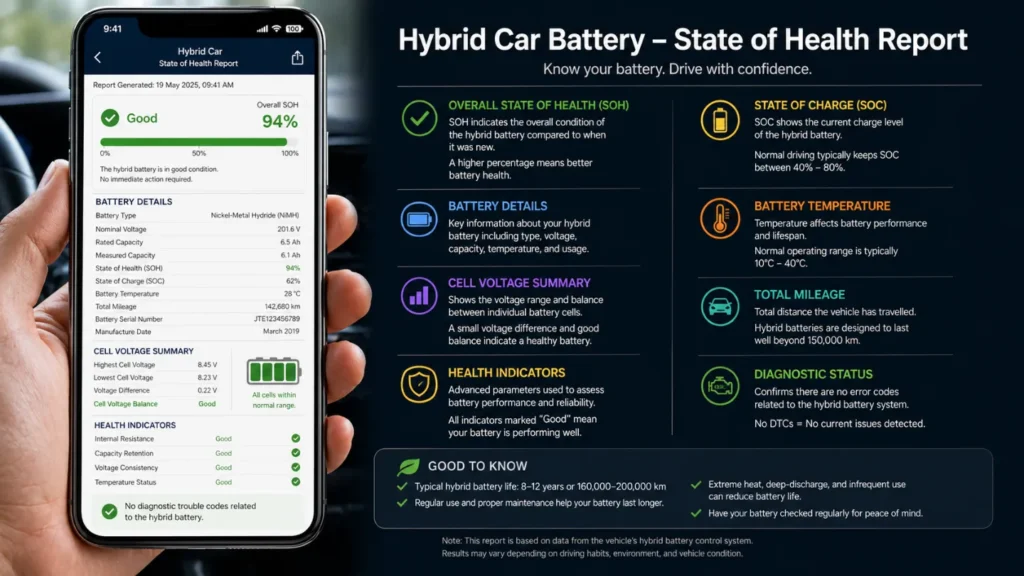
You can check your hybrid battery’s State of Health (SoH) for as little as the cost of a coffee, though the method varies depending on whether you have a standard hybrid (HEV) or a plug-in (PHEV).
You can try quick and free in-store tests and online calculators to see if a professional test is even necessary. Otherwise, the most cost-effective DIY way to get professional-grade SoH data is using a Bluetooth OBD2 adapter and a dedicated app.
You can use the popular Dr. Prius/Dr. Hybrid app for a Toyota or Lexus hybrid (HEV) car. Use a dedicated app like the Car Scanner ELM OBD2 app for PHEVs.
You can go for professional mobile (battery) tests if you are buying or selling a used vehicle and need a certified report to prove the battery health, which costs even more.
Is it worth replacing a hybrid battery?
You have to look at how much the fuel savings pay back the cost of the battery versus the alternative (driving the car with a dead battery on petrol only) to calculate the ROI for a hybrid car battery replacement.
If your car is worth more than $15,000, the ROI on a New Battery is better because it protects the vehicle’s high resale value. If your car is an older workhorse worth less than $10,000, a refurbished battery offers a much quicker ROI and keeps the car economically viable.
Right time to sell your hybrid car for the best resale value
The perfect time to sell your hybrid car for maximum resale value is typically just before it hits two major milestones: the 5-year mark or 100,000 kilometres. Hybrids hold their value far better than pure EVs, and their value is heavily tied to the perceived risk for the next buyer.
If you have a Toyota or Lexus hybrid car with a 10-year extended battery warranty, you have an extra 2-year cushion compared to other brands. Always mention this prominently in your ad to justify a higher price. The warranty automatically transfers to the new buyer when you sell the car.
Know more about the best time to sell your car here.
The bottom line
In Australia, a well-kept hybrid car battery usually lasts 8-12 years and often around 160,000 to 200,000 km, with many going surprisingly further if they are driven regularly and maintained properly.
What matters most is not just age or mileage, but climate, usage, and care. So pay attention to the warning signs: weaker fuel economy, sluggish take-off, or erratic battery readings. Check the battery’s State of Health before you buy, and if the car is getting older, factor in whether a replacement still makes financial sense.

Car tips, minus the guesswork
Get simple buying, selling, finance and ownership tips straight to your inbox.
FAQs
1. Can you drive a hybrid car with a dead hybrid battery?
In most cases, no, you cannot drive a hybrid car with a dead high-voltage battery, even if the petrol engine and fuel tank are perfectly fine. The hybrid car’s computer generally will not allow the vehicle to enter “READY” mode without the high-voltage battery power.
2. How often do you have to drive a hybrid car to keep the battery charged?
The general rule is to drive the car for at least 30 minutes once a week. HEVs are more sensitive to sitting idle than PHEVs.

Comments
New Comment