





A lot of guides give different suggestions when it comes to selling your car. Some say sell before the 100k kilometers while some suggest price it high to leave some negotiation room.
But you have to be reasonable and consider real-world factors like government policies, remaining warranty, and even the best time of the year when selling a car. Here’s how to time your sale for maximum value in Australia.
Why the timing and car age matter in selling a used car
Timing and car age matter because a car’s depreciation isn’t linear but drops sharply at certain milestones. The worst time to sell is right after those drops, and the best time is just before them. Factors like remaining warranty, upcoming service bills, facelift news, NVES, timing in a year, and buyer perception all play a role in your used car’s value.
What is the best mileage to sell a car?
The right odometer number for selling a used car in Australia is just under 100,000 kilometres, because it acts as a major psychological barrier. Once a car crosses this six-figure mark, it is often filtered out of search results on listing sites, and the buyer pool shifts from “premium seekers” to “bargain hunters.”
| Odometer reading | Market perception | Recommendation |
|---|---|---|
| 30,000–45,000 km | “Near New” | Sell if you want a brand-new car and a high trade-in |
| 85,000–95,000 km | “The Sweet Spot” | Sell now. This is your last chance for top-tier pricing |
| 105,000–120,000 km | “High Mileage” | Hold. The value has already dropped; you might as well keep it |
| 140,000–150,000 km | “End of Life” (for some) | Sell before major mechanical repairs become frequent |
The sweet spot: 90,000 km–98,000 km
This is purely your psychological edge, as the mechanical difference is usually not so profound as compared to a 100,000-kilometre-driven car.
The manufacturer warranty milestone: 60,000 km–75,000 km
Most Australian warranties are capped at 5 years or 100,000 km (some, like Mitsubishi, go higher). A buyer will usually pay a premium for a car with 70,000 km because they know they have roughly 30,000 km of “peace of mind” motoring left under warranty. Buyers also consider this an ideal mileage.
The low kilometres premium: Under 50,000 km
If your car has low mileage for its age (e.g., a 4-year-old car with 35,000 km), you can often list it above the market average due to high-value buyer perception.
For hybrid cars and EVs
A replacement battery pack can cost upwards of $10,000 for plug-in hybrids (PHEVs) or significantly more for pure EVs. The standard “100,000km rule” still applies here, but you must overlay it with the 8-year battery warranty window common across most brands.
The best time to sell and get the best value for your EV is within the year 6 or 7, or while your car’s battery capacity is still above the 70% threshold mentioned in most warranties.
Here are some useful tips to maximise your car’s resale value, other than just timing your selling.
What is the best age to sell a used car?
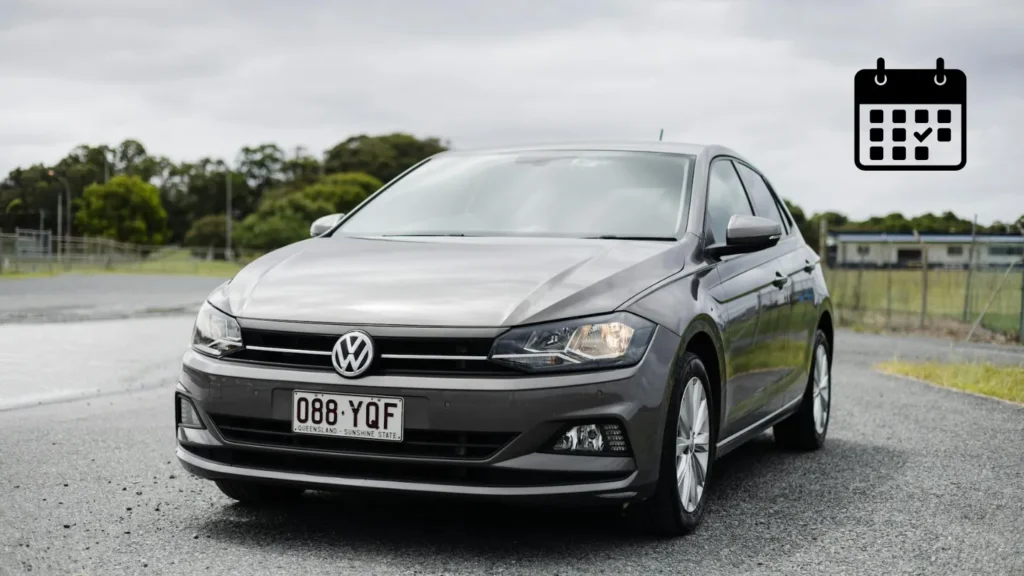
The sweet spot for selling a used car to achieve the best balance of resale price and total cost of ownership is typically when the vehicle is 3 to 5 years old. Selling within this window ensures the car is still considered near new, often has remaining warranty, and stays under key psychological mileage barriers.
Most Australian manufacturers offer 5-year warranties. Selling at the 4-year mark means the next owner still has a safety net.
The rapid depreciation levels out by year 5. It means you’ve already taken the biggest financial hit, but the car still holds enough value to fund a significant portion of your next purchase.
Your car likely still features modern safety tech (like AEB or Lane Assist) at 3–5 years old that current buyers expect, preventing it from being viewed as outdated.
Alternative: the 8–10 year milestone
If you miss the 5-year window, the next logical point to sell is just before the 8 to 10-year mark. Depreciation almost stops or slows significantly after 8 years.
Many cars require expensive major services (e.g., timing belts, transmission fluids) around year 8–10. Selling just before these big-ticket maintenance items saves you thousands.
Here is an argument on used car age vs. mileage, which will help you understand the used car buyer’s perception.
What is the best time of the year to sell a car?
The best time of the year to sell your used car for the highest price is generally during the summer months and the End of Financial Year in Australia. These periods usually bring higher demand and quicker sales.
| Period | Why it’s a peak time | Best for |
|---|---|---|
| Summer (Nov–Jan) | Search volumes peak (up to 30% higher) as families prepare for road trips and holiday travel | SUVs, 4WDs, and family vans |
| EOFY (May–June) | Businesses and individuals look for tax-related purchases or budget upgrades | Utes and business-use vehicles |
| Early New Year (Jan–March) | Buyers look to upgrade using holiday bonuses or start the year with a fresh car | General passenger cars |
| Tax Refund Season (July–Sept) | Buyers have extra cash from tax refunds to make larger deposits | Budget-friendly commuter cars |
When to sell vs. hold your used car
Buyer sentiment has shifted toward fuel efficiency, creating distinct “sell” or “hold” windows depending on the car.
| Car type | Market sentiment | Recommendation |
|---|---|---|
| Diesel Utes / Large 4WDs (e.g., HiLux, Ranger)Good to Excellent | High and resilient used car demand | Sell. You are likely at the price ceiling for pure-diesel tech. |
| Efficient Hybrids/PHEVs (e.g., RAV4 Hybrid, Corolla) Any condition | Currently strongly bullish due to efficiency | Hold. Unless you need the cash, their value is stable |
| Older Luxury Sedans/Large SUVsFair to Poor | Bearish. High running costs and rapid depreciation | Sell. These are depreciation traps currently |
| Small petrol “commuters” (e.g., i30, Mazda3) Under 100,000 km | Stable. High demand from budget-conscious buyers and students | Hold. Well-maintained small cars sell quickly |
| Early-gen EVs (e.g., older Tesla Model 3, Nissan Leaf)Out of Warranty | Negative. Steep resale drops due to rapid tech turnover | Sell. They’re under extreme pressure from new EVs |
Also read: Don’t sell your car before you fix these mistakes
What is the best route to sell your car?
Choosing between a private sale and a dealership in Australia fundamentally comes down to a trade-off between time and money. A private sale generally yields more cash, while a dealership offers an almost instant, risk-free transaction.
Choose a private sale if you are willing to wait for a buyer to pay the true market value, your car is unique (Enthusiast or Collector), and you have a low-value car (older than 10–12 years).
Choose a dealership if you need the car sold today to pay for a new one or clear a debt, the car is financed, and you want a “set and forget” process.
Want to know how to sell your car when it is financed?
Interest rate on a new car vs. depreciation argument
Compare the cost of borrowing (interest) against the loss of value (depreciation) of the new vehicle to make a smart financial decision. You can calculate a simple “Year 1” comparison.
If you keep your current car, your used car’s depreciation has already slowed (typically about 10% per year after age 3). You pay $0 in new interest.
If you buy a new one, you pay ~6% in interest plus lose ~20–25% in value. Even if you use the trade-in money to lower the loan, the total “loss” on the new asset is roughly 30% of its value in the first 12 months.
In most cases, keeping a well-maintained used car makes more financial sense. Only upgrade if the maintenance costs of your current car exceed the combined cost of new loan interest and the first-year depreciation hit.
The NVES factor in selling used cars
The New Vehicle Efficiency Standard (NVES), starting January 2025, may work in your favour depending on your car type. For instance, the higher price of new petrol/diesel cars may push buyers toward used cars, increasing their resale value.
High-demand models like 4WDs and diesel utes may become even more attractive as new ones get expensive. An old EV or a hybrid car may depreciate faster as the NVES encourages a flood of new, more efficient vehicles. So, maybe it’s better to sell it now if you are planning to buy a new one soon.
Tackling market saturation for identical cars
In a saturated market with hundreds of identical listings, the “when” to sell is less about the date and more about finding a window of peak demand or capitalising on industry-wide shifts like the NVES to make your car stand out. You must differentiate based on condition and perceived value rather than just price.
You can ensure that you list your car before it hits the psychological odometer barrier of 100,000 km, it has a fresh service proof and RWC, highlight the car’s “NVES-Exempt” utility, and have a premium presentation.
The bottom line
A few factors and the buyer’s perception decide when you should sell your car. Your strongest position is just before the big psychological and financial cliffs: under 100,000 km, within 3–5 years of age, and while there’s still factory warranty left.
So, sell it when your car still feels low-risk to the next owner, not when it starts costing you money. Get that timing right, and you stay in control of the deal.
FAQs
1. What happens to car insurance when you sell your car?
You can cancel or transfer your old car insurance policy. You can transfer the policy to a new vehicle if you are buying one. Do not leave the policy active once the car is gone, as it could complicate your claims history.
2. How to keep your number plate when selling a car?
In most states, you must visit a registry office (like VicRoads or Service NSW) before the used car sale to “reserve” or “hold” your custom/personal plates and get a set of standard replacement plates. You must also update the new plate number in the rego.

Comments
New Comment