




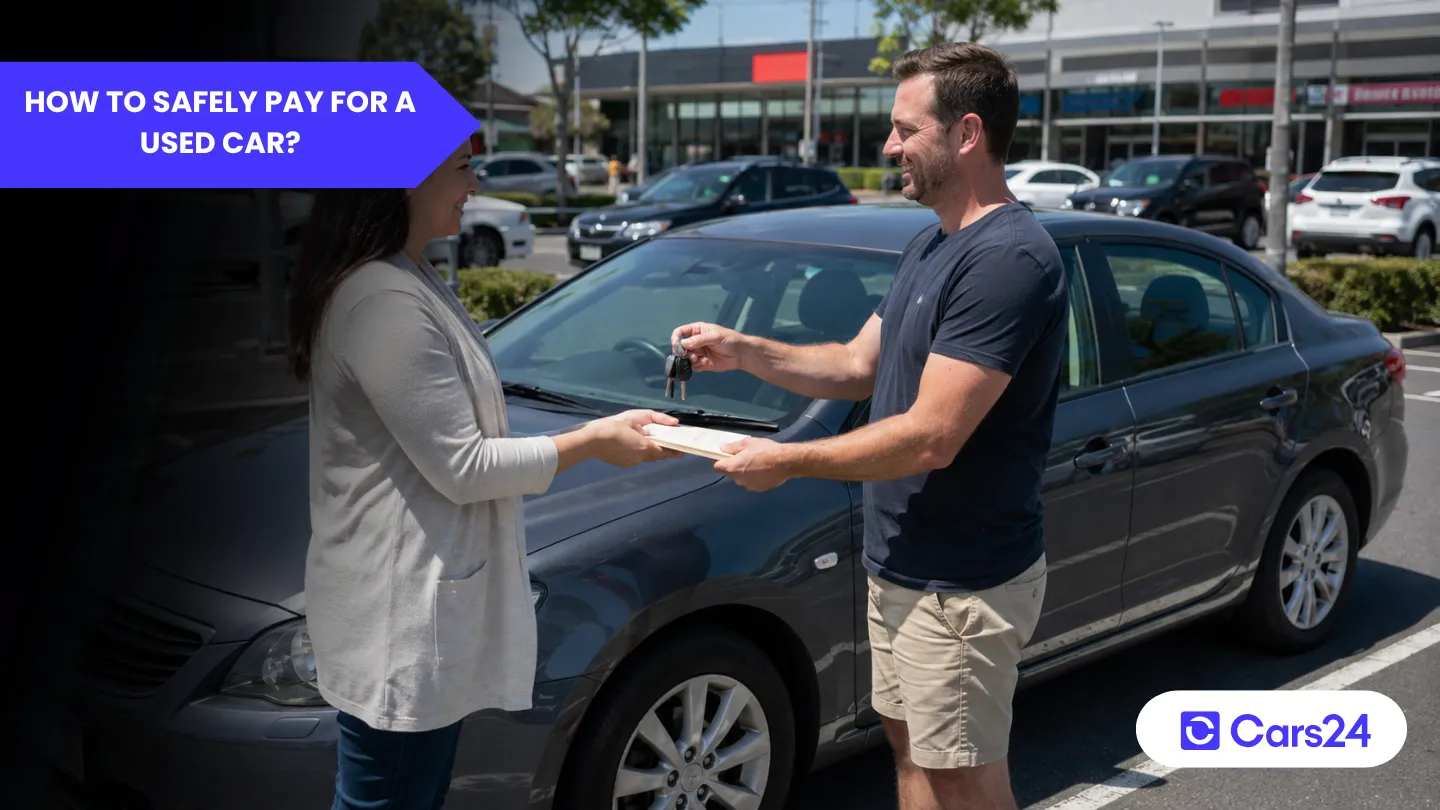
The payment to a used car private seller can feel like the most nerve-racking part of the entire purchase. A misstep could make you lose thousands of dollars.
It’s okay not to trust the buying process or the individual seller. You can make the payment by thinking strategically. You have to align a secure payment, ownership transfer, and the handover of the car keys with how payment systems work.
Learn about the different payment methods, the safest one, precautions, how to protect yourself from common private-sale scams, and get a full checklist to ensure the payment goes right.
How do you pay for a used car from a private seller safely and securely?
Prepare by verifying the seller’s ID, the car’s VIN, registration and PPSR. Then pay safely using PayID/Osko, a bank cheque, or a trusted escrow and not with large cash amounts. Meet at a bank or police safe zone and exchange payment only after receiving keys, a signed bill of sale, and completed ownership transfer documents.
Step 1: Prepare well before the handover day
You must have run the background and identity checks before talking about money. Verify the seller’s driver’s license, vehicle registration, and conduct a PPSR search to know whether their car is stolen or written off, and check for finance on a private car sale.
Agree on a safe payment method. Never carry large amounts of cash, and avoid unprotected instant transfers until you are standing with the car.
Consider specialised automotive escrow services or bank-backed platforms that hold funds securely until both parties agree to release them.
Prepare a bank cheque if the seller prefers it and arrange it with your bank beforehand. You should only hand it over once you have the keys and a signed receipt.
Check your daily transfer limits if you plan to use a real-time bank transfer like Osko. Some banks place a 24-hour hold on first-time transfers.
Also, prepare the necessary paperwork, like a bill of sale, transfer form, and car insurance application.
Step 2: Compare different car payment methods
The table below summarises a basic comparison between four main used car payment methods.
| Payment method | Processing speed | Transaction cost | Scam level risk | Best for |
|---|---|---|---|---|
| PayID/Osko | Seconds (or 24 hr hold) | Free | High | Vehicles under $10,000 with pre-approved limits. |
| Bank cheque | 3-5 business days | $10-$15 | Medium | High-value cars, when completed inside a branch. |
| Cash | Instant | Free | High | Low-value budget cars. |
| Escrow tech | Near-instant | Fee applies | Low | Interstate purchases or high-value private sales. |
1. Bank transfer
Real-time electronic payments via PayID and Osko use the New Payments Platform (NPP) to move funds between Australian bank accounts instantly, and transactions leave a permanent record in both banking apps. PayID even displays the seller’s legally registered name before you hit send.
Most banks cap daily Osko transfers at $5,000 to $10,000, and they also place a 24-hour security hold on large first-time transfers to new payees, so don’t forget to call your bank 24 to 48 hours before the meeting to increase your daily Osko limit.
The downside of this method is that funds sent to the wrong account number or PayID are incredibly difficult to recover. Scammers may also send a spoofed email claiming a PayID requires you to deposit extra funds to unlock the payment.
2. Bank cheques & cashless branches
A bank cheque eliminates the physical danger of carrying thousands of dollars. Confirm the bank’s open status beforehand and schedule your meeting with the used car seller for the operating hours.
Cheques are not instant and can still take 3 to 5 business days to fully clear into the seller’s account.
3. Cash payment
The traditional cash payment method is good for lower-value private vehicle transactions, but carrying more cash has a risk of theft, armed robbery setups, or cash-and-run ambushes.
Manually counting out thousands of dollars in $50 or $100 notes is also time-consuming and error-prone. It could become worse as recovering physical cash is nearly impossible if the car turns out to be stolen or broken.
Remember to meet inside the seller’s bank branch so they can immediately deposit and verify the notes. Avoid carrying more than $10k in cash, as banks must report cash transactions above this limit to AUSTRAC.
4. Escrow tech
Automotive escrow services are one of the safest methods for buying a pre-owned car. These platforms hold your purchase funds in a secure, neutral third-party trust account until both buyer and seller verify the car handover.
Services charge a percentage-based fee or a flat rate for managing the escrow, which is often split between buyer and seller. This setup is more secure as it requires both the buyer and the seller to create accounts, link banks, and verify identities before handover day.
These platforms mandate strict Know Your Customer (KYC) identity checks for both parties, which filter out anonymous fraudsters. On top of that, the escrow method also bypasses daily mobile banking limits.
Using escrow can provide an added level of security in some cases, although there are risks such as being tricked into thinking that the escrow is legitimate by emailers posing as the actual escrow and releasing the money upon seeing the car and getting the keys.
Step 3: Choose a safe handover location
Never meet a private seller in an isolated area, an unfamiliar industrial park, or a dark side street. Your meeting place must provide natural security and witnesses such as a police station, a safe exchange zone, a bank branch foyer, or a busy shopping centre car park.
Before discussing money, you must ensure the person standing in front of you actually has the legal right to sell the car by matching their driver’s licence and the car’s registration certificate.
At the same time, physically check the 17-character Vehicle Identification Number (VIN) on the car, and run a PPSR search and a quick Rego check.
Step 4: Finalise the deal legally
You must complete the official transfer of ownership and secure your drive-away protection as a final step. Firstly, you need a Bill of Sale, which will be the proof of purchase.
Then you complete the official car registration transfer application form and take your signed copy, lodge it with your state transport authority and pay the stamp duty.
At last, activate your car insurance, which you already prepared for in the first step and then collect all the car keys, logbook and manuals.
Readers also ask: Questions I should ask a private car seller
How do you avoid getting scammed when buying a used car?
Most fraudsters rely on pressure, sob stories, and fake digital proof to manipulate you and protecting yourself means controlling the environment, verifying the data, and using the right financial channels.
Payment methods to avoid in a private used car sale
- International wire transfers
- Cryptocurrency
- Gift cards
- Direct bank transfers before seeing the car
- Seller asks you to PayPal their friends or family
Red flags to spot a scammer immediately
- The remote seller story, where they cannot meet you in person
- Price is too good to be true
- The fake shipping company that will deliver the car to your door
- Refusal to provide the VIN
Remember the thumb rule – no car, no cash and always trust your instincts and walk away if you smell something fishy.
What to do if the funds are held by the bank?
Do not panic if your bank places a security hold on your real-time transfer during a used car handover, as they often freeze large, first-time payments to new payees to prevent fraud. Call your bank to request an immediate transfer if you are standing with the private seller.
And if the bank tells you the hold will take 24 hours to clear, you have two safe options:
- Option A is to leave and return to meet with the seller again tomorrow
- Option B is to hold the vehicle safely at a neutral site if you both agree
Protect yourself legally while the funds are in limbo by updating the Bill of Sale with a specific note on both copies of your signed receipt that the payment has been initiated but is currently held for review.
Readers also ask: What should I know before buying a car with finance owing?
What is the essential checklist for a used car handover?
Here is the final checklist to help you make a safe and secure payment for a used car in a private sale:
Pre-handover (1 day before)
- Increase bank limits
- Create a test transfer to minimise 24-hour bank holds
- Print paperwork such as Bill of Sale
- Book car insurance
- Decide on a safe meeting location
Identity and car verification (on-site)
- Check the driver’s licence
- Verify ownership
- Verify the seller’s phone
- Inspect the chassis VIN
- Run a PPSR check
Secure payment exchange
- Open your banking app
- Confirm the legal name of the seller in the app
- Verify cleared funds with the seller
- Handle payment holds safely
- Never pay twice in case of a pending status
Finalising the legal deal
- Sign the receipts like a Bill of Sale
- Fill out the rego transfer forms
- Ask the seller to lodge a disposal notice
- Collect all car keys and logbooks
How do you pay for a used car at a dealership?
Used car dealerships are heavily regulated under Australian Consumer Law, and payments there are inherently safer, though payment methods differ logistically: dealership finance, electronic funds transfer (EFT), bank cheque, debit/credit cards, and even cash payments.
Online used-car dealerships such as Cars24 represent car marketplaces where inspections, paperwork, and payments are managed within the portal, which helps eliminate many risks associated with private-party transactions.
Final words
Buying a used-car safely from a private seller isn’t about finding the fastest way to transfer money but about ensuring that the money, the keys, and the ownership all change hands simultaneously. Verify the seller, check the car’s history, meet in a safe location, and use a payment method that leaves a clear paper trail.
And don’t hesitate to walk away if the deal feels rushed, doesn’t add up, or the seller resists basic checks.
FAQs about paying safely for a used car from a private seller
1. What is the best way to pay for a second-hand car?
Dealer finance or upfront Bank Transfer. Paying a licensed dealer through these payment methods gives you maximum protection under the Australian Consumer Law.
2. What is the most secure way to pay for a car privately?
Secure escrow technology. Dedicated platforms (like Teamzo) hold your money in a secure trust account and release it to the seller only after you physically verify the car and the seller’s identity and take the keys.
3. Can you do finance with a private seller?
Yes, via a private car loan. You apply for finance through a bank or broker yourself. Once approved, your lender will verify the seller’s identity and PPSR status, then transfer the funds directly to the seller’s bank account on handover day.

Comments
New Comment