




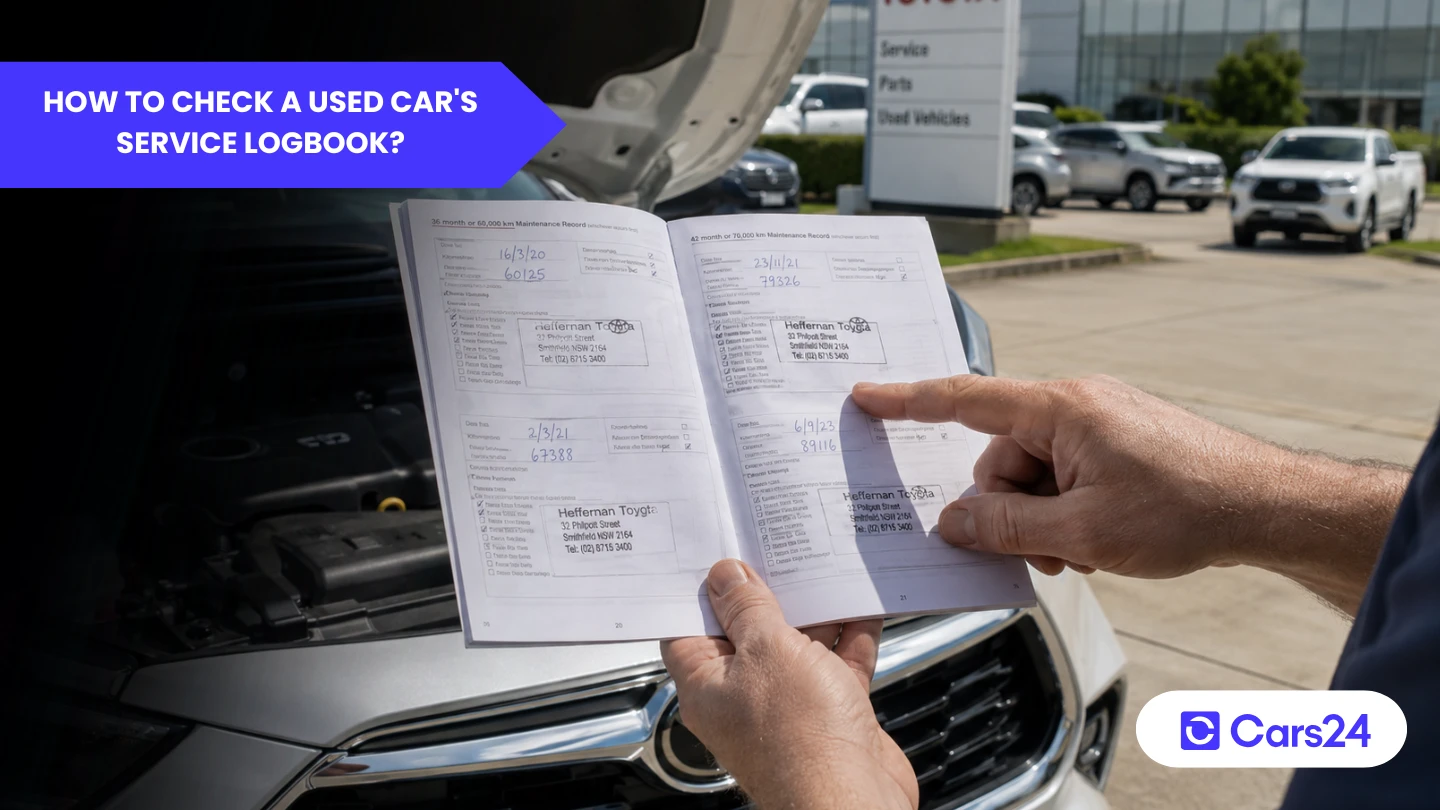
A used car’s service logbook tells a story, but only if you know how to read it. A booklet full of stamps and entries doesn’t always prove that it is genuine or that the car received proper care.
Missing entries, inconsistent kilometre readings, or questionable service records can point to poor maintenance or even odometer fraud, which is a big red flag. Fortunately, there are several ways to check and verify a service logbook before buying a used car.
Learn the practical ways to verify a car’s service history through a physical logbook or digitally, including odometer readings, service providers and supporting invoices, and how to piece the car’s history together before you go for a pre-purchase inspection of the used car.
Paper logbooks vs. digital service records for used cars
You won’t find any centralised government entity or public registry that records and provides a car’s complete service and maintenance history for used car buyers. The service history records are fragmented Down Under, and a conscious buyer like you must manually verify service records via physical logbooks or piece together digital data from private companies and car manufacturers.
A physical logbook is a paper booklet that documents each car service, maintenance or repair and is usually stamped by mechanics after every service; you can ask the private seller or dealer for it.
The other way is to look at the digital service records where the service data is on secure internet databases. There are only a few ways you can get your hands on the digital service logbook using a car’s VIN; scroll down to read it in detail.
Readers also asked: What questions should I ask a private used car seller?
How to check a car’s physical service logbook?
A clean car service paper logbook won’t guarantee it has no mechanical problems, but if the used car is genuinely well-maintained, it would be a more reliable purchase than others with irregular services. You can use the following checks to verify a used car’s paper service logbook.

The handwriting and ink should be naturally different across multiple years of service, and if you find that it’s all written in the same colour ink or feels fresh with clean edges, then it is likely a fake booklet.
The same inspection goes for the stamps; the old ones must look slightly faded, smudged, or aged, and a valid stamp includes the business name, ABN, address, phone number, and state-specific licence number.
If it’s hard to recognise fresh writing, you can look for the service dates with recorded kilometres, which should be in the right chronological order. For example, if a stamp from June 2022 says 40,000km, and the next stamp from June 2023 says 38,000km, the odometer has been rolled back, or someone made a fresh writing mistake, which is a red flag too.
Then, there is a simple ABN (Australian Business Number) check using the ABN on the stamps to verify the legitimacy of the servicing mechanic.
If all of the above seems genuine, you can pick any two random stamps from the car’s service logbook and call the mechanic’s phone number and ask, “Hi, I’m buying a car with this registration number. Your stamp is in the book for a service on this date. Can you verify this is in your system?”
Readers also asked: How do I check if a vehicle has been in an accident?
How to check a car’s service logbook online?
No state government road authority like Service NSW or VicRoads tracks, stores, or provides a car’s mechanical service logs to the public for free; the federal government’s paid PPSR check shows written-off/stolen/encumbrance status and more. And whatever the seller claims, only the closed and manufacturer-backed online car service logbooks are reliable.
Brands like Mazda, BMW, Mercedes-Benz, and Toyota store car service histories on their private corporate cloud networks and only authorised dealerships can upload records.
A record you can cross-check for free using the registration plate, in most states, is the car’s historical odometer reading, only if it was noted during annual safety inspections.
Here are the steps to check a car’s service logbook online if it’s missing or incomplete:
Step 1: Run the free odometer check
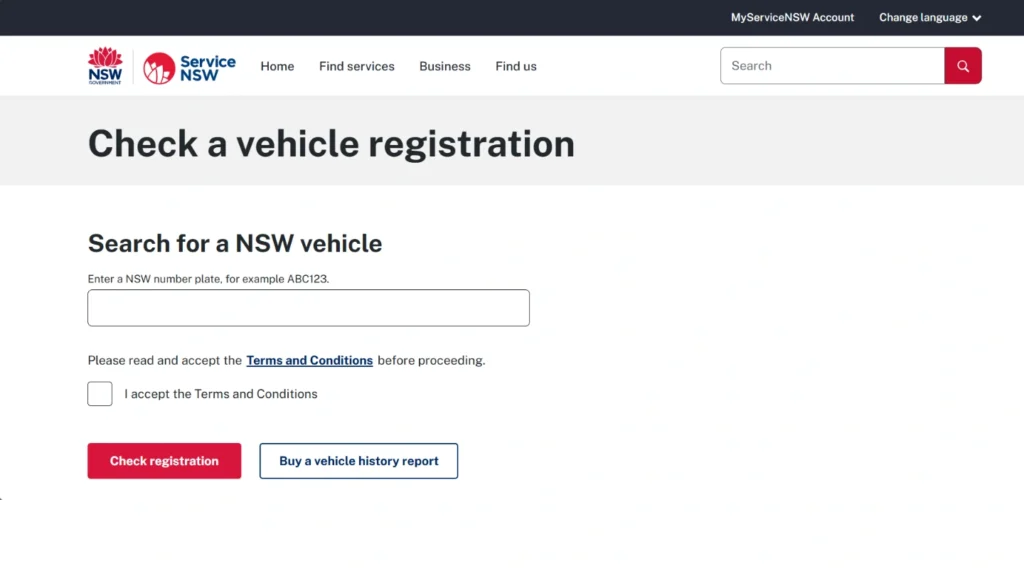
Go to the registered state’s transport website, such as Service NSW Rego Check, and see if it shows past odometer readings for a used car recorded at the annual safety inspections. Now match the state-recorded kilometres to the current odometer reading of the car to verify odometer tampering.
Step 2: Request verification from a dealer
You can do this one for free, too, if the car was serviced at an official brand dealership like Toyota.
Request the car’s VIN, get the official dealership’s contact, and politely ask the representative to confirm if the car has a consistent service history with their network and what the mileage was at the last logged service.
Step 3: Call the number on the sticker
You will likely see a small square service sticker with the mechanic’s name, the phone number, and the due date/mileage if it was serviced by an independent mechanic or a chain like Ultra Tune.
Call that mechanic shop and request them to confirm the date and kilometres of the last service, so that you can match it with the car’s current odometer reading and tell if the sticker is fake.
Step 4: Purchase car history report
If you have your eyes on a good-looking car but it has no service history paperwork, you can buy the car’s digital service history trail compiled from national insurance and workshop databases.
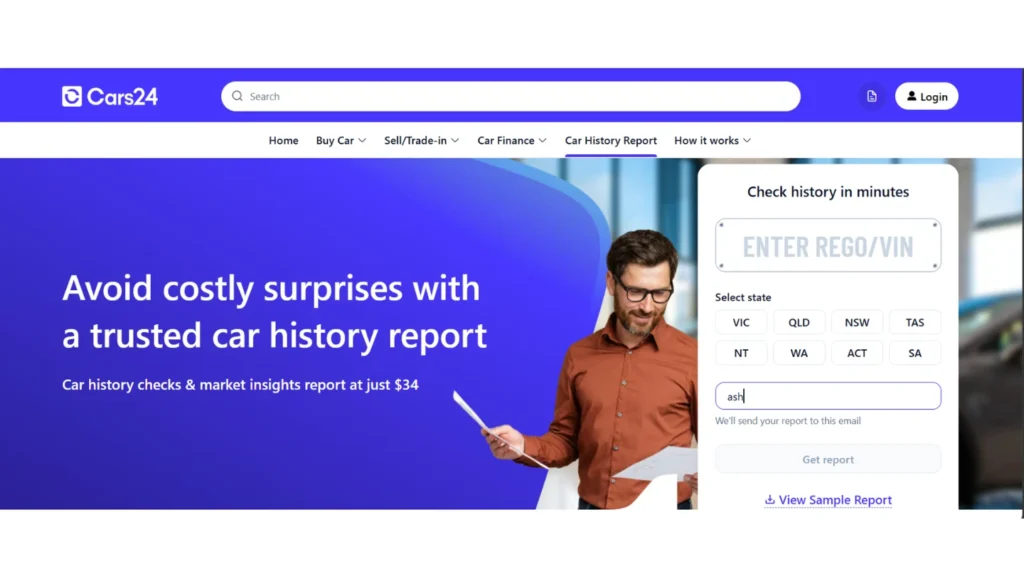
Some aggregators or private companies like Cars24 email you a detailed car history report PDF after you submit the car’s VIN or registration plate and pay a fee of around $25–$30.
You may find a detailed service history record and cross-check it with the car’s dashboard kilometres and fragmented service logbook records that the seller might have.
Readers also asked: How to identify signs of flood damage in used cars?
Which entities compile online car service logbooks in Australia?
Several commercial entities in Australia compile online car service, repair, and inspection records via insurance, workshop, and government data and offer them at a small cost to you.
1. Dedicated vehicle history aggregators: These companies buy data from national mechanic networks, insurance agencies, and smash repairers to piece together a car’s mechanical history.
2. Independent mobile inspection services: State auto clubs like RACV store past professional pre-purchase vehicle inspection data and can show it to you for a small fee.
3. Digital logbook and verification platforms: These companies keep the tax invoices and service stamps uploaded by the workshops or car owners, which can later be viewed on an app interface. But note that these apps are only as honest as the person typing in the data.
4. Large national automotive service chains: Major mechanic chains like Ultra Tune or Midas Australia can show you a car’s service history if it was serviced by them.
Can you access these records online safely?
No. Independent workshops must comply with strict Australian privacy laws, so they cannot display previous invoices online or hand them over to a prospective used car buyer because those receipts contain the previous owner’s private data.
You can still get the car history logbook by asking the seller to log into the dealership’s customer portal and give you the car history report PDF.
Why a legit car service logbook doesn’t mean no problems
You can only use a proper used car service logbook to confirm that the car was maintained in the past, but not that it’s problem-free right now. A used car can still have major issues because of recent misuse or a accident, theft, a bare-minimum service record, or it’s been standing idle for many months.
After checking a car’s service logbook, go further in your investigation by looking at the itemised tax invoices that accompany the stamps, if the seller has them. The invoices show exactly what parts were replaced and often note faults that need to be repaired in the future, which will help you gauge whether the used car has serious problems.
Other than the above, a pre-purchase inspection (PPI) is the best safety net for buying a used car if the seller does not have a proper service logbook. A modern, professional inspection is pretty thorough and detects even minor hidden issues using advanced equipment.

Comments
New Comment