




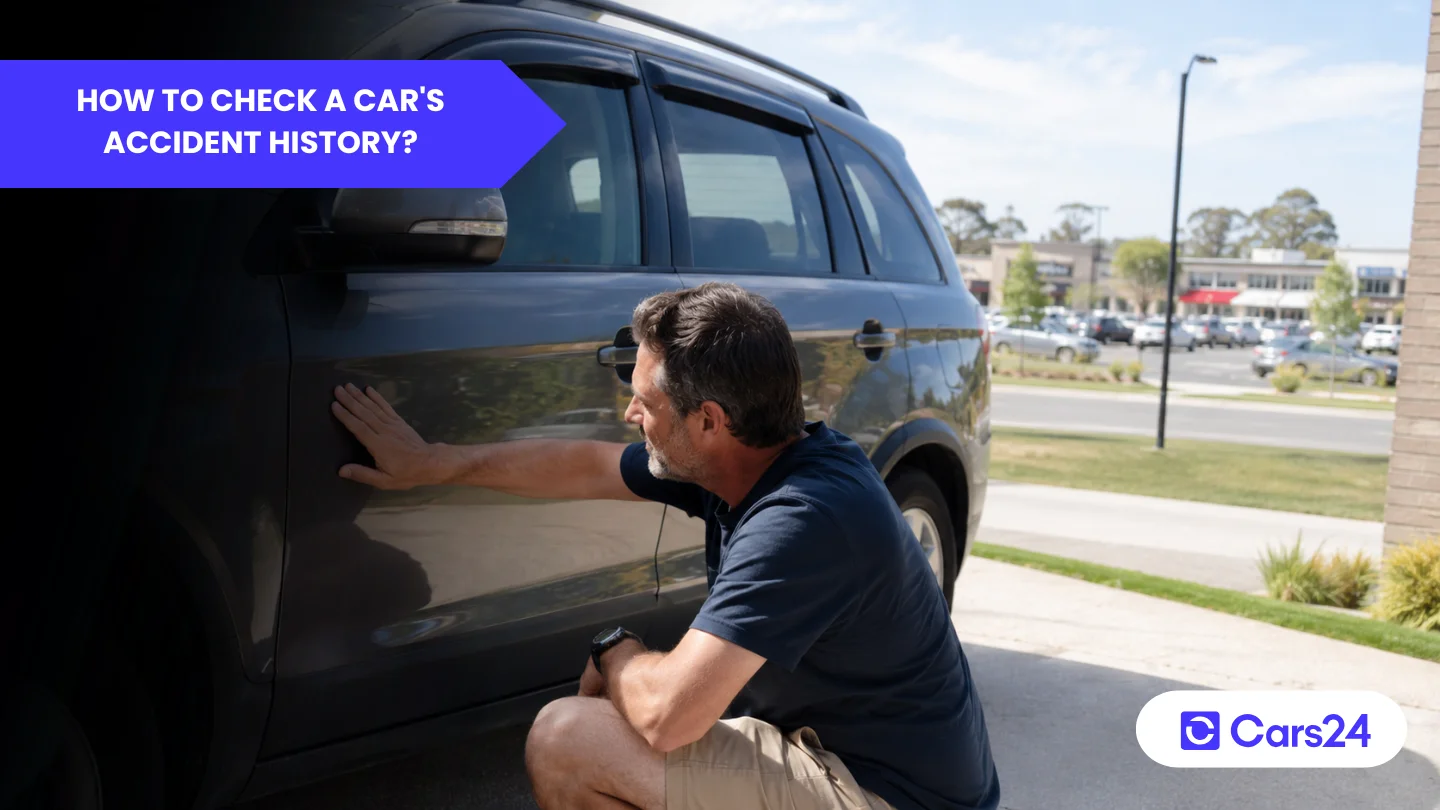
Buying a used car shouldn’t feel like taking a leap of faith. If a seller tells you the car has never been in an accident, don’t just accept their word—verify it. Because shady sellers often hide crash damage and then do poor-quality repairs to list and sell the car as soon as possible.
The good thing is that with some careful online research, observation and even a paid physical inspection, because you don’t want to take such a big-ticket risk, you can find out a car’s accident history.
This guide shows you how to check if a vehicle has been in an accident and what a pre-purchase inspection should include, and make your purchase with confidence.
Two ways to check if a vehicle has been in an accident
Many used vehicles in Australia have a hidden history of accidents, structural damage, or previous write-offs, and because private sellers are under no legal obligation to disclose these issues, you may buy a “lemon.”
And buying a lemon can be a safety hazard, plus a financial headache. You could get a poorly repaired and Frankenstein (welded-together sections) car, or one that has failed safety systems like poorly reinstalled airbags.
But it’s not that hard to uncover a car’s accidental or crash history – you can look at its record through digital car history reports and spot signs of major accidental damage with a physical inspection.
How to check if a vehicle has been in an accident?
Buying a car, used or new, is a big move. So, to be sure if an old car is safe and sound, you have to combine your digital car history research with the physical inspection. Here are the six clear steps you can follow to check if a vehicle has been in an accident in Australia.
Step 1: Do digital pre-screening
You can do a pre-screening right from your couch before wasting time and petrol travelling to see a used car.
First of all, reverse-image search the listing photos to find out whether the vehicle was previously sold at a damaged-vehicle auction like Manheim or Pickles. The old auction listing photos, which show a written-off car, will pop up in the search results.

Run your free state Rego check to check whether the car has failed a recent safety inspection due to accident damage or worse – it’s suspended.
Then, you can digitally inspect the used car by zooming in and seeing specific accident-related clues like non-uniform panel gaps, paint texture, and mismatched headlights.
And after all this, ask for that car’s VIN from the seller by telling them that you need to verify its history, and if they hesitate or refuse, say goodbye, and if they give the number, Google it immediately to search for previous crash repairs, old insurance valuation pages, and stolen vehicle forum posts.
You can also find out the seller’s history by looking at their profiles and reading their reviews if they are a dealership. Look for suspicious stuff like an individual selling multiple cars at once or someone complaining about a used car with an accidental history in a review.
Step 2: Find and match the car’s VIN
The Vehicle Identification Number (VIN) is a unique 17-character alphanumeric code and is printed by the manufacturer in several locations on the car and on official paperwork.
When around the car, look for the VIN on the windshield base, the B-pillar, and the firewall/engine bay under the bonnet, and once identified, you can match it to the VIN in the car’s registration certificate, the service logbook, or past insurance renewal notices.
Shady sellers use various tricks to hide heavy accident histories, stolen vehicle statuses, or written-off records, and you can easily recognise the red flags related to VINs by taking these steps:
- Check for mismatched VINs on the car at all three locations
- Find a tampered or scratched plate under the bonnet that used to have a stamped VIN
- See loose or mismatched aftermarket rivets on the compliance plates
- Read I (India), O (Oval), or Q (Quality) in a VIN because a legal code never uses these letters
Step 3: Run the PPSR check
Go to the official government website to catch a hidden accident history on a used car. Choose to search by VIN, mention your email and pay the $2 government fee to get the full PPSR report in your email inbox.
You will see one of the two red flags in the WOVR check section if a car you are seeing has a recorded accident history:
- Statutory write-off means it is illegal to register or drive this car in Australia
- Repairable write-off means they bought the smashed car at an auction and cleared a safety inspection to re-register it.
You can also see the date of the accident, the state where it happened, and specific codes detailing the impact zone. Other than that, you can also see if the car is actively stolen and if the car has outstanding finance.
Step 4: Get a car history report
You need the car’s VIN or its licence plate and state of registration to get a comprehensive commercial car history report. Expect to pay between $25 and $40 for a full report.
A premium paid car history report digs into commercial databases to find non-write-off accident clues like:
- Historical valuation drops by an insurance company or a dealership, which usually happens after a crash
- Past wholesale, salvage, or fleet auction sale photos showing damage clues
- Odometer rollback using previous kilometre logs from services, listings, or sales
- Commercial use as a rental car, taxi, or rideshare vehicle
Premium reports are highly reliable for reported data, but they cannot track what was never recorded, and that is why they cannot replace a thorough physical check.
Note: Only purchase a paid report if the car has already passed your free pre-screening checks.
Step 5: Inspect the used car yourself
This one only needs one tool: your eyes. Here are the signs to spot an accident history in a used car:
- Reflection test to detect any wavy, rippled, or distorted reflections on the panel
- Non-uniform panel gaps, such as between doors, are carefully observed with your index finger
- Window glass manufacturer logo mismatch
- Loose bolts holding the front fenders to the engine bay, or bare metal and scratch marks around them
- Weld marks, crinkled metal edges, or a new part in the metal frame that holds the radiator in place
- Crinkled metal in the spare tyre tub, which suggests a rear-end collision
- Messy, smeared or uneven sealant lines between the metal panels in the boot
- Unusually inner tyre wear suggests misaligned chassis or steering geometry
- Deep gouges, scrape marks, or fresh paint under the front bumper metal subframe
Step 6: Book an independent pre-purchase inspection
A comprehensive pre-purchase used car inspection from an independent provider has a thorough checklist that checks even minor clues of safety hazards. You can focus on these four categories to reveal past collisions:
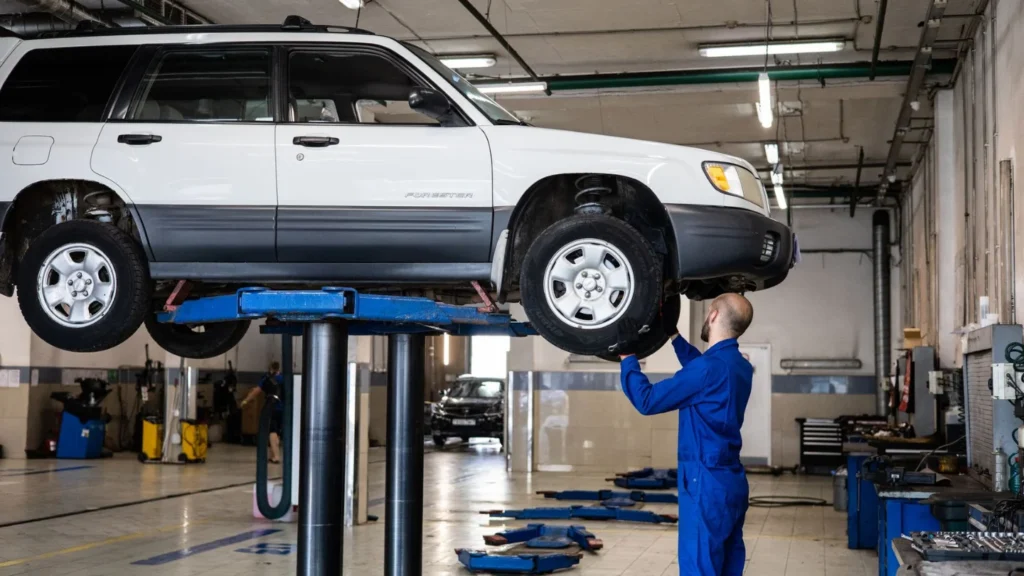
1. Structure and chassis diagnostics
Mechanics carefully observe the car’s exterior and chassis for damage. They use checks like:
- Digital paint depth gauge testing that reveals even micron-grade irregularities
- Inspecting chassis rail and K-frame for wrinkling, stretch marks, or clamping marks
- Examining A and B-pillar factory welds that are replaced by messy torch welds
- Looking at the chassis rails of utes or 4WDs for flood damage signs
2. Steering and wheel alignment geometry
This is done to detect the heavy metal warping that occurs during major car collisions. The mechanics usually look for these:
- Castor, camber, and toe discrepancies using digital scans
- Non-factor replacements in the subframe and the control arm, including suspension
3. Trim, weatherstripping, overspray
Some body shops often cut corners on finishing details when rushing to flip a repaired car, and smart car inspection mechanics know this habit, and they look for paint demarcation lines under the rubber seals in windows and doors. They also check the crash-related damage or fresh parts in plastic wheel arch liners and under-engine splash guards.
4. OBD2 diagnostic scanning
Modern mechanics also do some digital digging using OBD2 ports, as newer cars record many car events, including past airbag deployments, mismatched electronic parts replacement, and even odometer rollbacks.
Readers also asked: Can I sell my damaged car after an accident?
How does checking car accident history change with the state?
Your digital pre-inspection research to uncover a used car’s accident history differs with the legal frameworks of different states – each state transport authority operates on separate IT databases.
Check if a vehicle has been in an accident in NSW
New South Wales (Service NSW) provides the last 3 years of annual odometer readings taken during pink slip safety inspections, which can help you catch odometer rollbacks from local accidents. But it will miss odometer tracking if the car was previously registered interstate.
Check if a vehicle has been in an accident in Victoria
Victoria (VicRoads) sells a comprehensive “VicRoads Vehicle Report” where you can see local registration transfers, odometer records, and electronic roadworthy history. But many sellers often move the crashed car out of the state to bypass the strict Roadworthy Certificates (RWC) inspections in Victoria.
Check if a vehicle has been in an accident in Queensland
Queensland (TMR QLD) lets you do a free car registration search, which validates seller identity and basic current status, but it does not include odometer tracking or previous roadworthy records on its standard digital checks.
Check if a vehicle has been in an accident in WA and SA
Western Australia and South Australia have highly localised website portals showing current state registration timelines, and both states have more relaxed car history reporting laws, which unfortunately makes them popular destinations for cross-state vehicle transfers.
Do you see an interstate car accident history loophole here?
If a car is involved in an accident in Victoria, fails an RWC check there, or undergoes a suspicious odometer rollback, a seller can simply pay to re-register the car across the border in New South Wales or Queensland.
And when you run a standard, free state registration check, no Australian state provides interstate registration or damage history. The new state’s portal will simply display a clean slate starting from the date it entered that state. So how do you check its full history?
How to conduct cross-border car accident history research?
Check its written-off status from a simple federal PPSR search, which usually lists the state of the last registered security interest or previous state codes and then cross-check this with the previous state’s portal.
And if you can spare some money for paid research, try one of the commercial aggregators that compile historical dealership sales data, cross-state auction results, and even insurance quote histories.
Readers also asked: What questions should I ask a private used car seller?
What to do if you find hidden accident history in a used car?
Your decision regarding buying that used car with an accident history or walking away from the deal depends on the degree of damage to the vehicle and your driving needs. You will better understand it with the following two choices:
1. Walk away (for structural damage)
Structural damage is body, chassis or safety-system damage that really compromises your safety while driving the car, like bent frame rails or poor structural welding. Even if you buy it to flip it later, it may not sell for much for the same reason.
2. Negotiate heavily (for cosmetic/minor damage)
Cosmetic damage is the superficial damage, and if you don’t mind some weird-looking parts like a replaced bumper or a dented door panel, you can use the accident history to bargain heavily. Do your little research and find out the future cost of repairs and an estimated drop in the car’s resale value.
Set a limit on the car’s price when demanding a price drop. And don’t just ask. Show the evidence, your inspection report and the damaged part to the seller.

Comments
New Comment