




Do you worry about underpricing your car, being lowballed by flippers, or spending money on repairs that don’t actually increase your car’s resale value?
Because your goal is to sell the car as quickly as possible for the highest possible price, it’s easy to make small mistakes that quietly reduce your car’s resale value.
We have made a list of these common mistakes to avoid when selling a car and have offered suggestions to navigate the used car market legally and safely.
You will also learn about the repair ROI calculator, pre-sale preparations, and tips to maximise your car’s resale value.
What affects your car’s resale value?
Factors affecting your car’s resale value include its mileage (kms driven), service history, make and model, body type, demand, condition, customisation, and colour, too.
A new car typically loses 10-15% of its value the moment it leaves the showroom and a further 10-15% by the end of its first year. The Australian Taxation Office (ATO) estimates a broader annual depreciation rate of 25% for most vehicles for tax purposes.
Mistakes you should avoid to sell your car for the highest price
You should know what not to do when selling a car to sell it at the best price possible. You need to avoid mistakes that either decrease buyer trust or provide them with leverage to negotiate the price down. Below is a breakdown of common mistakes, their estimated impact, and the effort required to rectify them.
Mistake 1: Missing or incomplete service history
- Estimated impact on value: 10%–20% off the asking price
- Difficulty to fix: Medium
- Cost to fix: $0–100 for admin fees/postage
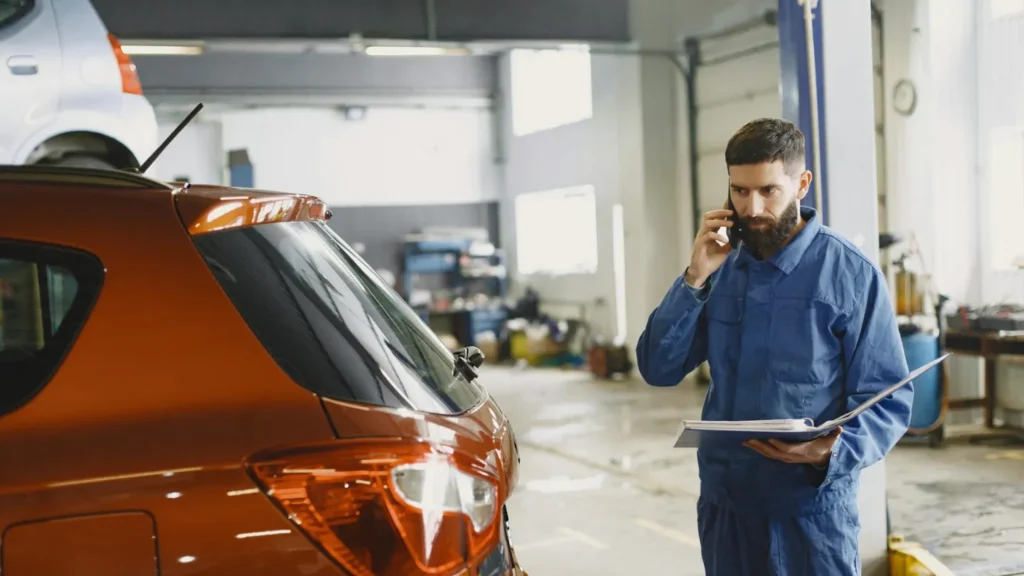
Buyers assume that a car is a mechanical risk with engine problems if you can’t prove it was maintained consistently. Contact previous mechanics to see if they can re-stamp your book or provide digital printouts of past invoices. EVs and PHEVs often need a battery State-of-Health (SoH) report.
Mistake 2: Inaccurate or emotional pricing
- Estimated impact on value: Varies
- Difficulty to fix: Easy
- Cost to fix: Free
You may want to price your car based on what you need for your next car, rather than what the market dictates. Overpricing leads to your ad sitting for weeks. Underpricing simply leaves money on the table. Do some research and find the average resale value for your kind of car online, such as on Cars24.
Mistake 3: Selling with an encumbrance
- Estimated impact on value: High (can kill the sale)
- Difficulty to fix: Varies
- Cost to fix: Remaining car loan payment
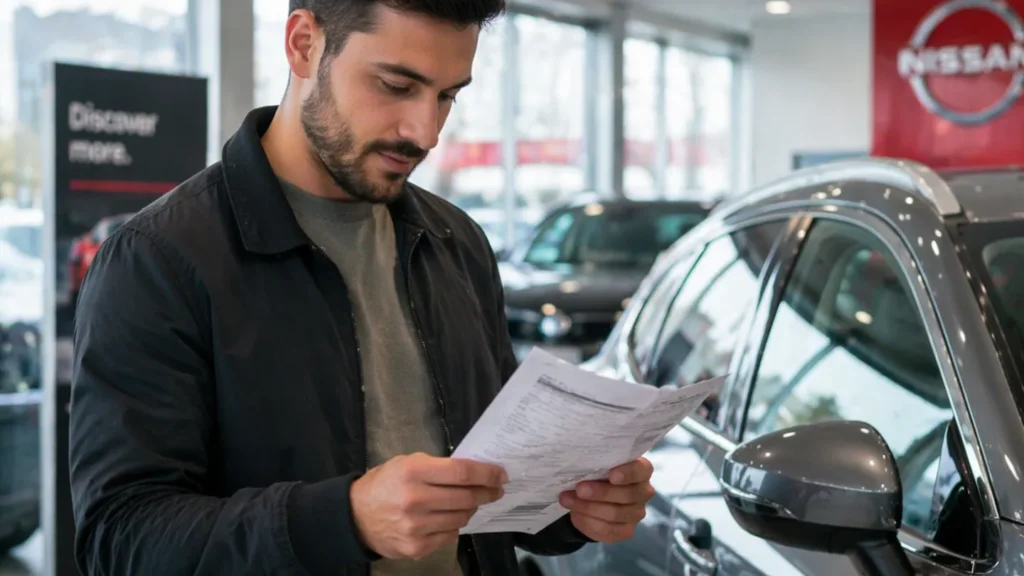
An encumbrance means there is money still owed on the car. Most private buyers will walk away immediately if they see a “Finance Interest” on the PPSR report. Obtain a “payout letter” from your lender. You can arrange for the buyer to pay the bank directly to clear the title, and then pay you the remaining balance. Here is a more detailed take on how to sell a financed car in Australia.
Mistake 4: Thinking that all upgrades enhance car value
- Estimated impact on value: Varies
- Difficulty to fix: Varies
- Cost to fix: Varies
Not all money spent on a car adds to its resale value. Functional upgrades (safety/utility) like new tyres, tow bar, roof racks, etc., usually help, while subjective (aesthetic) ones like lowered suspension and loud exhaust may not add value for many buyers. Expecting to get back the $2,000 you spent on a loud exhaust or custom paint is a mistake. If you have the original parts, swap them back and sell the aftermarket parts separately for a better return.
Mistake 5: Failing to price to the “market saturation gap”
- Estimated impact on value: Varies
- Difficulty to fix: Easy
- Cost to fix: Free
Pricing your car based on the average price without looking at how many similar cars are currently competing for the same buyers.
The used car market fluctuates based on how many similar cars are listed at once. For instance, If there are 50 white Toyota Corollas for sale in Melbourne and you price yours the same as the others, you are just one of many. Identify the “gap.”
If most listings are at $15,000 with high kms, and yours has low kms, price it at $16,500 to sit in the “Premium Gap.” If the market is flooded with your model, price it $200 lower than the cheapest comparable car to be the “Value Gap” choice.
Mistake 6: Poor ad photos
- Estimated impact on value: Fewer inquiries
- Difficulty to fix: Easy
- Cost to fix: Free
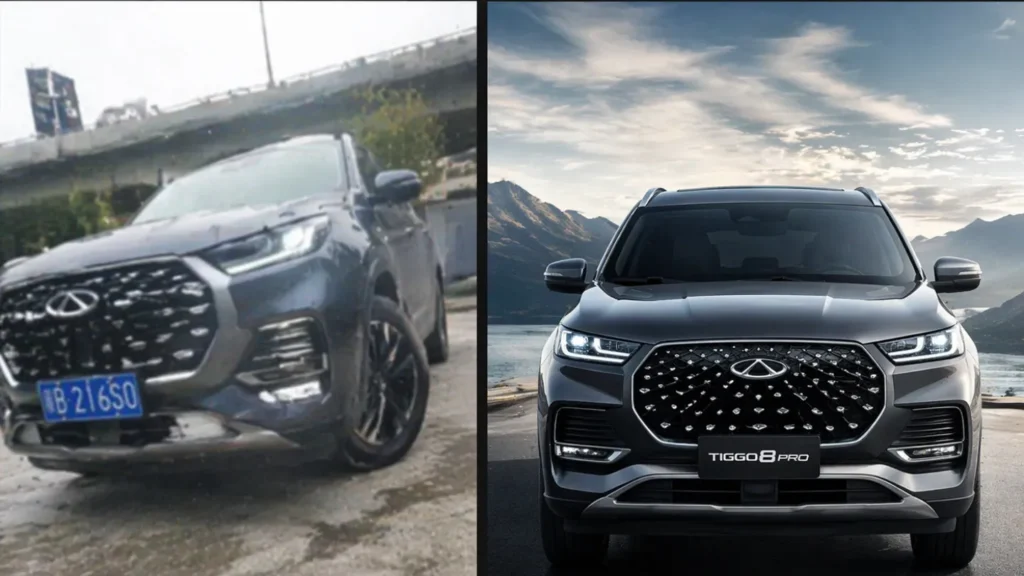
Most buyers decide whether to inspect your car within seconds of seeing the first photo online. Low-quality, bad-angle, and fewer photos lead to fewer inquiries. Clean the car, find a neutral backdrop (like a quiet park), and take 15–20 high-res photos with your phone in landscape mode during “golden hour” (just before sunset).
Mistake 7: Selling without RWC
- Estimated impact on value: $1,000+ drop
- Difficulty to fix: Medium
- Cost to fix: Varies (Inspection + repairs)
Selling a registered car privately without an RWC is difficult. It signals to the buyer that the car might fail a safety test. You may even lose all retail buyers and be left with wreckers or project hunters who will offer thousands less than market value. Get the RWC inspection done before listing. You’ll know the exact cost and can price accordingly, even if it needs repairs.
Mistake 8: Lingering odours (smoke, pets, or food)
- Estimated impact on value: Varies
- Difficulty to fix: Hard
- Cost to fix: $150–300 (for Ozone treatment)
A car that looks great but smells like a wet dog or old cigarettes is a deal-breaker for most people. It can reduce the value significantly as buyers factor in the cost of deep interior steam cleaning. Invest in a professional Ozone treatment or an interior deep clean from a local detailer.
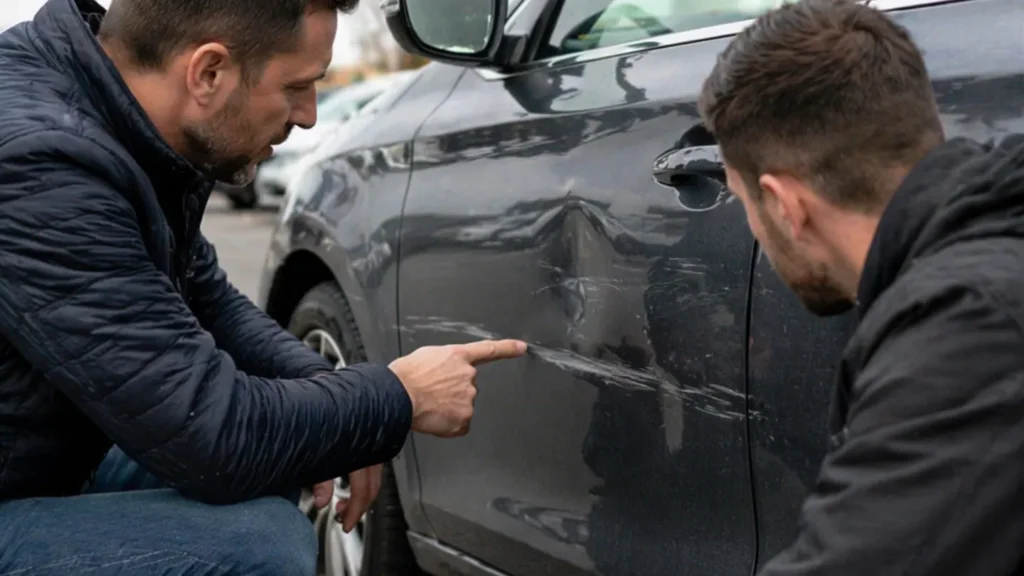
Mistake 9: Ignoring minor cosmetic dents and scratches
- Estimated impact on value: Varies
- Difficulty to fix: Easy
- Cost to fix: Varies
You might be used to that trolley ding, but a buyer may see it as a sign that you didn’t value the car. These small dings often lead to perceived repair costs of $500–$1,000, even if they only cost $200 to fix. Hire a mobile professional service to fix these scratches and dents.
Mistake 10: Accepting the first quick offer
- Estimated impact on value: Varies (but usually less than the asking price)
- Difficulty to fix: Easy
- Cost to fix: Free
Professional car buyers and “flippers” often target new listings with lowball offers within hours of posting. Stay firm on your “bottom line” for at least a week or more, depending on the offers you are receiving. You have done your research, be patient and let genuine private buyers see the ad.
Repair ROI calculator: Knowing when not to fix your car
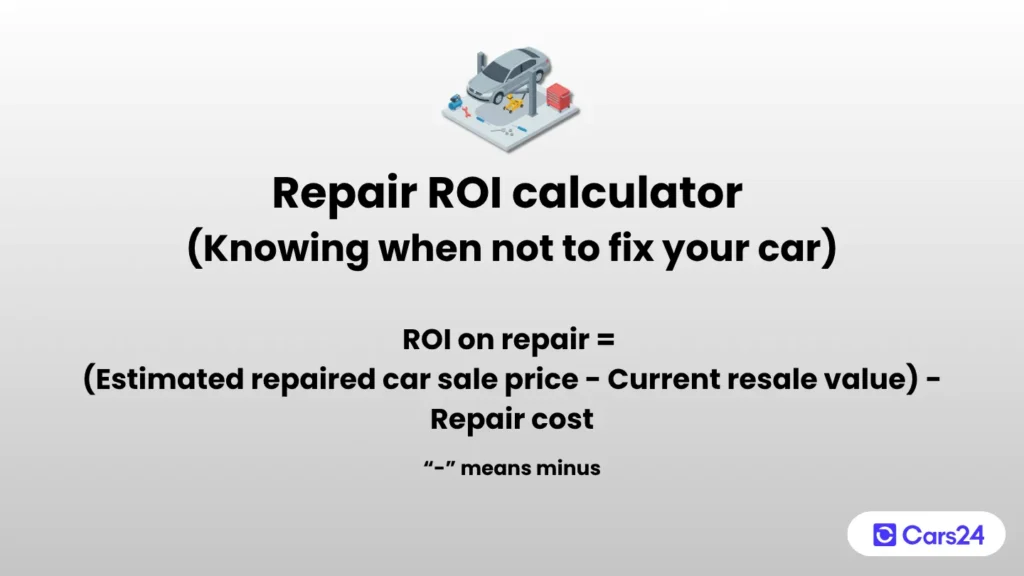
There is no official ROI calculator for car repairs, but it is wise to spend as much on the repair (or less) as the additional resale value you can get by adding that repair.
For example, if a $1,000 paint correction for a $40,000 car (before repair resale value) can enhance its resale value to $41,000 or up, it’s worth getting the car detailed.
The car repair ROI calculator for resale
ROI on repair = (Estimated repaired car sale price – Current resale value) – Repair cost
Positive result: The repair adds more value than it costs. Proceed with the fix.
Negative result: You are over-capitalising. Sell the car with the defect disclosed instead.
So if you are asking, “Should I repair the car before selling?” the answer is right here. Get it repaired if you have a positive result, and don’t if it’s a negative result.
What to do before selling your car?
Suppose you are selling your car in Melbourne. First of all, you must meet specific legal requirements set by VicRoads and Consumer Affairs Victoria. The mandatory legal requirements are Roadworthy Certificate (RWD), Notice of Disposal (NOD), and Transfer of Registration Form.
For good first impressions, you may want to get pre-sale detailing and minor fixes done. You also need documents like the Service History report, Proof of Ownership, PPSR certificate, sale receipt, etc., for trust building. You can have a more detailed read of what to do before selling your car here.
How to increase your car’s resale value?
Beyond paperwork, increasing your car’s resale value comes down to buyer perception. Transparency and presentation play a major role in how much buyers are willing to pay.
You should have all the core documents and a full service history logbook (helps sell faster). A professional detail is often the best ROI you can get before selling.
Don’t forget to address the issues that buyers will use as leverage to drop your price. Don’t shy away from showing them that parking lot dent.
How you list your car online matters just as much as its physical condition. Take good and detailed photos, and try to list your car during a strategic higher used-car selling time specific to your region. Read the tips to maximise your car’s resale value in detail.
The bigger picture
Selling a car isn’t just about what it is but also about what the buyer feels and trusts. Most people lose money not because their car is bad, but because of small mistakes that quietly kill the buyer’s confidence or leave a bigger room to negotiate down.
Missing service history, poor photos, bad pricing, smells, dents, or skipping a roadworthy signal risk. And buyers price that risk straight into their offer.
So remember this: Value comes from trust, presentation, and positioning, not just the car itself. Get those right, and you don’t chase buyers. They compete for your car.
FAQs
1. What is the hardest month to sell a car?
Winter (June, July, August) is generally the slowest period. Specifically, the weeks immediately following Christmas/New Year and the End of Financial Year (EOFY) are difficult as buyers are either cash-strapped or distracted by dealership clearances.
2. How to avoid being scammed when selling a car privately?
Always meet in person at a busy public location during daylight. Never release the car until funds are fully cleared in your account, and be wary of buyers offering to pay more than the asking price or those who refuse to inspect the car personally.
3. What age is the best time to sell a car?
The optimal window is typically 3 to 5 years old. This allows you to sell while the car still has a low odometer and potentially some original manufacturer warranty remaining.
4. What is the safest way to accept money when selling a car?
A bank transfer completed in-branch (where both parties are present) or an instant Osko/PayID transfer is the safest method. For larger sums, a bank cheque is a reliable alternative, provided you verify its authenticity with the issuing bank before handing over the keys.
5. What colour car is the hardest to sell?
Unconventional or “loud” colours like bright green, yellow, or purple are traditionally the hardest to resell. Neutral tones, white, silver, and black, remain the most popular and easiest to sell in the Australian market.

Comments
New Comment