




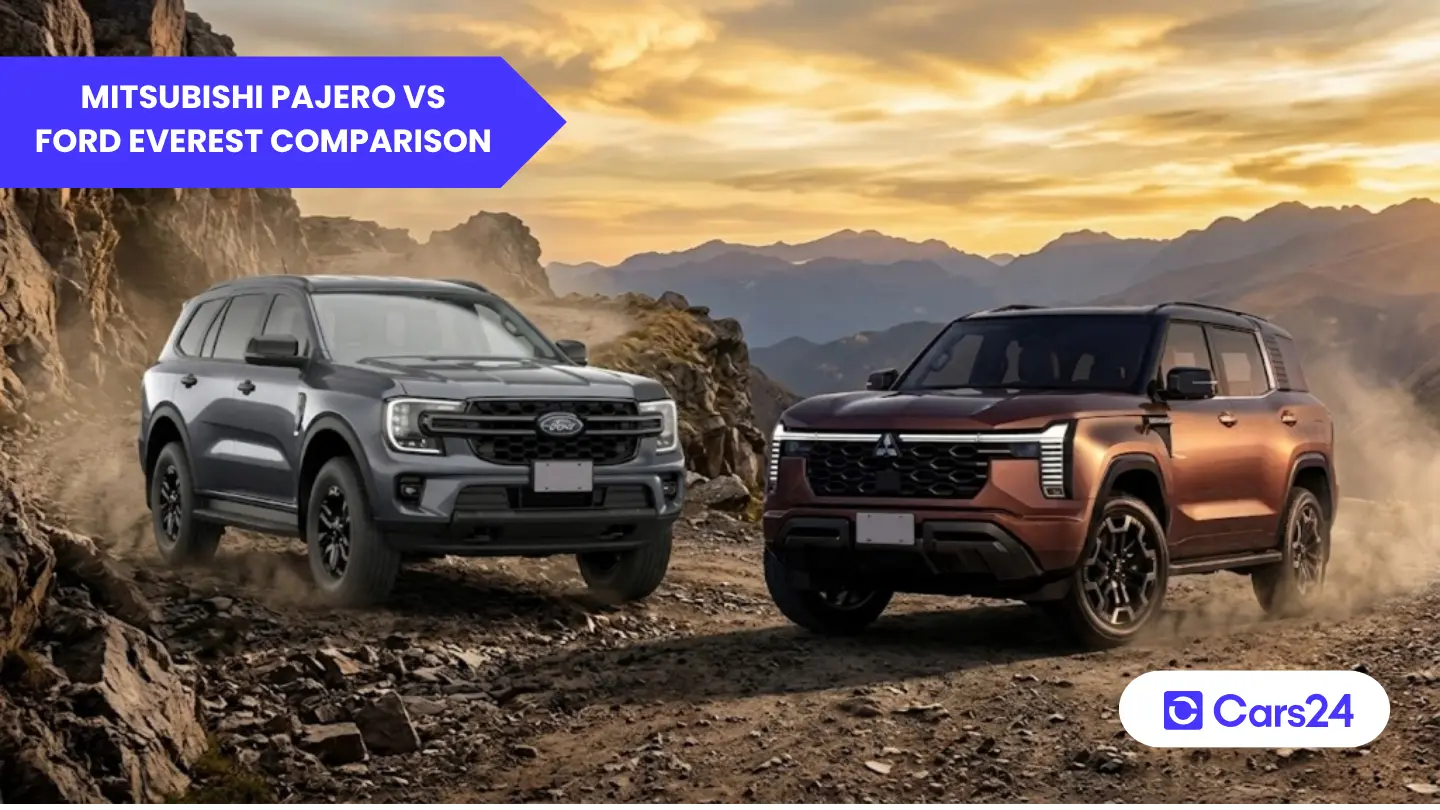
Mitsubishi just brought the Pajero back from the dead and it didn’t come back soft. The fifth-generation model ditches the old monocoque body for a Triton-based ladder-frame chassis, bolts on Super Select 4WD-II, and launches with a torquey 2.4-litre turbo-diesel. In other words, it’s aiming squarely at the Ford Everest, the seven-seat 4WD that’s been one of Australia’s default family-and-tow-rig picks for years.
So how do the two actually stack up? Below, we go category by category, price, engines, towing, tech, size and off-road chops, and call a winner where we can. Spoiler: Mitsubishi hasn’t released Australian pricing or towing figures yet, so a couple of rounds are still too close to call.
Read more: The Mitsubishi Pajero is back and it’s gone full 4WD again
Mitsubishi Pajero vs Ford Everest: Comparison at a glance
| Category | Ford Everest | Mitsubishi Pajero |
| Starting price | $58,990 (Active 2.0L diesel) | Not yet announced for Australia |
| Engine options | 2.0L 4-cyl diesel, 3.0L V6 diesel | 2.4L 4-cyl turbo-diesel |
| Peak power/torque | 184kW/600Nm (V6) | 470–480Nm (power TBC) |
| Transmission | 10-speed automatic | 8-speed automatic |
| Braked towing capacity | 3500kg | Not yet confirmed |
| 4WD system | Terrain Management System, low range | Super Select 4WD-II, 7 terrain modes, low range |
| Seating | 7 seats | 7 seats globally; 5-seat expected for Australia |
| Chassis | Ladder frame | Ladder frame (Triton-based, reinforced) |
Quick answer: Pajero or Everest?
If you want an SUV you can walk into a dealership and buy today, with known pricing, a strong V6 option and a 3500kg tow rating, the Ford Everest is the safer pick right now. If you care more about genuine off-road hardware, low range, a reinforced ladder frame, seven terrain modes, and you’re willing to wait for Australian pricing, the new Mitsubishi Pajero is shaping up to be the more interesting buy. The full breakdown is below.
Price: Everest wins by default
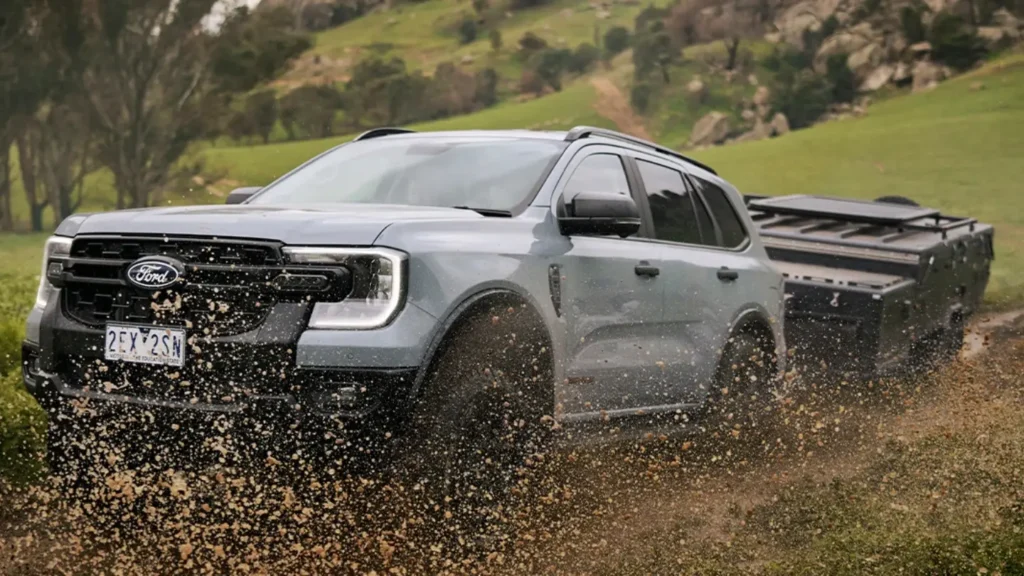
The Ford Everest range kicks off at $58,990 before on-road costs for the Active with the 2.0-litre four-cylinder diesel, with the same engine also offered in the Sport from $68,990. Buyers who want the V6 pay from $66,990 for the Active V6, $76,990 for the Sport V6, $79,990 for the off-road-leaning Tremor V6, and $82,917 for the flagship Platinum V6.
Mitsubishi has confirmed the Pajero is coming to Australia, but hasn’t released local pricing or a final local spec sheet. Until that happens, we can’t score this category properly. Everest wins simply because it’s the only one of the two you can price up today.
Cars24 Australia’s verdict? Everest (for now)
Engines and performance: Everest V6 has the numbers
The Mitsubishi Pajero launches with a single engine option: a 2.4-litre four-cylinder turbo-diesel making between 470Nm and 480Nm depending on variant, paired with a new eight-speed automatic.
The Ford Everest gives buyers a choice. Its 2.0-litre four-cylinder diesel produces 125kW/405Nm, while the 3.0-litre V6 diesel steps up to 184kW/600Nm, both run through a 10-speed automatic.
On paper, the Everest V6 outmuscles the Pajero comfortably, with 34kW and 120Nm in hand. That gap should show up on the highway, when overtaking, and when towing. The Pajero’s single engine sits closer in spirit to the Everest’s four-cylinder, though it edges it on torque.
Cars24 Australia’s verdict: Everest
4WD capability: This is where the Pajero gets serious
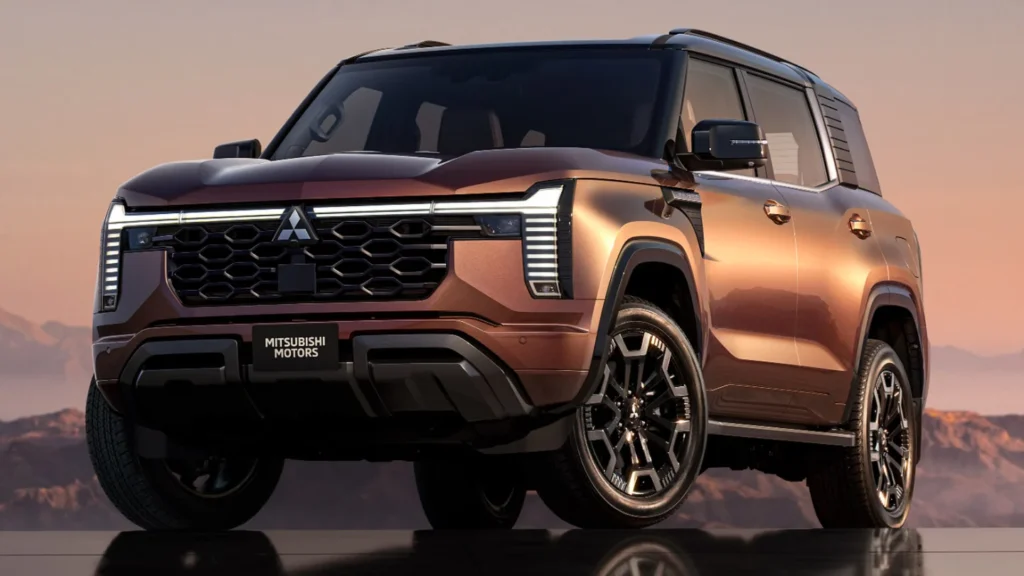
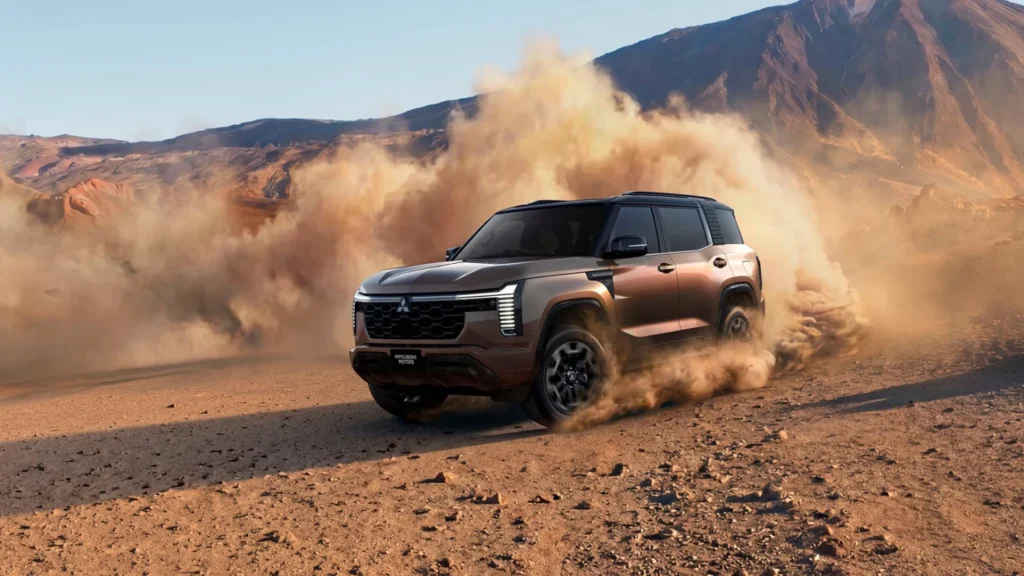
This is the category Mitsubishi clearly built the new Pajero around. It runs Super Select 4WD-II with 2H, 4H, 4HLc and 4LLc modes, plus seven drive modes covering Eco, Normal, Gravel, Snow, Mud, Sand and Rock. The ladder-frame chassis is reinforced beyond the Triton it’s based on, and Mitsubishi has tuned a dedicated suspension setup, double wishbones up front, a five-link rigid rear axle with coil springs out back.
Ford Everest isn’t a soft-roader either. It has proper low-range 4WD and Ford’s Terrain Management System for adjusting to different surfaces, and the Tremor V6 adds off-road-specific hardware on top of that.
Even so, everything about the Pajero’s spec sheet, the dual transfer case modes, the seven terrain settings, and the reinforced frame signals a vehicle built first for off-road capability and second for everyday comfort. We’d want to drive both back-to-back before calling this one outright, but on paper, the Pajero looks like the more serious off-roader.
Cars24 Australia’s verdict: Pajero, on paper
Towing: Everest’s 3500kg is confirmed, Pajero’s isn’t
The Ford Everest tows 3500kg braked, across the range including the V6 variants, a figure most large-SUV buyers will recognise as the benchmark in this class. Mitsubishi hasn’t confirmed a towing figure for the Australian Pajero yet. The 480Nm on offer suggests it should be a capable tow vehicle, but without an official number, there’s nothing to compare.
Cars24 Australia’s verdict: Everest
Interior and tech: Too close to call until pricing lands
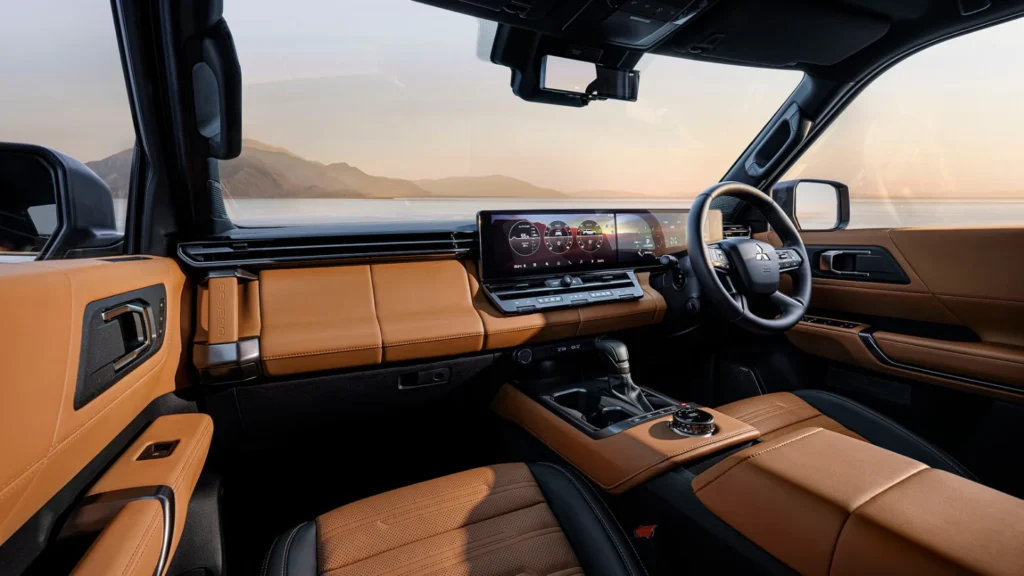
The new Mitsubishi Pajero’s cabin is a genuine step up from the outgoing model. Higher grades get 14.3-inch infotainment and driver display screens (12.3-inch on other variants), plus wireless phone charging, USB-C ports, dedicated off-road data readouts, and a Yamaha sound system on select variants. Mitsubishi has kept physical climate controls too — good news if you’d rather not dig through a touchscreen menu to adjust the fan speed. The second row slides 150mm, and Mitsubishi says the third row is built to fit adults, not just kids.
The Ford Everest counters with a well-established seven-seat cabin and a mature infotainment system backed by years of Australian-market feedback and refinement. Both look strong on paper. Without confirmed Australian equipment levels for the Pajero, it’s genuinely too close to call.
Cars24 Australia’s verdict: Draw
Size and practicality: Everest, narrowly
The Pajero measures 4920mm long, 1925mm wide, up to 1910mm tall, on a 2870mm wheelbase, comfortably in large-family-4WD territory. It’s a seven-seater globally, with a five-seat variant expected for Australia.
The Everest is also a seven-seater and has years of runs on the board as an Australian family favourite. The Pajero’s sliding second row gives it a practicality edge on paper, but Ford Everest’s proven local track record just nudges this one its way.
Cars24 Australia’s verdict: Everest, narrowly
Off-road ability: Advantage Pajero
This might be the category that decides the whole comparison for a lot of buyers. The old Pajero built its name on serious off-road pedigree, including 12 Dakar Rally wins, and the new model looks designed to reconnect with that reputation: ladder frame, low range, Super Select II, seven terrain modes, a reinforced chassis and dedicated suspension tuning.
The Everest, especially in Tremor V6 guise, is a genuinely capable off-roader in its own right. But the Pajero’s entire engineering brief reads like Mitsubishi chasing buyers who want more than a comfortable family SUV that can handle a dirt road — they want something built for it.
Cars24 Australia’s verdict: Pajero
Mitsubishi Pajero vs Ford Everest: Which should you buy?
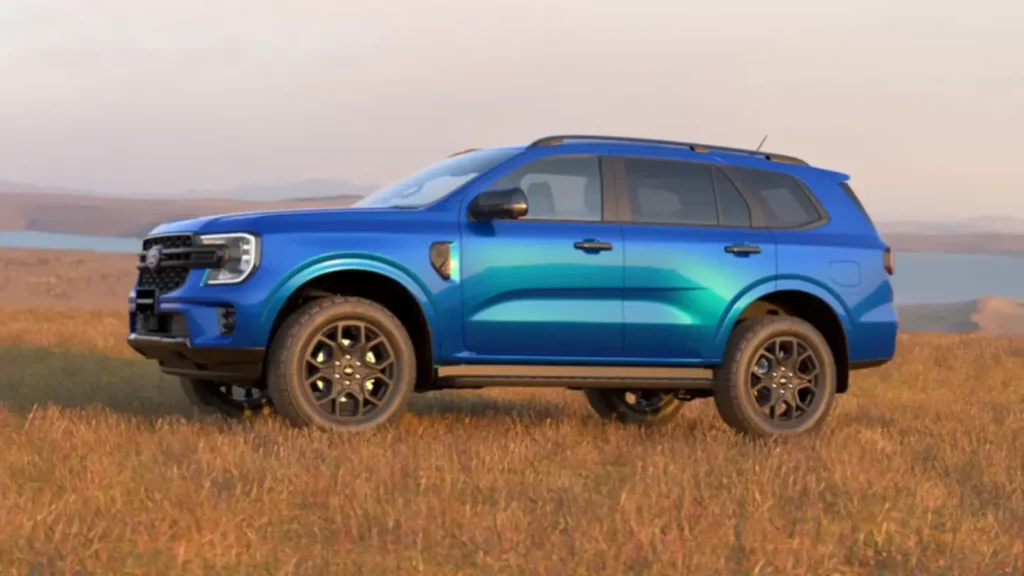
The answer depends on what you want from your 4WD. The Ford Everest makes more sense if you’re looking for an established family SUV with a choice of diesel engines, strong towing ability and a powerful V6 option.
It’s also the safer choice for buyers who want something they can buy in Australia today, with pricing and specifications already established.
The Mitsubishi Pajero is the more intriguing option. It brings back a famous nameplate with a completely different approach to the previous-generation model. Instead of another soft-roading family SUV, Mitsubishi has built a ladder-frame 4WD with Super Select II and a diesel engine designed for torque.
Its biggest question mark is pricing. If Mitsubishi positions the Pajero competitively against the Everest, Prado and MU-X, it could become one of the most compelling new entrants to Australia’s large 4WD market.
Mitsubishi Pajero vs Ford Everest: Verdict
For now, the Ford Everest is the better all-round choice. It has the stronger V6 engine, a confirmed 3500kg towing capacity, a proven Australian-market package and a wider range of established variants. But the Pajero could be the better choice for buyers who put off-road ability ahead of outright power and towing. And that’s what makes this comparison interesting.
The Pajero isn’t returning as a nostalgic SUV wearing an old nameplate. Mitsubishi has rebuilt it around a ladder-frame chassis, proper low-range 4WD and a diesel powertrain. Once Australian pricing, towing capacity and final specifications are confirmed, we’ll have a much clearer idea of whether the new Pajero can actually knock Everest off its perch.

Comments
New Comment