




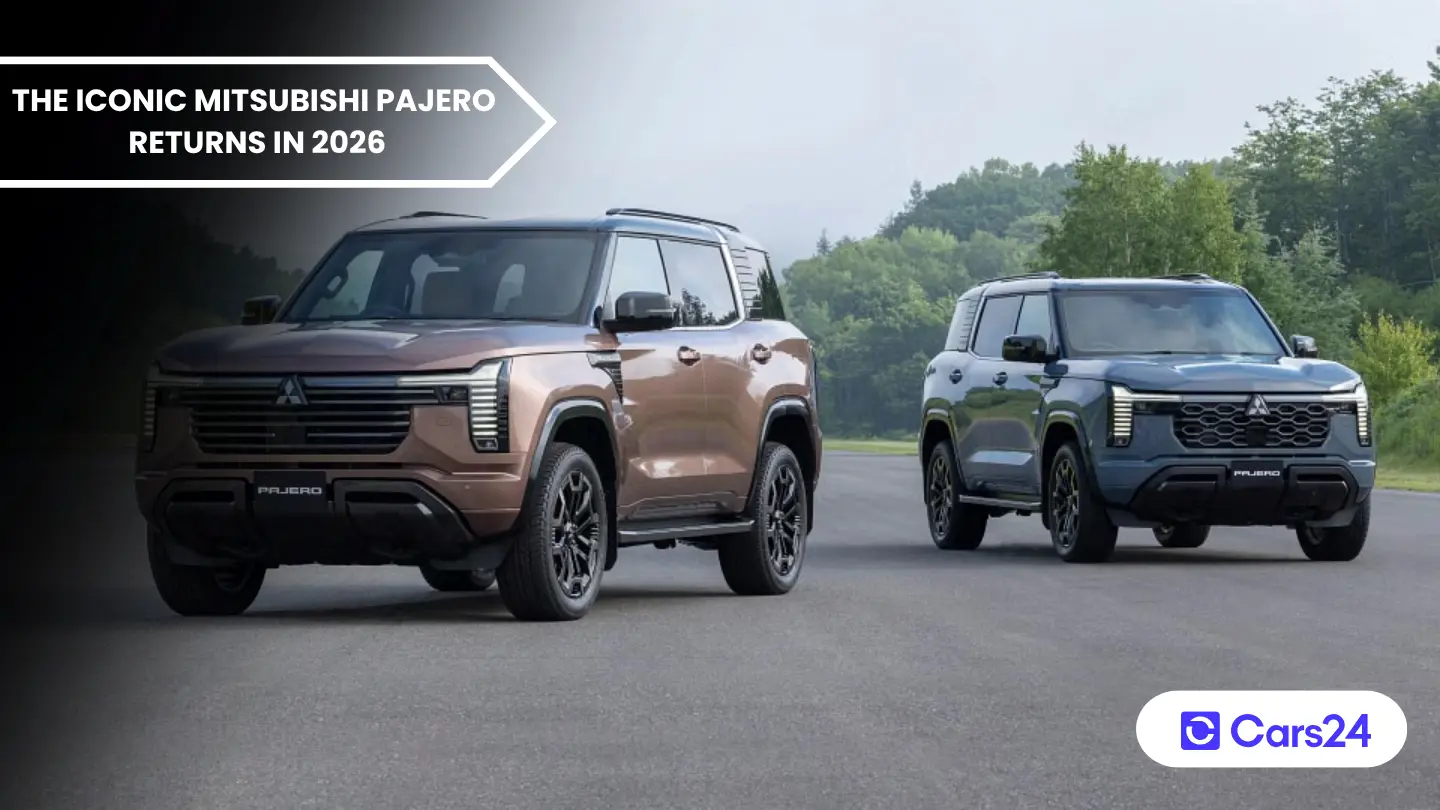
Key highlights
- The new Pajero swaps its old monocoque body for a Triton-based ladder-frame chassis.
- It launches with a 2.4-litre turbo-diesel making 150kW and up to 480Nm.
- Mitsubishi has confirmed a 2026 Australian launch, but pricing and specs are still unannounced.
Remember when “Pajero” was basically shorthand for “serious off-roader” in Australia? Well, it has made a comeback. Mitsubishi has just pulled the covers off the fifth-generation Pajero, five years after the nameplate quietly disappeared from local showrooms in 2021. And this isn’t just a nostalgia play with a new badge slapped on an old design, Mitsubishi has genuinely rebuilt the Pajero from the ground up.
If you grew up around Pajeros doing the school run one day and a Dakar-style adventure the next, this reveal matters. Here’s everything we know so far.
Read more: Mitsubishi Triton Savana Sertões brings rally-inspired off-road kit
Why is this reveal a bigger deal than it sounds?
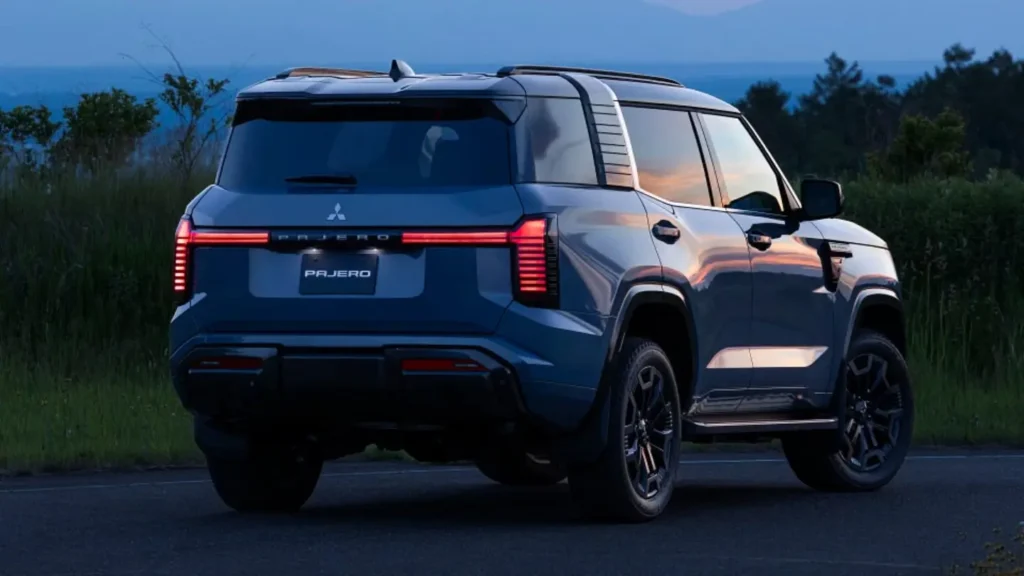
The old Mitsubishi Pajero used a monocoque (car-like) body, which made it comfortable but limited how far it could go off the beaten track. The new one ditches that entirely in favour of a ladder-frame chassis borrowed from the Mitsubishi Triton, Mitsubishi’s popular dual-cab ute.
That’s a significant shift in philosophy. Mitsubishi with this reflects that they’re not building a soft-road family SUV anymore, they’re building a proper 4WD wagon that happens to be comfortable enough for everyday life. Given how much Australians love their weekend touring rigs, that’s a smart bet.
Mitsubishi says the new Pajero has been through five years of development and leans heavily on the model’s off-road pedigree, including its 12 Dakar Rally wins, still one of the most decorated records in the event’s history.
What’s underneath: Triton platform, Pajero tuning
Mitsubishi hasn’t just bolted Pajero panels onto a stock Triton frame. The ladder chassis has been reinforced with thicker side rails and extra cross-bracing to handle the SUV’s different demands, and the suspension has been tuned specifically for the Pajero.
Up front, you get double wishbones, while the rear swaps the Triton’s leaf springs for a five-link rigid axle with coil springs, a setup designed to keep that classic Pajero ride comfort without giving up genuine off-road articulation.
Size-wise, the 2026 Mitsubishi Pajero isn’t small:
- Length: 4920mm
- Width: 1925mm
- Height: up to 1910mm
- Wheelbase: 2870mm
It’ll be sold as a seven-seater with three rows globally, though a five-seat version is expected for the Australian lineup. That puts the new Pajero firmly into the part of the local market occupied by vehicles such as the Toyota LandCruiser 300, Nissan Patrol Y63, Toyota Prado, Ford Everest and Isuzu MU-X.
Engine and 4WD system: Diesel-first, torque-focused
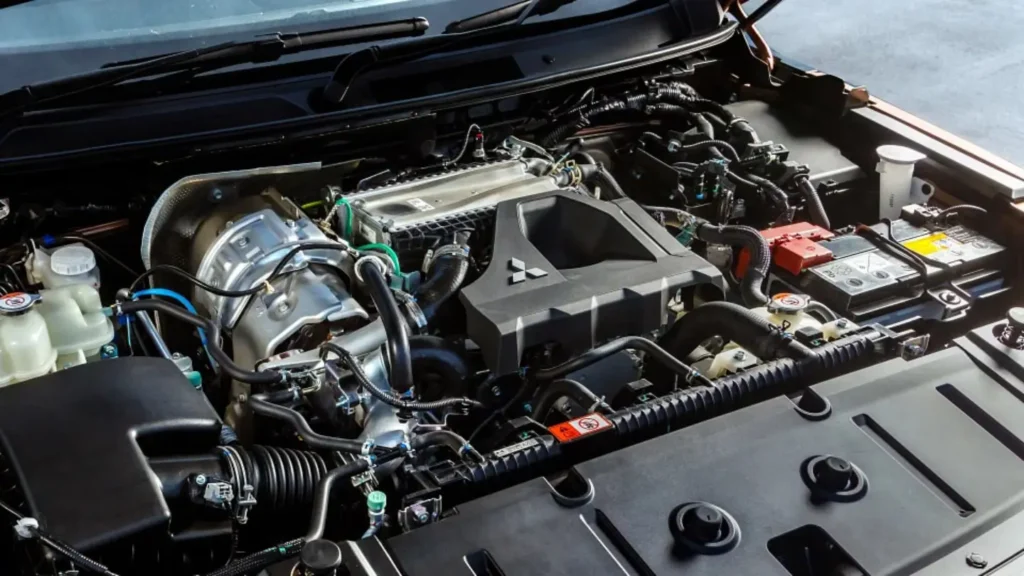
At launch, the Pajero gets a 2.4-litre four-cylinder turbo-diesel, producing 150kW and either 470Nm or 480Nm depending on the variant. On paper, that’s less power than you’d get from the petrol V6s in the Patrol Y63 or LandCruiser 300. But Mitsubishi is playing a different game here, leaning into diesel efficiency and low-down torque rather than chasing outright grunt.
That engine is matched to a new eight-speed automatic, a genuine upgrade over the Triton’s six-speed. Four-wheel drive duties are handled by Mitsubishi’s Super Select 4WD-II system, giving drivers 2H, 4H, 4HLc and 4LLc modes to play with, alongside seven drive modes: Eco, Normal, Gravel, Snow, Mud, Sand and Rock.
For Australian buyers who actually take their 4WDs off-road, this is the part of the story that matters more than styling.
Styling: Boxier, tougher, more off-road-ready
Design-wise, the new Mitsubishi Pajero is noticeably boxier and more rugged than the Outlander, with upright proportions built to project off-road presence rather than crossover softness. Up front, it gets a wide grille, slim LED headlights and a chunky bumper, while squared-off wheel arches and heavy body cladding carry that tougher look through the side profile and into a clean, upright tailgate with LED tail lights at the rear. It’s a modern take on the boxy silhouette long-time Pajero fans will recognise.
Mitsubishi is also expected to fit a solid suite of driver-assistance tech, though exact availability will likely vary by market and variant:
- Autonomous emergency braking
- Adaptive cruise control
- Lane-keeping assistance
- Blind-spot monitoring
A genuinely modern cabin
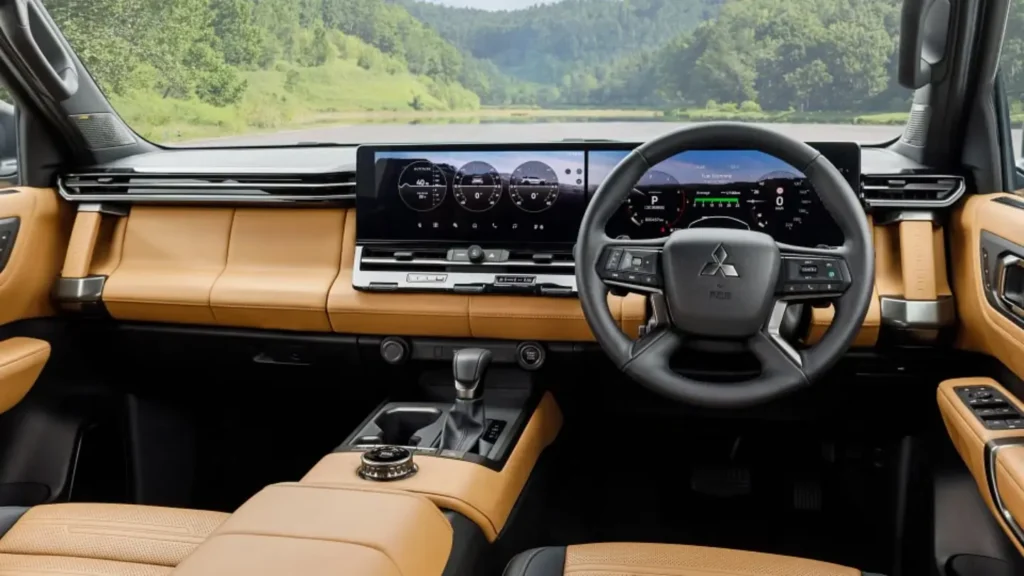
Step inside and the old Pajero would barely recognise the place. The new cabin gets a tall dashboard, big digital displays and, thankfully, physical climate controls rather than burying everything in a touchscreen.
Higher grades score 14.3-inch infotainment and driver display screens, with 12.3-inch units on other variants. There’s also dedicated off-road data built into the infotainment system, USB-C charging, wireless phone charging, and a Yamaha-tuned sound system on select trims.
Mitsubishi has clearly put thought into family use too. The second row slides 150mm for extra flexibility, and the third row is designed to actually fit adults, not just kids on short trips.
Mitsubishi Pajero Australian launch
Mitsubishi has confirmed the all-new Pajero will launch in 2026, although Australian pricing and the final local specification are yet to be announced. The timing is particularly interesting given the current state of Australia’s large 4WD market.
The Toyota LandCruiser 300 remains one of the country’s most established heavy-duty family 4WDs, while the Nissan Patrol Y63 brings a new-generation alternative to the segment. The Toyota Prado, Ford Everest and Isuzu MU-X also give buyers plenty of choice at different points of the market. The Pajero won’t necessarily win this fight through outright power or size.
Instead, Mitsubishi appears to be betting on something the old Pajero was always known for; a combination of genuine off-road ability, everyday usability and a strong reputation for durability. After a five-year development program and a complete change in its underlying architecture, the Pajero is finally back.
Now the big question is how much Mitsubishi will charge for it in Australia.

Comments
New Comment