




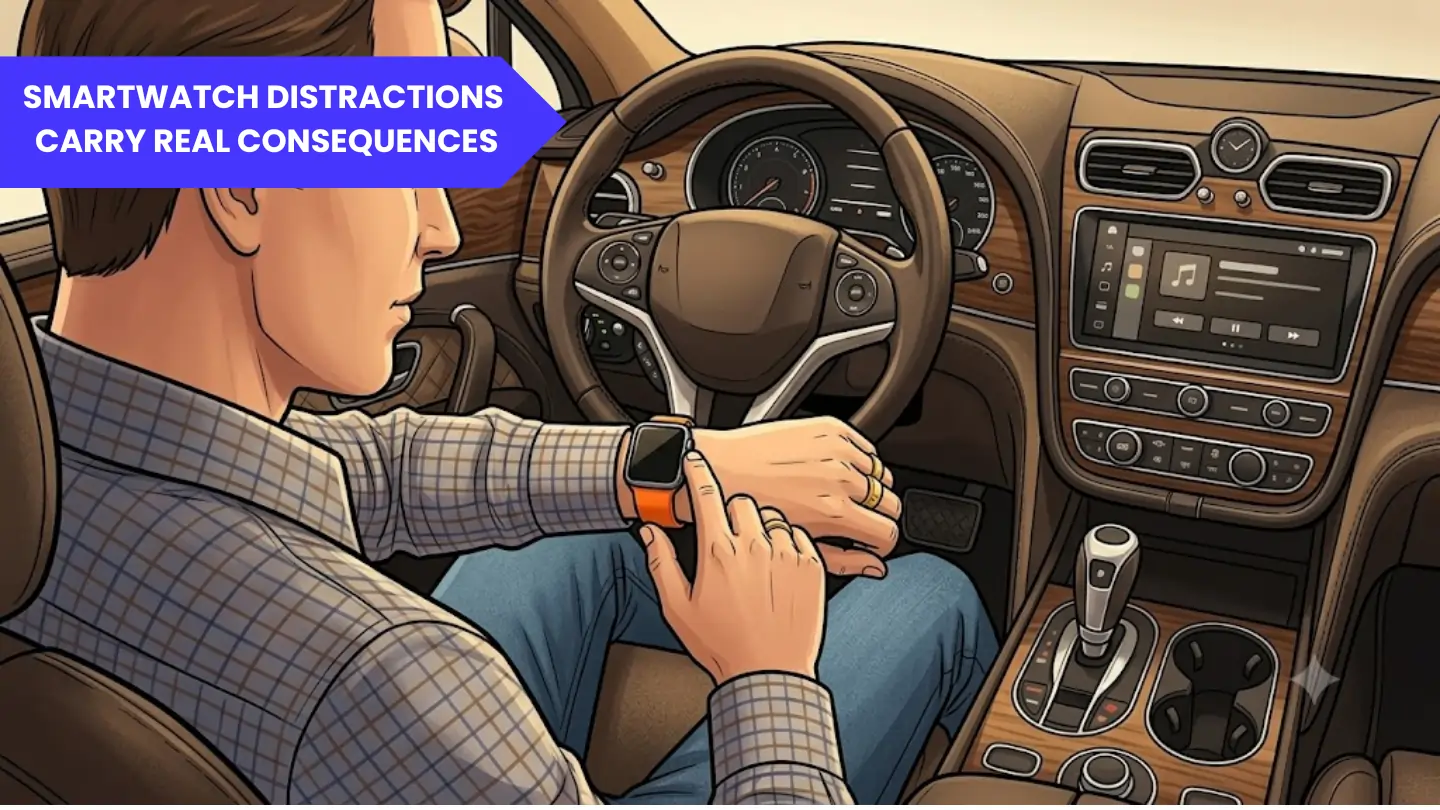
Smartwatches have become an extension of the smartphone, delivering calls, messages, navigation prompts and app alerts directly to your wrist. For many Australians, checking a smartwatch is now almost second nature. The problem is that what feels like a quick glance can be viewed very differently by road authorities.
Across Australia, driver distraction remains a major road safety concern, and wearable technology has not escaped scrutiny. Although there is no single nationwide law dedicated to smartwatches, many states and territories regulate their use under existing mobile phone, visual display unit and distracted-driving rules. Depending on the circumstances, interacting with a smartwatch behind the wheel can attract fines, demerit points and, in some cases, significant penalties.
So, is it actually legal to use a smartwatch while driving? The answer depends on how you’re using it and where you’re driving.
Why are smartwatches a concern while driving?
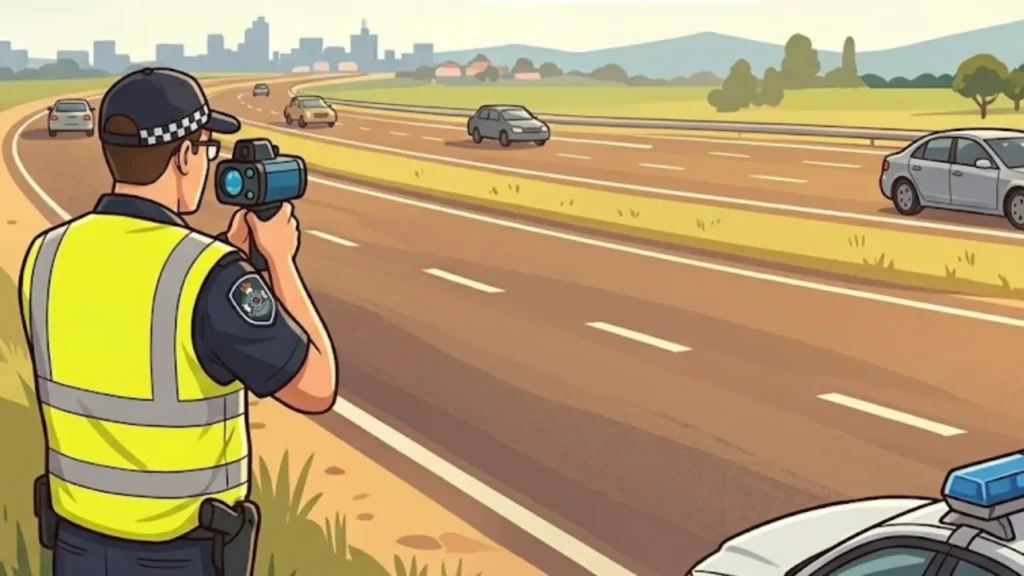
Unlike a traditional watch, a smartwatch demands your attention. Whether you’re reading a text, checking a notification or responding to a call, you’re diverting your eyes, mind and sometimes even your hands away from driving.
Road safety experts refer to this as a combination of:
- Visual distraction – taking your eyes off the road
- Cognitive distraction – taking your mind off driving
- Physical distraction – removing a hand from the steering wheel
Even a momentary lapse in concentration can increase the risk of a crash, particularly in heavy traffic or at higher speeds.
Read more: How to read ANCAP safety ratings before buying a used car
Can you legally use a smartwatch while driving?
The answer depends on where you live and how you’re using the device. In many states and territories, drivers can be penalised if a smartwatch is being used in a manner similar to a mobile phone. Activities such as reading messages, replying to notifications, browsing apps or interacting with the screen may result in fines and demerit points.
Some jurisdictions also classify smartwatches as visual display units, meaning they cannot be viewed or operated while driving unless they meet specific exemptions. Importantly, these restrictions often apply even when you’re stopped at traffic lights or sitting in traffic. In most cases, your vehicle must be legally parked before you can interact with the device.
What smartwatch functions are generally allowed?
Rules vary across Australia, but fully licensed drivers are typically permitted to:
- Listen to music, podcasts or audio content
- Use hands-free audio functions where permitted
- Receive notifications without interacting with the device
However, drivers are generally not permitted to:
- Read or send text messages
- Browse social media
- Check emails
- View videos or images
- Scroll through apps
- Manually interact with the smartwatch while driving
If you’re unsure whether a particular function is allowed, it’s safest to assume it isn’t until you’ve parked.
Read more: What is Victoria Rego Rebate? Everything you need to know
What about smartwatch navigation?
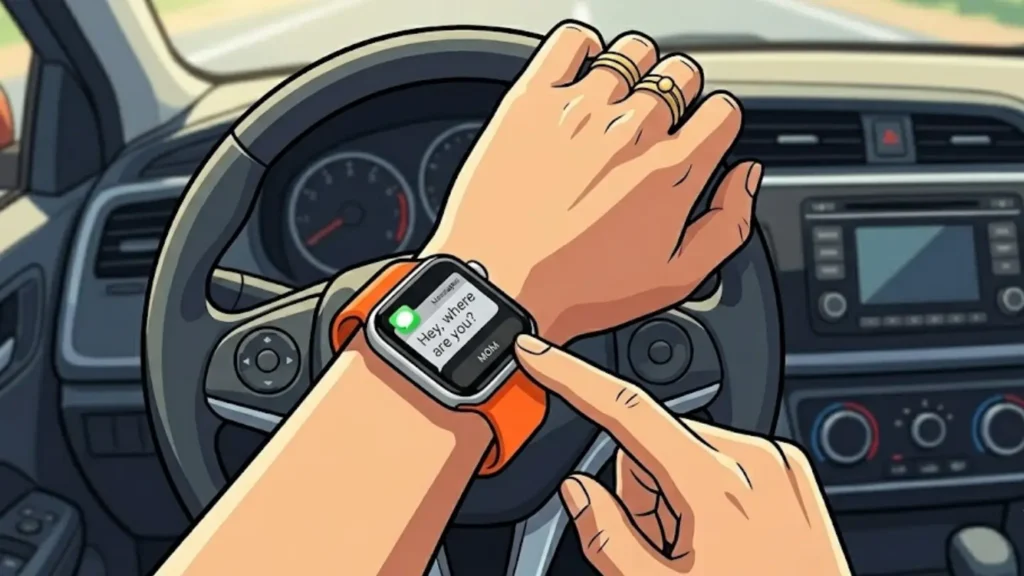
This is where many drivers get caught out. In some states, navigation is permitted only when displayed on an approved in-vehicle system or a properly mounted device. Because a smartwatch is worn on the wrist rather than mounted to the vehicle, using it for navigation while driving may not be permitted.
Before relying on smartwatch directions, it’s worth checking the specific road rules in your state or territory.
Penalties can vary dramatically
The penalties for illegally using a smartwatch while driving can vary significantly across Australia because different states and territories apply different road rules and enforcement approaches. Depending on how the device is being used, drivers may be penalised under distracted-driving, mobile phone or visual display unit regulations.
In South Australia, for example, using a smartwatch in a way that breaches visual display unit rules can attract fines starting from $125. In New South Wales, offences involving smartwatch use may attract fines of more than $400 and multiple demerit points if the device is being used like a mobile phone. In Tasmania, penalties for breaches of distracted-driving laws can exceed $2,000 in some circumstances.
Learner and provisional licence holders may face even greater consequences because many jurisdictions impose stricter restrictions on device use for less experienced drivers. Because penalties, exemptions and enforcement policies can change, drivers should check the latest road authority guidance in their state or territory before using any wearable device behind the wheel.
Learner and P-plate drivers face stricter rules
If you’re a learner or provisional licence holder, the restrictions are often even tougher.
Many states prohibit L-plate and P-plate drivers from touching or operating wearable devices while driving. In some jurisdictions, even voice-operated functions are not allowed.
As a result, younger and less experienced drivers should avoid interacting with a smartwatch altogether while behind the wheel.
Read more: How to get your P1 Plate in Australia: Step-by-step guide for new drivers
How to avoid fines and stay safe?
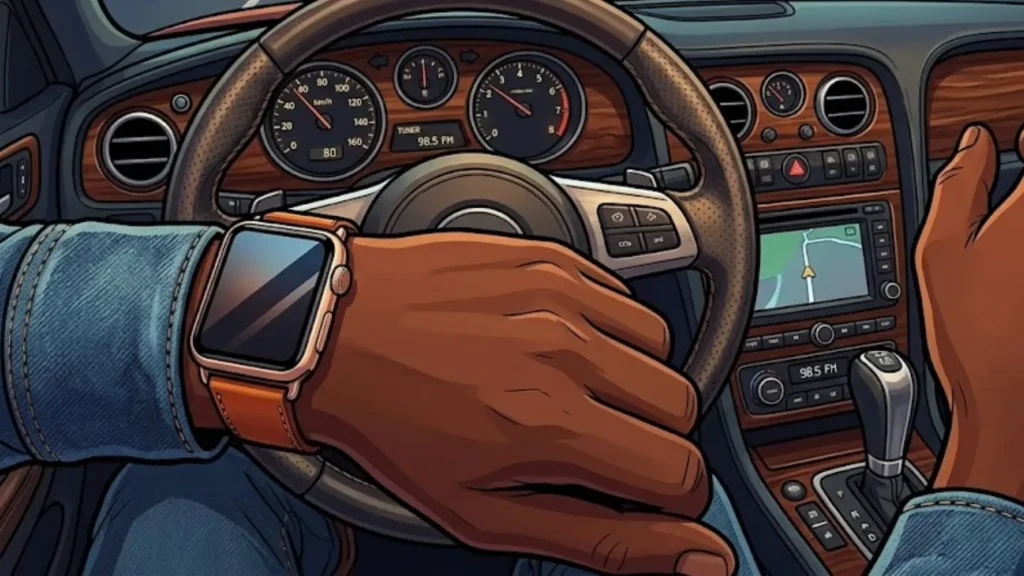
The simplest solution is to minimise smartwatch distractions before you begin your journey.
Before driving:
- Enable Do Not Disturb mode
- Silence unnecessary notifications
- Set up music or podcasts beforehand
- Use your vehicle’s approved infotainment system where available
- Leave messages and notifications until you’ve parked
If something is important enough to require your attention, pull over safely and park before checking it.
The verdict
Smartwatches may be convenient, but they’re not risk-free when you’re driving. Across Australia, road authorities increasingly view wearable devices as another source of driver distraction, and using one incorrectly could result in fines, demerit points or more serious consequences.
If a notification appears while you’re on the road, the safest option is also the simplest; keep your eyes on the road, your hands on the wheel and check your smartwatch once you’ve parked.
Browse the latest range of quality used cars available at Cars24.

Comments
New Comment