




There’s a sound every motorhead in Australia loves: the low, lumpy rumble of a V8. But lately, Cars24 Australia has been writing about more and more cars losing theirs. The Nissan Patrol has traded its V8 for a twin-turbo V6, the Toyota LandCruiser 300 has taken a similar path, and the LandCruiser 70 Series has moved from a V8 diesel to a four-cylinder turbo-diesel.
It got us wondering: are V8 engines really disappearing from Australian showrooms? Not quite. While the V8 is becoming harder to find in mainstream SUVs and four-wheel drives, it’s still alive and evolving elsewhere. The Ford Mustang continues with its 5.0-litre V8, Mercedes-AMG is still developing its 4.0-litre twin-turbo V8, and Ram has brought the Hemi back to Australia in the 2500 Warlock. At the other end of the spectrum, the Lamborghini Temerario and McLaren W1 pair V8 engines with electric motors.
So, what’s actually happening to the V8? Here’s why the engine is becoming rarer, where you can still find one, and what the shift means for Australian car buyers.
Read more: Ford Mustang manual may outlive its signature V8
What is a V8 engine?
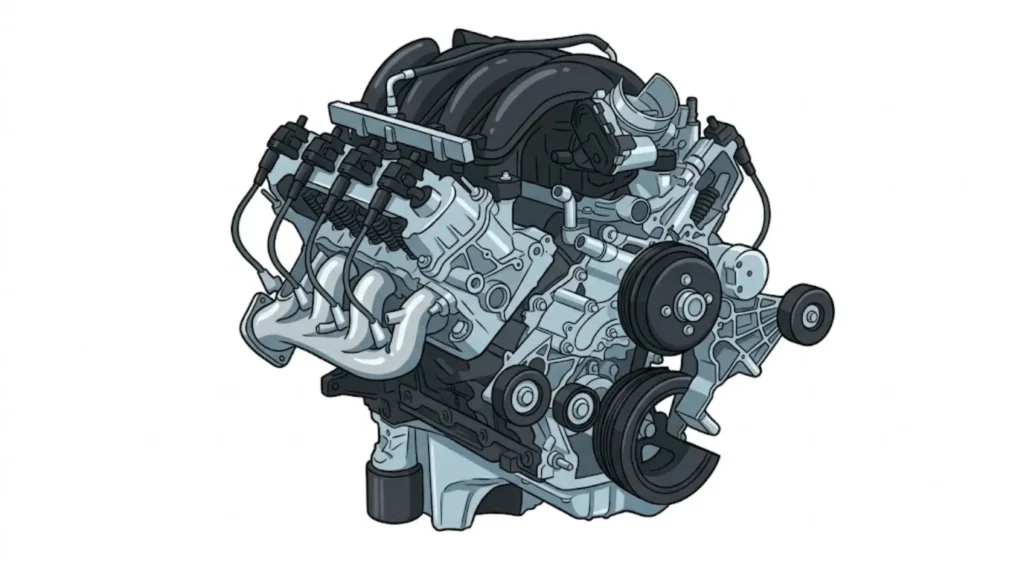
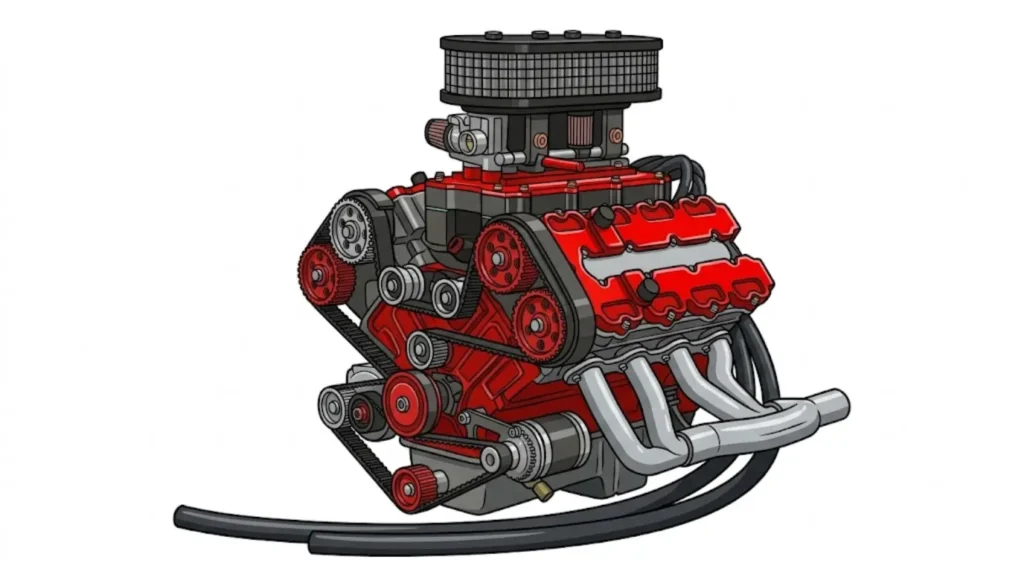
A V8 is an internal-combustion engine with eight cylinders arranged in two banks of four, forming a V shape. The number of cylinders is one of the key differences between V6, V8 and V10 engines. A V6 has six cylinders, while a V10 has 10. More cylinders can provide greater potential for power, smoother operation and a distinctive engine character, but cylinder count alone doesn’t determine how powerful an engine will be.
Modern turbocharging and hybrid technology mean a smaller engine can produce more power and torque than a larger naturally aspirated engine from previous generations. V8 engines have traditionally been popular in performance cars, large SUVs, utes and luxury vehicles because they can provide strong power and torque. Their distinctive exhaust note has also made them particularly appealing to enthusiasts.
V6 engines are considerably more common in modern mainstream vehicles, while V10s have become increasingly specialised. V10 engines are now largely associated with exotic and high-performance cars. That makes the V8 something of a middle ground. It can provide the performance and character enthusiasts want, while also being practical enough for large SUVs, utes and other heavy-duty applications.
In Australia, the V8 also carries a strong motorsport connection through Supercars, which continues to use V8-powered race cars, including Toyota’s new 5.2-litre V8-powered GR Supra for the 2026 championship.
Why are V8 engines becoming harder to find?
Australia’s New Vehicle Efficiency Standard (NVES) is one factor influencing how manufacturers approach high-emitting vehicles. The NVES does not ban V8 engines or dictate which engines manufacturers can sell. Instead, it sets average CO2 emissions targets for manufacturers and suppliers across the new vehicles they bring to the Australian market.
A manufacturer can still sell a high-emitting vehicle, but it needs to manage the emissions of its overall fleet to meet the applicable target. That creates a stronger incentive to offer lower-emitting vehicles alongside higher-emitting models, including hybrids and other more efficient powertrains.
For buyers, this doesn’t mean every V8 is suddenly going to disappear. It does mean manufacturers have more incentive to use V8 engines where they make the most sense, rather than across a wide range of vehicles.
Read more: Next-gen Mercedes-AMG C63 could revive the V8
Australia has already lost some familiar V8s
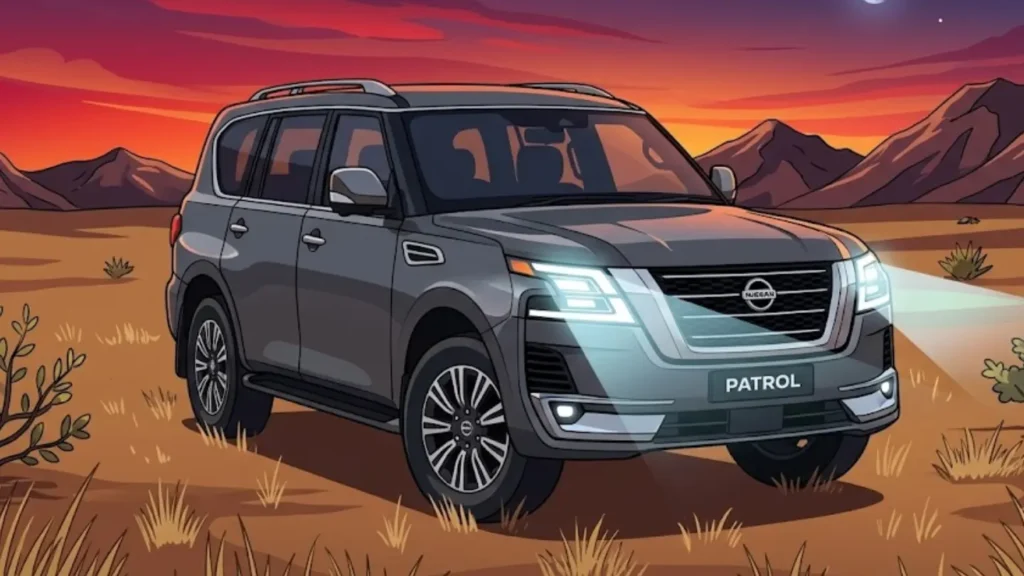
The biggest changes are happening in large SUVs and work-oriented vehicles. The outgoing Nissan Patrol Y62 is powered by a 5.6-litre petrol V8, but the new Y63 Patrol uses a 3.5-litre twin-turbo V6 producing 317kW and 700Nm. Nissan says the new engine produces more power and torque than the outgoing V8.
Toyota has taken a similar approach with the LandCruiser 300, replacing its 4.5-litre twin-turbo diesel V8 with a 3.3-litre twin-turbo diesel V6. The LandCruiser 70 Series has also moved from its 4.5-litre turbo-diesel V8 to a 2.8-litre four-cylinder turbo-diesel. For buyers, these changes show that losing a V8 doesn’t necessarily mean losing performance or capability. Modern turbocharged six-cylinder and hybrid powertrains can deliver substantial torque and power while helping manufacturers manage emissions.
But V8 engines aren’t simply going away
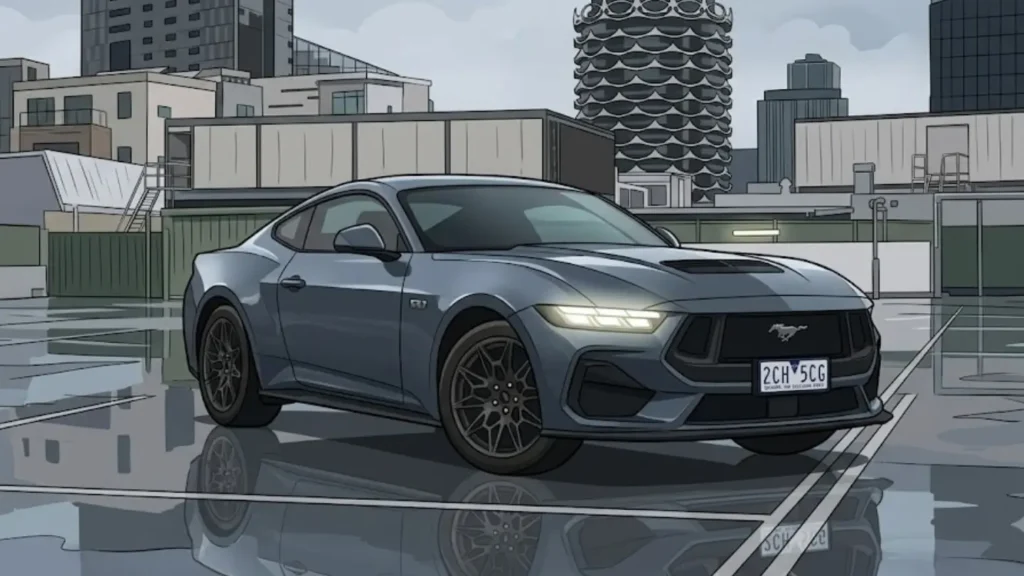
The more interesting part of the current V8 story is what is happening at the performance end of the market. The Ford Mustang continues to offer a naturally aspirated 5.0-litre V8 in Australia, while manufacturers such as Mercedes-AMG are still investing in new V8 technology.
Mercedes-AMG has continued developing its 4.0-litre twin-turbo V8 as emissions requirements become more stringent. The engine is already being rolled out across several AMG models, while the possibility of a future V8-powered C-Class has not been completely ruled out. The current Mercedes-AMG C63 instead uses a 2.0-litre turbocharged four-cylinder plug-in hybrid. Any return to a V8 in a future C-Class remains unconfirmed, but continued development of the V8 shows that manufacturers aren’t necessarily treating the engine as obsolete.
The V8 is also being reinvented
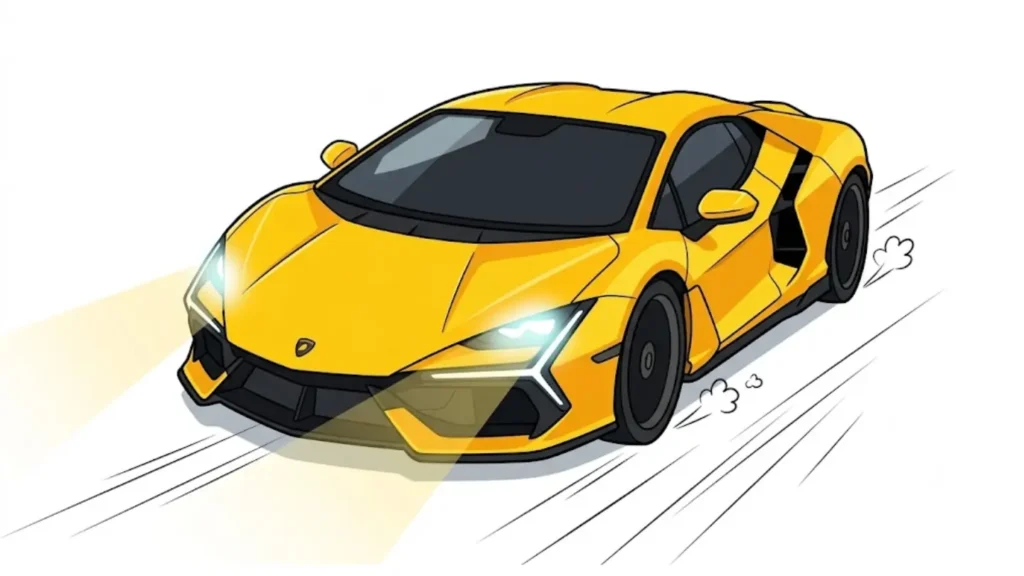
Lamborghini offers an even clearer example of how the V8 is changing. The new Lamborghini Temerario replaces the Huracán’s naturally aspirated V10 with a 4.0-litre twin-turbo V8 supported by three electric motors. The combined system produces 677kW, showing how a smaller combustion engine can be paired with electrification to deliver considerably more performance.
McLaren has taken a similar approach with the W1, using a twin-turbo V8 alongside an electric powertrain. In these applications, electrification isn’t necessarily replacing the V8. Instead, it is helping manufacturers keep a high-performance combustion engine relevant under increasingly demanding emissions requirements. That could become an important part of the V8’s future.
Ram shows the V8 can even come back
Ram provides another useful example of how complicated the V8 story has become. The brand has moved its core 1500 range towards the Hurricane inline-six, but the Hemi V8 has returned to Australia in selected models, including the Ram 2500 Warlock.
This doesn’t mean the Hemi is returning across the entire Ram range. Instead, it shows how manufacturers can continue offering a V8 where there is a specific customer base for it, even as smaller and more efficient engines become the core choice. The same principle could apply elsewhere, particularly to large performance cars, specialist SUVs and heavy-duty vehicles.
What does this mean if you want a V8?
If you’re buying a new car and specifically want a V8, the biggest change is the type of vehicle you’ll need to consider. The V8 is becoming less common in mainstream SUVs and utes, while remaining more visible in performance cars, luxury vehicles and specialist models.
That means buyers shouldn’t assume that a new-generation replacement will retain the same engine as the vehicle it replaces. The new Patrol is a clear example: the model remains a large, powerful four-wheel drive, but its V8 has been replaced by a twin-turbo V6.
It is also worth looking beyond the cylinder count. A modern turbocharged six-cylinder or hybrid powertrain can offer more power and torque than an older V8, while potentially using less fuel. If what you really want is the sound, response and character of a V8, however, the engine itself matters more than the performance figures on a specification sheet.
Should you buy a V8 while you still can?
If owning a V8 is important to you, current availability is worth considering. There is no guarantee that a V8-powered model will retain its engine when it moves into its next generation. However, buying one purely because you expect it to become a future collectible isn’t necessarily a sound strategy.
Consider the whole ownership picture instead, including fuel consumption, servicing, insurance, purchase price and how often you’ll actually use the vehicle’s performance. For someone who wants a V8 specifically, the choice may ultimately come down to character rather than numbers.
The V8 isn’t dead, but it is changing
The V8 is becoming less common in mainstream SUVs and utes, but it continues to have a place in performance cars, luxury vehicles and specialist models. Hybrid technology could also help manufacturers keep high-performance V8s relevant as emissions requirements become tougher.
CARS24 Australia says: if a V8 is on your must-have list, look at what is available now rather than assuming the next generation of your preferred model will retain one. The V8 isn’t disappearing overnight, but it is becoming an increasingly specialised choice.
Comments
New Comment