




No one wants to get stuck on a motorway in the middle of the night, right? Modern diesel vehicles have this feature of going “Limp” without diesel exhaust fluid (DEF).
For tradies and fleet operators, that’s more than an inconvenience; it’s downtime! So, what is this DEF? Why should you care about it? What happens if you drive without it?
We answer all these questions and more queries regarding diesel exhaust fluid or AdBlue, as most Aussies call it.
What is diesel exhaust fluid (DEF)?
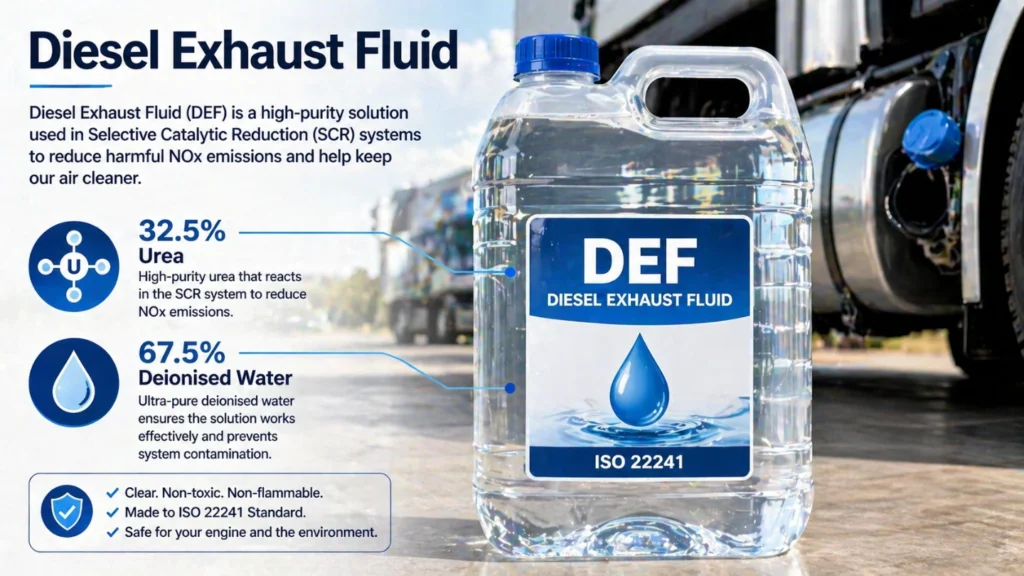
Diesel Exhaust Fluid (DEF) is a high-purity solution composed of 32.5% technical-grade urea and 67.5% deionised water used in modern diesel (since 2010) vehicles to reduce harmful nitrogen oxides emissions to near-zero levels.
Australians often call DEF “AdBlue,” which is a popular brand name for DEF. It is not a fuel additive. It is stored in a separate DEF tank and injected into the exhaust stream of modern diesel engines.
DEF is essential for keeping modern diesel vehicles compliant with emissions regulations and operating correctly. Maintaining DEF levels ensures proper operation and compliance with emissions standards.
Do all diesel engine cars have DEF?
No. Whether an engine requires it depends primarily on its age, the specific emissions technology it uses, and the regulations in the country where it is sold.
Many diesel vehicles made before 2010 for trucks and 2014 for many passenger vehicles (predating Euro 5/6 standards) do not require DEF. Some modern vehicles use alternative Exhaust Gas Recirculation (EGR) to reduce nitrogen oxides.
And some new diesel cars are sold here without DEF systems, like the Kia Tasman and Ford Ranger (some variants).
Most manufacturers have moved toward DEF/SCR systems because they are more effective at meeting strict Euro 6 standards (now at Euro 6d). Selective Catalytic Reduction (SCR) allows the engine to be tuned for better power and fuel economy, as the emissions cleaning happens entirely in the exhaust.
How to tell if a diesel vehicle runs on DEF fueling?
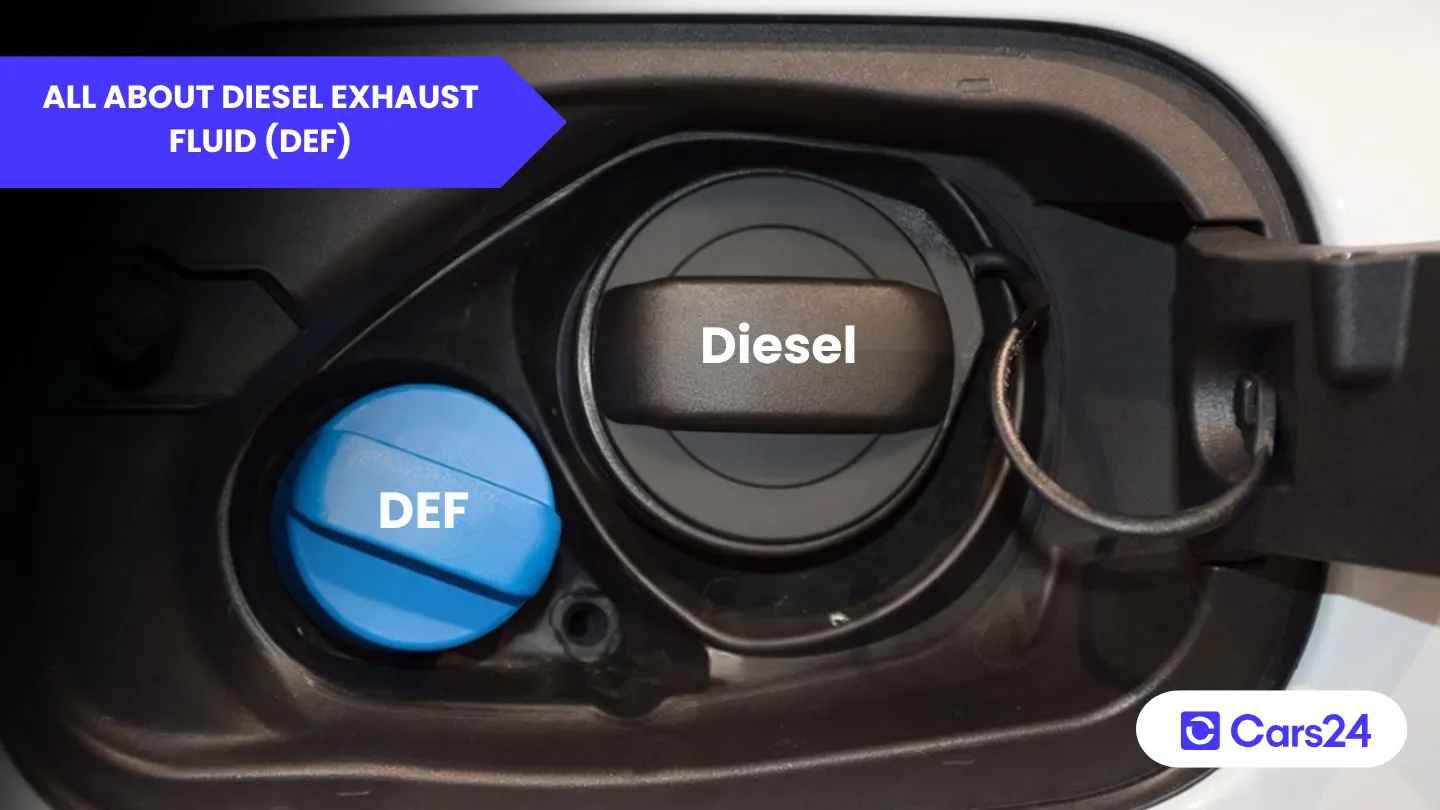
The most reliable way to tell if your vehicle uses DEF is to look for a blue filler cap, typically located next to the diesel fuel flap, under the bonnet, or in the boot. If your car has a dedicated “AdBlue” or “DEF” gauge or warning light on the dashboard, it requires the fluid.
Also read: 20 factors that impact car fuel usage in Australia
What are the types of DEF in Australia?
There is fundamentally only one main type of Diesel Exhaust Fluid (DEF) for road vehicles. However, you will encounter variations in branding, packaging, and specialty additives designed for specific environments.
1. Standard DEF (AUS 32)
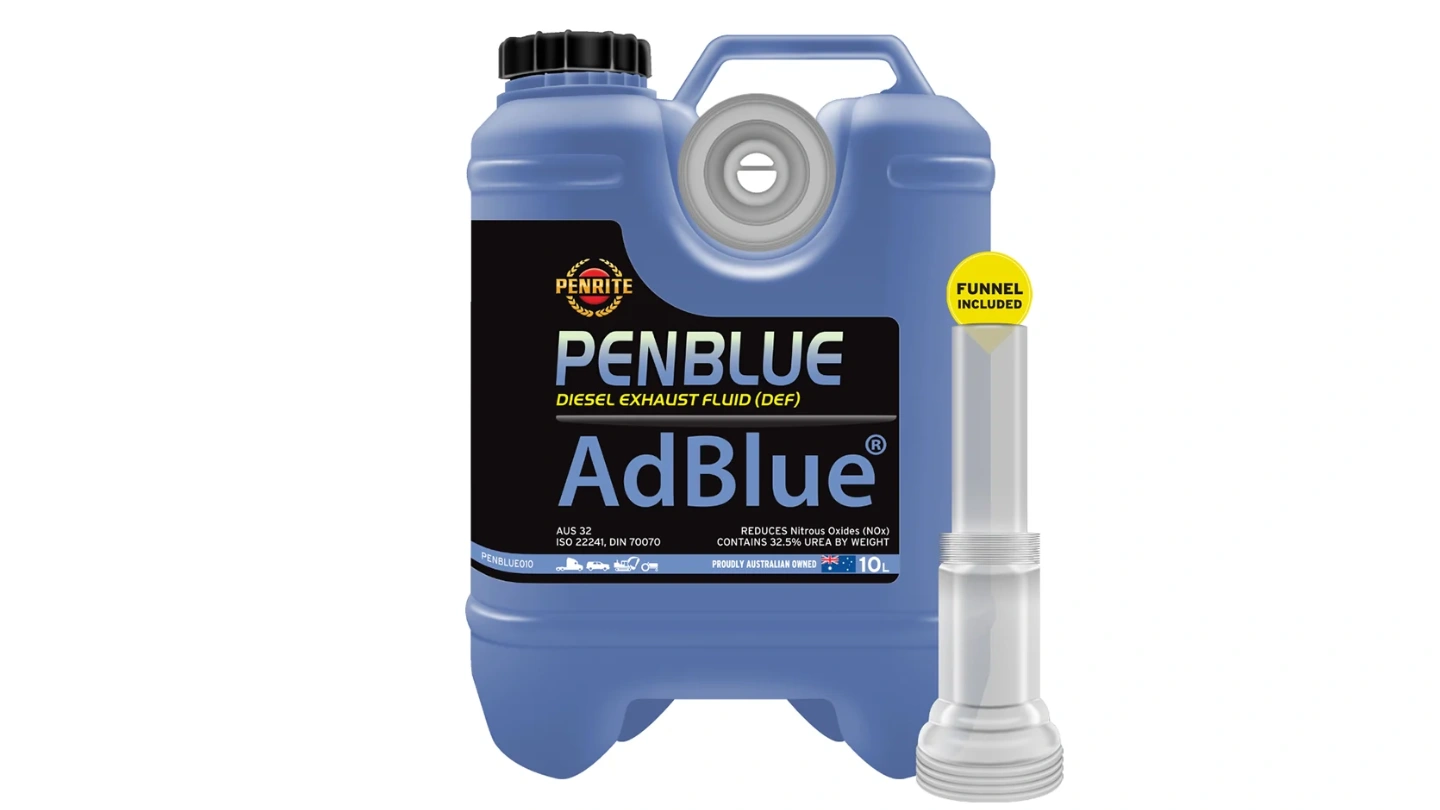
This is the standard used by almost all diesel cars, SUVs, and trucks in Australia. Its composition is 32.5% high-purity urea and 67.5% deionised water and must meet ISO 22241. You will see brand names like Penrite Penblue, Nulon Nu-Blue, and Gulf Western Clearonox. These are chemically identical to AdBlue.
The term “DEF 10” is used for a standard Diesel Exhaust Fluid (DEF) packaged in a 10-litre container, which is the most common size for Australians.
2. Specialty “Platinum” or Anti-crystallisation DEF
Some premium or platinum DEF versions include proprietary additives to prevent urea crystals from forming in the system, which is a common cause of expensive repairs. A common brand is BlueDEF Platinum.
A DEF conditioner such as Xenum ADMAX or Rislone DEF Treatment is also an anti-crystallisation additive and can be added to standard DEF to prevent clogging, especially in cold climates or vehicles that sit stationary for long periods.
3. Marine DEF (AUS 40)
It is only used for large ships and commercial marine engines. It has a more concentrated 40% urea solution and follows the ISO 18611 standards. Do not use this in your car or truck.
What is the Limp Mode in diesel vehicles in Australia?
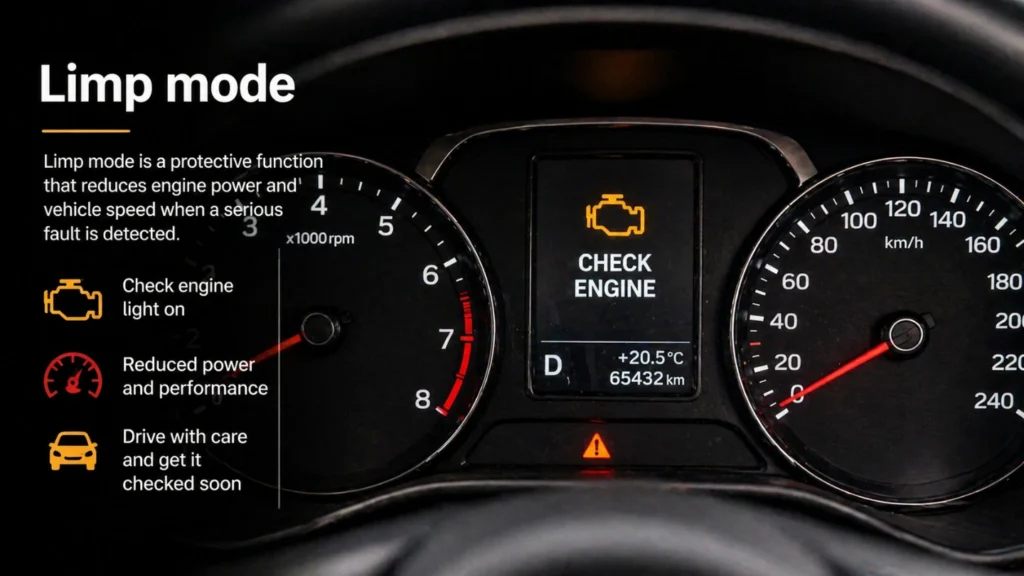
Limp Mode or Limp Home Mode is a self-preservation state triggered by your diesel vehicle’s computer when it detects a fault that could cause catastrophic engine or transmission damage. It occurs due to issues with emissions systems like the Diesel Particulate Filter (DPF) or DEF/AdBlue (low level).
How it works
When the Engine Control Unit (ECU) receives abnormal signals from sensors, such as excessive exhaust backpressure or an empty DEF tank, it intervenes to limit the vehicle’s speed and power. This typically reduces engine power, limits speed, and may trigger warning lights on the dashboard, or a “Check Engine” light or “Limp Home” dashboard message may illuminate.
Any major engine fault can trigger it, but diesel car drivers most frequently encounter limp mode due to DPF blockages, faulty sensors, engine overheating, and DEF (AdBlue) issues. It may happen as you run out of DEF or use contaminated fluid. The car may refuse to restart entirely once the tank is empty.
What are the ingredients of DEF?
Virtually all standard diesel exhaust fluids (DEFs) are most commonly sold under the AdBlue brand and consist of only two high-purity ingredients. They must maintain a precise ratio of the following ingredients to meet the critical ISO 22241 quality standard:
- 32.5% Technical-Grade Urea: A high-purity, synthetic form of urea that is much cleaner than the versions used in fertilisers.
- 67.5% Deionised Water: Purified water that has had minerals like calcium, magnesium, and iron removed to prevent clogging the delicate SCR catalyst
AdBlue is widely available across Australia in various sizes, from 1L emergency packs to 20L drums. DEF is widely available across Australia at service stations, auto stores, and major retailers.
If you’re doing a lot of driving, buying AdBlue at the pump at a truck stop is often significantly cheaper than buying individual plastic bottles.
Also read: Is diesel fuel still worth it or slowly losing ground?
How does diesel exhaust fluid (DEF) work?
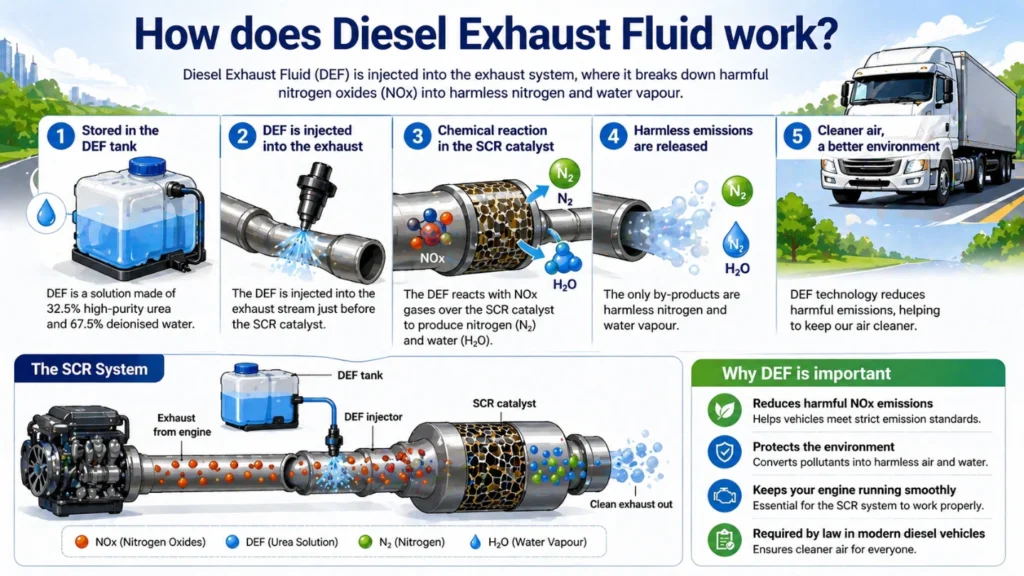
DEF works through a controlled chemical process within the exhaust system. Here is the step-by-step breakdown of how it works:
1. The trigger
As you drive, for example, towing a caravan in a Ford Ranger up the Gateway Bridge, its engine produces Nitrogen Oxides (NOx). Sensors in the exhaust detect these levels and tell the car’s computer exactly how much DEF is needed.
2. The injection phase
The DEF isn’t added to the engine or the fuel. Instead, it is stored in a separate tank (10-20L in a 4WD). A tiny nozzle sprays a fine mist of DEF directly into the hot exhaust pipe after the gases have left the engine.
3. Thermal decomposition
The exhaust pipe is incredibly hot (often over 200°C). When the DEF hits this heat, the water evaporates, and the urea turns into Ammonia (NH3), which is the active cleaning agent.
4. The SCR catalyst
The exhaust gases and the new ammonia move into the Selective Catalytic Reduction (SCR) brick. This is a ceramic honeycomb structure coated with precious metals. Here, the Ammonia reacts with the Nitrogen Oxides, and they chemically convert nitrogen oxides into nitrogen (N₂) and water vapour (H₂O).
The DEF consumption rate, similar to Diesel, increases with heavy-throttle acceleration and heavy towing.
How often do you need to refill DEF?
Most vehicles consume DEF at roughly 1–3 litres per 1,000 km, depending on driving conditions, load, and engine size.
Vehicles will typically warn you well in advance when DEF levels are low, often with several hundred kilometres of driving range remaining.
What colour is a diesel exhaust fluid (DEF)?
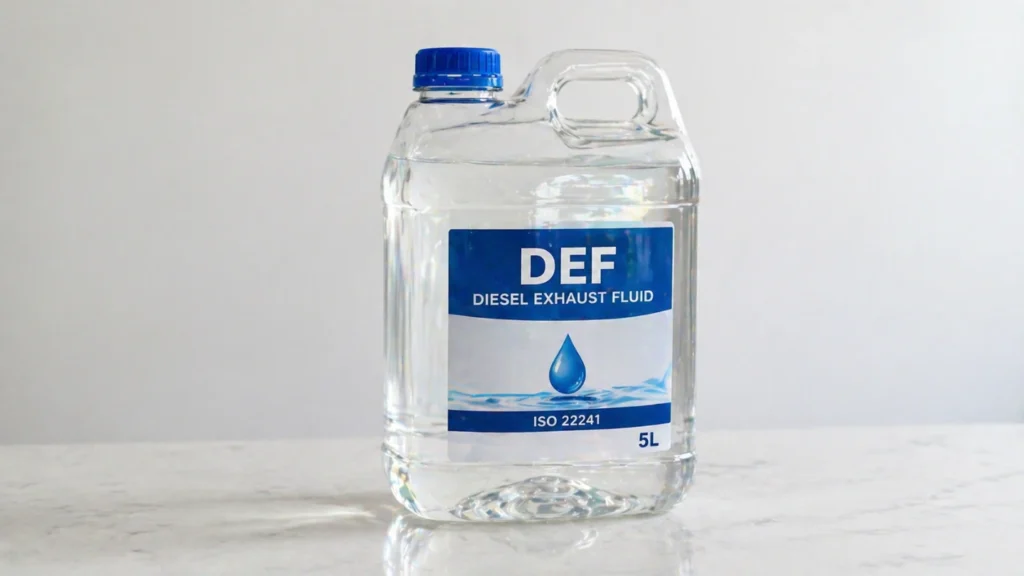
There is no official colour-coding system for Diesel Exhaust Fluid (DEF) types (AUS 32 or AUS 40) because, by regulation, all quality DEF must be clear and colourless like water. Despite names like “AdBlue” or “BlueDEF,” the fluid itself is transparent.
If the fluid in your tank or a container appears yellow, cloudy, or dark, this is not a different type of DEF; it is a warning sign that the fluid has degraded or been contaminated. Blue is the most common colour for DEF packaging to distinguish it from other automotive fluids.
What colour is a diesel exhaust fluid cap?
Almost all modern diesel vehicles in Australia feature a blue filler cap specifically for the DEF reservoir or tank to prevent you from accidentally putting diesel into the wrong tank.
What’s the safe and right way to store DEF?
The urea in DEF is highly sensitive to temperature and contamination. In the Australian climate, the shelf life of DEF can vary significantly depending on where you keep it. Here is the safe and right way to store your DEF:
1. Keep it out of the sun
UV rays and heat cause the urea to decompose rapidly into ammonia gas. Store DEF containers in a cool, dry, and well-ventilated area like a darkened corner of a garage. Properly stored DEF can last up to 2 years.
2. Manage the temperature
DEF is best kept between -11°C and 30°C. Avoid keeping a spare bottle in the boot of your car long-term, as the cabin can easily exceed 60°C in summer.
3. Prevent contamination
The SCR system is incredibly delicate. Keep the blue filler cap tightly sealed at all times. Only use the dedicated nozzle and never reuse a funnel that has touched oil, fuel, or coolant.
4. Use the right containers
If you are decanting from a bulk IBC or a large drum, only use high-density polyethylene (HDPE), stainless steel, or titanium. Never store DEF in containers of copper, brass, zinc, or galvanised steel. The fluid will corrode these metals to form a sludge.
How to tell if your DEF has gone bad?
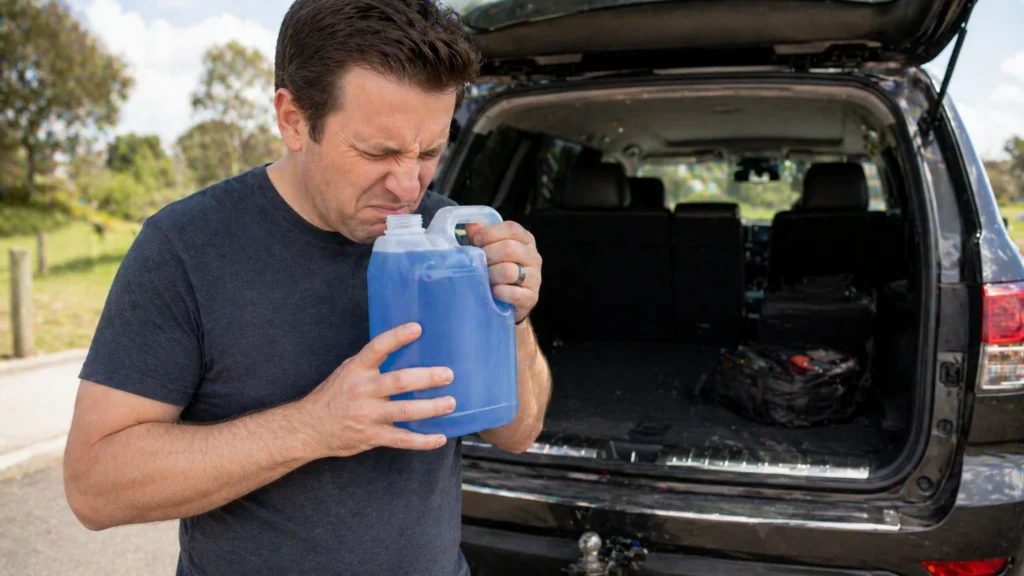
Give it a quick sniff. If it has a powerful, stinging ammonia (NH3) smell (like strong floor cleaner) or looks cloudy/yellowish, it has likely degraded and should be disposed of at a local waste facility.
What are AdBlue defeat devices?
People use AdBlue/DEF defeat devices (or “AdBlue emulators” or “delete kits”), which are hardware emulators, to trick a vehicle’s computer into thinking the SCR system is working perfectly, even when the DEF tank is empty, or the system has been disabled.
These are a black market solution used by some owners to avoid the cost of AdBlue fluid, expensive sensor repairs, or the risk of Limp Mode. These delete kits are illegal for use on any vehicle driven on public roads in Australia. Apart from heavy fines, your car’s insurance (after inspection) and warranty may also be voided.
Is DEF made with agricultural urea okay for your diesel car?
No. Agricultural urea (fertiliser) is not the same as Technical Grade urea used in AdBlue. Contamination is the biggest damaging factor to the car’s Selective Catalytic Reduction (SCR) system.
Fertiliser contains anti-caking agents, biuret, trace minerals, and organic matter, which “poison” the precious metals (like platinum or zeolite) inside your SCR catalyst and immediately make it ineffective permanently. Moreover, it can even block DEF injectors.
A SCR replacement costs thousands of AUD. On top of that, your car may go into Limp Mode, its warranty can be voided, and it becomes difficult to sell your car.
The bottom line
Diesel Exhaust Fluid (DEF) or AdBlue isn’t optional but a critical fluid in modern diesel cars. It doesn’t power the engine, but it cleans up what the engine produces, keeping emissions legal and the car running properly.
Ignore it, contaminate it, or run it empty, and your vehicle will remind you fast, often by dropping into limp mode or even refusing to start.
The key lesson? Treat DEF with the same discipline as fuel. Use only the correct, high-quality fluid because illegal substitutes can cost you far more in repairs, fines, or voided warranties.
FAQs
1. What is the freezing point of diesel exhaust fluid (DEF)?
The freezing point of standard DEF (AUS 32) is -11°C.
2. What is the shelf life of diesel exhaust fluid in Australia?
While the global standard for DEF’s shelf life is often quoted as up to 2 years, the Australian heat significantly shortens this.
3. Is urea in urine or pee the same as in DEF?
No. The urine is approximately 95% water and only 2% urea. It is far too dilute to trigger the chemical reaction needed to clean your exhaust and will damage the expensive SCR system permanently.
4. Why do truckers not like DEF?
Many truckers in Australia may not like DEF because, while it helps the environment, it adds layers of cost, complexity, and risk to their livelihood.
5. Can I still drive without AdBlue?
No. You are legally required to run your modern diesel car on DEF in Australia, and without it, you risk costly damage to your car’s SCR system.
6. What is DEF mobile?
DEF Mobile generally refers to one of three things: Mobile DEF refuelling & transport services like the DEF Group, mobile mechanics like Lube Mobile, and digital DEF management tools like Blue Def Decoder.

Comments
New Comment