




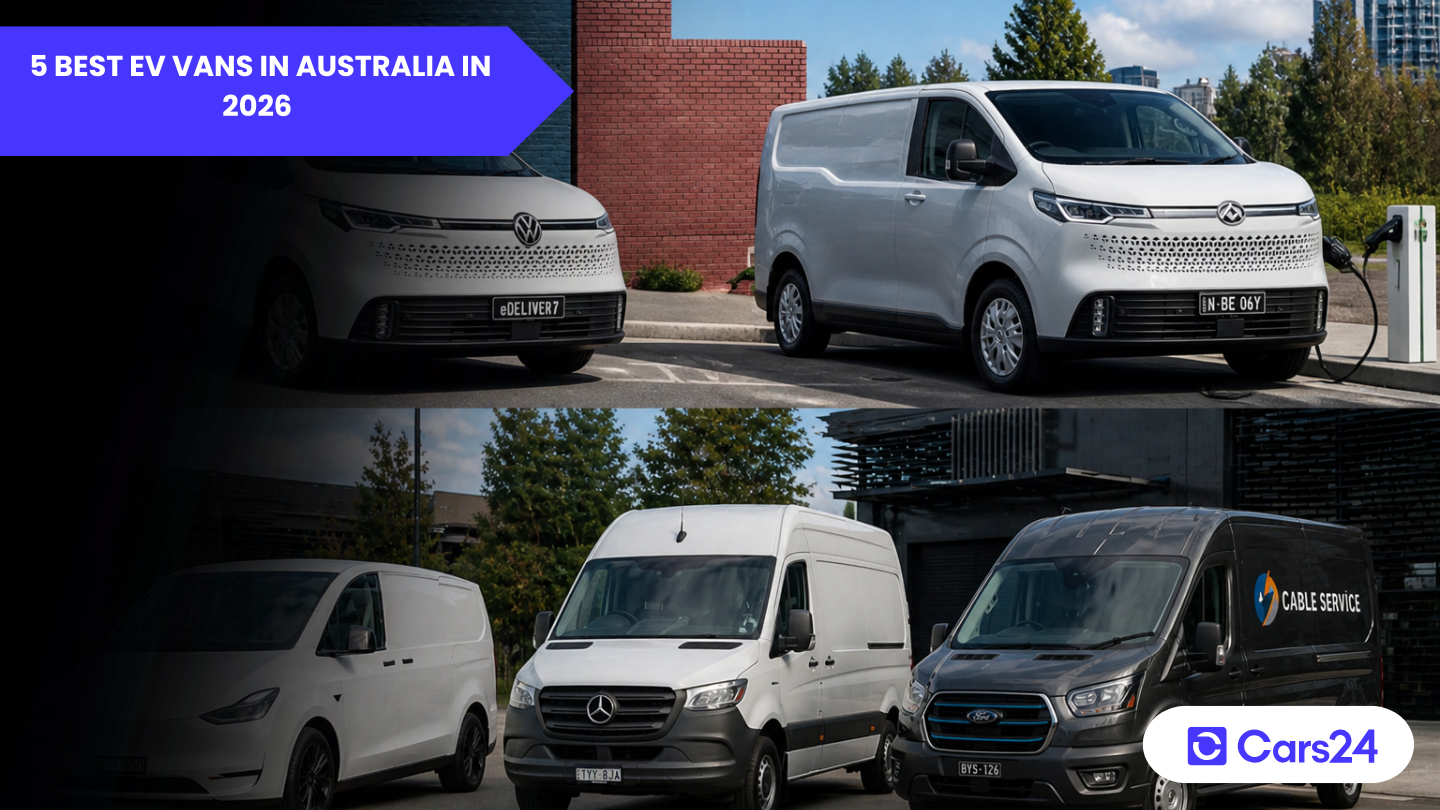
As Australia’s commercial EV market gains momentum, electric vans are becoming increasingly viable for businesses looking to cut running costs and emissions. But value in this segment isn’t just about battery size or range, it’s about payload capacity, charging flexibility, and how well each van integrates into real-world operations.
From compact urban delivery vans like the Renault Kangoo E-Tech to full-size options such as the Ford E-Transit and Mercedes-Benz eSprinter, buyers now have a broader spread of choices. Meanwhile, newer entrants like the Volkswagen ID. Buzz Cargo and LDV eDeliver 7 aim to strike a balance between efficiency, practicality, and price.
If you’re comparing options, these are the best 5 EV vans that represent some of the most relevant choices in Australia right now.
Read more: 10 used utes in Australia with the strongest trade-in value
Ford E-Transit
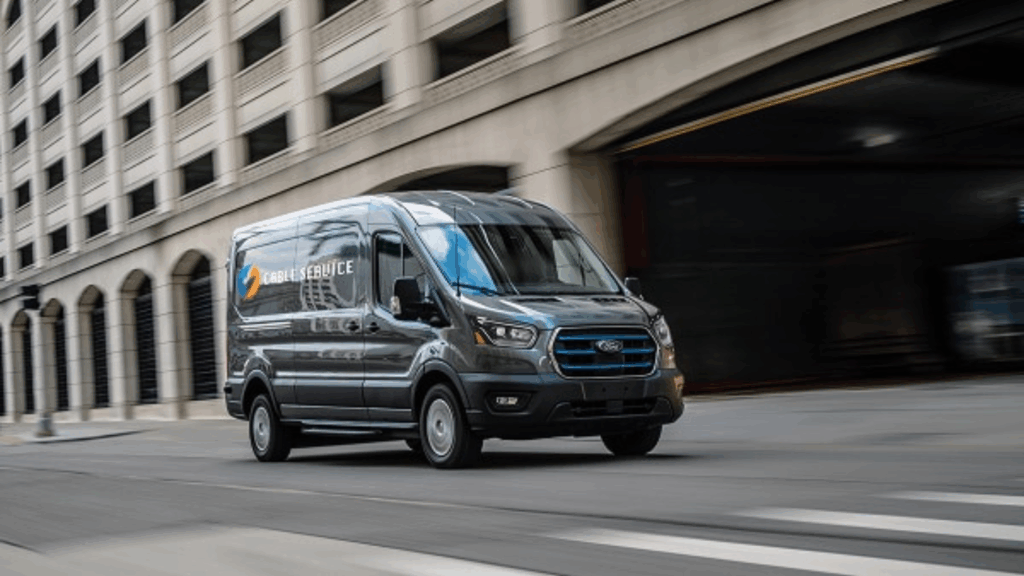
The Ford E-Transit sets the benchmark for full-size electric vans in Australia, particularly when it comes to outright capability. Compared to mid-size options like the LDV eDeliver 7, it offers significantly more cargo volume and payload flexibility, making it better suited to larger fleets and trade applications.
Where it stands out against the Mercedes-Benz eSprinter is its broader configuration range and competitive pricing, though the Mercedes counters with a more premium cabin. Against smaller vans like the Renault Kangoo E-Tech, the E-Transit is in a different league entirely, more powerful, more spacious, but also more expensive to run and park in urban environments. DC fast-charging capability also makes it viable for multi-shift fleet use.
For businesses prioritising scale and versatility, the E-Transit delivers one of the most complete electric van packages currently available in Australia .
| Specifications | Ford E-Transit |
| Battery | 68kWh |
| Power | 198kW |
| Torque | 430Nm |
| Transmission | Single-speed automatic |
| Drivetrain | Rear-wheel drive |
| Range (WLTP) | Up to 307km |
| Payload | 1616kg |
Read more: 10 most affordable hybrids in Australia in 2026
Renault Kangoo E-Tech
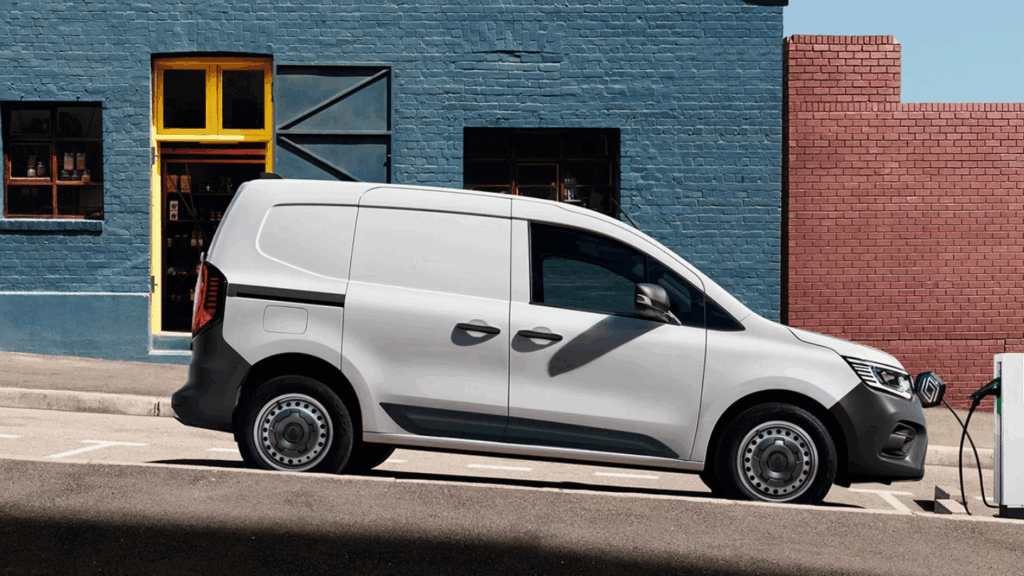
At the opposite end of the spectrum, the Renault Kangoo E-Tech focuses on urban efficiency and accessibility. Compared to the larger Ford E-Transit and Mercedes-Benz eSprinter, it offers far less payload and cargo space, but its compact size makes it far easier to manoeuvre in tight city environments.
Against the Volkswagen ID. Buzz Cargo, the Kangoo is more utilitarian and typically more affordable, though it lacks the VW’s design appeal and slightly longer range. Compared to the LDV eDeliver 7, it trades outright capability for lower running costs and simplicity.
For small businesses, couriers, and last-mile delivery services, the Kangoo E-Tech stands out as one of the most practical entry points into electric van ownership in Australia.
| Specifications | Renault Kangoo E-Tech |
| Battery | 45kWh |
| Power | 90kW |
| Torque | 245Nm |
| Transmission | Single-speed automatic |
| Drivetrain | Front-wheel drive |
| Range (WLTP) | Up to 286km |
| Payload | 756kg |
Volkswagen ID. Buzz Cargo
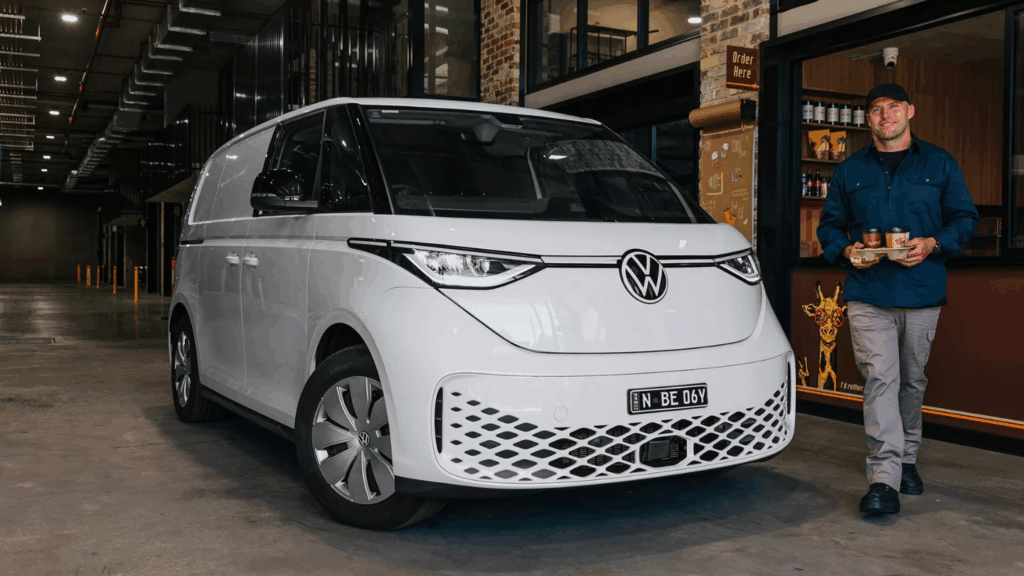
The Volkswagen ID. Buzz Cargo sits somewhere between style and substance, offering a more lifestyle-oriented take on the electric van. Compared to the Renault Kangoo E-Tech, it provides more space and a longer wheelbase, but comes at a higher price point.
Against the LDV eDeliver 7, it feels more refined and tech-focused, though the LDV often undercuts it on value. Compared to the Ford E-Transit, the VW ID. Buzz Cargo electric van is smaller and less capable in outright payload, but far easier to live with in urban environments.
Its appeal lies in branding and usability, businesses wanting to project a modern, eco-conscious image may find it more compelling than the more utilitarian alternatives.
| Specifications | Volkswagen ID. Buzz Cargo |
| Battery | 79kWh |
| Power | 210kW |
| Torque | 550Nm |
| Transmission | Single-speed automatic |
| Drivetrain | Rear-wheel drive |
| Range | Up to 431km |
| Payload | 774kg |
Read more: Top 5 EVs with the best battery warranties in Australia (2026)
Mercedes-Benz eSprinter
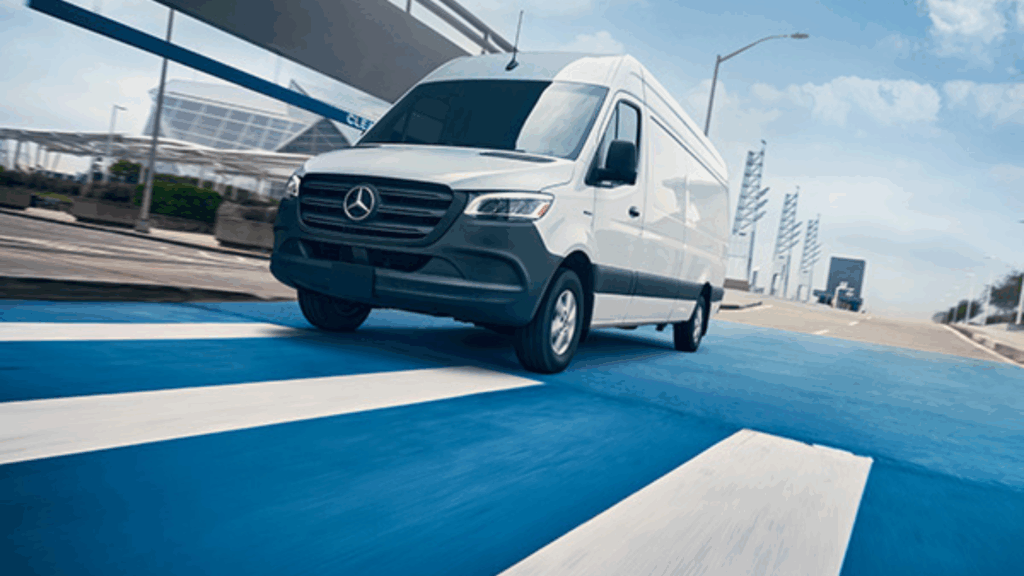
The Mercedes-Benz eSprinter positions itself as a premium large van option in Australia, competing directly with the Ford E-Transit. While both offer similar use cases, the eSprinter leans more toward refinement and brand appeal, whereas the Ford focuses on flexibility and fleet value.
Compared to the LDV eDeliver 7, the Mercedes offers a more upmarket cabin and stronger brand backing, but at a significantly higher price. Against the Volkswagen ID. Buzz Cargo, it delivers far greater cargo capacity, though it’s less suited to tight urban environments.
For businesses that prioritise brand image, driver comfort, and a more premium experience, the eSprinter makes a strong case provided the higher upfront cost fits within budget.
| Specifications | Mercedes-Benz eSprinter |
| Battery | 81kWh/113kWh |
| Power | 100/ 150kW |
| Torque | 400Nm |
| Transmission | Single-speed automatic |
| Drivetrain | Rear-wheel drive |
| Range | 332km |
| Payload | 1190kg |
LDV eDeliver 7
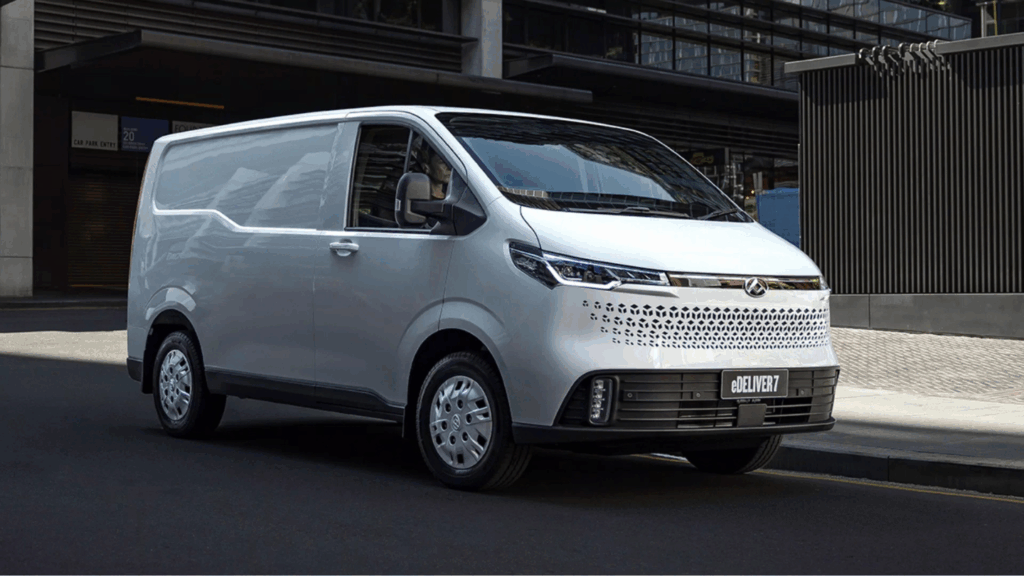
The LDV eDeliver 7 strikes a balance between affordability and usability, sitting between compact vans like the Kangoo and larger models like the E-Transit. Compared to the Volkswagen ID. Buzz Cargo, it’s typically more cost-effective while offering comparable practicality, though it lacks the same level of refinement.
Against the Ford E-Transit and Mercedes-Benz eSprinter, it offers less outright capacity but comes in at a much lower price point, making it attractive for small to medium-sized businesses. Compared to the Renault Kangoo E-Tech, it provides a clear step up in space and capability.
For buyers looking for a practical, no-frills electric van that doesn’t stretch the budget, the eDeliver 7 presents one of the strongest value propositions in the segment.
| Specifications | LDV eDeliver 7 |
| Battery | 77kWh/88kWh |
| Power | 150kW |
| Torque | 330Nm |
| Transmission | Single-speed automatic |
| Drivetrain | Front-wheel drive |
| Range | Up to 328km |
| Payload | 1175kg |
Read more: Top 5 best value used electric cars in Australia in 2026
Final thoughts on Australia’s best EV vans
Choosing the right electric van ultimately comes down to how and where it will be used. The Renault Kangoo E-Tech is ideal for urban delivery and tight city routes, while the LDV eDeliver 7 offers a strong middle ground between price and practicality.
For larger operations, the Ford E-Transit and Mercedes-Benz eSprinter deliver the space and payload needed for demanding workloads, with the Ford leaning toward value and the Mercedes toward refinement. The VW ID. Buzz Cargo electric van, meanwhile, adds a more design-led, brand-focused option for businesses wanting to stand out.
Across this list, the key takeaway is increasing choice. Whether your priority is cost, capacity, or urban usability, Australia’s growing EV van market now offers a solution tailored to a wide range of business needs.

Comments
New Comment