




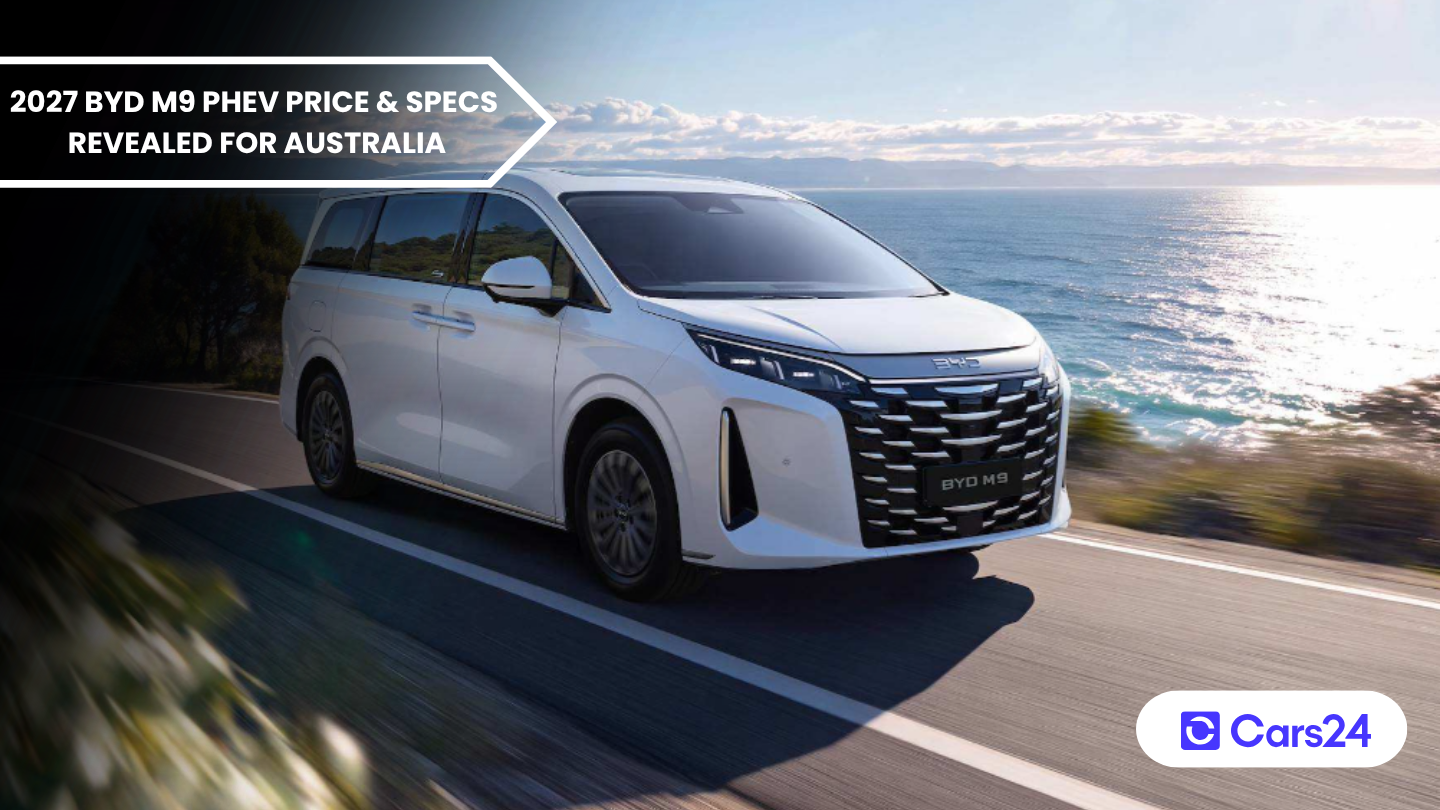
Australia’s people mover buyers are about to get a genuinely interesting new option. BYD has confirmed local pricing for its M9 plug-in hybrid, and the numbers put it right in Kia Carnival territory, which, if you know this segment, is no accident.
Here’s how the M9’s pricing stacks up against its main hybrid rival and BYD’s own premium sibling:
| Model | Variant | Price (before on-roads) |
| BYD M9 PHEV | Dynamic (8-seat) | $61,990 |
| BYD M9 PHEV | Premium (7-seat) | $72,990 |
Prices exclude on-road costs. Kia Carnival Hybrid figures shown are for the S and GT-Line trims marking the range’s floor and ceiling.
So the BYD M9 Dynamic slots in above the Carnival Hybrid’s entry point, while the Premium lands comfortably within the Carnival’s price spread, well short of its GT-Line flagship. It also undercuts BYD’s own premium electric D9 from its Denza brand by a wide margin. This matters because the Carnival isn’t just popular in this segment, it’s dominant. More than three in four people-movers sold in Australia this year have worn a Kia badge, and plenty of Chinese brands have tried and failed to make a dent by chasing a more premium, Mercedes-Benz V-Class-style buyer instead. BYD, fresh off overtaking Kia in overall Australian sales, looks to be taking a more direct swing.
Read more: Heavily overhauled 2027 BYD Atto 2 EV launched in China
What’s under the skin?
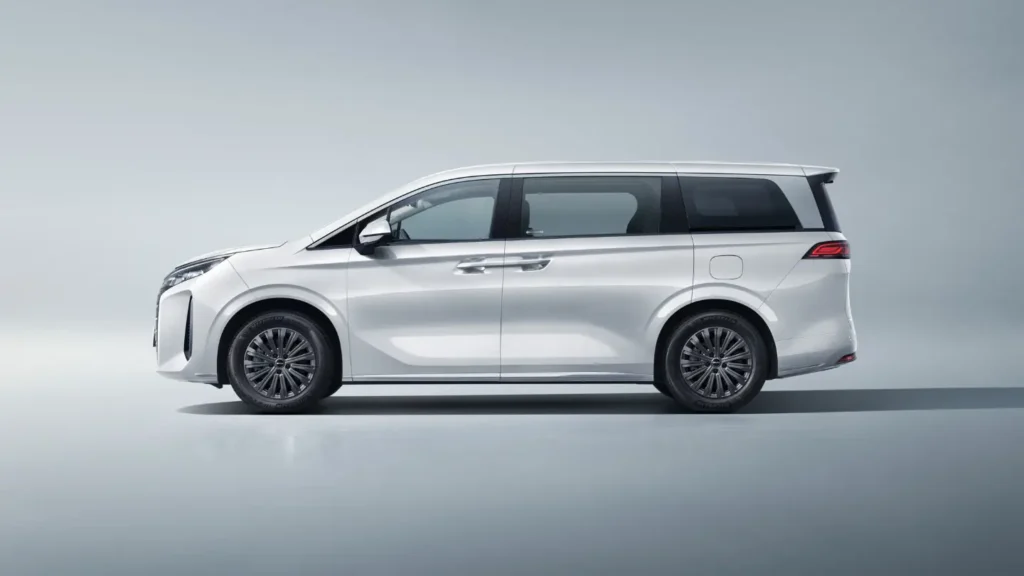
The BYD M9 runs DM-i 5.0 Super Hybrid system; a turbocharged 1.5-litre four-cylinder petrol engine paired with an electric motor, driving the front wheels. The entry Dynamic uses a 20.39kWh lithium iron phosphate battery producing 191.4kW, based on recently published certification documents, full specs are still to come.
Step up to the Premium and you get a bigger 36.6kWh battery, with combined outputs of 218kW and 315Nm. BYD claims 145km of WLTP electric-only range for the Premium, plus a total combined range of 850km, numbers that suggest most school runs and daily commutes could be done on electric power alone, with the petrol engine there for longer hauls. DC charging speeds haven’t been locked in for Australia yet, though Chinese-market documents point to 41kW and 73kW figures across the two powertrains.
Family-friendly features, with a few surprises
The Premium’s equipment list reads like it’s aimed squarely at families who want a bit of indulgence on long trips. Heated and ventilated front seats are joined by second-row captain’s chairs with heating, ventilation and what BYD describes as a “near zero-gravity” seating position, the kind of feature usually reserved for luxury sedans, not minivans.
There’s also an integrated fridge/hotbox capable of cooling to -6°C or warming up to 50°C, handy for keeping drinks cold or snacks warm on a road trip. Vehicle-to-load (V2L) capability across both variants means you can run small appliances straight off the car’s battery, useful for camping trips or, more usefully for most, running speakers at kids’ sports days.
On safety, BYD is promising a surround-view camera, a broad suite of active safety and driver assist tech, up to nine airbags, and a Sentry Mode that keeps watch over the car while it’s parked.
Size and practicality
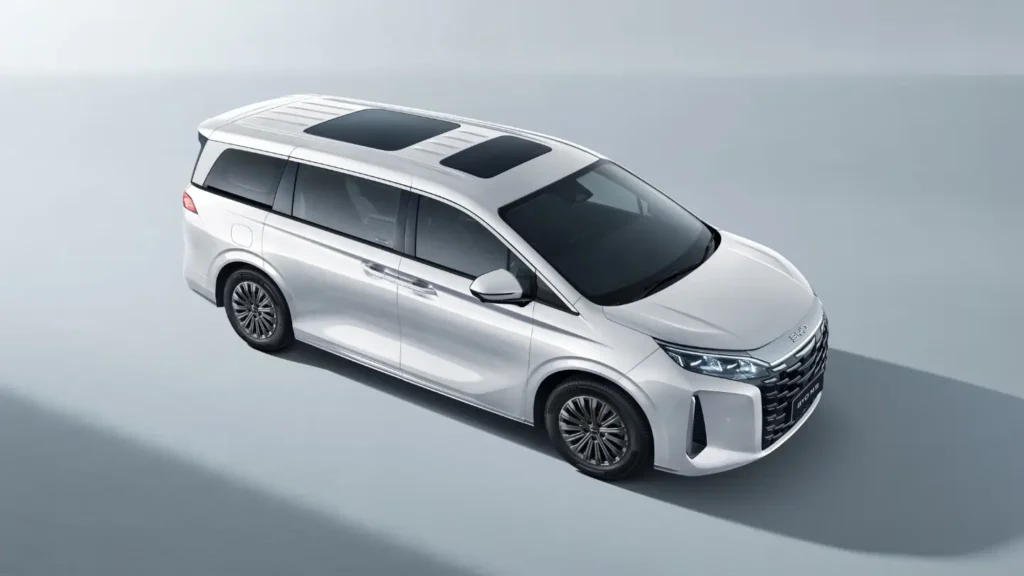
Dimensionally, the BYD M9 measures 5145mm long, 1970mm wide and 1805mm tall on a 3045mm wheelbase, making it 10mm shorter, 25mm narrower and 30mm taller than the Carnival, on a wheelbase that’s 45mm shorter. Payload comes in at 654kg for both variants, boot space behind the third row is a claimed 470 litres, and braked towing capacity is rated at 1500kg.
When can you buy one?
BYD says the M9 will arrive in Australia during the fourth quarter of 2026 (October to December), with the Premium variant landing first. It’ll join the GAC M8 as only the second PHEV people mover on sale locally, a sign this corner of the market is finally starting to diversify beyond diesel and conventional hybrid power.
Whether the BYD M9 can actually dent the Carnival’s grip on Australian families remains to be seen. But with genuine electric range, a longer feature list, and pricing that lines up almost dollar-for-dollar with its target, BYD has at least given Kia something to think about.

Comments
New Comment