




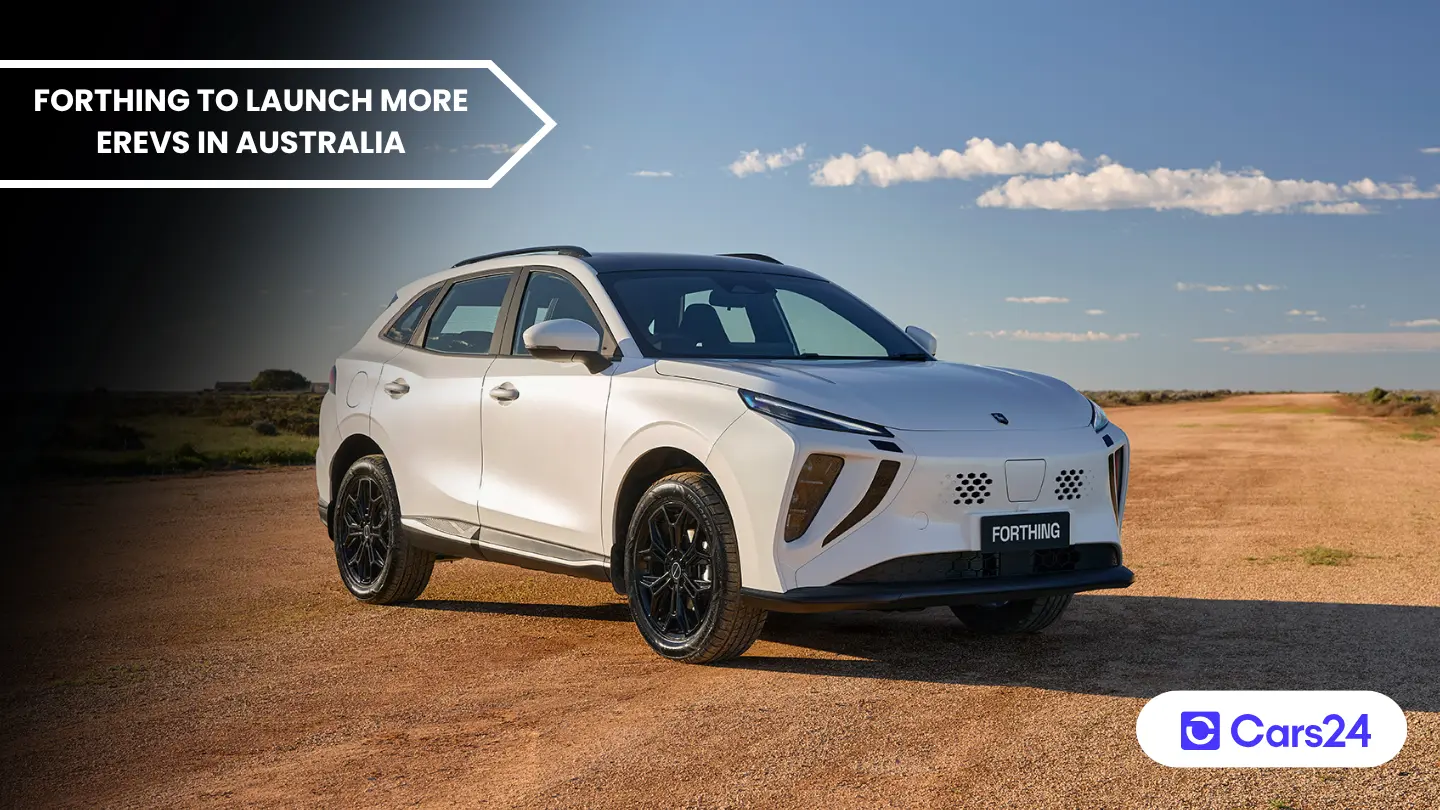
Key highlights:
- Forthing plans to offer EREV and EV powertrains across its Australian lineup
- Its REEV, like Taikon 5, claims 170km EV range and 937km total WLTP range
- Three more Forthing models will arrive in Australia within 18 months
Extended-range electric vehicles (EREVs) have been around for years, but Australia is now seeing more of them as a long-range alternative to battery electric vehicles (EVs).
Chinese brand Forthing plans to offer EREVs alongside equivalent EVs across its range, as the company’s National manager Shaun Garrard believes the technology suits Australian buyers particularly well because it combines electric driving with an internal combustion engine (ICE) backup.
As the RAV-4-sized Forthing Taikon 5 REEV currently arrives in local showrooms at an aggressive price of $36,990 drive-away, Garrard has confirmed 3 new model launches within the next 18 months, which will also have EREV powertrains.
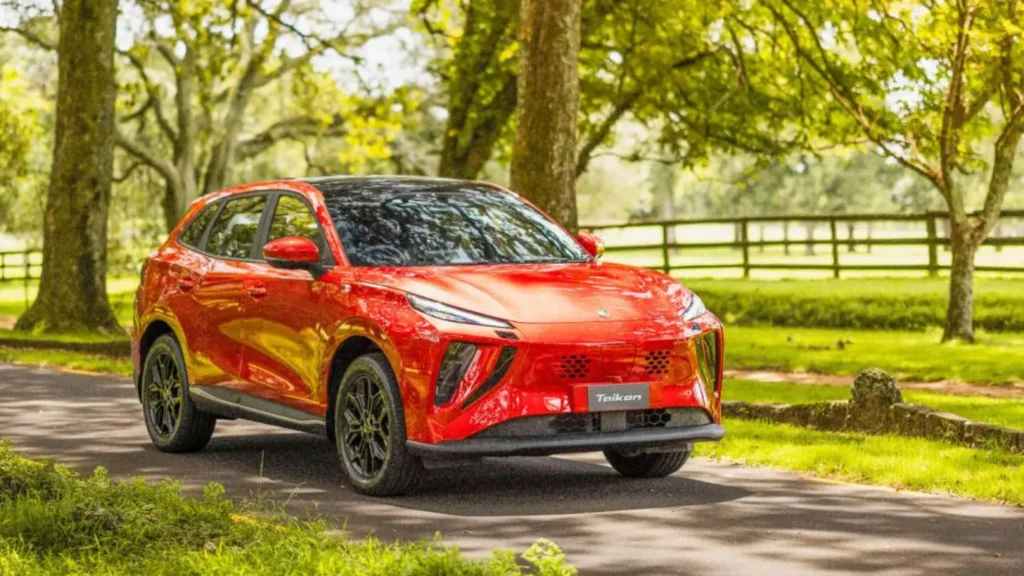
Why Forthing sees EREVs as a good fit
Garrard says EREVs can give Australians access to pure EV technology without removing the reassurance of a petrol engine, and that charging-network concerns still influence many Australian buyers.
Forthing, a subsidiary of Chinese automotive giant Dongfeng, has launched in Australia with the Taikon 5 Electric and Range Extender Hybrid (REEV), both mid-size SUVs and plans to launch three more Forthing models in Australia over the next 18 months.
The first will be an affordable people mover, which will also offer both EREV and EV powertrains.
How an EREV works: Forthing’s REEV powertrain
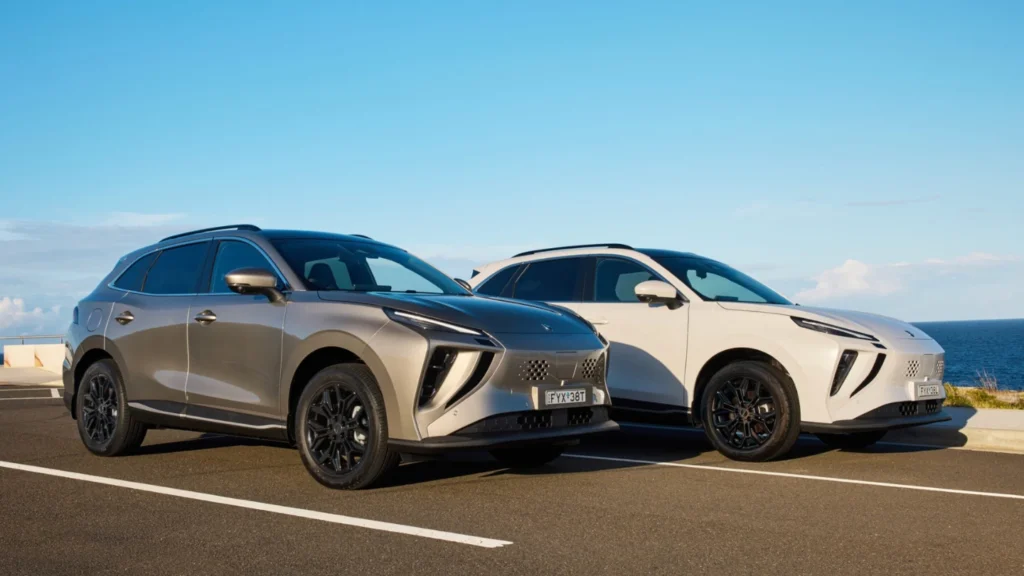
An EREV generally uses its petrol engine differently from a conventional plug-in hybrid (PHEV) – rather than using the engine to drive the wheels, the ICE engine generally works as a generator.
It charges the battery, which then supplies electricity to the electric motor or motors that drive the vehicle, and Forthing’s REEV follows that approach and operates as a pure series hybrid. Forthing Taikon 5 uses this powertrain only.
| Specification | Forthing REEV powertrain |
|---|---|
| Engine | 1.5-litre four-cylinder petrol |
| Engine output | 72kW-77kW |
| Battery capacity | 31.94kWh LFP |
| Drive type | Rear-wheel drive |
| Motor output | 120kW / 240Nm |
| EV range | 170km WLTP |
| Combined range | 937km WLTP |
| Fuel tank capacity | 43L |
The 1.5-litre petrol engine feeds the 31.94kWh lithium iron phosphate (LFP) battery, which drivers can also plug in and charge; the battery then powers a 120kW/240Nm electric motor on the rear axle.
With its 43-litre fuel tank and large battery, the Forthing REEV claims 170km of electric driving range on the WLTP cycle, and the range-extender system increases the total claimed range to up to 937km WLTP.
EREVs have been around for years
The technology may feel like a new trend, but EREVs have a longer history.
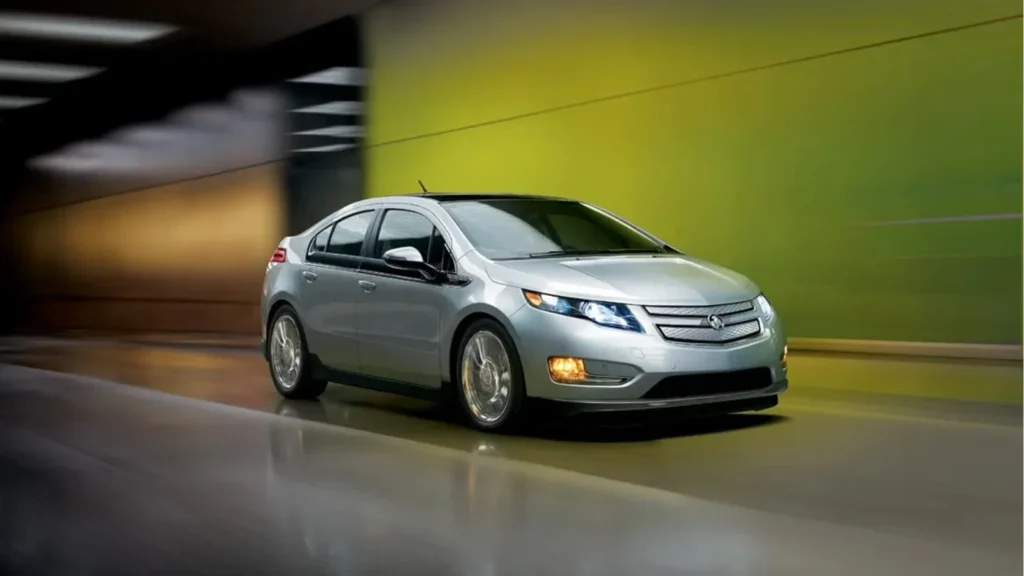
The first-generation Holden Volt ranks among the earliest mass-produced EREVs, and overseas markets sold it as the Chevrolet Volt and Opel/Vauxhall Ampera.
| Specification | First-gen Holden Volt EREV |
|---|---|
| Engine | 1.4-litre four-cylinder |
| Battery capacity | 16.0-17.1kWh |
| EV range | 56-61km |
| Combined range | 610km |
The Volt went on sale globally from 2010 to 2015 and arrived in Australia in 2012. Its battery capacity varied between 16.0kWh and 17.1kWh depending on the model year.
The Volt delivered 56–61km of electric range and up to 610km of combined range.
Also read: 7-seat Skoda Peaq EV just drove 936km without stopping to charge
China brought EREVs back in a big way
EREVs lost momentum in Western markets towards the end of the 2010s, but China took a different path.
Chinese carmakers have produced EREVs in large numbers since around 2019, with Li Auto, AITO and Leapmotor among the leading brands.
Traditional automakers have now started returning to the technology as well. Stellantis, Hyundai, Ford and Volkswagen’s Scout Motors have all committed to launching EREV powertrains across various global markets during the second half of this decade, with North America a major target.
Chinese “Super Hybrids” offer another approach
Not every long-range electrified vehicle follows the EREV classification.
The latest wave of Chinese “Super Hybrids” includes the Geely Starray EM-i, Chery Tiggo 7 Super Hybrid and Jaecoo J7 SHS, and like Forthing’s new mid-size SUV, these vehicles target the mid-size SUV market.
They aim to deliver an EV-like driving experience, with some offering more than 100km of electric range and more than 1000km of total combined range.
Also read: Omoda 4 and Omoda 7 SUVs confirmed for Australia in 2027
EREVs are already planned for Australia
Leapmotor offers EREV versions of its B10 and C10 SUVs locally. Hyundai has also confirmed its updated Santa Fe EREV for Australia, although the timing remains unconfirmed.
BMW previously used a similar approach with the i3 REx, launched globally in 2013.
BMW offered several battery options during its production life, while the range-extender version added a 647cc two-cylinder petrol engine sourced from the C650 GT scooter.
The system gave the i3 REx a total driving range of up to 322km.
Geely’s premium brand Zeekr also plans to introduce EREV technology with its 8X and 9X luxury SUVs.
The European-market 9X uses a particularly large 55kWh battery and a 660kW/935Nm dual-motor electric drive system, assisted by a 2.0-litre turbocharged petrol engine.
What Forthing’s Australian strategy means
Forthing wants EREVs to sit alongside conventional EVs across its Australian lineup rather than serve as a standalone technology.
The company has already launched the Taikon 5 in both Electric and Range Extender Hybrid forms, setting the record for the country’s cheapest mid-size electric SUV and the cheapest EREV, and it plans to bring three more models within 18 months.
The Taikon 5 REEV starts at $36,990 drive-away, while the EV variant starts at 38,990 drive-away.
Its first upcoming model will be an affordable people mover with both EV and EREV powertrains; the second will be a large SUV, and the third model is unknown.
For Forthing, the pitch is straightforward: buyers can drive on electric power while keeping a petrol-powered range extender available when they need longer-distance flexibility.

Comments
New Comment