




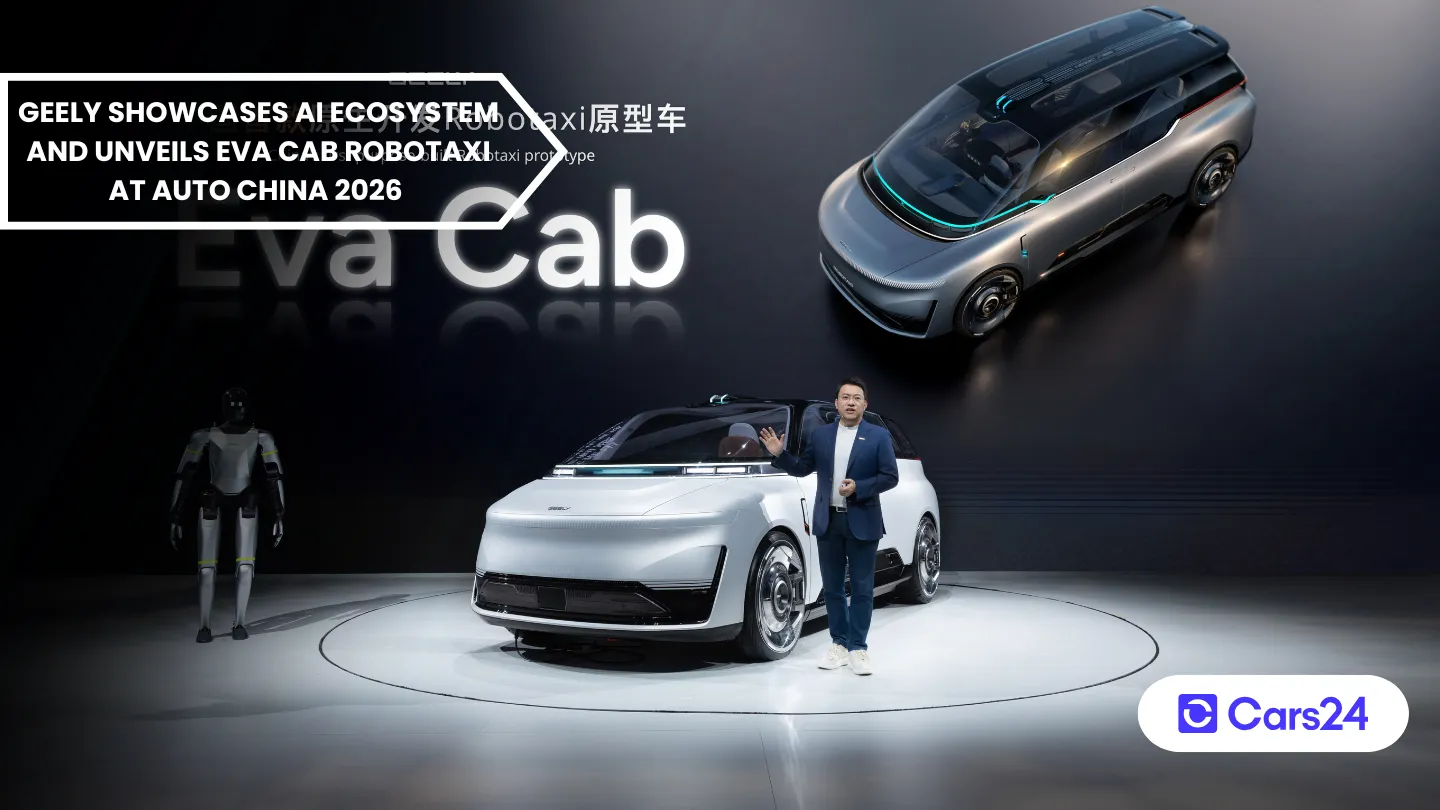
Geely Auto Group has used its first-ever appearance as a direct exhibitor at Auto China 2026 in Beijing to pull back the curtain on its full technology ecosystem and the headline act is a purpose-built Robotaxi prototype that could signal where urban transport is heading globally, including here in Australia.
Read more: Geely unveils Galaxy Light concept and new off-road platform
Meet the EVA Cab: China’s first purpose-built Robotaxi
Jointly unveiled by Geely Auto Group, AFARI Technology, and ride-sharing subsidiary CaoCao Mobility, the EVA Cab is China’s first Robotaxi designed from the ground up for autonomous passenger transport not adapted from an existing model.
The exterior design centres on wide-opening electric sliding doors and a face-to-face cabin layout, maximising passenger space while keeping the look refined. Inside, design touches like the “Galaxy Skyroof” ceiling and “Orchid Pavilion” armrests aim to make the autonomous ride feel less clinical and more human.
Under the skin, the EVA Cab packs serious hardware. It runs on Geely’s new EEA 4.0 “Quantum-Grade” electrical architecture, which uses quantum encryption technology to secure everything from Bluetooth keys and remote vehicle control through to OTA software updates and personal data, a meaningful step forward in connected vehicle security.
Processing power comes from three flagship chips, the NVIDIA SuperChip, NVIDIA Thor U, and Qualcomm Snapdragon 8397 delivering a combined 3,000-plus TOPS of computing performance. Geely says that’s enough to handle the demands of Level 4 autonomous driving in complex, real-world environments.
For sensing, the EVA Cab uses the world’s first 2,160-line digital LiDAR system, capable of generating 25.92 million points per second and detecting objects up to 600 metres away. Paired with Geely’s AFARI G-ASD L4 software, the industry’s first mass-production-ready L4 autonomous driving solution, the system is designed to operate fully driverless on open public roads.
Geely plans to launch a CaoCao Mobility-branded version of the EVA Cab in 2027, backed by over a year of pilot operations already running in Hangzhou and Suzhou.
Read more: Geely EX2 EV show offer announced ahead of Melbourne Motor Show debut
Why does this matter for Australia?
Australia’s ride-share market is dominated by Uber and DiDi, but autonomous ride-hailing is a sector every major market is watching. While local regulation around Level 4 autonomous vehicles still has a long way to go, the technology Geely is demonstrating today is the kind that shapes what Australians will eventually be hailing from their phones in the years ahead. The commercial rollout timeline 2027 in China isn’t as far off as it might seem.
A full AI technology stack on display
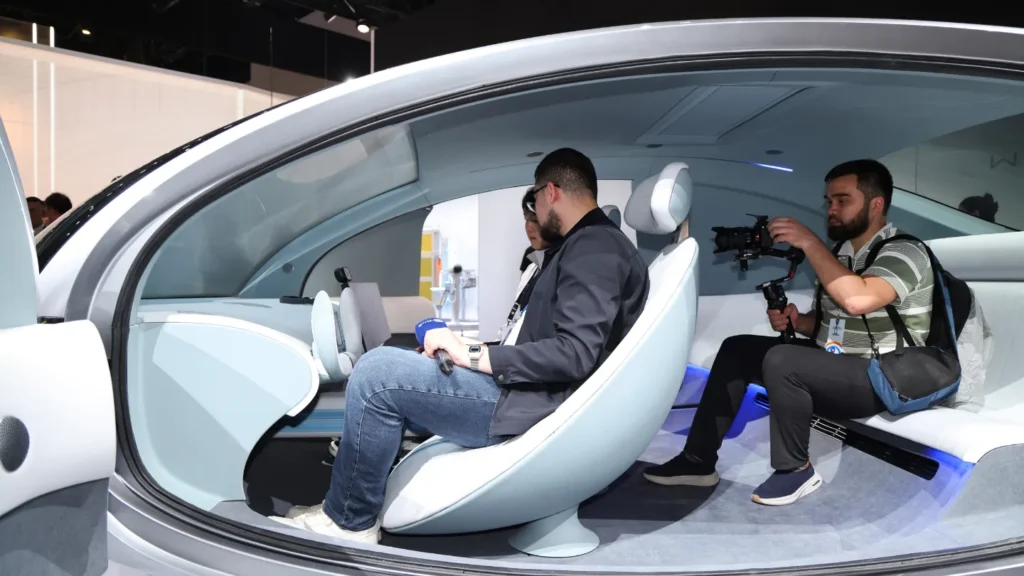
Beyond the EVA Cab, Geely used the Beijing show to showcase what it calls its “Full-Domain AI 2.0” era, a broad technology ecosystem spanning smart cities, smart energy, vehicle platforms, and even a bipedal humanoid robot named “Eva.”
The group debuted the world’s first full-stack 900V high-voltage hybrid architecture, 12C ultra-fast charging technology, solid-state battery development, and next-generation intelligent cockpit systems.
Geely’s AI journey dates back to 2021, when it launched the “Xingrui AI Large Model” claimed to be the world’s first full-stack, in-house-developed, full-scenario AI model for the automotive industry. In 2022, it established the Xingrui Intelligent Computing Centre, now running 23.5 EFLOPS of computing power, the highest of any Chinese automaker.
This year at CES 2026, Geely unveiled its WAM (World Action Model), a system that enables cross-domain collaboration across the entire vehicle for the first time essentially giving the car a continuously evolving “worldview” so it can make better decisions in real time. The WAM acts as the vehicle’s central brain, coordinating the cockpit, advanced driver assistance, chassis, powertrain, and body control through a “1+2+N” intelligent agent architecture.
Building on this, “Super Eva” serves as the car’s hyper-intelligent hub natively integrated with driving, chassis, and powertrain systems and capable of memory and inference. Geely says the EVA Cab has inherited these capabilities and is on track to become a true “mobility bot” that can perceive, think, decide, and act.
Read more:
Safety front and centre
Geely has also become the first automaker globally to achieve ISO 8800 AI Safety certification, a significant credential as governments and regulators worldwide begin to formalise standards for AI-driven vehicles.
In December 2025, Geely launched what it calls “Comprehensive Safety 2.0,” expanding the concept of vehicle safety from the individual occupant to the broader transport ecosystem introducing the idea of “Public Domain Safety.” The group also opened the Geely Safety Centre, a facility it describes as the world’s largest and most comprehensive automotive safety testing site, holding five Guinness World Records.
The bigger picture
Geely Auto Group is in the middle of a significant transformation from a large-scale manufacturer into what it describes as an “intelligent mobility technology company.” The technology on show in Beijing reflects years of deliberate investment in AI infrastructure, vertical integration, and real-world deployment.
For Australian consumers, Geely’s influence is most directly felt through brands like Volvo, Polestar, and increasingly its own Galaxy and Lynk & Co lines. But the pace of AI and autonomous vehicle development the group is demonstrating suggests that the cars Australians drive in five to ten years could look very different to what’s on the road today.

Comments
New Comment