




Key highlights
- Hyundai plans more than 100 new or refreshed models globally by 2030
- AI, robotics and software will become increasingly important to Hyundai’s future
- A new body-on-frame vehicle could eventually spawn a Hyundai ute for markets such as Australia
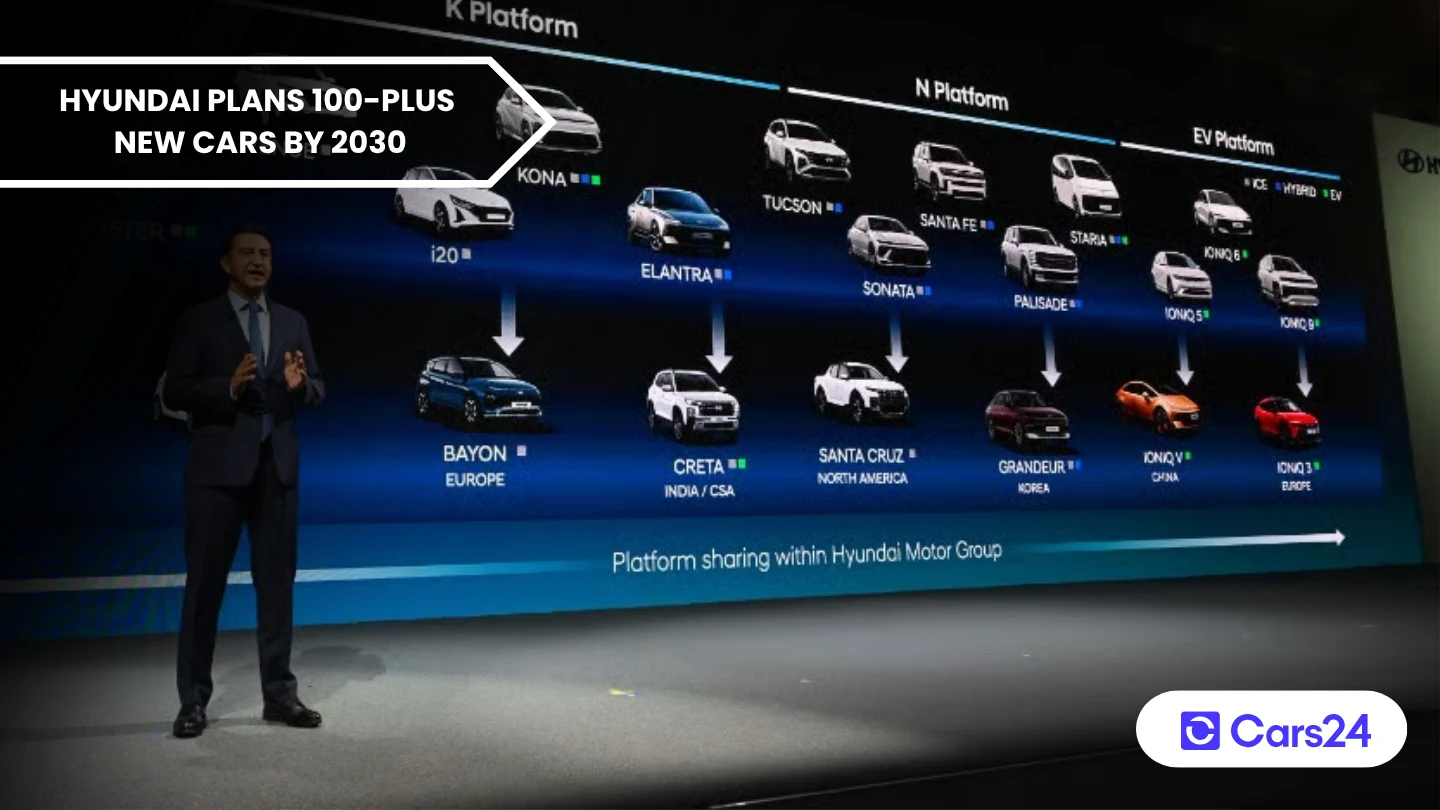
Hyundai is planning one of the biggest product offensives in its history, with more than 100 new or refreshed models due globally by 2030. But while plenty of new metal is coming, Hyundai Motor Company says its bigger transformation will be towards becoming a technology-focused business built around artificial intelligence (AI), robotics and software.
Speaking at Hyundai’s 2026 Investor Day, President and CEO José Muñoz said the company wants to transform “into a technology and physical AI company that also produces cars”. This doesn’t mean Hyundai is walking away from conventional cars and SUVs. Quite the opposite. The company expects to expand into more than 18 new product and market segments over the next four years.
Read more: Hyundai is developing cheaper EV batteries with 20% longer life
More than 100 new Hyundai and Genesis models
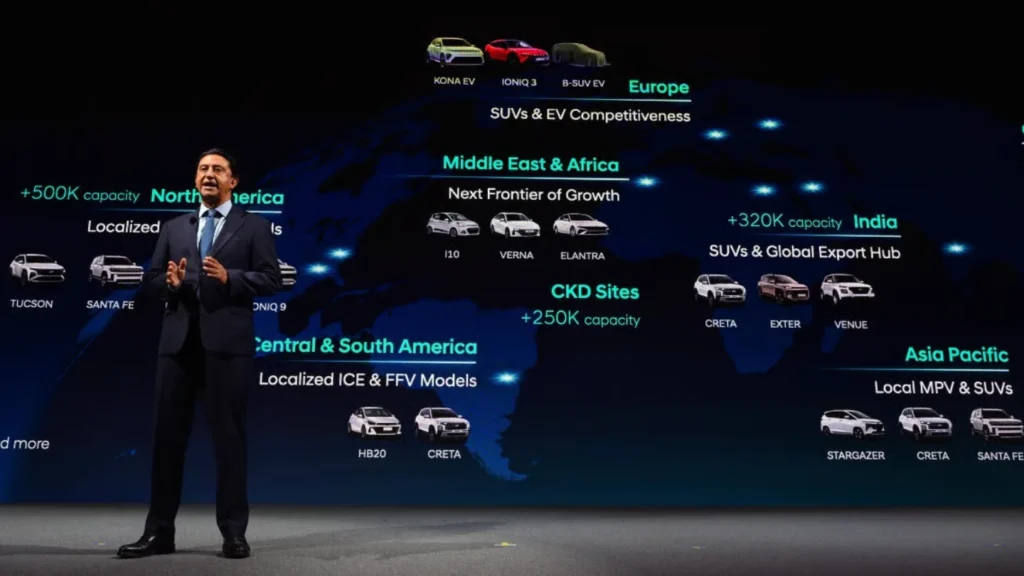
Hyundai says its upcoming product offensive will include more than 100 new or significantly refreshed models across its global operations. The rollout will be heavily concentrated in some of Hyundai’s biggest markets, with:
- 58 launches planned for North America
- 49 launches planned for South Korea
- 41 launches planned for Europe
- 26 new vehicles planned for India
- 22 new vehicles planned for China
The numbers overlap because individual models can be launched across multiple regions, rather than representing 196 completely different vehicles. Among the products already flagged are an all-new Tucson, a new i30 Sedan, a large commercial van and a new body-on-frame vehicle.
That last model is particularly interesting for Australia. A new body-on-frame vehicle could provide the basis for a ute, potentially giving Hyundai a more direct rival to established Australian favourites such as the Toyota HiLux and Ford Ranger. Hyundai hasn’t confirmed a production ute as part of this announcement, however, so that remains speculation rather than a confirmed model.
Hyundai is betting heavily on AI
The product expansion is only one part of Hyundai’s strategy. The company is increasingly positioning itself as a technology business, with AI and robotics expected to play a much larger role across its operations. Hyundai acquired a controlling stake in Boston Dynamics, the robotics company behind the famous Spot robot dog, in 2021 and completed its acquisition of the company in July 2026.
The brand is also developing its own software and AI capabilities through 42dot, its global software centre. One of the first visible examples for Hyundai customers is the company’s Pleos Connect infotainment system, which incorporates an AI assistant called Gleo. Rather than simply responding to basic voice commands, Hyundai is developing Gleo as an “agentic AI” system designed to handle more complex interactions.
It points towards where Hyundai sees the connected car heading: less like a conventional infotainment system and more like a software platform that can understand what the driver wants and act on it.
What does this mean for Australia?
Australia isn’t one of Hyundai’s biggest global sales regions, accounting for around 4 per cent of the company’s regional vehicle sales, according to the presentation. North America accounts for around 32 per cent, while South Korea and India together represent 16 per cent. Europe contributes around 15 per cent.
That doesn’t mean Australian buyers will miss out on Hyundai’s product expansion. The local market is likely to benefit from the global rollout, particularly where Hyundai can adapt vehicles already being developed for right-hand-drive markets.
Australia could see new or updated models sourced from South Korea and Europe, while the company’s broader expansion into new vehicle segments could eventually open the door to products that Hyundai doesn’t currently sell locally. The forthcoming i20 N from Europe, for example, is one model already expected to be relevant to Australian buyers.
For now, Hyundai has not confirmed which of the 100-plus new or refreshed models will come to Australia, so the exact local lineup remains unclear. What is clear is that Hyundai isn’t simply planning to refresh its existing range. The company is attempting to broaden what it does as a carmaker, with new vehicle segments, software, AI and robotics all forming part of its strategy through to 2030.
For a company that has spent decades building its reputation on cars, SUVs and commercial vehicles, becoming a “technology and physical AI company that also produces cars” is a fairly significant change in direction.

Comments
New Comment