




Key highlights:
- Australia remains the i30 N hatchback’s only market
- Hyundai has built over 58,000 i30 N hatchbacks
- Future European N models will need electrification
The Hyundai i30 N hatchback is disappearing from international markets as tightening emissions regulations and ageing product architecture take their toll. Australia has become its last remaining market, giving local enthusiasts another chance to buy Hyundai’s original N performance car while its future remains uncertain.
The situation is particularly interesting because Hyundai has discontinued the regular petrol-powered i30 hatchback in Australia, leaving the high-performance N as the only hatchback version still available. Hyundai says it will continue supporting Australian buyers as long as the business case makes sense.
Australia becomes the i30 N hatchback’s last outpost
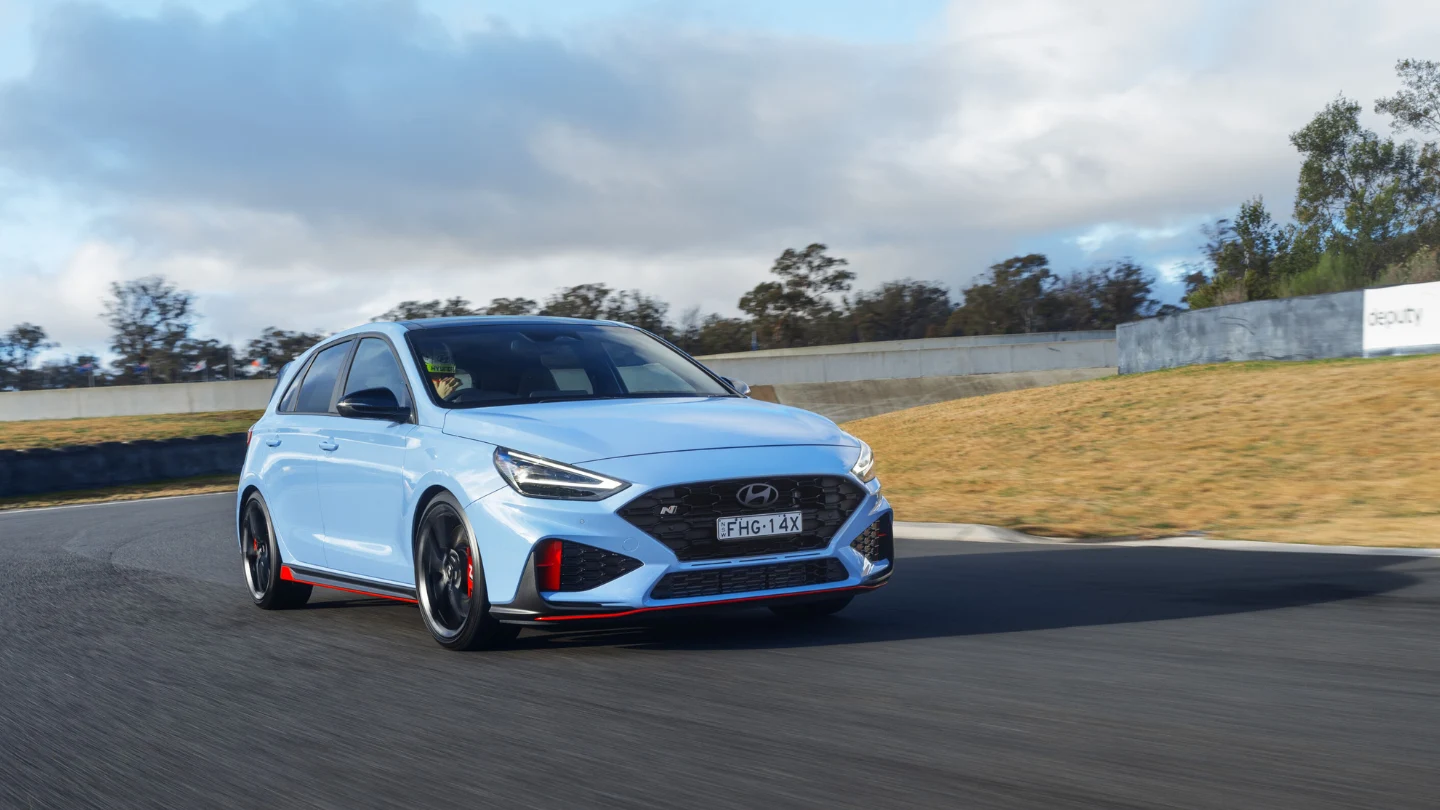
Hyundai’s original N performance model has gradually disappeared from international showrooms, particularly in Europe, where engineers developed much of the car.
Hyundai Europe head of product Christopher McKinnon confirmed the situation to Drive Australia at the 2026 Paris Motor Show.
“I believe Australia is the only market we go to with the i30 N [hatchback],” he said.
McKinnon explained that Hyundai’s flexible manufacturing arrangements and global production network allow the company to continue supplying Australia. He also said Hyundai sees a business case for supporting the Australian market and will continue doing so while that remains viable.
The latest i30 N hatchback update arrived in Australian showrooms in August 2024 as a 2025 model-year vehicle, and brought subtle styling revisions and significant technology changes, but retained the existing mechanical powertrain. That update arrived just as Hyundai ended production of the European-market version.
The i30 N is the only i30 hatchback variant available locally. Hyundai discontinued the regular petrol-powered i30 hatchback range at the end of 2025 because of slow sales and high manufacturing costs in Europe.
Hyundai i30 N sales: Australia takes a significant share
Despite its limited global availability, the i30 N remains Hyundai’s longest-running and most popular N performance model. Hyundai first revealed the i30 N in 2017 and began production in 2018, and since then, the company has built more than 58,000 examples.
Official Hyundai sales and production figures during January–September 2026 reveal how important Australia has become to the model:
| Hyundai N model | Production/sales figures Jan-Sep 2026 |
|---|---|
| i30 N hatchback production | 1,598 |
| i30 N hatchback sales in Australia | 826 |
| i20 N sales | 838 |
| i30 Sedan N sales | 504 |
| Ioniq 5 N sales | 18 |
| Ioniq 6 N sales | 11 |
The Czech factory, now the only plant producing the i30 hatchback range, built 1598 i30 N hatchbacks during the first nine months of 2026, and Australia recorded 826 i30 N hatchback sales over the same period. The 838 i20 N sales largely represent run-out stock following the end of production in March.
Australia has bought 11,452 i30 N hatchbacks since the model entered production, representing roughly 1 in 5 examples built globally. That makes Australia a particularly important market for the original N performance car.
The second-best-selling N model is the i30 Sedan N, which has recorded approximately 46,600 international sales. Australia accounts for about 1 in 9 of those vehicles.
Also read: Toyota Corolla prices rise, hatch gains standard features
Will Hyundai develop another i30 N hatchback?
The outlook for a replacement i30 N hatchback remains uncertain. European reports suggest Hyundai is considering bringing the performance hatchback back to showrooms on the continent.
The underlying i30 hatchback platform is now around a decade old and approaching the end of its product life. Hyundai executives have also played down the possibility of a new-generation regular i30 hatchback with a conventional petrol engine.
Emissions regulations create another major obstacle, particularly in Europe.
“If we do an N [for Europe] that is not electric, it would have to be electrified. You’d still have to have hybridisation in order for it to be relevant, and in order to be able to sell the car because of the CO2 regulations that we have,” said McKinnon.
Tough European emissions rules influence future N models
McKinnon pointed to France as an example of how emissions-related taxes affect vehicle affordability. He said manufacturers must remain below certain CO2 thresholds, otherwise, the financial penalties can make selling a vehicle commercially unviable.
He added that crossing approximately 160g/km of CO2 in France makes the situation untenable because of the high taxes. McKinnon believes there is still a market for hybrid-powered N performance vehicles, but future models would need electrification to remain viable.
Hyundai’s next-generation N models could adopt hybrid power
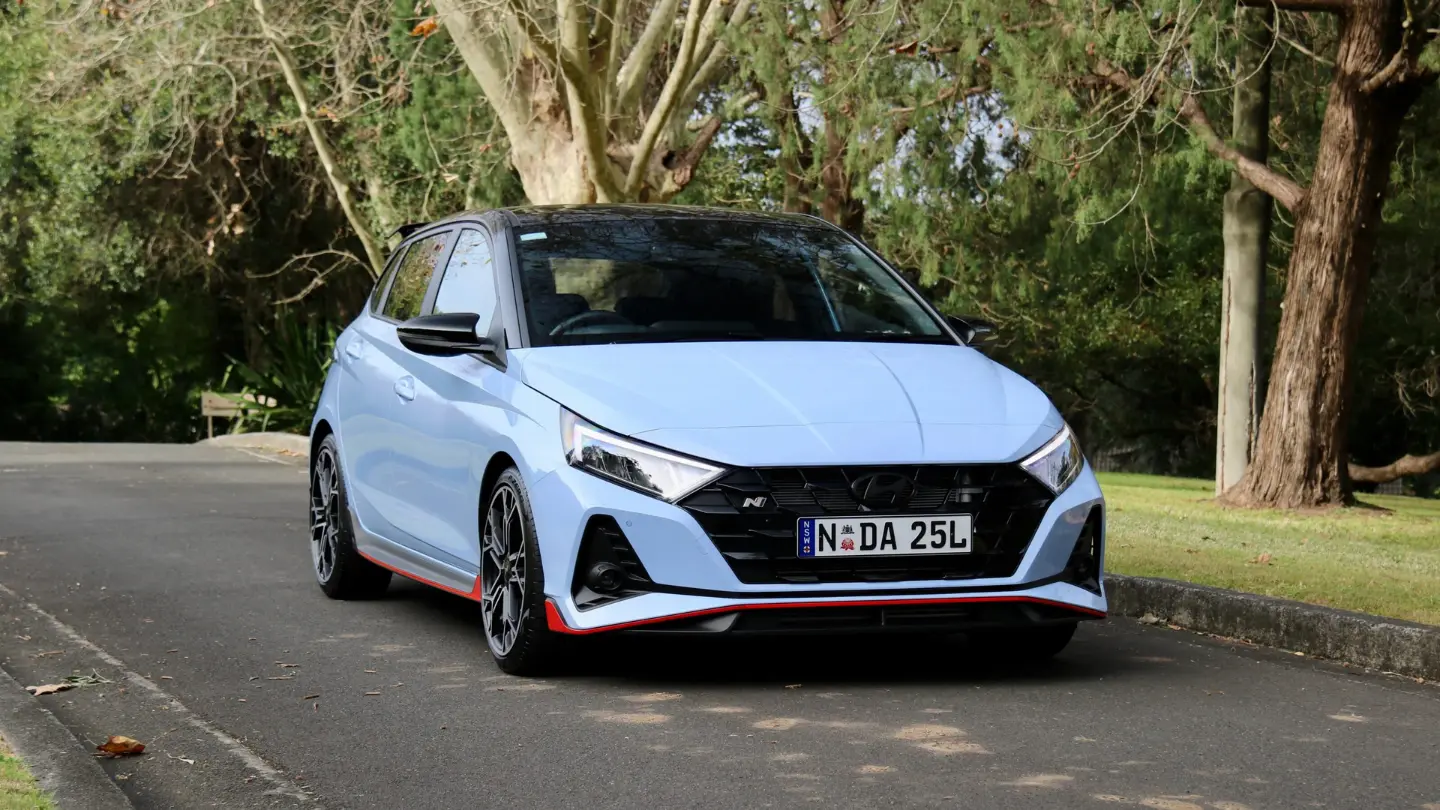
While the i30 N hatchback’s future remains unclear, Hyundai has other N performance projects in development. The next-generation i20 N is expected to use a 1.6-litre turbocharged four-cylinder petrol engine combined with electric motors.
This hybrid arrangement could help Hyundai maintain the small performance hatchback’s petrol-engine character while meeting stricter emissions requirements. Patent filings also suggest Hyundai is exploring simulated H-pattern gear shifters and clutch pedals for future hybrid and electric vehicles.
Such technology could suit an electrified replacement for the manual i20 N, allowing Hyundai to retain some traditional performance-car driving characteristics.
The i30 Sedan N has a more clearly defined future, with a new generation confirmed, but it is expected to replace the current 2.0-litre turbocharged petrol engine with a larger 2.5-litre turbocharged unit. Unlike the proposed next-generation i20 N, the new i30 Sedan N is tipped to use the petrol engine without hybrid assistance.
The difference comes down to its main markets. Hyundai primarily sells the i30 Sedan N in the United States and South Korea, where emissions regulations are less stringent than in Europe.
Looking to buy your favourite old Hyundai model? Explore these used Hyundai cars offered with a 30-day return policy across Australia.

Comments
New Comment