




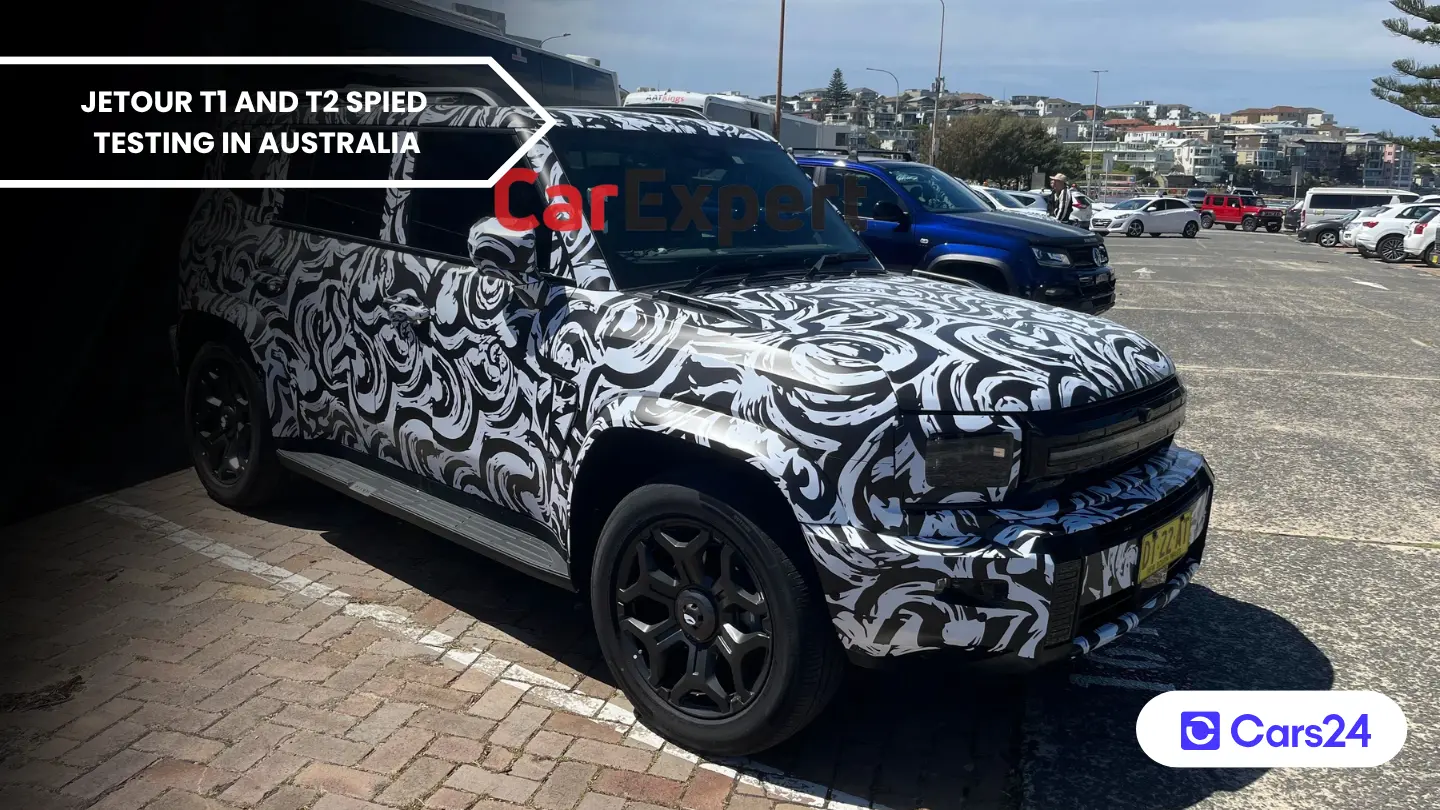
The Jetour T1 and T2 have been spotted testing in Australia, with camouflaged examples photographed at Bondi Beach in Sydney. The sightings come ahead of the Chinese brand’s expected local launch in 2027, when the two mid-size SUVs are tipped to lead its Australian range. Jetour is part of the Chery Group, but it will operate as a separate brand in Australia, with its own distribution arrangements and back-office operations. This means it will sit alongside, rather than simply be folded into, existing local brands such as Chery and Omoda Jaecoo.
The T1 and T2 are expected to arrive before Jetour’s more rugged offerings, including the G700 off-road SUV and F700 dual-cab ute. Those larger vehicles are not expected to launch before the second half of 2027.
Australian pricing, final specifications and confirmed launch dates for the T1 and T2 have not yet been announced.
Read more: Jetour G700 gets a facelift and Huawei tech ahead of its Australian debut
How do the Jetour T1 and T2 compare in size?
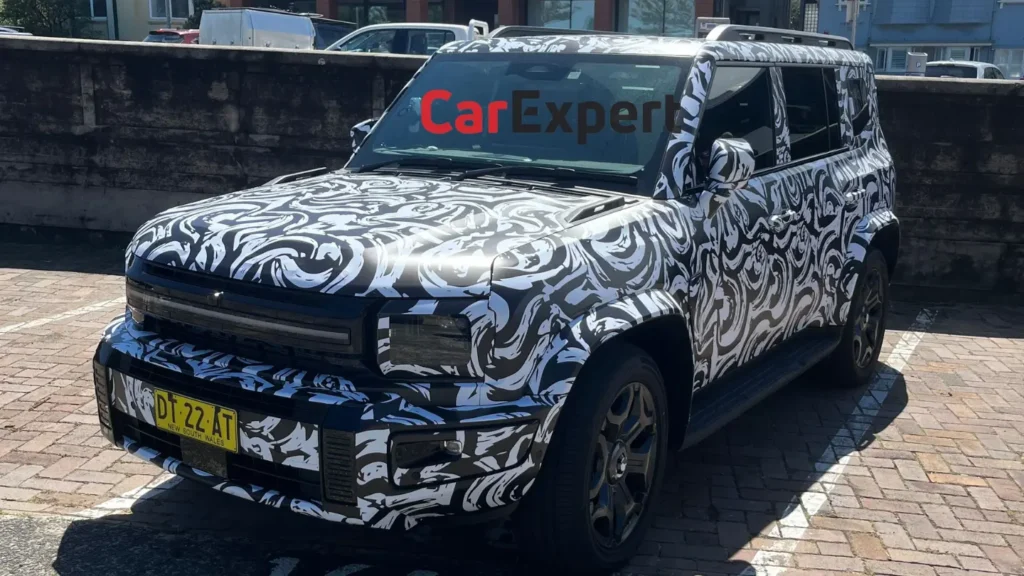
Although the two SUVs share their underlying platform and powertrain options in overseas markets, their styling sets them apart. The T1 has softer, more rounded bodywork, while the T2 adopts a more upright shape with a boxier profile. The latter’s styling is intended to appeal to buyers who prefer a more traditional off-road-inspired SUV design.
Both are larger than the Toyota RAV4, one of Australia’s key mid-size SUV benchmarks.
| Dimension | Jetour T1 | Jetour T2 |
| Length | 4,705mm | 4,785mm |
| Width | 1,967mm | 2,006mm |
| Height | 1,840mm | 1,870-1,880mm |
| Wheelbase | 2,800mm | 2,800mm |
For comparison, the Toyota RAV4 measures between 4,600mm and 4,645mm long, depending on the variant, with a 2,690mm wheelbase. The Jetour models’ larger dimensions could appeal to Australian families looking for cabin space and a substantial road presence. However, their actual practicality will depend on details such as boot capacity, rear-seat space and equipment, which have yet to be confirmed for Australia.
Petrol and plug-in hybrid powertrains available overseas
Jetour already sells the T1 and T2 in South Africa, providing an indication of the powertrains that could potentially be offered here. However, the overseas range should not be treated as confirmation of Australian specifications. Both models are available with a 1.5-litre turbocharged four-cylinder petrol engine producing 125kW and 270Nm, paired with a seven-speed dual-clutch automatic transmission and front-wheel drive.
A more powerful 2.0-litre turbo-petrol engine produces 180kW and 375Nm, with all-wheel drive and the same type of seven-speed transmission. Plug-in hybrid versions are also available overseas. The T1 i-DM combines a 1.5-litre turbo-petrol engine with an electric motor and an 18.4kWh battery, producing a combined 250kW and 530Nm. Its claimed electric driving range is 100km under the NEDC testing cycle.
The T2 i-DM uses a similarly sized battery and delivers 265kW and 610Nm, with a claimed electric range of 90km under the same cycle. These figures could make the plug-in hybrid versions worth watching for Australian buyers seeking a balance between electric commuting and longer-distance driving. However, local powertrain availability and Australian-specific driving range figures remain unconfirmed.
Off-road-inspired features and technology
Despite their crossover underpinnings, the T1 and T2 offer several features aimed at drivers who want more than a conventional family SUV. Overseas specifications include independent suspension at both ends, while all-wheel drive variants receive a rear electronic limited-slip differential and eight selectable drive modes. These include settings for rock, snow, mud and sand.
Ground clearance varies by powertrain and model. The T1 offers between 190mm and 200mm, while petrol-powered T2 variants have 220mm. The T2 i-DM plug-in hybrid has 190mm of clearance, highlighting a potential trade-off between electrified power and off-road capability. Most T2 variants sold overseas also feature an externally mounted full-size spare wheel, reinforcing the model’s more rugged styling.
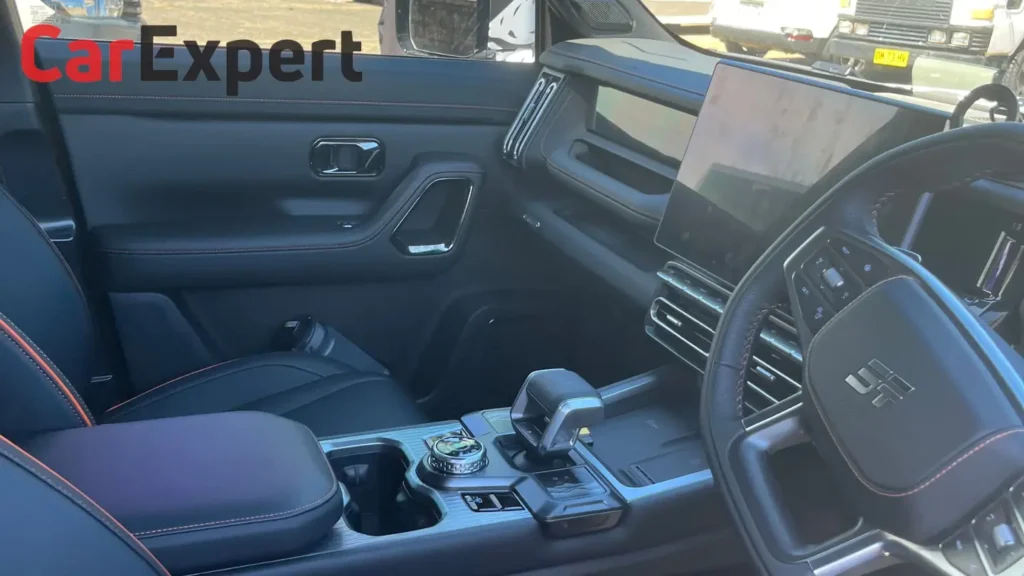
Inside, overseas models come with a 10.25-inch digital instrument cluster and either a 12.8-inch or 15.6-inch infotainment touchscreen. Wireless Apple CarPlay and Android Auto are included, while available equipment includes a panoramic sunroof, ventilated front seats and adjustable ambient lighting. Australian equipment levels and safety specifications have not yet been confirmed.
Where will the Jetour SUVs fit in Australia?
The T1 and T2 will enter a crowded Australian mid-size SUV market, where buyers already have options from established Japanese and Korean brands as well as newer Chinese manufacturers. They will also face competition from within the Chery Group’s local portfolio, including the Chery Tiggo 7, Tiggo 8 and Jaecoo J7. How Jetour differentiates its vehicles from these models will depend on Australian pricing, standard equipment, powertrain choices and warranty coverage.
For now, the Australian sightings indicate that local preparations are progressing, but they do not confirm when sales will begin or which overseas features will make the final cut. More details should emerge as Jetour approaches its expected 2027 Australian launch.

Comments
New Comment