




Key highlights
- The all-wheel-drive concept claims a 0-100km/h time of 2.5 seconds and a top speed of 300km/h.
- An 85kWh battery delivers a claimed 400km WLTP range, with charging from 10 to 80 per cent taking less than 15 minutes.
- The next-generation Peugeot E-208 is expected to be revealed in the first half of 2027, although Australian availability remains uncertain.
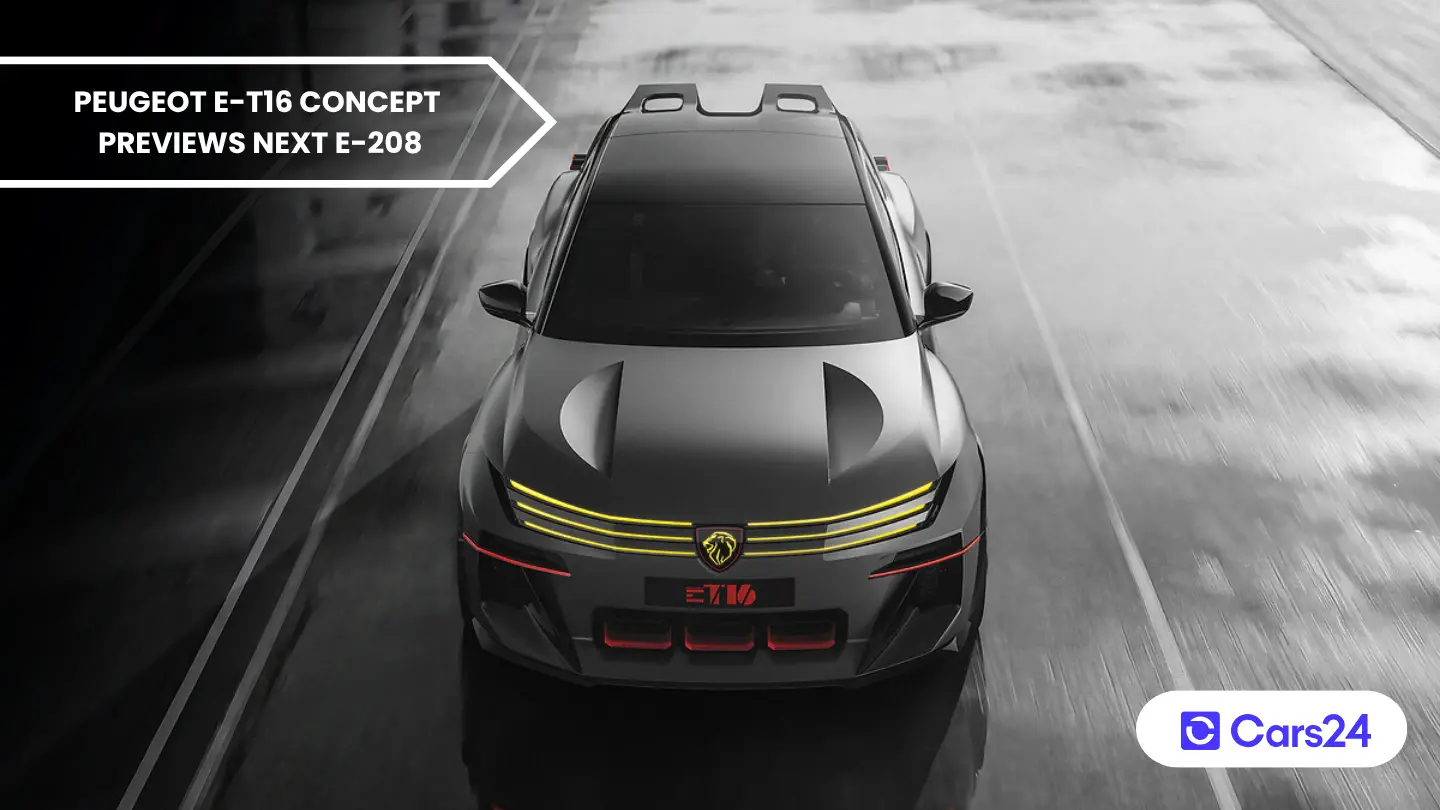
Peugeot has unveiled the E-T16 concept at the 2026 Paris motor show, presenting an extreme electric hatchback that pays tribute to one of the brand’s most recognisable rally cars while offering a glimpse of its next-generation E-208.
Described by Peugeot as its ultimate vision for the future E-208, the concept combines all-wheel drive, a claimed 608kW of power and dramatic bodywork inspired by the 205 Turbo 16, which competed during rallying’s notorious Group B era.
The production version of the next Peugeot E-208 is expected to be unveiled in the first half of 2027. However, there is no confirmation that the new electric hatchback will reach Australian showrooms.
That uncertainty extends to Peugeot’s broader Australian line-up. In July 2026, local distributor Inchcape announced plans to hand back its Peugeot distribution rights to parent company Stellantis, with a replacement distributor yet to be confirmed.
For Australian buyers considering a future small electric car, the Peugeot E-T16 is therefore more significant as a preview of Peugeot’s design direction than as a confirmed future purchase.
Read more: Peugeot RCZ Vision revealed with 373kW and solid-state battery tech
608kW of power and a claimed 300km/h top speed
The Peugeot E-T16 uses three electric motors, with two mounted on the rear axle and another driving the front wheels. Combined output is rated at 608kW, equivalent to 816hp, making it the most powerful road-going Peugeot concept described by the brand.
Peugeot says the concept weighs less than 1632kg, giving it a power-to-weight ratio of under 2kg per horsepower. The claimed performance figures include a 0-100km/h sprint in 2.5 seconds and a top speed of 300km/h, reached in 16 seconds.
An 85kWh lithium nickel manganese battery supplies the electric motors, while an 800V electrical architecture supports high-power charging.
Peugeot claims the E-T16 can complete three laps of the 20.8km Nürburgring Nordschleife without losing power, even in its most aggressive driving mode. Its claimed WLTP driving range is 400km, and a 10 to 80 per cent charge is said to take less than 15 minutes.
Those figures remain manufacturer claims for a concept vehicle rather than independently verified production-car results. The range figure also uses the WLTP testing standard, so real-world driving range would vary with conditions and driving style.
Rally heritage shapes the E-T16’s design
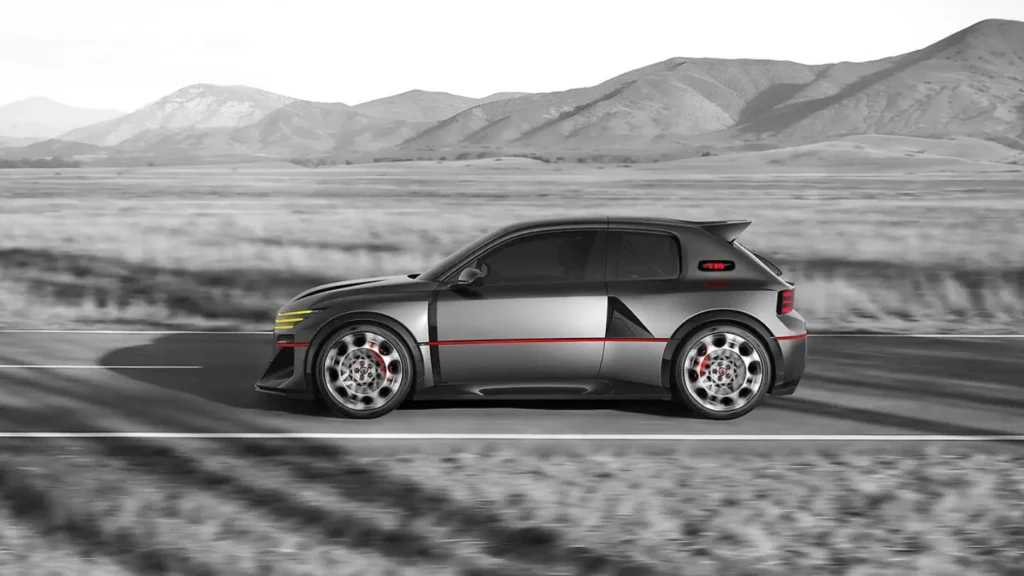
The Peugeot E-T16 draws heavily on the Peugeot 205 Turbo 16, the road-going homologation model developed to satisfy Group B rally regulations in the 1980s.
Group B cars became famous for their extraordinary power and aggressive aerodynamic additions, but the category was also marked by fatal accidents involving competitors and spectators. The championship abandoned the regulations after the 1986 season.
Peugeot won the World Rally Championship manufacturers’ titles in 1985 and 1986, while Timo Salonen and Juha Kankkunen secured the drivers’ championships in those respective years.
The new concept reinterprets that heritage with flared wheel arches, oversized air intakes, a large rear wing and an illuminated red strip running around the body. Its matte grey paint and silver wheels also reference the original 205 Turbo 16 road car.
The rear bodywork tilts open to reveal the two rear electric motors. Peugeot says the dramatic exterior is functional, helping manage battery cooling during sustained high-performance driving.
Other details include 380mm brake rotors at both ends, 275mm-wide front tyres and 315mm-wide rear tyres. Torque vectoring helps distribute power between the wheels to improve traction and handling.
Digital cabin and next-generation Peugeot styling
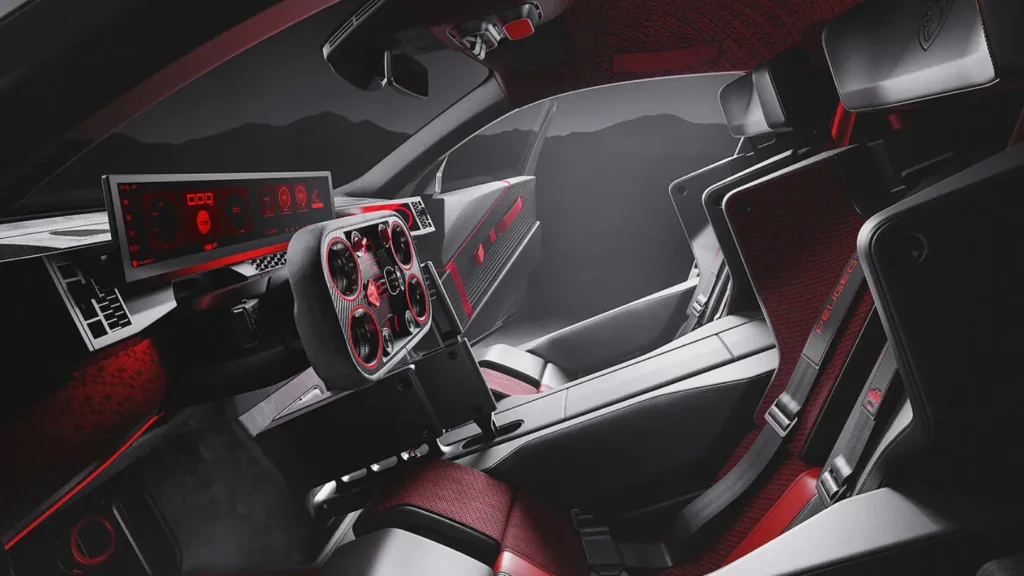
Inside, the Peugeot E-T16 features carbon-fibre bucket seats, a tubular roll cage and a rectangular steering wheel. The cabin also adopts Peugeot’s Hypersquare steering control and a 21-inch curved panoramic display, similar to the technology shown in other recent Peugeot concepts and production SUVs.
The concept follows the 2025 Polygon concept, which explored a future design direction inspired by the Peugeot 205 GTi.
While the Peugeot E-T16’s extreme proportions and performance are unlikely to translate directly to a production small hatchback, its lighting, interior technology and styling provide clues about what could feature in the next E-208.
For Australia, the important question is whether Peugeot can confirm a local distribution arrangement and bring the next-generation electric hatchback here. As of October 2026, Australian pricing, specifications and launch timing have not been announced.
Until those details emerge, the Peugeot E-T16 remains a striking demonstration of how the brand intends to connect its rally heritage with its electric-car future.

Comments
New Comment