




Key highlights
- 125kW and 310Nm combined system output from a 1.5-litre turbo petrol engine and two electric motors
- Golf Hybrid uses 4.6–5.1L/100km, while the T-Roc Hybrid returns 5.1–5.5L/100km
- Australia remains unconfirmed, with the new T-Roc due here in 2027 with mild-hybrid power at launch
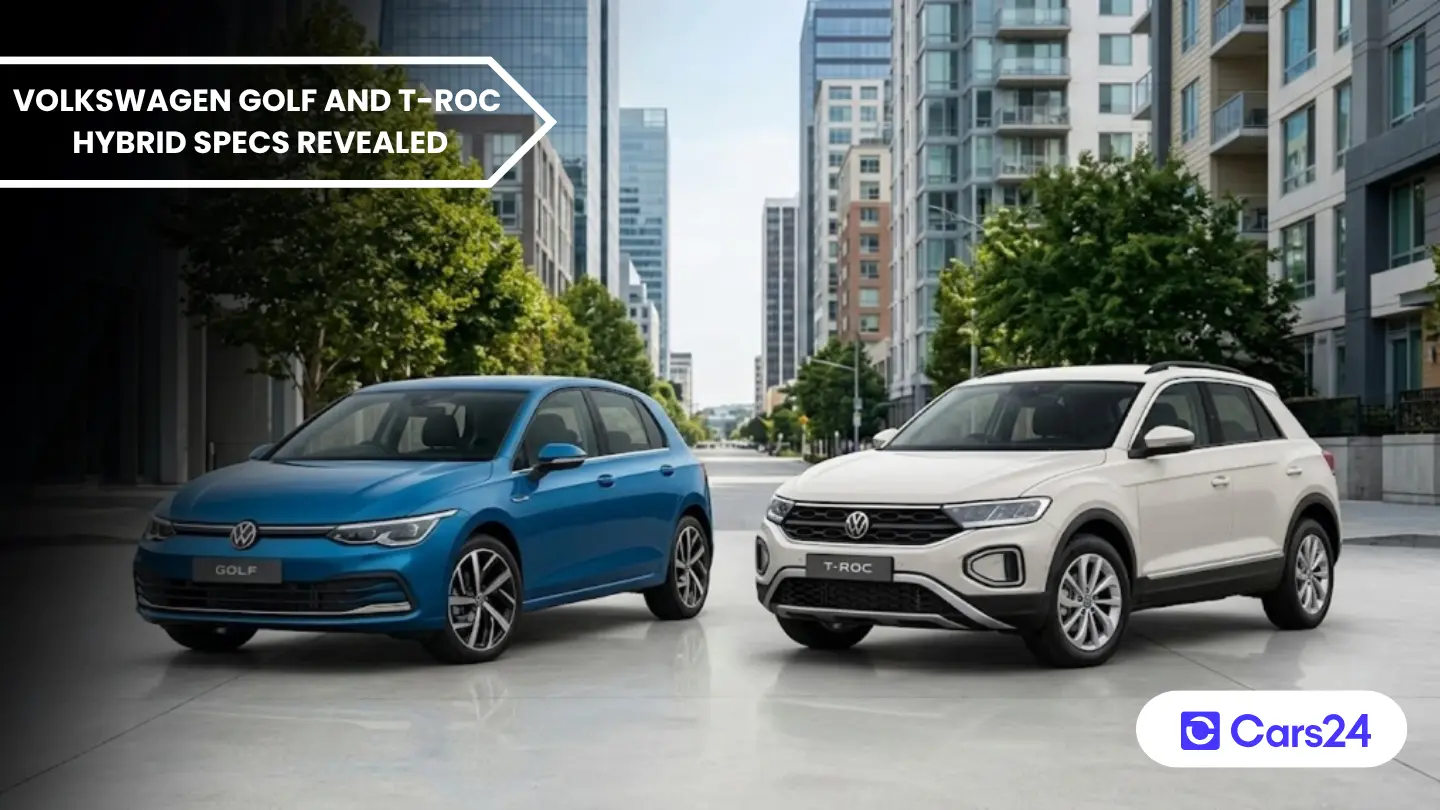
Volkswagen has revealed further information on the output of its new Golf Hybrid and T-Roc Hybrid as well as fuel economy and details on the new hybrid system. The new hybrids are now available to pre-order in Germany, giving us a better insight into the technology that could soon be making its way to other markets.
For Australian buyers, however, there is one important question that remains unanswered: will Volkswagen bring the Golf Hybrid or T-Roc Hybrid here?
Read more: Volkswagen Amarok W600 sticks with diesel V6 for performance
Volkswagen’s new hybrid system explained
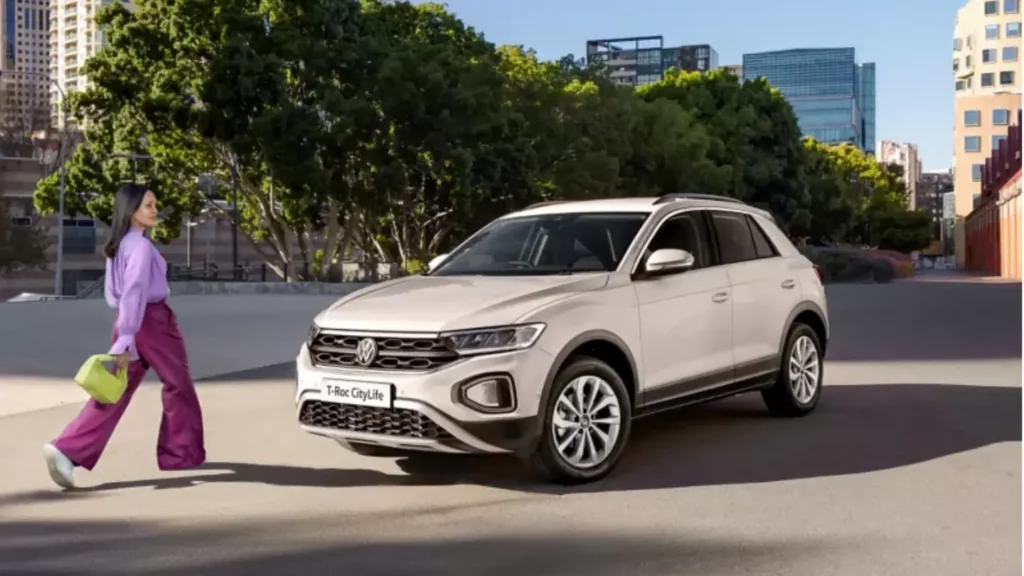
Volkswagen’s Golf Hybrid and T-Roc Hybrid use a new hybrid drivetrain based on a 1.5-litre turbocharged four-cylinder petrol engine. Rather than just fitting an electric motor to the front-wheel drive petrol engine, Volkswagen uses two electric motors as part of their hybrid system.
One motor is basically a generator, the second motor being the drive motor, with the electric motor able to power the vehicle on its own or team with the petrol engine. Combined output from the system is 125kW and 310Nm. The 1.5-litre turbocharged petrol engine produces 110kW and 250Nm, with torque on offer from 1750rpm to 4000rpm, while the electric drive motor can put out 125kW. Power from the petrol engine is sent through a single-speed transmission, with the hybrid system able to switch between three modes of operation. They are electric driving, series driving and parallel driving.
In electric mode, the car is propelled by the electric motor, while in series mode, the petrol engine is used as a generator to power the electric motor. Parallel operation allows the petrol engine to drive the wheels, with the electric motor able to provide additional assistance when required. A relatively small 1.6kWh NMC lithium-ion battery is located under the boot floor.
The hybrid system is more similar to the self-charging systems used by Toyota and Lexus rather than a plug-in hybrid, with no large battery to allow the vehicle to travel long distances on electricity alone.
Golf Hybrid is the quicker and more efficient of the two
The Golf Hybrid is claimed to accelerate from 0-100km/h in 7.5 seconds, while its top speed is 180km/h. The larger and taller T-Roc Hybrid takes 8.5 seconds to reach 100km/h, although it has the same 180km/h top speed. Fuel consumption is where the new hybrid system makes a bigger difference. The Golf Hybrid has a claimed WLTP fuel consumption of 4.6–5.1L/100km, depending on the specification.
The T-Roc Hybrid is rated at 5.1–5.5L/100km. For comparison, Volkswagen says the new hybrids are more efficient than the equivalent 110kW 1.5-litre mild-hybrid versions.
The mild-hybrid Golf with the same 1.5-litre turbo engine is rated at 5.2–5.8L/100km, while the T-Roc mild hybrid is rated at 5.6–5.9L/100km. That means the full-hybrid system can reduce claimed fuel consumption by up to around 1L/100km compared with the corresponding mild-hybrid models, depending on the vehicle and specification.
Will the Golf Hybrid and T-Roc Hybrid come to Australia?
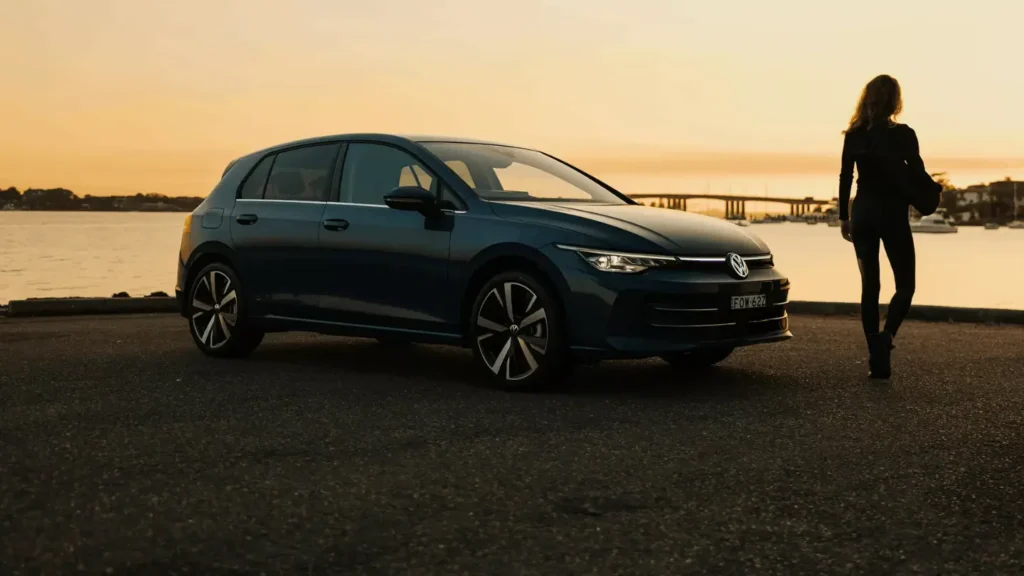
This is where things get less certain. Volkswagen Australia has not confirmed plans to introduce either hybrid drivetrain locally. The second-generation Volkswagen T-Roc is already confirmed for Australia in 2027, but it is expected to launch locally with mild-hybrid power.
Volkswagen Australia has previously indicated that it is more interested in plug-in hybrid technology than conventional hybrids, arguing that PHEVs offer the additional benefit of EV-only driving range.
That position could make the new Golf and T-Roc hybrid system less likely to reach Australia, at least in the immediate future. However, the latest specifications show that Volkswagen now has a conventional hybrid drivetrain that can deliver competitive fuel economy without requiring a large battery. For the Golf, a claimed 4.6L/100km would put it firmly in the territory of some of Australia’s most efficient petrol-electric cars.
Whether Australian buyers will get the opportunity to choose it remains to be seen.
Volkswagen Golf and T-Roc Hybrid pricing
In Germany, the new hybrid system is currently restricted to the higher-grade Style and R-Line variants. The Golf R-Line Hybrid starts at €41,400, equivalent to around A$67,000, while the T-Roc Style Hybrid starts at €44,470, or roughly A$71,900.
These converted figures are only indicative and don’t represent potential Australian pricing. For now, Australian customers looking at the next-generation T-Roc will have to wait for Volkswagen to confirm its local powertrain range.
The new hybrid system gives Volkswagen another option between mild-hybrid petrol power and plug-in hybrid technology, but whether that option makes it to Australia is still unclear.

Comments
New Comment