




Key highlights
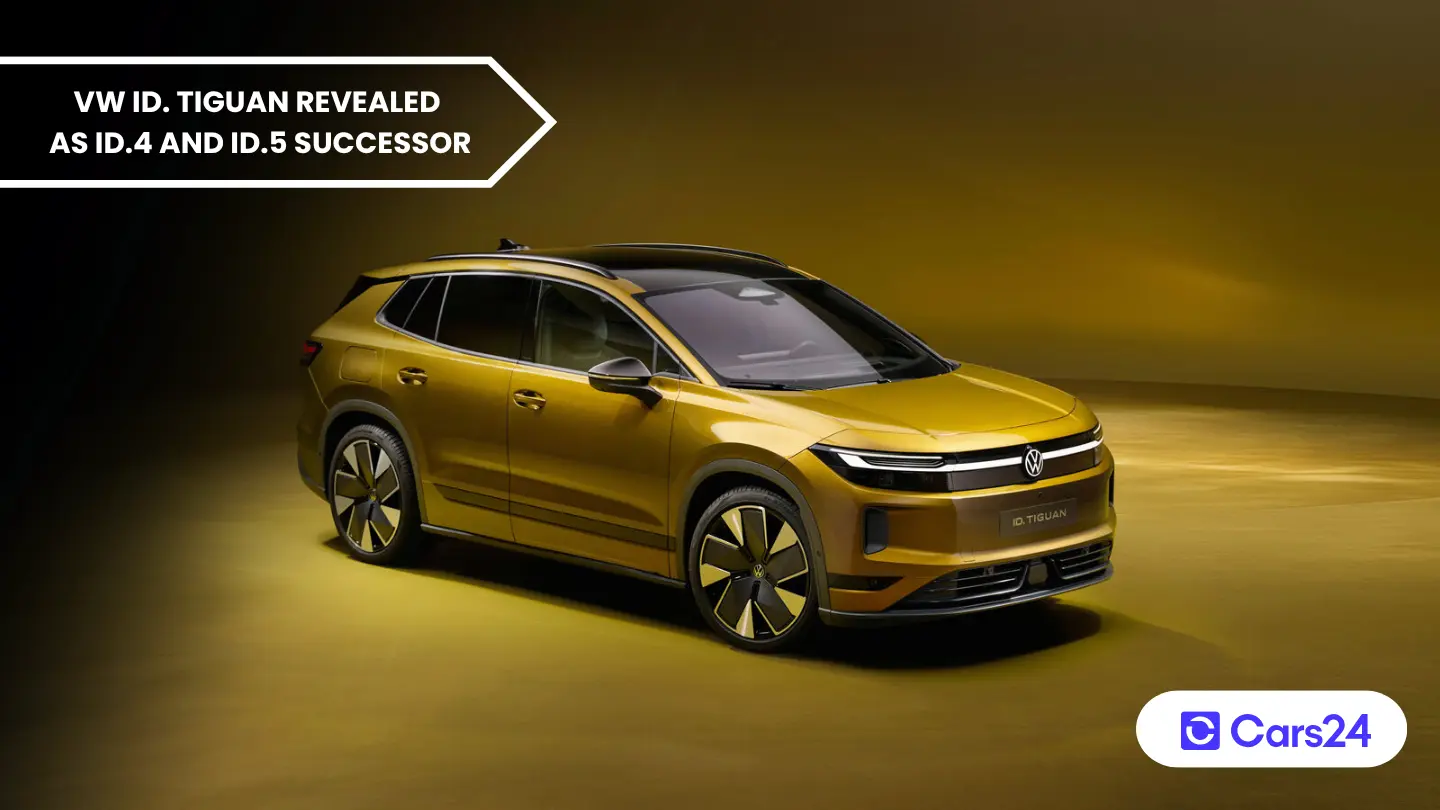
- The Volkswagen ID. Tiguan replaces the ID.4 and ID.5 with a redesigned exterior, updated MEB+ platform and new cabin technology.
- Three powertrains offer up to 600km of WLTP range, with 58kWh LFP and 77kWh NMC battery options.
- Australian pricing, specifications and launch timing have not yet been confirmed.
Volkswagen has unveiled the ID. Tiguan, a new electric SUV that will replace both the ID.4 and its coupe-styled ID.5 sibling. The model is scheduled to reach global markets in early 2027, although Volkswagen Australia has yet to confirm when it will arrive locally. The new name brings Volkswagen’s established Tiguan badge into its electric vehicle range, with the conventional Tiguan continuing to be sold alongside it with petrol, diesel and hybrid powertrains.
The ID. Tiguan is more than a name change. It moves to Volkswagen’s updated MEB+ electric vehicle platform and features a completely redesigned exterior, revised battery options and a new interior intended to make everyday operation more straightforward. Volkswagen says more than 950,000 ID.4 and ID.5 vehicles have been built since the model series began. The ID. Tiguan will carry that electric SUV range forward with updated technology and a more conventional SUV appearance.
Read more: 2027 Volkswagen ID. Tiguan confirmed as major ID.4 overhaul
More than a styling update
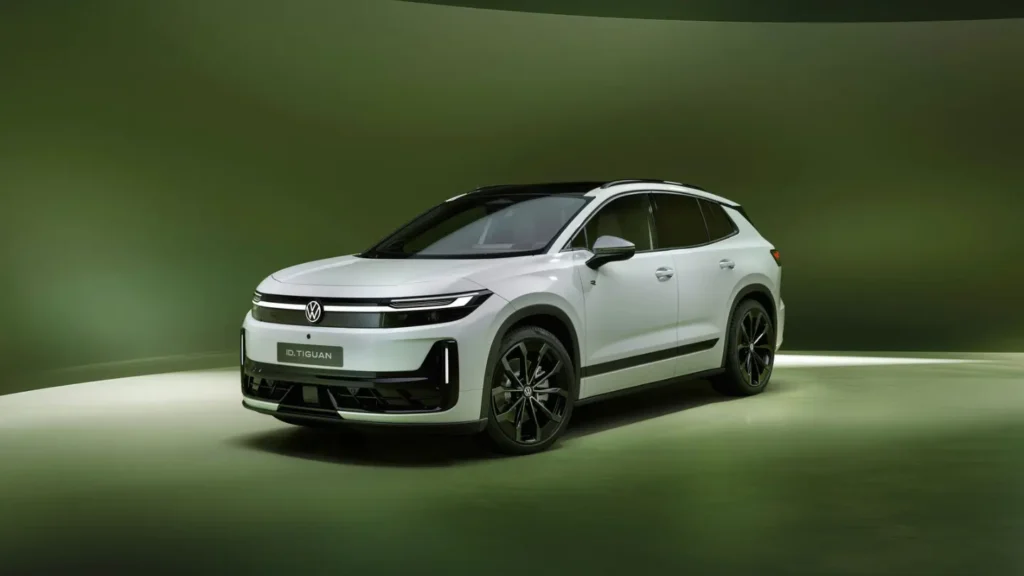
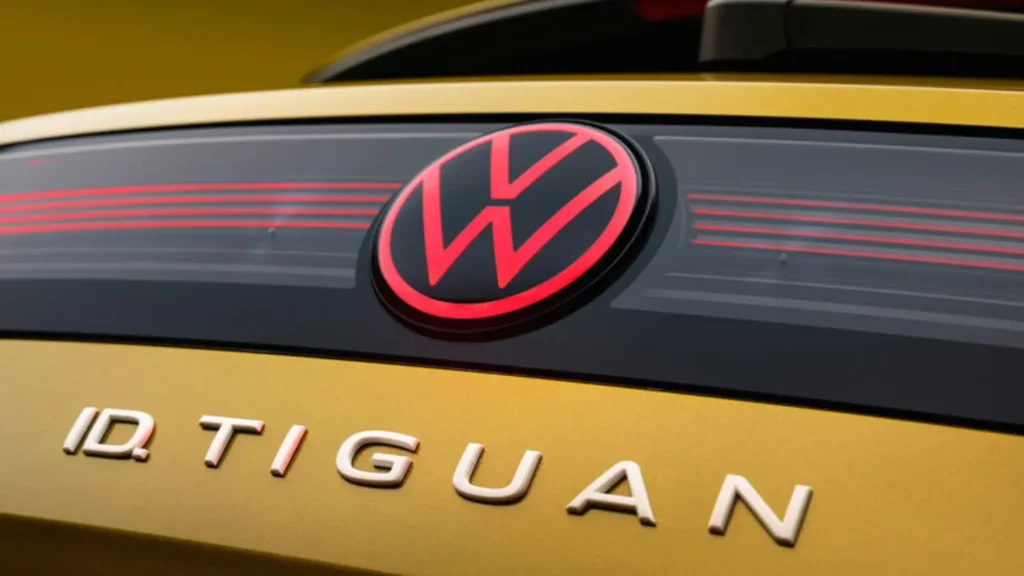
Every exterior body panel on the ID. Tiguan is new, giving it a more upright front end and a more substantial appearance than the outgoing ID.4. Slimmer headlights, an illuminated front light bar and a light-up Volkswagen badge feature at the front, while the rear gets a full-width lighting treatment. Conventional pull-type door handles replace the flush-fitting design used on the ID.4. Volkswagen will also offer an R-Line version with sportier bumpers, gloss-black detailing and distinctive 21-inch alloy wheels.
The SUV retains the updated MEB+ architecture, which underpins changes to its electric motors and battery technology. Three powertrain configurations will be available overseas at launch. The entry-level version combines a 58kWh lithium iron phosphate (LFP) battery with a 140kW electric motor driving the rear wheels. Volkswagen quotes a WLTP driving range of up to 450km and a 0-100km/h acceleration time of 8.5 seconds.
The next step up uses a 77kWh nickel manganese cobalt (NMC) battery and a 210kW rear-mounted electric motor. This rear-wheel-drive variant offers a claimed range of up to 600km under the WLTP test cycle. At the top of the initial range, a 220kW dual-motor version sends power to all four wheels. It uses the same 77kWh NMC battery and has a claimed WLTP range of up to 560km, with a 0-100km/h time of 6.3 seconds. LFP batteries can avoid the need for nickel and cobalt and are increasingly used in electric vehicles. However, whether Volkswagen Australia will offer all three powertrains, or the same battery combinations, remains to be confirmed.
Charging and towing capabilities
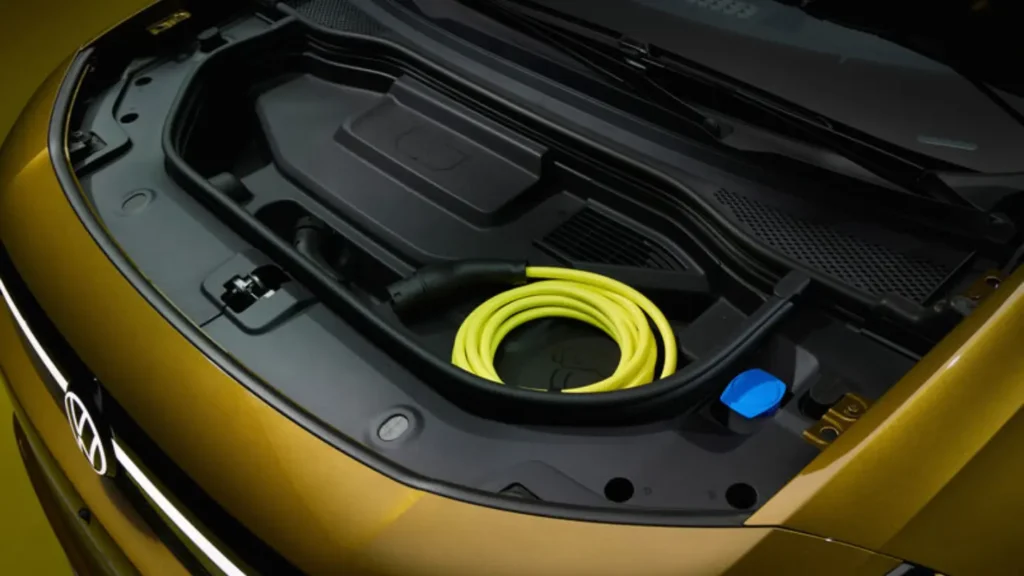
Charging performance varies with the battery fitted. The 58kWh version supports AC charging at up to 11kW and DC fast charging at up to 105kW. Volkswagen quotes a 10 to 80 per cent charging time of around 26 minutes under suitable conditions. The larger-battery versions retain 11kW AC charging but increase peak DC charging power to 165kW. Volkswagen quotes a 10 to 80 per cent charging time of approximately 29 minutes.
These figures are based on the overseas model specifications. Actual charging times will depend on battery temperature, the charger available and the vehicle’s state of charge. Australian charging specifications have not yet been announced. Towing is another consideration for buyers looking at electric family SUVs. The 140kW rear-wheel-drive version is rated to tow a braked trailer weighing up to 1,800kg on an eight per cent gradient, while the two more powerful versions can tow up to 2,000kg. All versions have a maximum roof load of 75kg.
These figures may interest buyers who need an electric vehicle for touring or towing, but Australian towing ratings and equipment specifications will need to be confirmed before local buyers can rely on them.
A more practical cabin with retro touches
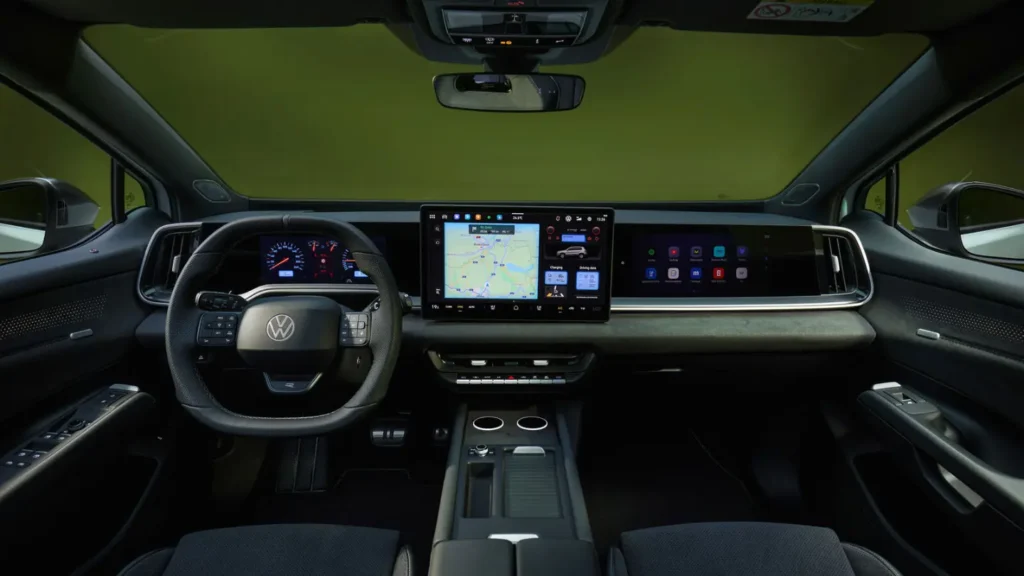
The cabin receives a substantial redesign, with a 10-inch digital instrument display and a standard 15-inch central touchscreen. Apple CarPlay and Android Auto are included, while physical buttons below the central screen restore direct access to key climate controls. The centre console adds two Qi2 magnetic wireless charging pads, USB-C ports and additional storage. An optional 12-inch passenger display allows the front passenger to access infotainment functions and stream media.
Volkswagen has also introduced retro-inspired digital instrument and infotainment themes that reference older models, including previous generations of the Golf. Other available features include one-pedal driving, Connected Travel Assist and a digital key, although local equipment levels are yet to be confirmed. The ID. Tiguan is designed to accommodate five occupants, with ISOFIX child-seat anchorages on the outer rear seats. Boot capacity is rated at 534 litres, increasing to 1,577 litres with the rear seats folded. The new cabin also brings higher-quality materials and additional comfort equipment, with features such as ventilated and massaging seats and a Harman Kardon sound system available as options in overseas markets.
When will the Volkswagen ID. Tiguan arrive in Australia?
The ID. Tiguan gives Volkswagen a more recently developed electric SUV to succeed the ID.4 and ID.5. Its use of the established Tiguan name may also make the brand’s electric lineup easier for buyers to understand, while the conventional Tiguan continues to cater to customers who prefer combustion or hybrid power.
However, Australian launch timing, pricing, equipment levels and battery options remain unconfirmed. The overseas range figures are based on the WLTP test cycle and should not be treated as a guarantee of real-world driving range in Australia.
For buyers considering an electric family SUV, the ID. Tiguan’s claimed range of up to 600km, 534-litre boot and maximum 2,000kg braked towing capacity make it a model worth watching. Its competitiveness in Australia will ultimately depend on local pricing, specifications and how it performs on local roads.

Comments
New Comment