




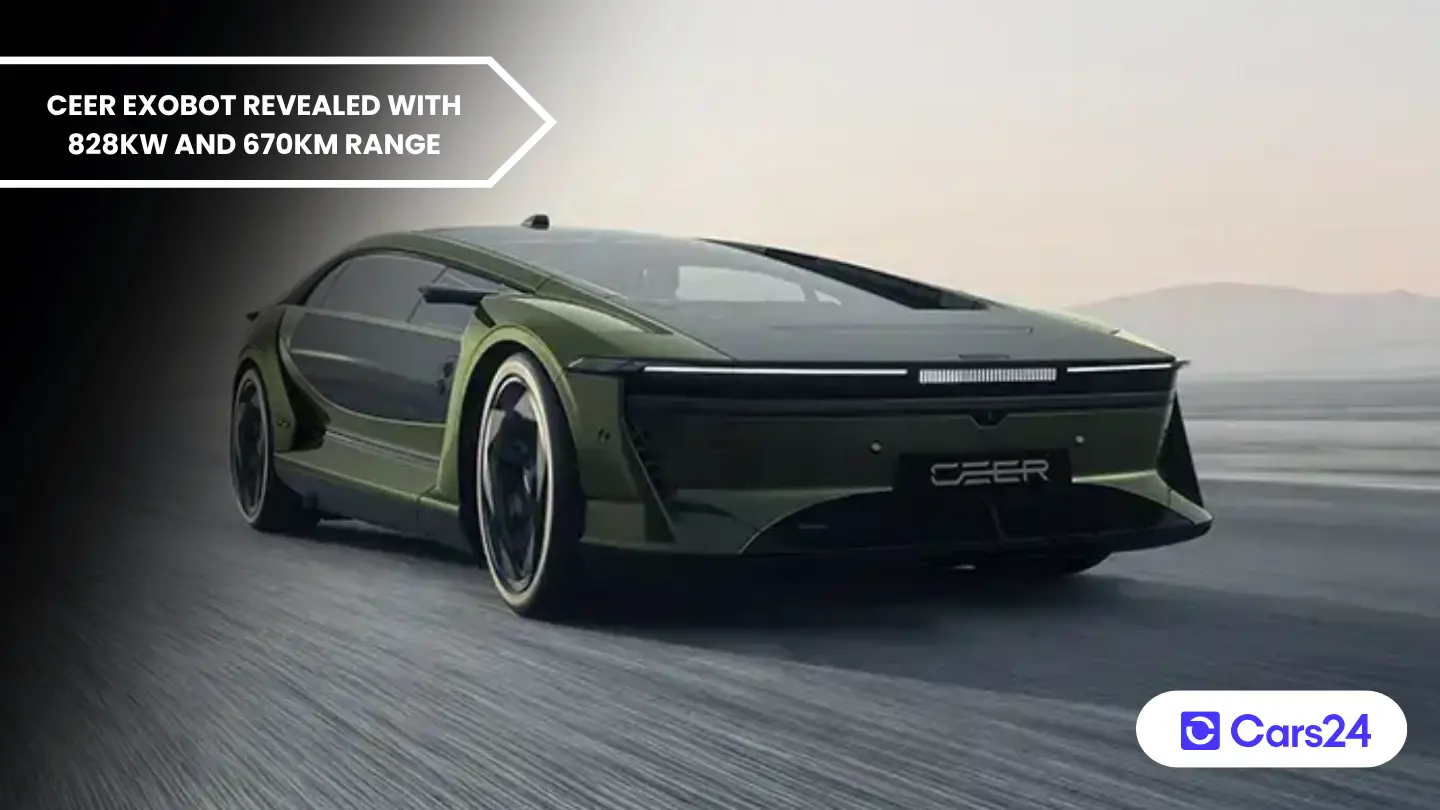
Key highlights
- Ceer has revealed the Exobot electric sedan and SUV with up to 828kW and 1500Nm from three electric motors.
- First Edition models use a 112kWh battery and claim up to 670km of NEDC range.
- Ceer plans to expand beyond Saudi Arabia from 2028, but there is currently no indication of an Australian launch.
Saudi Arabia hasn’t had its own car manufacturing industry before, but that’s the gap Ceer is trying to fill. The brand has just revealed its first production vehicles, the Exobot sedan and SUV, and gone with a design so extreme it looks more like a motor show concept than something built for daily use.
But the bigger news might be buried in the announcement rather than on the surface. Ceer was set up in 2022 as Saudi Arabia’s first electric-only car brand, yet CEO Jim DeLuca has now confirmed, as of this September 23, 2026 reveal, that the line-up will expand beyond EVs to include plug-in hybrids and combustion-engined models too. It’s a similar pattern to what several established car-makers globally have followed as EV demand has grown unevenly across different markets.
Read more: Brand’s cheapest 2027 XPeng L03 price and specs revealed
Power figures that would embarrass a supercar
The numbers on the flagship Exobot are genuinely startling. A tri-motor, all-wheel drive setup produces up to 828kW (1111hp), along with 1500Nm of torque. Ceer claims the sedan will do 0-100km/h in 2.1 seconds and hit a top speed of 250km/h, while the SUV needs 2.4 seconds and tops out at 210km/h. The initial cars sold, badged First Edition, will be slightly tamer at 625kW (850hp) and 1000Nm, still enough for a claimed 2.6-second sprint in the sedan and 2.9 seconds in the SUV.
Both versions share a 112kWh NCM battery and 800-volt electrical architecture. Ceer quotes 670km of range for the sedan and 560km for the SUV, though these figures are on the NEDC test cycle, which tends to be more generous than the WLTP standard Australians are more used to seeing, so real-world range would likely come in lower. A 10 to 80 percent DC fast charge is claimed to take under 30 minutes. Underneath, the Exobot runs steer-by-wire, rear-wheel steering, active chassis control and continuous torque vectoring. The steer-by-wire system reportedly cuts the amount of steering wheel rotation needed from a conventional 400 degrees down to just 160 degrees, a genuinely unusual setup for a production car.
Big doors, bigger glass, and some serious backing
Ceer is a joint venture between Saudi Arabia’s Public Investment Fund and Taiwanese manufacturing giant Foxconn, with a technology licensing deal with BMW. Reports also point to Croatian EV specialist Rimac Technology supplying the rear drive unit, with Hyundai Transys providing the front motors, a genuinely credible parts list for a first-time car brand.
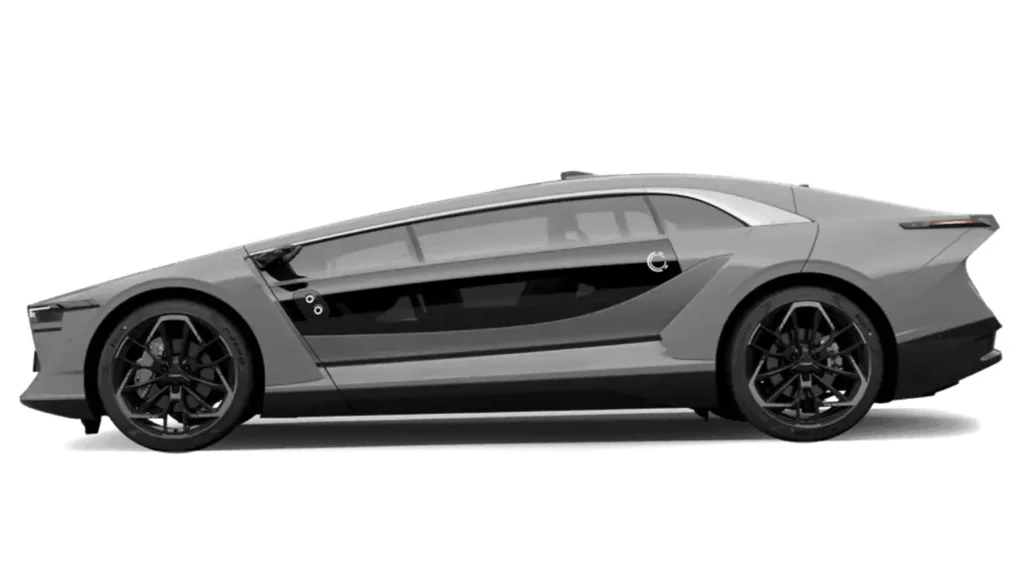
The design leans hard into spectacle. Both body styles get huge upward-opening “Shahin Wing” doors, named after a falcon, measuring almost three metres long and opening through a 60-degree arc, with no conventional B-pillar between the front and rear seats. The windscreen is claimed at 2.4 metres and sits at a 15-degree angle, while the lighting uses 32 individual bars as a nod to 1932, the year Saudi Arabia was unified as a kingdom.
Dimensions are large across the board. The sedan measures 5260mm long, 2100mm wide and 1430mm high, while the SUV is a touch shorter at 5020mm long but the same width, standing 1690mm tall.
Given the heat these cars need to handle, Ceer has fitted what it calls Halo Cooling, claimed to drop cabin temperature from 65°C to 32°C within 10 minutes, alongside special glass coatings and separate front and rear air-conditioning zones.
Inside, there’s a 48-inch curved 8K display running across the dashboard, a 10.4-inch central control screen and an 8.0-inch rear passenger display. An AI voice assistant works in Arabic and English, and the car also gets over-the-air updates, digital-key access, remote parking and a range of driver assistance systems.
Will the Ceer Exobot come to Australia?
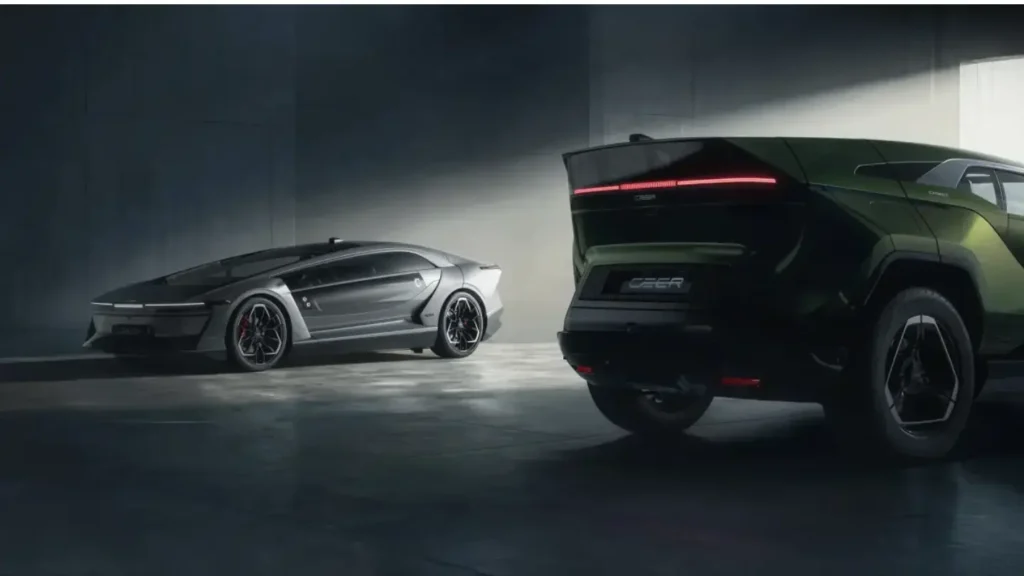
There is currently no confirmed Australian launch for the Ceer Exobot. The brand expects to begin selling the Exobot in Saudi Arabia in early 2027, initially with the First Edition before introducing the Exobot Plus. Ceer plans to expand into neighbouring markets from 2028, followed by a wider expansion across the Middle East and North Africa.
The company has also said its upcoming mainstream models will be engineered to meet global regulatory requirements, potentially allowing them to be exported to more markets in the future. However, Australia has not been identified as part of the brand’s current expansion plans.
Ceer also won’t remain an EV-only brand. Its chief executive has confirmed the future range will include plug-in hybrid and combustion-powered vehicles, with seven models planned over the next five years. For Australian car buyers, the Exobot is therefore more of a look at an emerging global manufacturer than an immediate new-car option. If Ceer eventually expands into Australia, its high-performance EV technology and focus on hot-climate engineering could become more relevant to the local market.

Comments
New Comment