




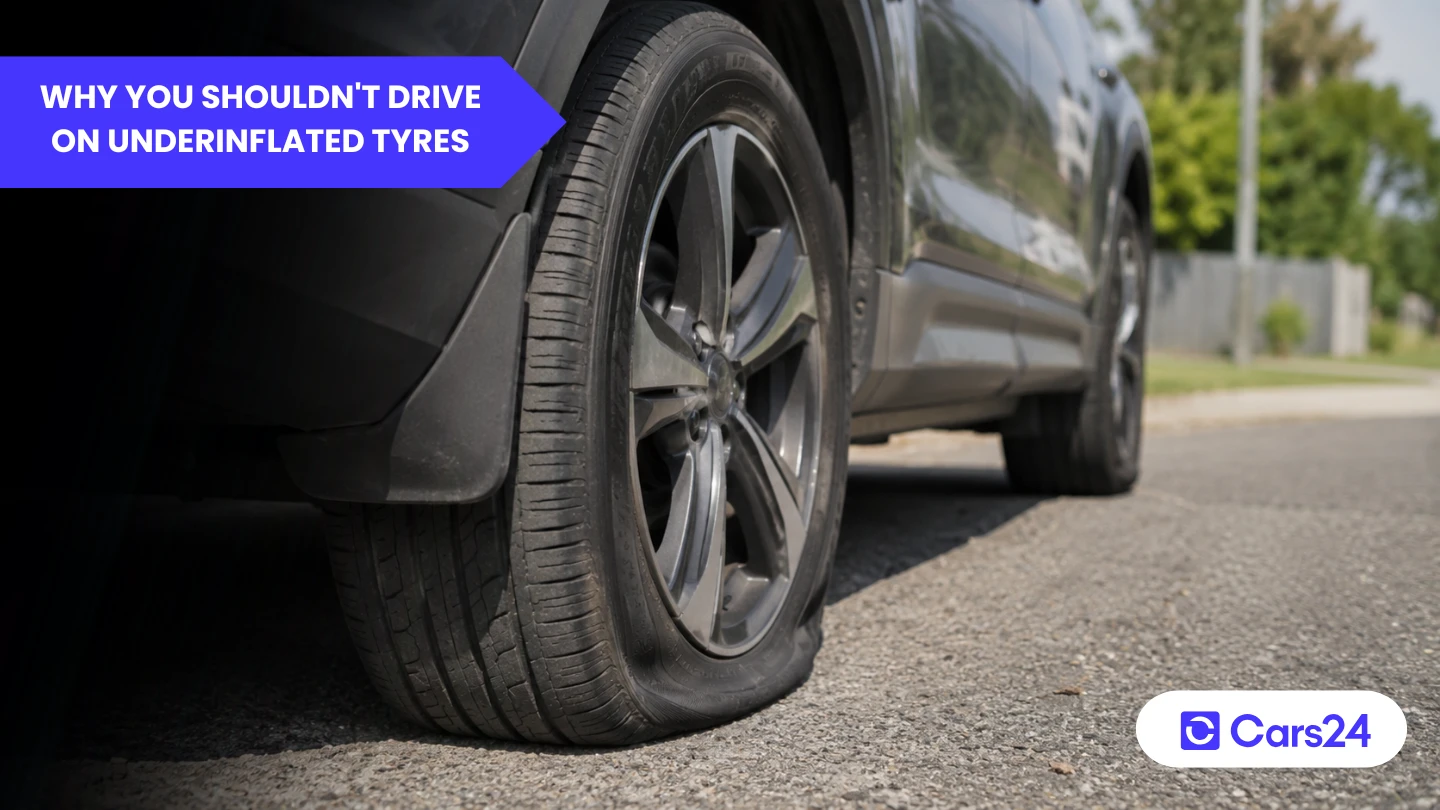
When was the last time you checked your tyre pressures? If you can’t remember, you’re not alone. Underinflated tyres can be surprisingly difficult to spot because many modern tyres still look normal even when they’re carrying less air than they should.
A tyre that’s 5-10 PSI low often looks perfectly fine in the driveway and may even feel normal around town. But the real damage is often invisible.
The good thing is that understanding the risks is straightforward. Here, we’ll break down what happens inside an underinflated tyre, how quickly problems escalate, and how low pressure affects your road safety and wallet.
What do underinflated tyres mean?
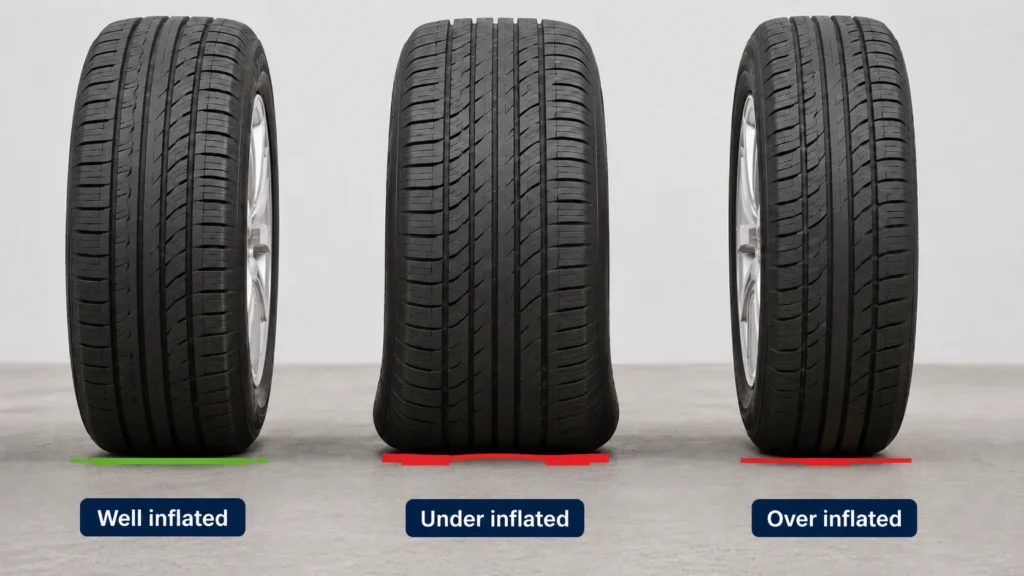
Underinflated tyres mean the air pressure inside your car tyres is below the manufacturer’s recommended level. This causes excessive rubber tread to contact the road, which compromises your driving safety, burns extra fuel, and accelerates tyre wear.
Here is a guide on Tyre Pressure Conversion, in case you want to do a quick kPa-PSI-bar conversion at a servo.
Why driving on underinflated tyres should be avoided
Driving on underinflated tyres increases heat build-up, the leading cause of tyre failure, raising the risk of tread separation or blowouts. It also increases hydroplaning risk, worsens fuel economy by about 0.2% per PSI lost, accelerates edge wear, reduces handling, towing stability, braking performance, and increases damage from potholes and kerbs.
Reason 1: Excessive heat build-up (number one tyre killer)
When a tyre is underinflated, its sidewalls flex more than intended. This extra movement generates heat inside the tyre, particularly during long highway drives and hot Australian summers. Over time, excessive heat can weaken the tyre’s internal structure, increasing the risk of tread separation or a sudden blowout.
Wanna understand tyre construction and other tyre dimensions? We’ve written an illustrative guide for it.
Reason 2: Hydroplaning risk (losing control in the wet)

The tread patterns in properly inflated tyres push out water through the grooves. When underinflated, the tyre’s contact patch flattens and widens, and the tread grooves close up or become shallow.
Highway speeds + underinflated tyres + a puddle = potential disaster
Instead of the tyre cutting through water, it rides up on top of it, and you lose steering and braking control. Hydroplaning can start at as low as 70-80 km/h with severely underinflated tyres and standing water.
Reason 3: Poorer fuel economy
Underinflated tyres have higher rolling resistance. The flat tyres create drag, and your car engine has to work harder to overcome that drag.
You may lose about 0.2% in fuel economy for every 1 PSI drop below the recommended tyre pressure. Running 10 PSI low across all 4 tyres means roughly 2% worse fuel economy. Over a year of driving (15,000km), that’s an extra tank or two of fuel.
Reason 4: Uneven and rapid tyre wear
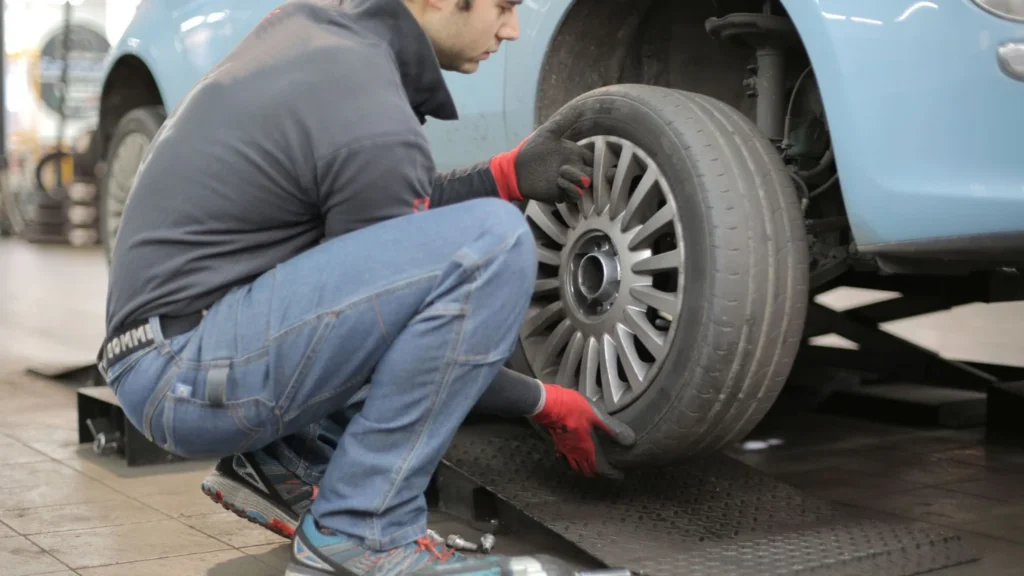
An underinflated tyre wears on both outer edges of the tread, leaving the centre relatively untouched. That’s because the tyre is “cupping”; the sidewalls bulge out.
But the tyre is still structurally compromised and unsafe. You’ll need to replace it thousands of kilometres earlier than a properly inflated tyre. A set of four quality tyres for an SUV costs $800-$1,500.
Reason 5: Increased risk of tyre damage
Underinflated tyres have less structural rigidity. When you hit a pothole, kerb, or rock, the tyre can compress too far, allowing the wheel rim to smash into the pothole edge and pinch the tyre against the rim.
This “pinch flat” or “rim cut” can:
- Cut the tyre’s sidewall (instant replacement, not repairable)
- Damage the tyre’s internal cords (hidden failure that can blow later)
- Crack or bend your wheel rim
Here is a simple guide to prevent tyre blowouts.
Reason 6: Reduced towing stability

When towing, your rear tyres are under additional load and underinflation compounds the problem. The rear tyres flex more, the sidewalls get hotter, and the trailer can start to sway or fishtail because the tow vehicle’s rear end isn’t planted.
Once a trailer starts swaying, an underinflated tyre setup makes it harder to correct. The delayed steering response and the rear-end instability combine into a snake that can flip your entire rig.
Reason 7: Low tyre pressure is critical for EVs
Underinflated tyres on an EV mean direct, measurable loss of range. Tyre heat build-up and wear are worse (faster) because EVs are heavier and deliver instant torque to the tyres.
Readers also asked: How to fix a flat tyre?
Reduced handling and braking performance on underinflated tyres
Underinflated tyres can feel vague and less responsive, particularly during sudden steering inputs or emergency manoeuvres. The vehicle may take longer to react to driver inputs, making it harder to avoid hazards.
Low tyre pressure can also reduce braking effectiveness and increase stopping distances, especially in wet conditions where grip is already limited.
How to keep your tyres at the right pressure?
Check all four tyres and the spare monthly, preferably when cold. Use a digital pressure gauge, follow the tyre placard pressure readings, and add a few PSI when towing or carrying heavy loads. Here are the detailed tips on keeping your car tyres at the right pressure:
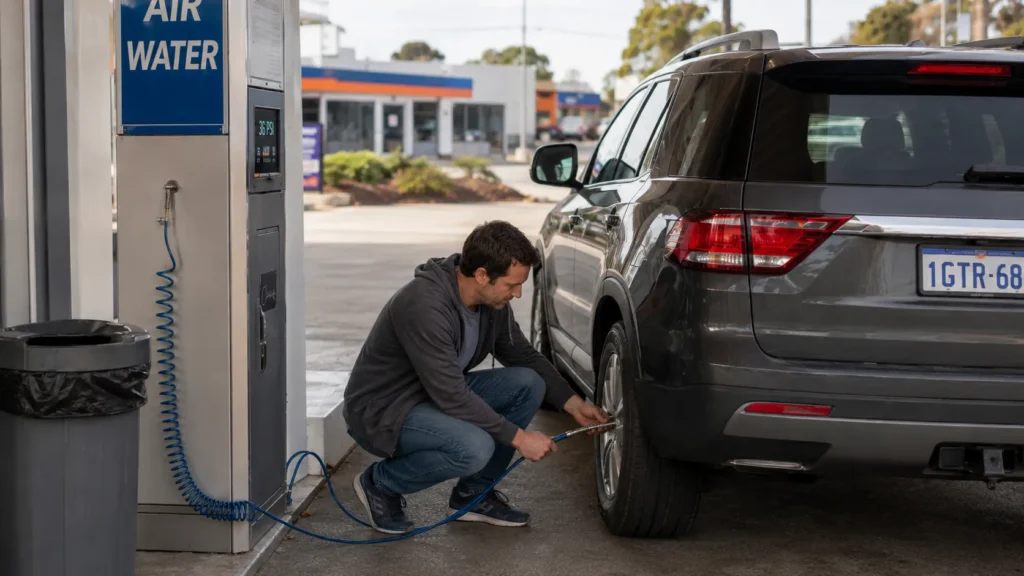
1. Make it a monthly routine
Set a monthly calendar reminder for a suitable day and time when you have time to fill air. Always test pressures in the morning when tyres are cold. Wait at least 3 hours if you have already driven the car, and don’t forget your spare tyre.
2. Invest in personal tools (if you can)
Buy a digital gauge and get a 12V portable air compressor for easy top-ups at home.
3. Adjust for specific driving loads
Read your car’s tyre placard. Add a few PSIs if your car is packed with heavy luggage and passengers or when towing a caravan, boat, or trailer.
4. Account for the weather
Tyre pressure drops a bit when the weather gets colder. Pay extra attention when transitioning from autumn into a cold winter. Do not let air out if pressures look high (it’s normal) right after highway driving.
5. Protect your tyre valves
Always replace missing valve caps to keep dirt and moisture out with plastic or rubber caps. Gently wiggle the rubber valve stem to check for cracks or leaks.
Australian road rules regarding driving with underinflated tyres
There are no specific Australian Road Rules that define a minimum PSI or kPa for your tyres. Instead, driving with tyres that are significantly underinflated is covered by general national and state laws about defective vehicles, unroadworthy equipment, and dangerous driving.
If your tyre pressure gets low enough to visibly flatten or affect the car’s control, you could face serious legal penalties in all Australian states.
FAQs about driving on underinflated tyres
1. Can underinflated tyres cause a blowout?
Yes. Low pressure causes the tyre sidewalls to flex excessively, generating intense internal frictional heat that can trigger a sudden blowout at high speeds.
2. How often should I check my tyre pressure?
At least once a month and right before embarking on any long road trips. Always check them while the rubber is completely cold.
3. Can a tyre look normal but still be underinflated?
Yes. Modern radial tyres can lose up to half of their required air pressure without visibly sagging or looking flat to the naked eye.
4. Is it safe to drive to a servo with low tyre pressure to inflate them?
Yes, but only if you drive slowly and keep the distance short. If the tyre is completely flat or down to the rim, do not drive on it; change to your spare or use a portable pump instead.
5. What is the 4 PSI rule on tyres?
It is a rule car enthusiasts use to check if your starting pressure is correct. If you measure your passenger tyres cold, drive for 30 minutes on the highway, and recheck them, the pressure should rise by 4 PSI due to heat expansion. A higher rise means your starting pressure was too low. A pressure increase of around 4 PSI after driving may indicate an appropriate starting pressure, but manufacturers’ recommendations should always take priority.

Comments
New Comment