




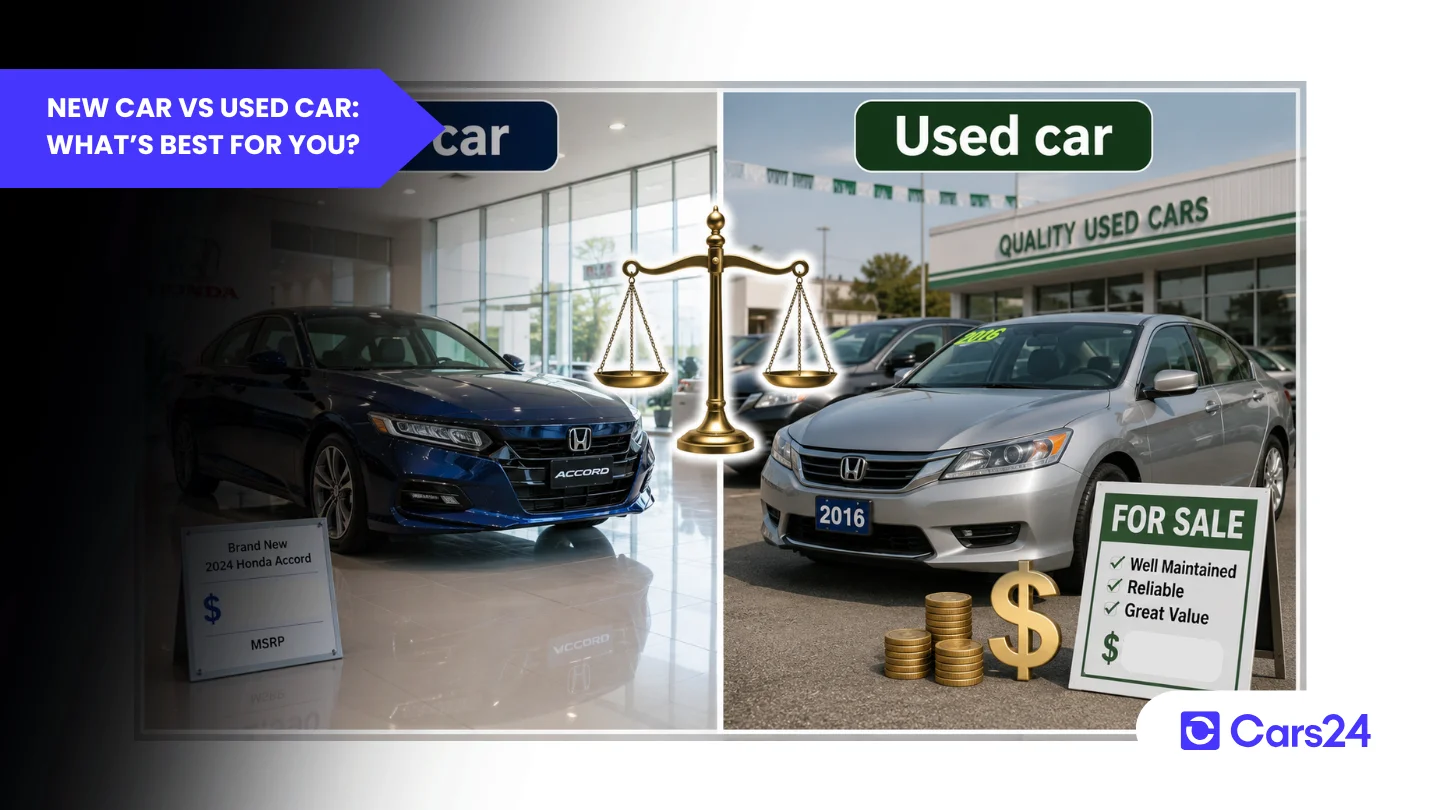
Standing at the crossroads of a new car vs. used car decision, it often feels like there’s no perfect answer. Used car savings excite budget buyers, while tech-savvy buyers love all the new convenience and safety features, and some of you may even like both: the savings and the tech.
We have considered the good and bad sides of both types of cars and created a straightforward and practical guide that will ease your decision-making process.
Learn the benefits and drawbacks of buying a new vs. used car, compare ownership costs, know about demo and certified pre-owned cars, and get a decision-making checklist.
Choosing the right car for your budget
A new car offers fixed and predictable costs, and a used car lowers your initial purchase price but risks unpredictable maintenance fees.
You should calculate your Total Cost of Ownership (TCO) to choose between a new or used vehicle in Australia, which includes upfront costs, running costs, and depreciation.
| Financial metric | Under $25,000 budget | $25,000 to $50,000 budget | Over $50,000 budget |
|---|---|---|---|
| Best choice | Used car | Late-model used vs entry new | New car/demo model |
| Depreciation risk | Very low; steep drop is over | Moderate; drops 10–15% annually | Extremely high; loses 30% fast |
| Finance options | Higher interest rates apply | Standard secured car loan rates | Lowest finance rates available |
| Warranty status | Out of factory warranty | May have remaining warranty | Full 5 to 7-year warranty |
Choosing a new car offers fixed, capped-price servicing costs and full manufacturer warranty protection, but extremely rapid depreciation. Choosing a used car lowers initial loan amounts and the car has slower depreciation, but it carries a risk of sudden mechanical failure.
Define your absolute maximum drive-away price limit. Check insurance premiums for new vs used models online. And finally, find out finance rates and review warranty terms to properly weigh a new car vs. used car against your budget.
Buying a new car in Australia
Is it worth buying a new car? Whenever this question comes to mind, think about your car needs, budget, and long-term reliability. A new car does not give you mechanical headaches initially, but it comes at a premium over used cars. Consider the following pros and cons of buying a new car for an informed decision.

Why buy a new car vs. a used one? The advantages
The main advantages of buying a new car over a used one in Australia are full factory warranty protection, fixed capped-price servicing, lower finance rates, and the latest safety features.
1. Long manufacturer warranties
Australia has some of the best new-car warranty periods globally, as most mainstream brands offer 5 to 7-year warranties, with some OEMs extending it up to 10 years if you service within their network.
2. Capped-price servicing
You know what each regular service will cost for the first 3 to 7 years of ownership, which makes budgeting predictable and eliminates surprise repair bills at the mechanic.
3. Lower finance interest rates
Australian lenders view new cars as lower risk than used ones, hence charge lower car finance interest rates than used cars, which allows you to save a few thousand dollars in interest charges overall.
4. Advanced safety and technology
New cars must meet the latest Australian Design Rules (ADRs) and ANCAP safety ratings. You get access to latest driver-assistance and safety technologies, such as Lane Keep Assist and Blind Spot Monitoring.
5. Consumer law protections
New cars come with automatic consumer guarantees under the Australian Consumer Law (ACL), which states that a vehicle must be of acceptable quality. The ACL provides strong pathways for a refund or replacement if a new car turns out to be a “lemon”, compared to private used car sales.
The disadvantages of new cars
The main disadvantages of buying a new car over a used one are immediate and severe depreciation, higher initial purchase costs, and more expensive insurance premiums.
1. Extreme first-year depreciation
A new car can lose about 10% to 15% of its value just when you purchase it and up to 30% to 40% by the end of the first three years. A used car has already taken this massive financial hit.
2. Higher upfront taxes and fees
Upfront government charges are significantly inflated as the initial purchase price of a new car is higher. This state-based tax or stamp duty scales with the car’s value, and on top of that you also pay the Luxury Car Tax (LCT) if you buy a premium new car above the government threshold.
3. Expensive insurance premiums
Insurance companies calculate your comprehensive premium based on the agreed or market value of the car. A brand-new car costs the insurer more during a claim, so they demand a higher annual insurance bill for new cars compared to used ones.
4. Restrictive servicing conditions
You must service a new car strictly according to the logbook schedule to maintain your valuable 5-to-10-year manufacturer warranty. You can legally use independent mechanics, but you cannot skip services or use non-genuine parts, which limits your ability to find cheaper maintenance options.
5. Wait times and delivery delays
Many brand-new, upcoming popular models have weeks, months, or even year-long dealership waiting lists. On the other hand, you just pay (safely) and drive away your used car.
Readers also asked: What are the signs of engine problems in a used car?
Buying a used car in Australia
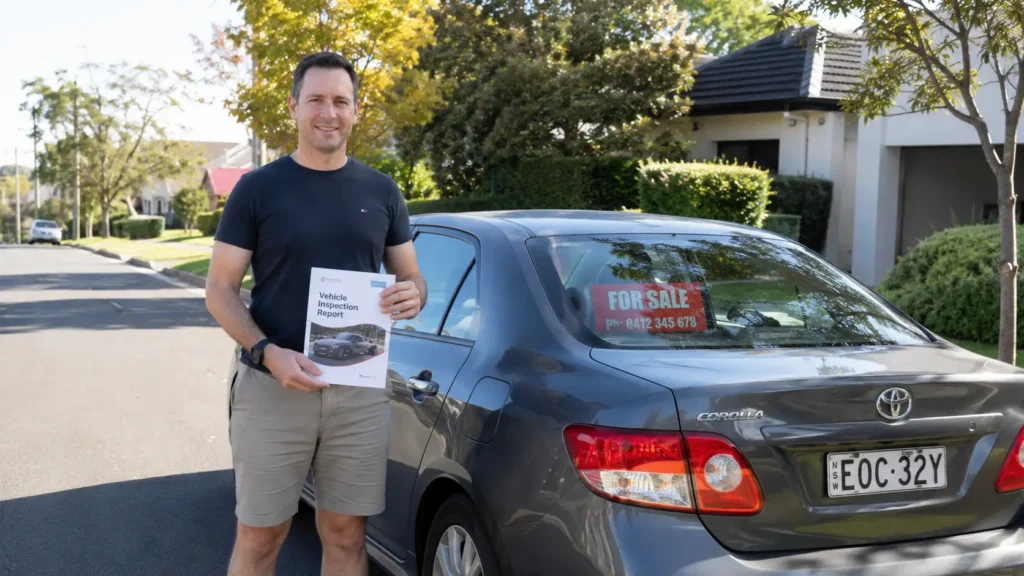
You save a lot of money on a used car, especially if you find a good one with a clean and regular maintenance history. But if you are not so lucky, you may get surprise repair costs later, unlike a new car. Understand the pros and cons of buying a used car to make a smarter car purchase decision.
The benefits of buying a second-hand car
The ultimate advantage of buying a used car over a new one is financial efficiency. You avoid the significant 30% to 40% initial few years of depreciation hit, and you can buy a higher-tier vehicle, lower your debt, and secure cheaper insurance.
1. Minimal ongoing depreciation
A new car loses value fastest in its first three years, and when you buy a 3-to-5-year-old used car, the depreciation curve flattens significantly. You will lose a little money compared to the original buyer when you decide to sell the car in a few years.
2. More value for your money
A strict budget of $30,000 might only buy you an entry-level new hatchback. That same $30,000 in the used car market can buy you a top-spec SUV loaded with luxury features.
3. Cheaper comprehensive insurance
Your annual comprehensive insurance premiums will be significantly cheaper because a used car has a lower market value than a brand-new equivalent.
4. Lower loan amounts and less interest
Used car loans often carry slightly higher interest rates than new car loans, but the smaller loan amount can result in lower monthly repayments and may offset the higher rate.
5. Zero dealer delivery fees
Many dealerships add “dealer delivery fees” to new cars for basic grooming, transport, and administrative costs. Used cars bought via private deal completely bypass these dealer markups.
The disadvantages of buying a second-hand car
The main disadvantage of buying a used car is financial risk. You inherit unknown mechanical wear, lack the protection of a full factory warranty, and face higher interest rates on car finance.
1. Hidden mechanical and maintenance costs
Used cars naturally have worn parts, and you may need to replace high-cost items within your first year of ownership. A full set of tyres and brakes can easily cost $800 to $1,500+. Modern stop-start batteries are expensive to replace, and there are also major logbook services like expensive timing belt changes.
2. No factory warranty safety net
If you buy a car out of its warranty period and the engine or transmission fails, you are entirely on your own. A major mechanical failure can instantly wipe out any savings you made by buying used over new.
3. Higher financing interest rates
Australian lenders view used cars as higher-risk assets because their value fluctuates and they can break down. The extra used car finance interest paid can eat up a massive chunk of your initial purchase savings.
4. The “lemon” risk and hidden history
You rely on the previous owner’s honesty when buying a used car. You risk buying a vehicle with a problematic past, including odometer tampering, poor maintenance, and unrepaired accident damage.
5. Zero protection via private sales
Even if you negotiate and get a great deal, you receive no statutory dealer warranty and no protection under Australian Consumer Law (ACL) if the privately-bought used car breaks down the next day.
You will find this ultimate guide to buying a used car helpful.
Is a dealer demonstrator car worth it?
A dealer demonstrator or a demo car is worth considering if you want a near-new vehicle, immediate delivery, and a meaningful discount (often 5% to 15%, depending on the model, mileage, and dealer), but it may not be worthwhile if the vehicle has high mileage or a short remaining warranty.
A demo car is a vehicle used by dealership staff or for customer test drives. It is legally classified as new but often has real-world wear that requires careful inspection.
If you are serious about buying a demo car, audit its warranty and registration, get it inspected, check its service history, and calculate the real discount.
Readers also asked: Can low mileage guarantee a reliable used car?
Are pre-owned certified cars worth your consideration?
This option bridges the gap between a new and used car by offering a late-model used car that has passed a strict, manufacturer-certified mechanical inspection. Its value lies in a discounted purchase price with an extended factory warranty and complimentary roadside assistance.
On the other side, dealerships charge a premium for this certification and make CPO cars more expensive than identical used cars sold privately. Moreover, your choice is restricted to whatever inventory the franchise dealers have in stock. See a more detailed comparison of a new vs. used vs. certified pre-owned car.
Total cost of ownership (TCO) of a car in Australia
A used car usually carries higher repair and finance costs, especially if it has a poor service record, but it still wins financially because it avoids the massive upfront depreciation hit of a new vehicle.

A new electric car in Australia will also cost you more to own and run, while a 3-year-old used EV will cost significantly less. New EVs benefit from cheaper finance and capped-price servicing, but like traditional used cars, used EVs also save you from massive depreciation.
The financial gap between a new EV and a used EV can shrink compared to ICE cars, but only if you buy the new EV using a Novated Lease. The Australian Taxation Office (ATO) offers a highly lucrative Fringe Benefits Tax (FBT) exemption under the electric car discount policy.
How to decide which car is best for you?
It makes sense to buy a new car if you prioritise long-term reliability, want fixed running costs and have access to financial benefits like Novated Lease. You should buy a used car if you have a tight budget, want to avoid debt, and change cars every few years.
You should buy a new car if…
1. You can buy through a Novated Lease (salary packaging), especially an EV or PHEV
2. You prioritise absolute peace of mind over upfront savings
3. You plan to keep the car for 7 to 10+ years
4. You need highly predictable and fixed monthly expenses
5. You are financing the car and qualify for low interest rates
6. You are buying a reliable and popular car like a Toyota Hybrid, which has excellent resale value
You should buy a used car if…
1. You want to avoid the sharp first-year depreciation drop
2. You are paying with cash and want to live debt-free
3. You want a higher-tier or luxury model on a mainstream budget
4. You plan to sell the car or upgrade in 2 to 4 years
5. You want to keep your annual insurance premiums low
6. You need a car immediately and refuse to wait for the delivery lists
Be careful when buying a used car, ask questions, and always get a pre-purchase inspection done. Check the old car’s paperwork, examine the exterior, test the interior, get the whole car professionally inspected, and complete a thorough test drive.
Bottom line
The choice between a new and used car comes down to what matters most to you.
A new car is a worthwhile investment if you value peace of mind, predictable costs, the latest safety features, and plan to keep your car for many years.
And a well-maintained used car could be a smart purchase if stretching your budget, avoiding the biggest depreciation hit, and getting more value for your money are your priorities.
Think strategically before your purchase. The best car isn’t the newest or the cheapest, but the one that fits your budget, lifestyle, and long-term goals with confidence.
FAQs about new car vs used car
1. Are car loans cheaper on new cars vs used cars?
New cars generally have cheaper loan rates as they are less risky for financial security than a used car.
2. Is car insurance higher for new cars vs used cars?
New cars cost more to insure. Used cars have lower premiums because they are less expensive for an insurer to replace if written off.

Comments
New Comment