




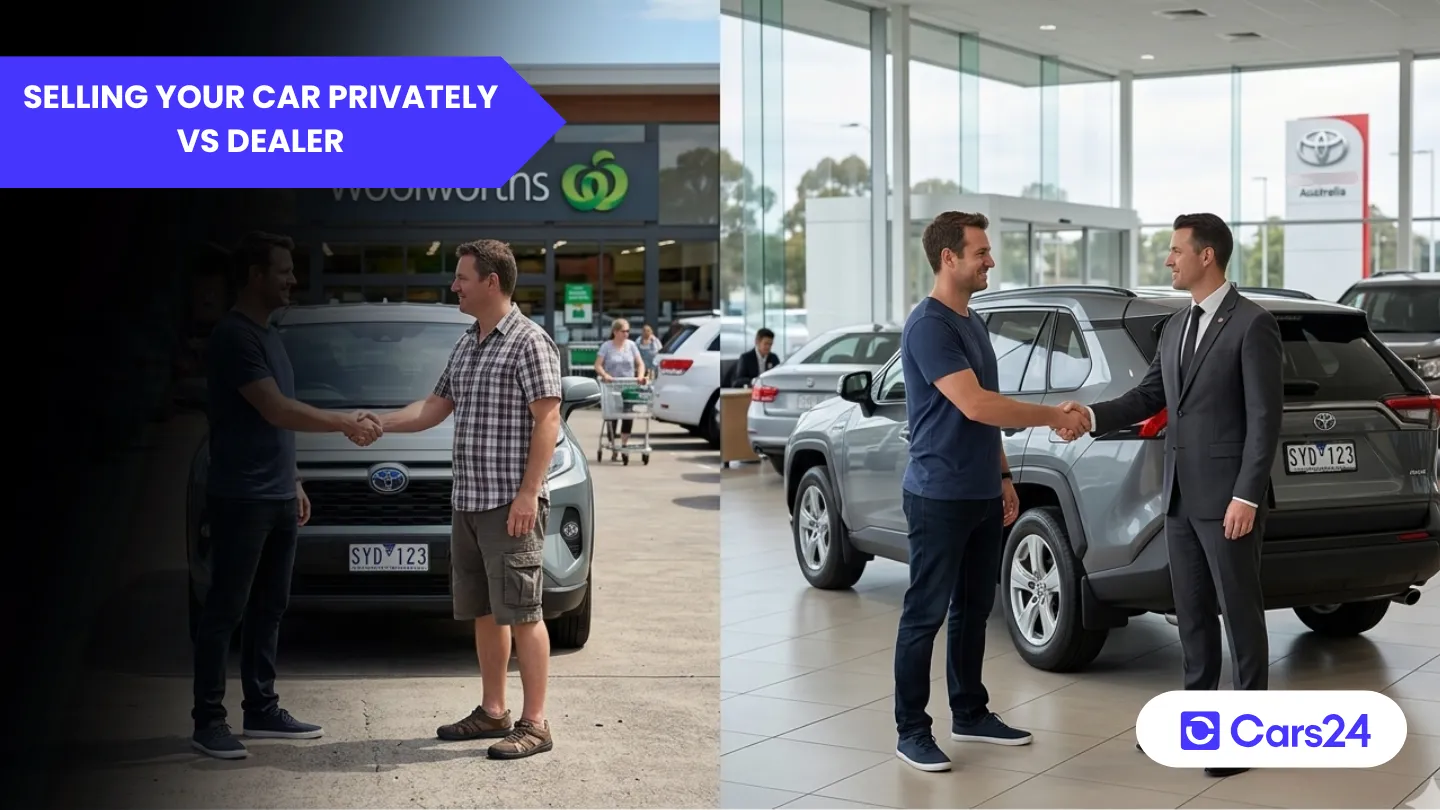
Everyone wants the maximum price for their used car, which a private sale may offer. But, you often hear about scams, administrative costs, legal liabilities, and the “tyre-kicker” fatigue and feel unclear about a private car sale.
Here, we have compared and detailed the objective way to see whether your car will actually sell better privately, as a trade-in, or at a dealership. This guide will help you move into your new vehicle with the best car sale deal, considering your time, effort, hassle, ROI, etc.
Choosing the best way to sell your car
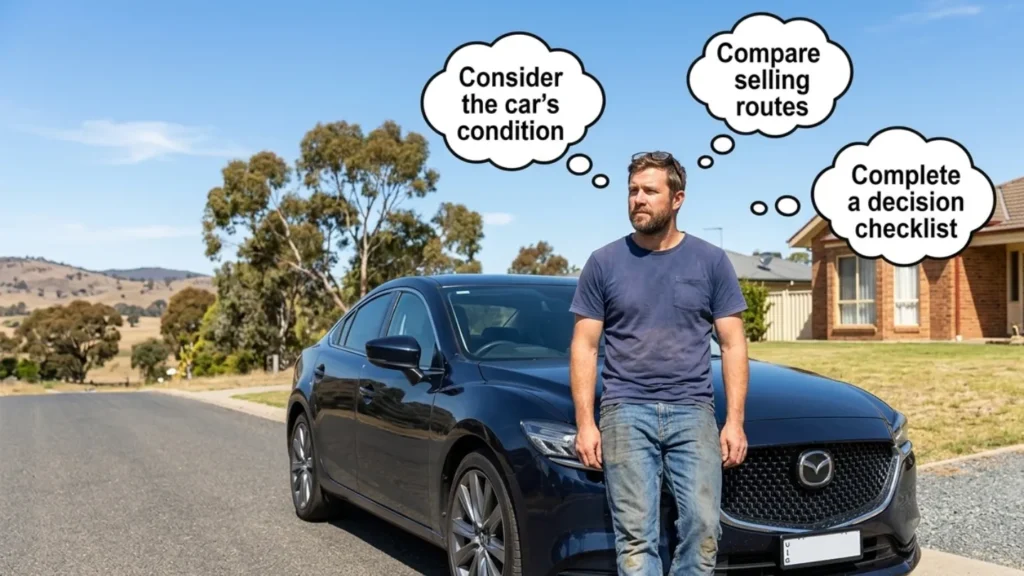
You have to balance time vs money while considering your car’s specific profile for choosing the best way to sell your car. Your car’s age, mileage, and mechanical state are the strongest indicators of which path will yield the best result.
Consider your car’s condition and profile
Near-New (under 5 years/100k km) cars are highly desirable for dealership trade-ins. Dealers can offer closer to market value because they can easily resell them with statutory warranties.
High-demand/popular models like Toyota or Honda and body types like SUVs/Utes are prime for private sales. Buyers pay a premium for reliability and popularity, which you won’t see in a wholesale dealer offer.
Unique, enthusiast cars, rare or collector models like muscle cars should always be sold privately. Dealers often lack a target audience for niche cars and will value them based on standard data rather than their unique appeal to enthusiasts.
If your car has major cosmetic damage or mechanical issues, selling to a dealer is often better. Dealers have the resources to repair them more cheaply than you can, whereas a private buyer will use every fault as a heavy negotiation point.
Private vs. trade-in vs. dealer car selling
| Feature | Private sale | Trade-in | Selling to a dealer (direct) |
| What is it? | Listing the car yourself on relevant platforms like Cars24 and selling offline | Hand over your old car as partial payment for a new one at a dealership | Selling your car outright to a dealership or professional buyer without buying anything from them |
| Sale price | Highest (usually 10–20% more) | Lowest (wholesale value) | Low (wholesale value) |
| Effort | Usually high: advertising, inspections, no-shows | Minimal: dealer handles everything | Low: simple appraisal and sale |
| Time | Can take weeks or months | Immediate (same day) | Very fast (1-2 days) |
| Paperwork | You manage all transfers and RWC | Dealer manages all admin/transfers | Dealer handles paperwork |
| Financial perk | Cash in hand | Potential sales tax/stamp duty savings | Quick cash without buying new |
Decision checklist for your deal
- Do I need a new car now? If yes, trade in at a dealership to swap and potentially save on stamp duty.
- How is my car’s service history? Cars with full logbooks sell much faster privately. If yours is patchy, a dealer might be more forgiving.
- Is my state’s RWC mandatory? In VIC or QLD, you must provide a safety certificate for a private sale. If your car won’t pass without $2,000+ in repairs, a dealer “as-is” sale may be more profitable.
- What is the psychological barrier? If your car is near 100,000 km, sell it before it hits that mark to get the best price privately. Once over, the pool of premium buyers shrinks.
Pros and cons of selling your car privately in Australia
| Pros | Cons |
|---|---|
| 1. You can typically achieve a sale price 10-20% higher than a dealer’s wholesale or trade-in offer | 1. Requires significant time and effort for car preparation, marketing, and managing enquiries |
| 2. You have direct control over the asking price and can negotiate directly with buyers | 2. Personal safety and security risks like car theft, scams, and privacy concerns |
| 3. Unique, enthusiast, or modified vehicles often fetch much higher prices privately | 3. Significant legal and administrative burdens like RWC, Notice of Disposal, etc. |
| 4. You can build trust by providing your car’s full service history and maintenance records | 4. No certainty on your car’s sale, and it could sit for a long time while depreciating |
| 5. You decide when and where to meet buyers, how to advertise, and when to finalise the deal | 5. Reduced legal protection may lead to aggressive confrontations or car cloning |
Pros and cons of selling your car to a dealer
| Pros | Cons |
|---|---|
| 1. Typical exemption from Roadworthy Certificates (RWC) and related costs | 1. Generally, lower car sale offers than the private market value |
| 2. Same-day appraisal and payment | 2. High-pressure environment as a salesperson may push for a quick decision |
| 3. Reduced legal liability as it transfers to the dealer | 3. Limited negotiation room, as dealers often have fixed car valuation models |
| 4. No “tyre-kickers” or scams or hassle of meeting strangers | 4. Low “ballpark” offers for the old, high km, or niche models |
| 5. Trade-in tax benefits like reduced stamp duty or sales tax on a new car | 5. Dealers may be less willing to discount the price of your new car in a trade-in |
| 6. Simplified finance payouts as dealers handle the payout process | 6. Some dealers may charge hidden fees that reduce the final payout |
Is the extra sale money from selling your car privately worth it?
The extra money from your private car sale is usually worth it if your car is worth more than $15,000, but for cheaper vehicles, the hourly rate you earn for your effort drops significantly. Whether it is worth it for you depends on how you value your time and the specific value of your car.
Suppose, for an in-demand $30,000 used car. You are effectively earning $269 per hour for the 15 hours of work you put into the private sale. Most people consider this a high wage and well worth the hassle.
If your car is only worth $5,000, the profit gap might only be $750. After paying for an RWC and ads, your effective hourly pay drops to roughly $30–$40 per hour, which many find isn’t worth the risk of scammers or no-shows.
Moreover, major mechanical issues in your car can be another reason to sell it to a dealer. The dealer deal will also offer you peace of mind if you are uncomfortable meeting strangers or dealing with high-pressure negotiation.
Is it better to sell a car privately or to a dealership?
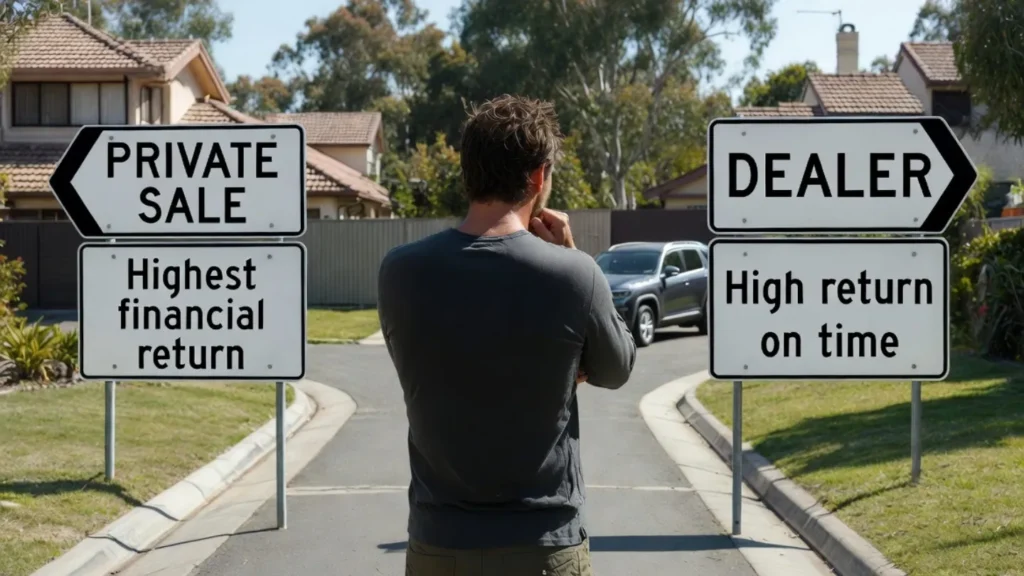
Selling privately offers the highest financial return on your asset (typically 10–20% more money) while a dealership sale provides a good return on your time.
Choose selling your car privately if you want to maximise profit on high-demand, well-maintained, or unique enthusiast cars. Choose selling or trading to a dealership if you want a fast, stress-free transaction, especially if you are upgrading to a new vehicle soon.
The data shows that Aussies are increasingly buying used cars from dealers due to rising preference for statutory warranties and easier financing, which are harder to get for private sales. Dealers now account for 48.6% of used car transactions in Australia.
Moreover, affordable cars under $20,000 are in extremely tight supply, meaning a private seller with a clean, budget-friendly car can often find a buyer very quickly.
Is it better to sell a car privately or trade it in?
The Return on Investment (ROI) for selling a newer, popular car privately in Australia is generally positive in dollar terms, even after the extra efforts, preparations, and higher time cost than a trade-in.
| Feature | Private sale | Trade-in |
|---|---|---|
| Financial return | Higher | Lower |
| Time and effort | High | Minimal |
| Paperwork | You manage | Dealer handles |
| Safety risk | Higher. Risk of scams and “tyre kickers” | Low. Secure transaction with a licensed business. |
| Tax perks | Usually none for private individuals | Potential savings. Trade-in value may reduce stamp duty on your new car. |
Dealers may only offer “scrap” or “auction” value for high-mileage older cars, but private buyers also heavily discount these. The effort-to-reward ratio often drops significantly for cars worth under $5,000 in private car selling. We have also covered the topic of getting the best car price in a trade-in.
Is it better to trade in or sell your car to a dealership?
Trading in your used car is generally better if you are upgrading, as it can offer tax advantages, therefore a better ROI than selling directly, which is best for a quick exit with cash in hand.
Choose trade-in if you are buying a car from the same dealer. This simplifies the process and provides the tax reduction. Choose selling to a dealer if you do not want another car immediately or want to buy your next car from a different source.
| Feature | Trade-in (Upgrading) | Selling to dealer (Direct) |
|---|---|---|
| Primary goal | Offset the cost of a new car | Fast, unconditional cash |
| Tax benefit | Potential stamp duty savings | None (standard cash sale) |
| Convenience | Integrated “one-stop” swap | Quick payout (24–48 hours) |
| Leverage | Use as leverage for a new car deal | Minimal; price is strictly wholesale |
What is the best way to sell a car privately in Australia?
List your car across multiple platforms to maximise exposure while strictly following your state’s safety and transfer laws. Safety certificates are often legally mandatory before you even list the car for sale in certain states (e.g. Victoria, Queensland, New South Wales).
Otherwise, you have to do some preparations like detailing, knowing the best time to sell, valuation, documentation, and knowing some tips and tricks. Private car sales typically yield 10–20% more than dealer trade-ins, though they require more effort.
Selling a car privately, which is under finance
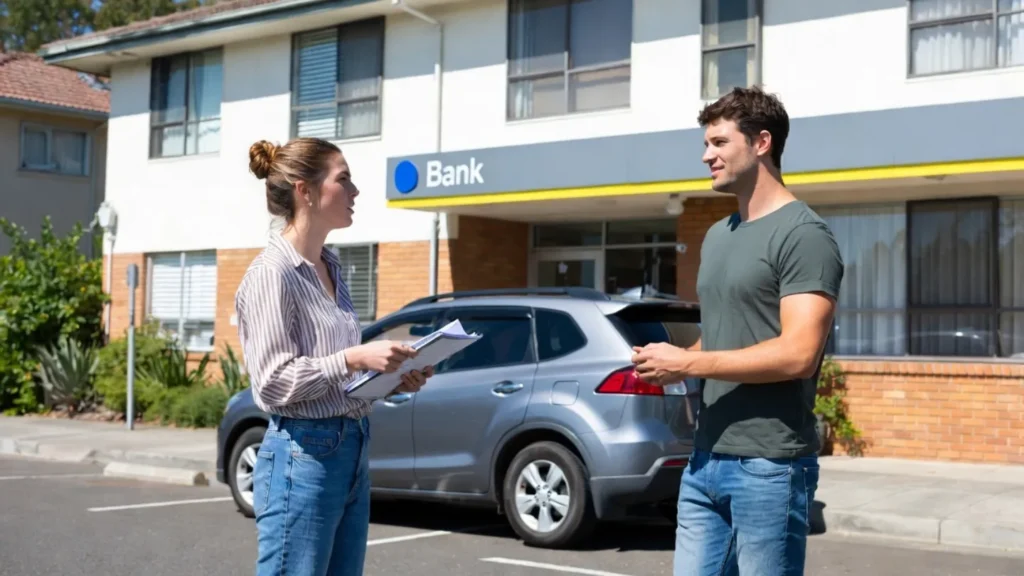
In this scenario, the money lender holds a security interest (encumbrance) on the car, and they technically remain the legal owner until the debt is cleared. Here are the steps to sell your car under finance in a private deal, safely and legally:
1. Get an official payout figure
This states the total loan amount and the letter’s expiry date, and it acts as proof of debt.
2. Disclose the finances early
Be upfront in your advertisement that the car is under finance to build trust.
3. Coordinate the split payment
The safest way to finalise the private car sale is to have the buyer pay the lender directly.
4. Handling a “shortfall” (negative equity)
If your car is worth less than what you owe, you must pay the difference to the lender yourself before or during the sale.
5. Finalise paperwork and clearance
Ask the lender for a “Letter of Release” or confirmation of settlement and transfer ownership after the lender has received the funds.
Do you have any liability after selling your car privately?
You may be liable for traffic fines and tolls, fraudulent sale, and legal title after a private car sale if you don’t inform the concerned administrative authorities and honestly disclose the car’s history. You must ensure a “clean break” from the vehicle by following these steps:
1. Lodge a Notice of Disposal (NoD)
Submit a NoD or state equivalent, like a Transfer of Registration form, to your local road authority (e.g., Service NSW or VicRoads) immediately after the buyer drives away.
2. Create a detailed “Bill of Sale”
Include essential details like names, driver’s license numbers, and VIN, and get this written receipt signed by both parties. Explicitly include the phrase “sold in as-is condition” to clarify that no warranty is provided.
3. Provide a Roadworthy Certificate (RWC)
In most states (like VIC and QLD), it is the seller’s legal responsibility to provide a current RWC or Safety Certificate to the buyer.
4. Cancel your insurance and toll tags
Notify your insurance provider as soon as the sale is finalised and remove any e-tags from the windscreen to avoid ongoing charges.
How to avoid being scammed when selling a car privately?
It’s cliché, but yes, never hand over your car keys until funds have fully cleared in your bank account. Be careful about these things to avoid getting scammed when selling your car privately:
1. Payment red flags
Requests to use Western Union, cryptocurrency, or courier fees. Overpayments on PayID/PayPal. Ignore the buyer’s “successful transfer” screenshots and verify with your own banking app.
2. High-risk buyer behaviour
Buyer offering full price immediately without seeing your car, claiming they work remotely (in FIFO or oil rigs). Buyer rushing the deal or moving to off-platform messaging (e.g., WhatsApp or email).
3. Physical safety and theft prevention
Take a photo of their driver’s license before they test drive your car with you. Meet in busy public areas. Blur your car’s number plates in ad photos to avoid plate cloning.
4. Verified documentation
Get a bill of sale as proof of sale. Lodge your Notice of Disposal (or state equivalent) after the sale.
The bottom line
There is no single “best” way to sell your car in Australia, but only the best way for your car. If it is a clean, popular, well-serviced model with decent value, a private sale usually gives you the most money. If it is old, damaged, high-kilometre, under finance, or you simply need it gone fast, a dealer trade-in or direct dealer sale is often the smarter, safer move.
So think like this: the better your car’s condition and the stronger its market demand, the more private selling pays off. But once time, effort, safety, or repair costs start eating into that gap, the dealer option begins to make more sense.
FAQs
1. What is the hardest month to sell cars in Australia?
January, late June, winter, and school holidays are the most difficult times to sell your car in Australia. You can have a detailed read on the best time to sell your car here.
2. What colour car is the hardest to sell in Australia?
Neutral car colours like white, silver, and grey offer consistent value, while bright and unpopular colours like yellow, orange, red, gold, brown, and purple are harder to sell.

Comments
New Comment