




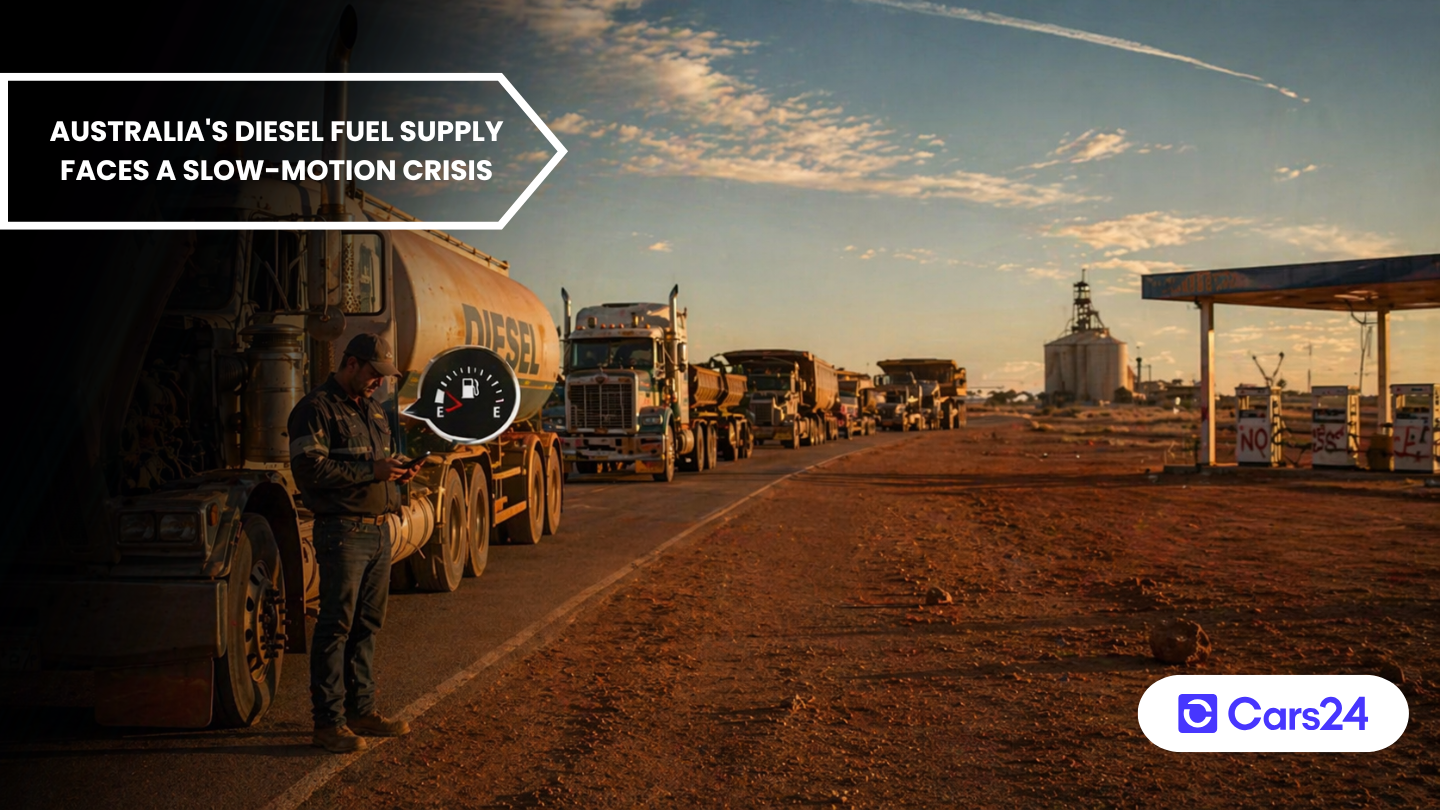
When the Strait of Hormuz blockade began choking global oil supply earlier this year, Australians were cushioned at least temporarily by geography. The simple fact of distance bought time. But that buffer, analysts now caution, is not immunity.
A new report from the Institute for Energy Economics and Financial Analysis (IEEFA) argues that Australia is entering the delayed phase of a global diesel supply shock, with the full force yet to be felt. For a country that imports approximately 87 per cent of its diesel making it the world’s largest importer relative to domestic production that lag is now a vulnerability.
Read more: Diesel fuel in 2026: Still worth it or slowly losing ground?
Why diesel, and why now?

Diesel is not merely a motorists’ fuel. It is the backbone of Australia’s agricultural sector, its mining operations, and its rail freight network. A sustained squeeze on supply does not just translate to higher bowser prices; it threatens the operational viability of industries that underpin the national economy.
The IEEFA’s chief executive, Amandine Denis-Ryan, described the mechanism clearly: a prolonged crisis would place “significant constraints on the ability of key diesel producers in the Asia-Pacific region to continue exporting.” In that scenario, regional suppliers themselves facing surging domestic demand would be forced to slash export volumes or pivot to importing altogether, removing Australia’s usual supply alternatives.
“Australia’s location means it may feel the crisis for longer than other countries, but it is also buying the country time to prepare.”- Amandine Denis-Ryan, CEO, IEEFA
Diesel fuel prices in Australia tripled between January and April 2026 a steeper trajectory than petrol, which approximately doubled over the same period as crude oil prices surged. At the worst point in April, the national average for diesel climbed above $3.20 per litre. As of today, it has eased to around $2.85 per litre, partly in response to pre-emptive government intervention.
Read more: Australia secures massive 200 million litre diesel supply
The government is buying time, but for how long?
The federal government has moved to shore up supply, with more than 200 million litres of additional diesel fuel secured for importation. That decision, which analysts have largely praised as timely, is credited with contributing to the recent price softening.
But the IEEFA’s assessment is that intervention may only be delaying, not defusing, the pressure. The report warns of a “long tail”, a protracted period of elevated prices and constrained supply that could outlast the immediate crisis in the Middle East. For rural and regional communities, where diesel is often the only viable energy source for critical operations, that scenario carries serious economic consequences.
What is the IEEFA calling for?
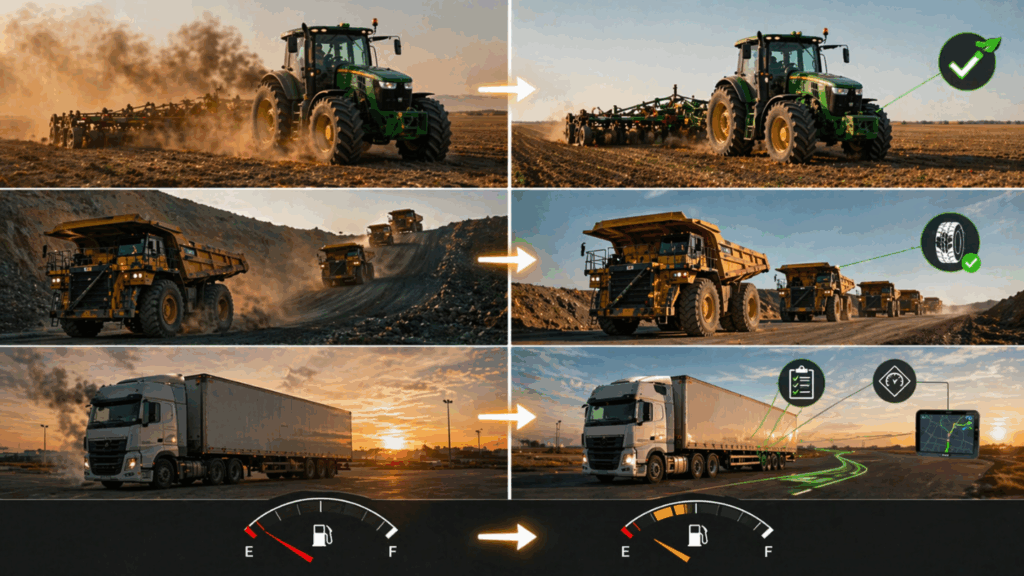
Beyond emergency stockpiling, the IEEFA is pushing for structural change. The report urges the government to pursue “fuel optimisation” strategies across the agriculture, mining, and transport sectors, an umbrella term covering eco-driving practices, speed reduction policies, and improved logistics and vehicle maintenance protocols.
More ambitiously, it flags the accelerated transition to electric vehicles as a medium-term hedge. While that shift carries its own economic and infrastructural challenges particularly in remote and regional areas the report frames electrification less as a climate measure and more as an energy security imperative.
“In addition to helping mitigate any potential supply shortfalls,” Denis-Ryan noted, “these initiatives would reduce the financial impact of the oil crisis on businesses”, a framing that may carry more political weight than environmental arguments alone.
The broader picture
Australia’s diesel exposure sits within a wider regional vulnerability. The Asia-Pacific’s growing appetite for diesel fuel driven by industrial expansion across Southeast Asia means that competition for available supply will intensify rather than ease if the Middle East crisis deepens.
In that context, the current price moderation may be less a sign of structural relief and more a pause before the next wave. The coming months will test whether the government’s supply interventions were sufficient or merely a temporary fix for a problem with a much longer arc.

Comments
New Comment