




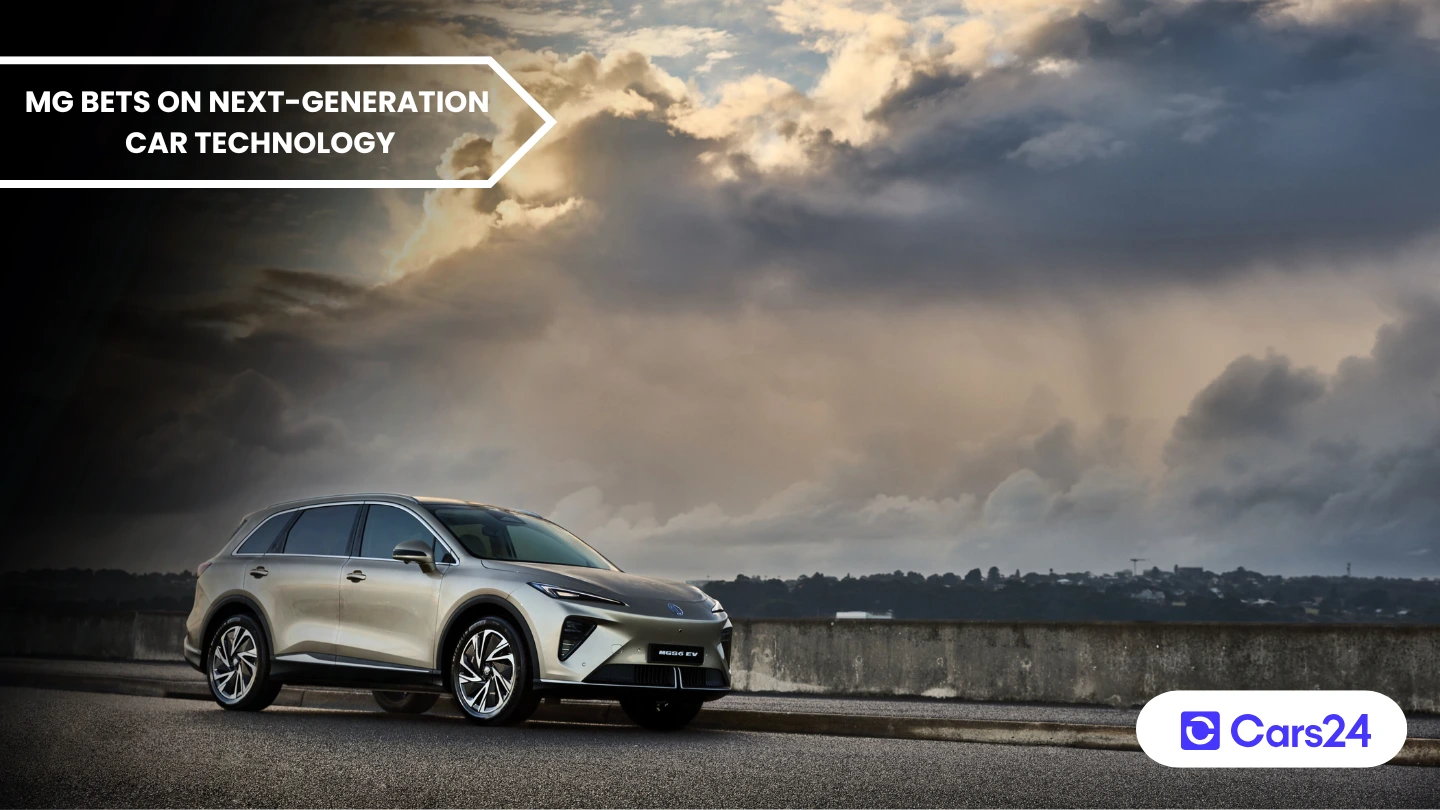
MG’s parent company SAIC Motor says increasing investment in electric vehicles, battery technology and vehicle software is helping bring advanced automotive technology into more mainstream cars in Australia.
The Chinese automotive group sold more than 4.5 million vehicles globally in 2025 and earlier this year became the first Chinese automotive group to surpass 100 million cumulative vehicle sales.
That scale is significant as manufacturers compete to develop electric powertrains, batteries and increasingly software-focused vehicles, with technologies that were once largely associated with premium cars now moving into more affordable segments.
Read more: MG IM5, IM6 EV bookings open in Australia, pricing and features revealed
MG is using global investment to expand its Australian range
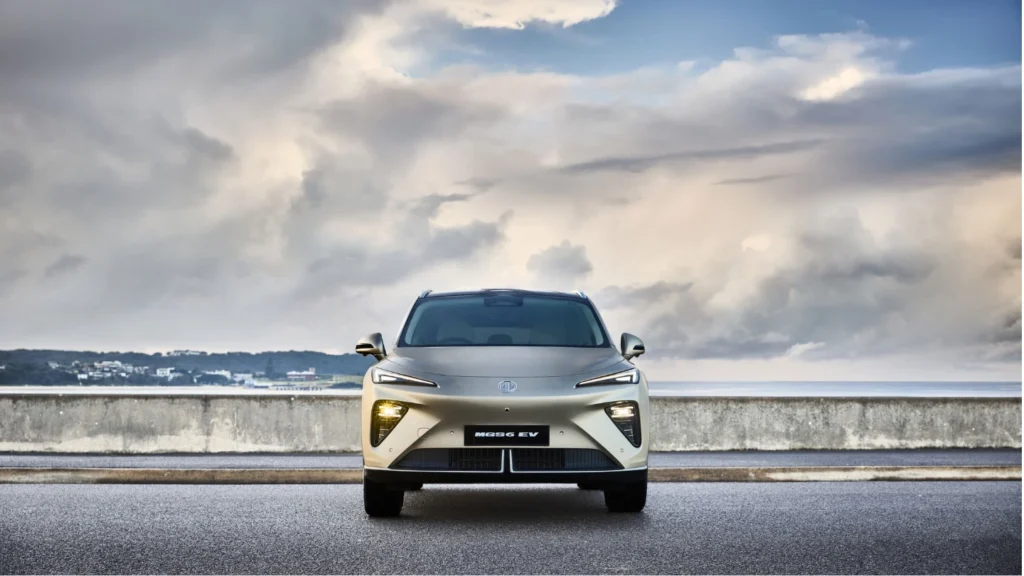
The shift is already visible across MG’s Australian line-up. The MG4 EV Urban has brought electric vehicle technology into a more accessible part of Australia’s new-car market, while the MGS6 EV introduces the brand’s latest electric vehicle platform.
Read more: Budget MG4 EV Urban earns 5-star ANCAP rating
At the premium end of the group’s electric vehicle portfolio, IM Motors has expanded into Australia with the IM5 and IM6, bringing technologies including advanced battery systems and intelligent vehicle functions.
The significance of these vehicles is broader than the individual features they offer. As manufacturers increase spending on EV development, technologies can increasingly be shared across different models and vehicle segments. This is helping reduce the time it takes for developments initially introduced in higher-end vehicles to reach more mainstream cars.
MG Motor Australia and New Zealand Marketing Director Dimitri Andreatidis said technology was becoming a more important part of the new-car buying decision.
“People still care about value, but they’re also paying much closer attention to the technology in a vehicle and how it improves the driving experience.”
For Australian car buyers, that means price and mechanical specifications are no longer the only major points of difference between new vehicles.
Read more: MGS6 EV gets 5 stars at ANCAP
EV technology is changing the new-car market
Electric vehicles have accelerated this shift because battery systems, software and electronic architecture are central to how an EV performs.
Range, charging capability, battery management and software can have as much influence on an electric car’s usability as traditional considerations such as engine performance and fuel economy have on petrol-powered vehicles.
Manufacturers are therefore investing heavily in areas that can improve efficiency, performance and the overall ownership experience.
During the first half of 2026, SAIC sold more than two million vehicles globally, including almost 800,000 new energy vehicles. Its overseas sales also increased by almost 49 per cent during the period.
The company is continuing development of technologies including semi-solid-state batteries, steer-by-wire systems and artificial intelligence-enabled vehicles.
SAIC’s investment reflects a wider industry shift towards vehicles that rely increasingly on software and electronic systems, rather than being differentiated primarily by their mechanical components.
Read more: Australians bought an EV every 77 seconds as June sales hit record
What does this mean for Australian car buyers?
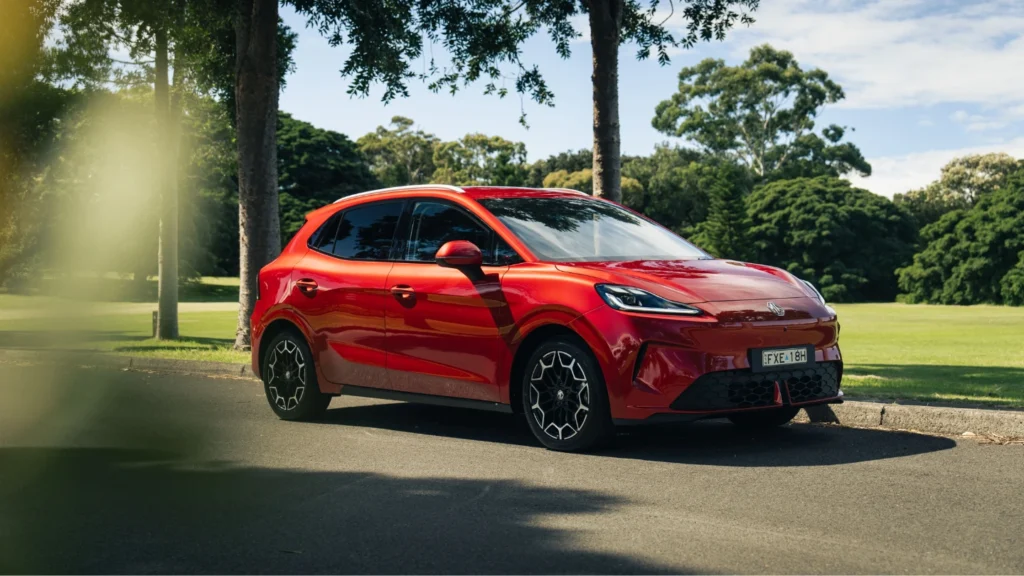
The biggest change for Australian consumers is likely to be the speed at which new technology becomes available at different price points.
Features that once required buyers to move into a premium vehicle are increasingly appearing in mainstream electric cars. This could give consumers more technology and capability without necessarily requiring a substantially higher purchase price.
However, more technology does not automatically mean a better vehicle.
For Australian drivers, the usefulness of advanced systems will depend on factors such as how well driver assistance technology operates, whether software is reliable and intuitive, and how effectively an EV performs in real-world conditions.
Battery and charging performance are particularly important in Australia, where long distances and differences in charging infrastructure can make the requirements of urban and regional buyers very different.
After-sales support is also becoming more important as vehicles become increasingly software-dependent.
MG Australia Head of Product Meng Chen said the faster development cycle was helping bring new technology to customers sooner.
“Technology that once took years to filter into everyday vehicles is now reaching customers much faster.”
For Australia’s new-car market, that trend is likely to continue as global manufacturers increase spending on batteries, electric powertrains, software and vehicle electronics.
For buyers, the result is a market where advanced technology is becoming less of a premium-only feature and more of an expected part of a new car.
Read more: EVs dominate the new car sales in China in May 2026

Comments
New Comment