




Key highlights:
- Super-One keeps its 202km range to preserve lightweight city-car design
- Honda has not ruled out more power or Mugen-inspired upgrades
- All 130 Australian 2026 cars were allocated within hours
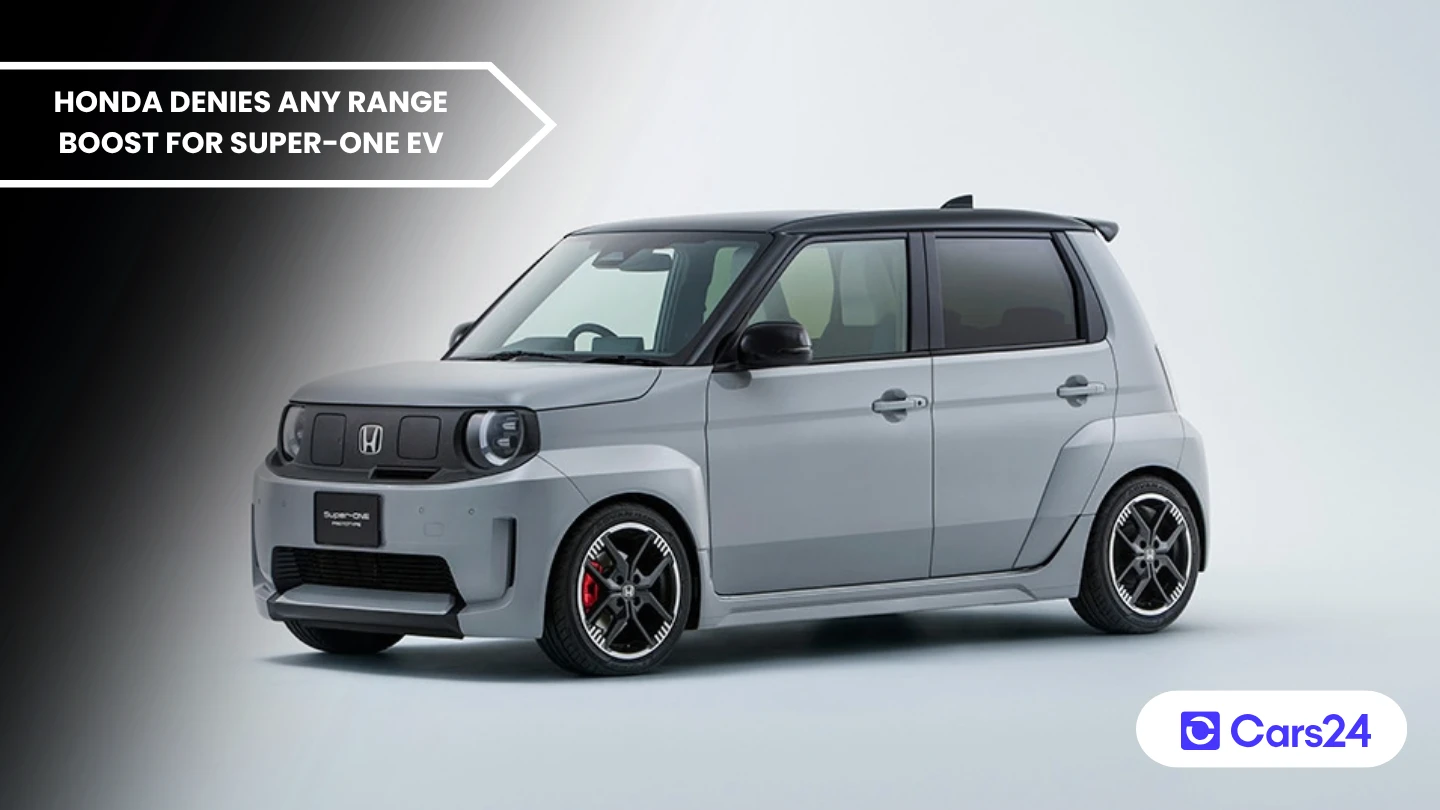
Honda has ruled out adding a larger battery to the Super-One electric hatch, despite its 202km WLTP range making it the shortest-range new electric passenger vehicle currently available in Australia.
Honda says the car’s 1093kg kerb weight sits at the heart of the project, and adding a heavier battery would undermine its purpose as a lightweight city car.
However, Honda has left the door open to a more powerful version and has not ruled out a body kit from Japanese tuning specialist Mugen Motorsports.
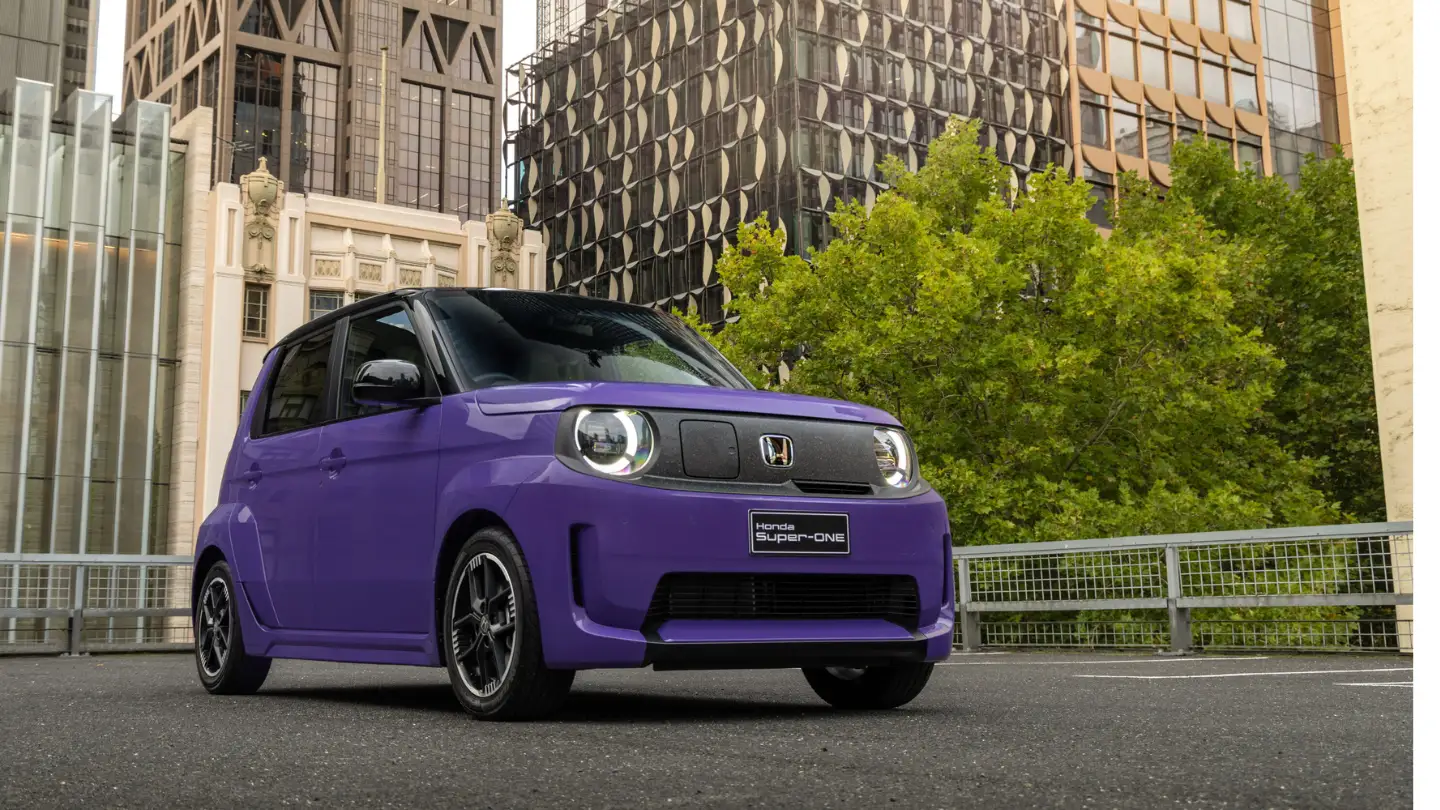
The Honda Super-One is priced at $36,900 drive-away in Australia, and customers can spend another $500 on two-tone paint, which adds a contrasting Crystal Black roof and piano black trimmings.
Why does Honda not want a bigger battery?
The Super-One uses a 29.6kWh lithium-ion battery and a 47kW front electric motor, and the steering-wheel Boost button takes it to 70kW.
The hatch weighs just 1093kg, while its compact dimensions help it make better use of the relatively small battery and modest power output.
Its 202km WLTP range sits below the other small EVs currently competing at the cheaper end of Australia’s market and has 18km less range than the BYD Atto 1 Essential and 50km less than the Geely EX2 Complete.
| Model | Battery | WLTP range |
|---|---|---|
| Honda Super-One | 29.6kWh | 202km |
| BYD Atto 1 Essential | 30kWh | 220km |
| Geely EX2 Complete | 35.3kWh | 252km |
Asked at the Super-One’s Australian launch whether Honda had considered a larger battery, or could still do so, Honda Australia president and chief executive Jay Joseph explained why the company wants to avoid that path.
“You just go in this endless spiral of addition,” Joseph said.
He explained that solving range anxiety with a larger battery would increase weight, which would then require bigger brakes.
Those heavier brakes would require stronger chassis components, while the additional weight could also require a larger motor and ultimately more battery capacity again.
“It takes an incredible amount of discipline to prevent that endless spiral by saying nope, we’re keeping this to the minimum,” Joseph said.
Also read: Brand’s cheapest 2027 XPeng L03 price and specs revealed
202km makes it Australia’s shortest-range EV
The Super-One’s 202km WLTP figure gives it the shortest range of any new electric car currently available in Australia.
Honda also quotes 253km under the more lenient NEDC testing cycle, which is slightly higher than the 245km quoted for the Toyota HiLux BEV cab-chassis, which does not have a WLTP rating.
If the HiLux BEV faced the tougher WLTP test, it would likely sit below the Honda.
Honda Australia general manager Nick Parkington said the Super-One’s range matches its intended role.
“The role of this car is as a city car; therefore, a 200 [kilometre] range is absolutely appropriate for the car,” Parkington said.
He compared requests for more range with asking for seven seats in a vehicle that was never designed to carry seven people.
More power remains possible
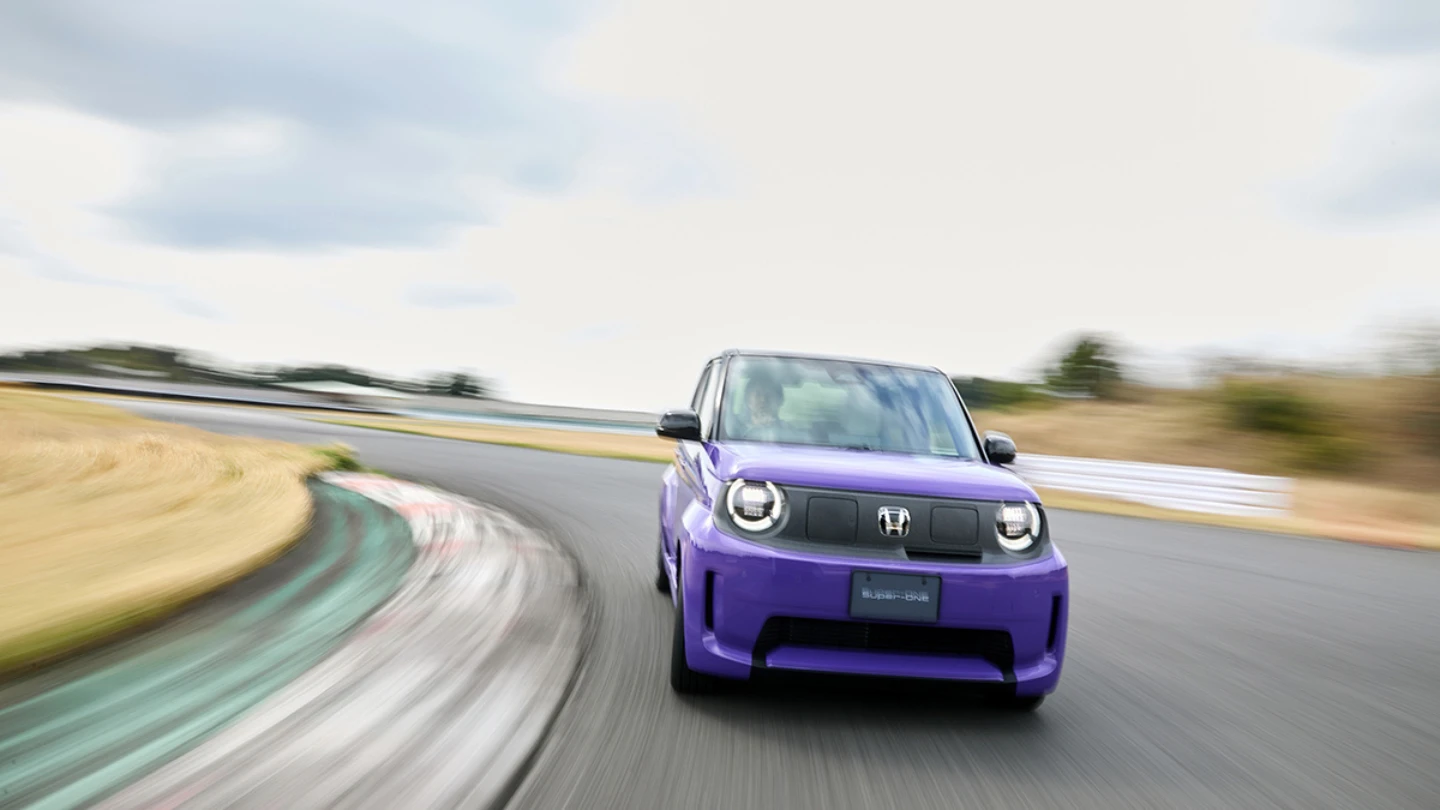
Honda has not ruled out a more powerful Super-One. The company also would not comment beyond current supply when asked about an official RS variant or a version developed with Mugen.
Honda Australia director Robert Thorp said the company is instead working on a personalisation program.
“We know buyers are going to want to individualise the car,” Thorp told Drive.
“There are a couple of things we’re working on in that space,” he added, saying, “if you watch closely you might see some cool stuff”.
Mugen already has Super-One upgrades
Mugen Motorsports has already developed a range of carbon-fibre and lightweight components for the Super-One in Japan, such as:
- Aggressive front splitter
- Rear spoiler
- Side skirts
- Rear diffuser
- Fibreglass bonnet
- Recaro seats
- 16-inch forged alloy wheels
The exterior parts alone are listed in Japan at about 1,383,000 yen, equivalent to roughly A$12,000 at current exchange rates.
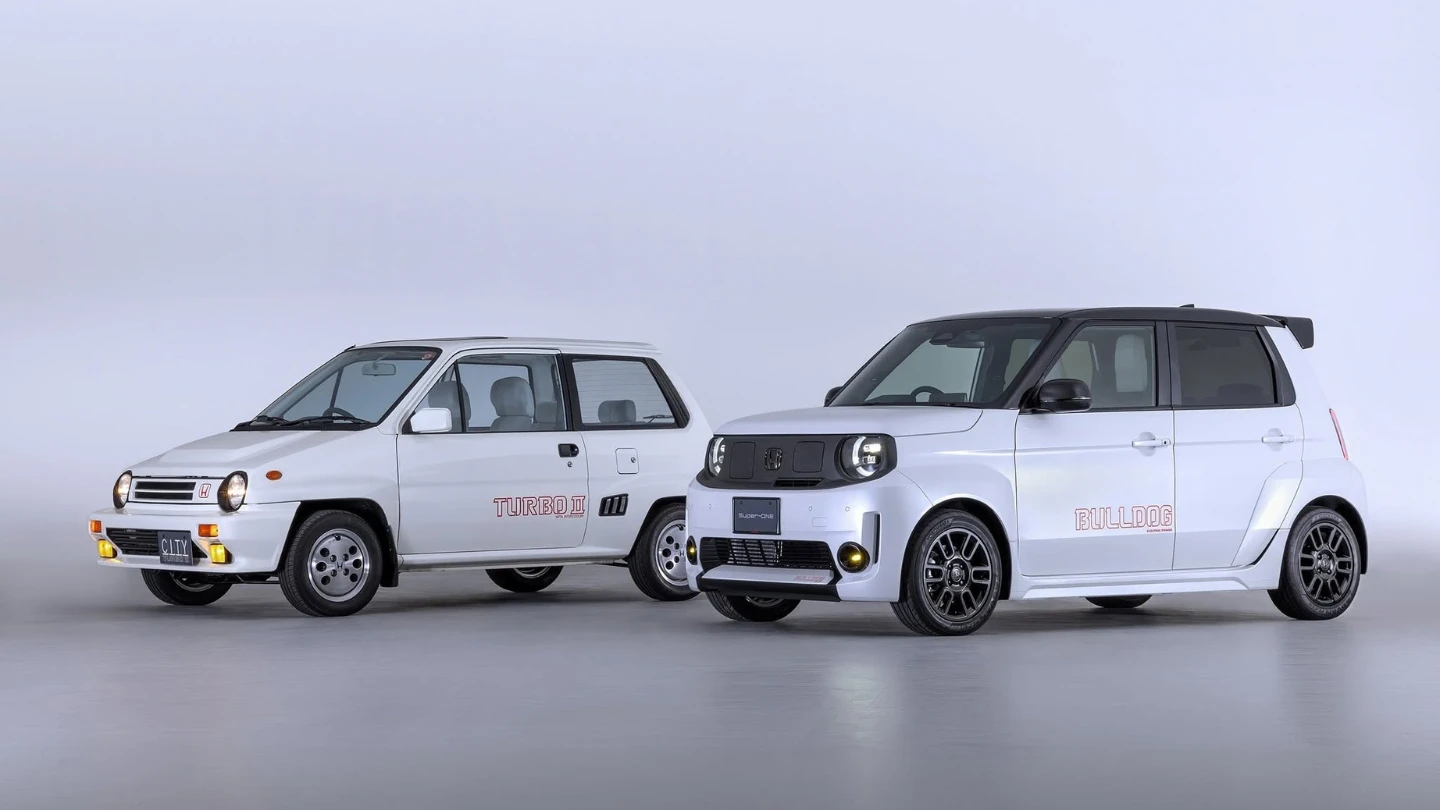
Honda Access, Honda’s in-house accessory arm, also offers a Bulldog Style pack, and the Bulldog name comes from the nickname for the 1983 City Turbo II.
The pack includes retro-inspired Bulldog decals, yellow two-tone LED fog lights, a larger roof spoiler and 15-inch black ME-027 alloy wheels.
Demand has surprised Honda
The Super-One attracted close to 7000 expressions of interest before its Australian launch, and that figure exceeds the interest recorded for both the Civic Type R and the more recent Prelude coupe, according to Honda executives.
Honda attributed the strong response to the car’s appearance at the Melbourne motor show and the reaction it generated on social media. The company said the level of interest exceeded what it had expected when the project began.
Honda Australia will receive 130 Super-Ones during 2026, and all 130 were allocated within hours of pre-orders opening on August 4.
Another allocation will arrive during the first quarter of 2027, covering January to March, and two-tone cars are due during the second half of 2027.
Honda plans to import roughly 500 Super-One units across a calendar year, and the first customer deliveries are scheduled for October 1, 2026.
Looking for a classic, reliable Honda car? Check out these used Honda cars available with a 30-day return policy.

Comments
New Comment