




Have you ever looked at a tyre that’s been underinflated for a long time and wondered, “Can I just pump it back up and keep driving?”
It sounds like a simple question, but this is one of those situations where a wrong move can turn a cheap fix into a serious safety hazard.
The problem is that tyre damage can occur inside the tyre, where it may not be visible during a visual inspection. A tyre that looks perfectly normal from the outside may have already suffered structural damage from being driven while flat.
In this guide, we’ll enable you to identify clear warning signs and safety limits that help you decide whether reinflation is safe. So that you can make the right (and safe) call without the guesswork.
When it is unsafe to reinflate a tyre (11 signs)
According to Australian workplace safety authorities and tyre standards, it is unsafe to reinflate a car tyre if it has been driven while flat, severely underinflated, run at less than 80% of its recommended pressure, or shows visible signs of internal or external structural damage.
Here is a breakdown of the conditions under which a tyre must never be reinflated and must instead be replaced or professionally stripped down for internal inspection.
1. Severely underinflated or run-flat damage
Driving on a flat or near-flat tyre causes the sidewall to flex excessively, generating intense heat that permanently destroys the internal steel and fabric cords.
Even if it looks okay on the outside, the internal structure may be shredded and ready to explode under pressure. You should not pump it back up without professional intervention.
2. Sidewall bulges or “bubbles”
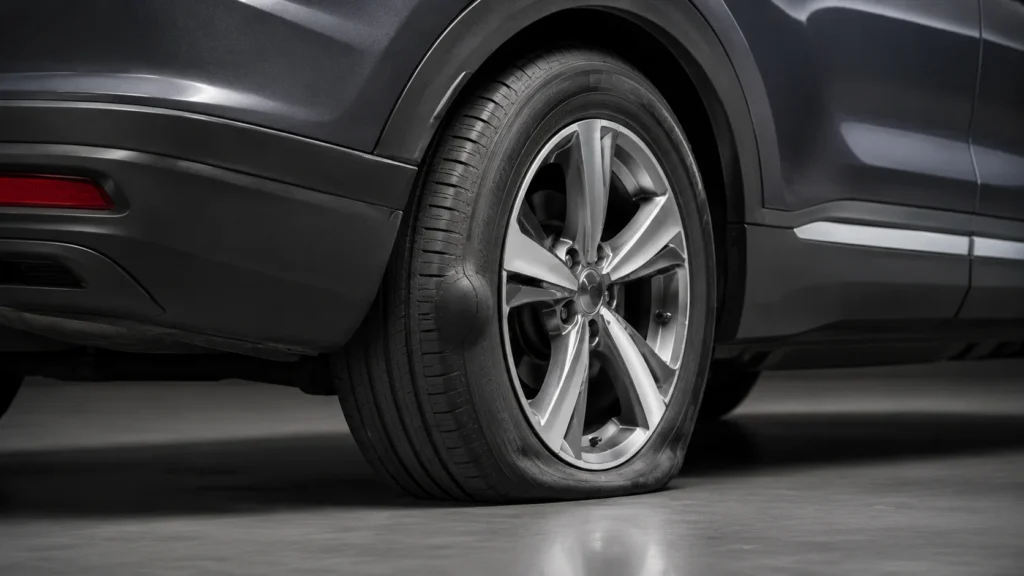
A bulge suggests that the internal structural plies have ruptured, and the compressed air is only being held in by the thin outer layer of rubber. Pumping more air into a tyre with a sidewall bulge significantly increases the risk of a tyre burst.
3. Sidewall creases or gouges
A dark, circular ring or deep crease pressed into the sidewall rubber is a definitive sign that the tyre was driven on while flat. This also sacrifices its structural integrity.
4. Exposed cords or wires
If you see any internal steel wires, fabrics, or nylon cords through cuts, gashes, or heavy abrasions, the tyre is structurally compromised and unsafe to reinflate.
5. Bead damage
The tyre bead is the steel-reinforced loop of rubber that sits tightly against the metal rim of your wheel. When you apply high-pressure air to a tyre with a damaged bead, the rubber cannot grip the rim evenly. A damaged bead may prevent the tyre from sealing properly against the wheel, creating a risk of sudden air loss or failure during inflation.
6. Low tyre light ignored in the TPMS
If the TPMS warning light has been on for an extended period, inspect the tyre carefully and have it professionally checked before reinflation, especially if the vehicle has been driven extensively while underinflated. The tyre may look good from the outside, but it is often damaged internally due to sidewall flexing.
7. Big punctures
Punctures greater than 6mm or any punctures located outside the central 75% of the tread (such as on the tyre shoulder or sidewall) generally cannot be safely repaired and usually require tyre replacement. This comes under Transport Victoria guidelines and broad tyre manufacturer standards.
8. Bald tyres
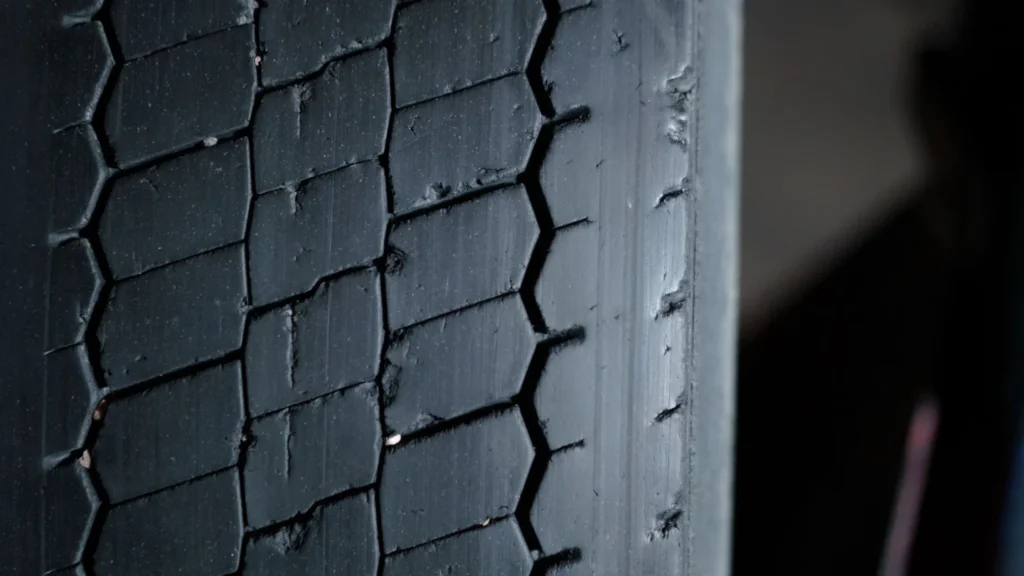
If the tread depth is below the Australian legal limit of 1.5mm or visibly worn off, the tyre should be replaced rather than reinflated for continued road use, as worn tread significantly reduces grip and safety.
9. Perishing and dry rot
Older tyres in long parked cars often develop severe rubber deterioration, cracks, or delamination. Brittle rubber cannot sustain the stress of rapid reinflation.
10. Split rims
Many old vehicles (vintage, 4WD, or light commercial) have split rims (multi-piece wheels). You must never inflate their tyres if there is any suspicion of a component mismatch, corrosion, or distortion. An explosive failure here can throw heavy steel locking rings at you while reinflating them.
11. Unregulated air sources
While rare, reinflating a tyre using a commercial or workshop air pump that lacks a functional pressure regulator or an inline gauge is incredibly risky, as it can over-pressurise and burst a small car tyre.
Also read: Tyre dimensions: What those sidewall numbers really mean
When should you reinflate tyres?
The right moments to reinflate your car tyres are determined by time, distance driven, weather changes, and vehicle load. Here are these timings explained:
1. Reinflate only when tyres are cold
The best moment to inflate your car tyres is in the morning before you drive the vehicle or it’s been parked in the shade for at least two hours or driven only under 2 kilometres away from home.
2. Routine maintenance
Checking and topping up your tyres monthly keeps them at optimal pressure.
3. Travel, loading and towing situations
Always check your tyre pressure before heading out on long drives, heavy loading, and before towing. You must increase the rear tyre pressure slightly when loading and towing.
4. Environmental and seasonal changes
You must check your car’s tyre pressure in the first cold week of the winter or when changing the terrain, such as increasing tyre pressure when moving from sandy off-roads to the highway.
Readers also asked: What are different types of car tyres?
Safe car tyre inflation practices
Your main goal while reinflating your car tyres is to minimise your exposure to a potential blast radius while preventing over-pressurisation. Workplace safety bodies like WorkSafe Victoria say that even everyday passenger car tyres can cause serious injury if they fail explosively during inflation. Here are some safe practices to reinflate your car’s tyres:
1. Read the tyre placard: Use the vehicle’s official tyre placard for the recommended cold inflation PSI or kPa.
2. Stand clear of the sidewall: Never lean, crouch, or sit directly facing the tyre’s sidewall while the air is pumping.
3. Position at the tread face: Stand at a 90-degree angle to the side of the tyre, positioning your body in line with the front or rear tread profile rather than the flat side of the wheel.
4. Never leave it unattended: Do not jam the air pump lever open or walk away from an actively inflating tyre.
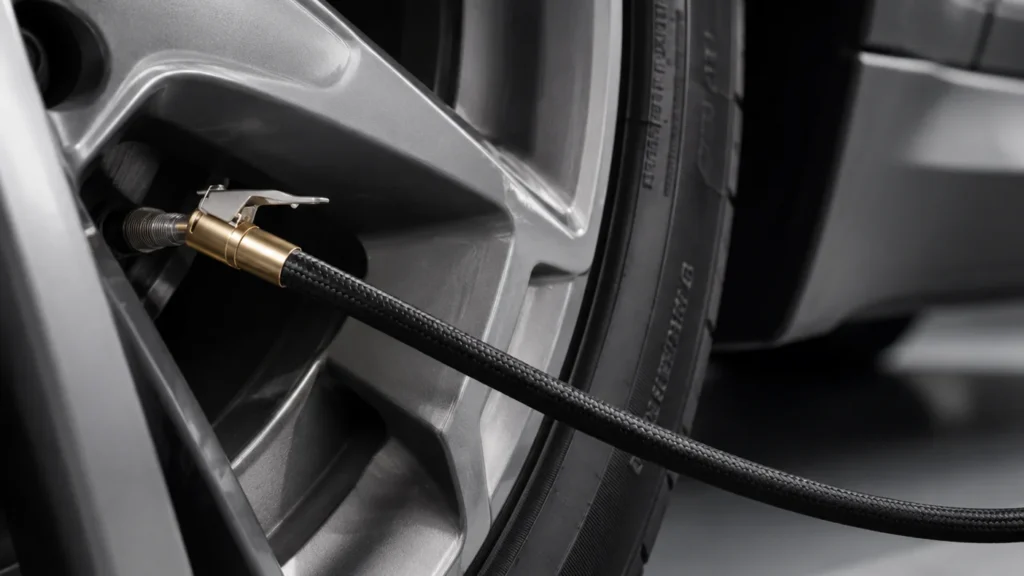
5. Use clip-on chucks: Opt for a clip-on air chuck that locks onto the valve stem automatically. This eliminates the need to hold the hose in place, keeping your hands away from the wheel.
6. Utilise hose length: Ensure your air line is long enough (3 metres or more) so you can stand at a safe distance.
7. Never use unregulated air: Only use pumps fitted with a working, automated cutoff regulator or an integrated inline pressure gauge.
8. Inflate tyres when cold: For an accurate reading, check and fill your tyres when the car has been stationary for at least two hours or driven less than 2-3 kilometres.
FAQs about safe car tyre reinflation
1. Is it bad to slightly over-inflate your tyres?
Yes. Over-inflating by 2-4 PSI is generally fine; however, going over 5 PSI above your placard is bad.
2. Is 27 PSI safe to drive on?
No, 27 PSI is under-inflated for modern hatchbacks, sedans, and SUVs, which typically require between 30 and 42 PSI.
3. What PSI is dangerous to drive on?
As a thumb rule, any tyre pressure that is significantly below or above your vehicle manufacturer’s recommended range can be unsafe. Pressures below 20 PSI are generally considered dangerously low for most passenger vehicles in Australia. Driving with tyre pressures at these extremes can increase the risk of tyre damage, a blowout, and reduced vehicle control.

Comments
New Comment